

Introduction
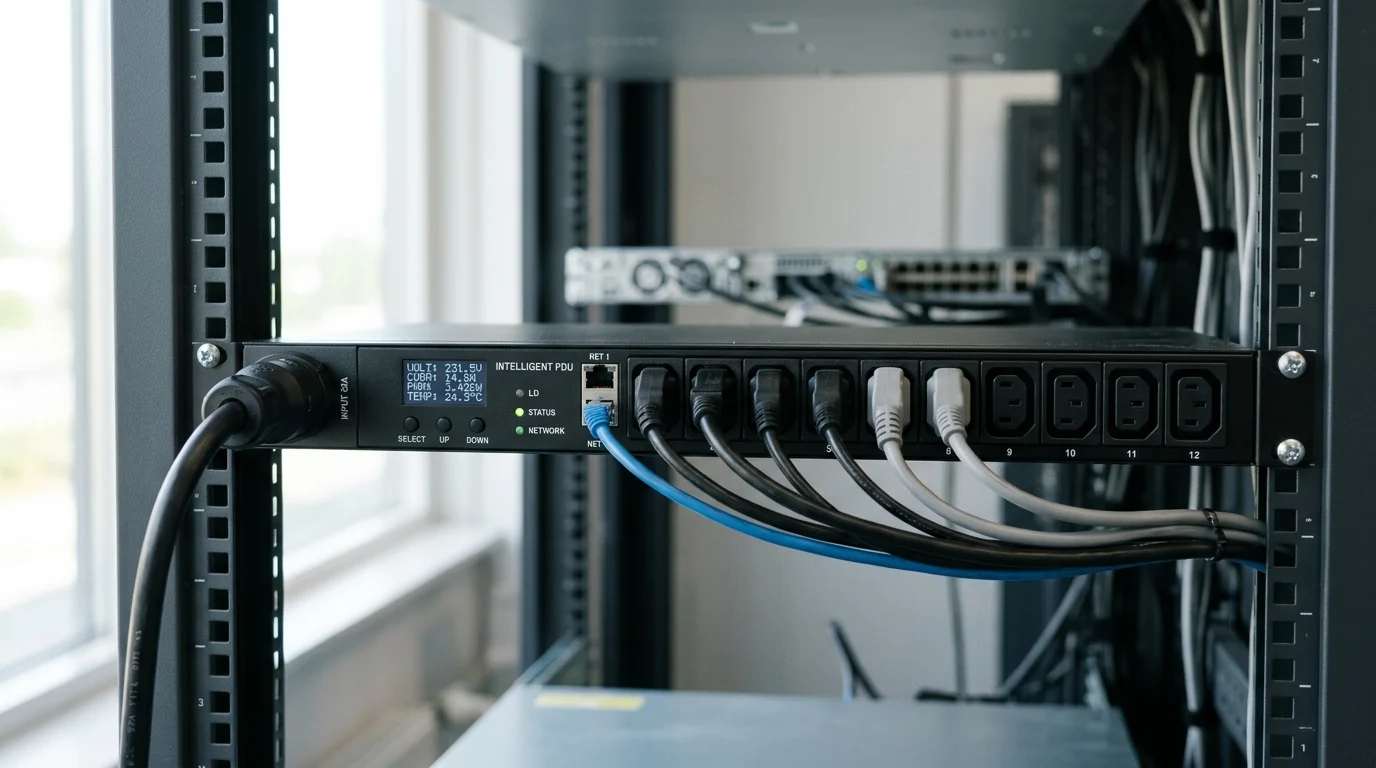
As AI workloads push rack densities from traditional levels into 40–120 kW territory, power distribution is becoming a frontline design issue rather than a background utility. Intelligent PDUs sit at the center of that shift by providing outlet-level monitoring, remote control, load balancing insight, and the real-time data needed to manage GPU-driven power spikes without risking downtime. This article examines the 2026 trends shaping data center power strategy, explains why basic PDUs fall short in high-density environments, and shows how intelligent PDUs help operators improve resilience, capacity planning, and day-to-day control as compute demands keep rising.
Why Intelligent PDU Strategy Matters for High-Density AI Power
If you have walked the floor of any major facility recently, you know the landscape is shifting fast. We aren’t just hosting standard web servers anymore; we are feeding incredibly power-hungry AI clusters. By the time we hit 2026, relying on basic power strips will be a recipe for absolute disaster. That is why I always emphasize to my teams that upgrading to a true Intelligent PDU strategy is non-negotiable if you want to keep your hardware running without melting down your infrastructure.
Managing power for AI is a totally different beast. You need visibility, control, and real-time data to prevent catastrophic outages. Let’s look at exactly why this shift is happening and what it means for your next hardware refresh.
AI Rack Density, GPU Power Spikes, and Power Constraints
Let’s talk numbers because the math is changing rapidly. A few years ago, a standard enterprise rack pulled maybe 5 to 10 kW. Today, a single High-Density Rack packed with next-generation GPUs can easily demand between 40 kW and 120 kW. That is a massive concentration of energy in a very small footprint.
But it is not just the sustained load that keeps me up at night—it is the power spikes. Modern AI accelerators can pull up to 2x their Thermal Design Power (TDP) for microseconds during intensive large language model (LLM) training phases. If your power distribution architecture cannot handle these transient spikes, you will trip breakers, corrupt data, and crash millions of dollars worth of compute in the blink of an eye.
Key Intelligent PDU Capabilities for 2026 Data Centers
So, what exactly do we need these intelligent units to do by 2026? First off, we need billing-grade accuracy. I am talking about +/- 1% precision on power monitoring down to the individual outlet level. This granularity lets us see exactly which node is hogging power and helps us calculate precise workload efficiencies.
You also need integrated environmental sensors. When you are pushing 100 kW in a single rack, localized hotspots can form in seconds. Having daisy-chained temperature and humidity sensors feeding directly into your management dashboard lets you throttle workloads dynamically before thermal limits are breached. In a high-stakes AI environment, having this telemetry is just as important as the power delivery itself.
How Intelligent PDU Options Compare for High-Density Compute
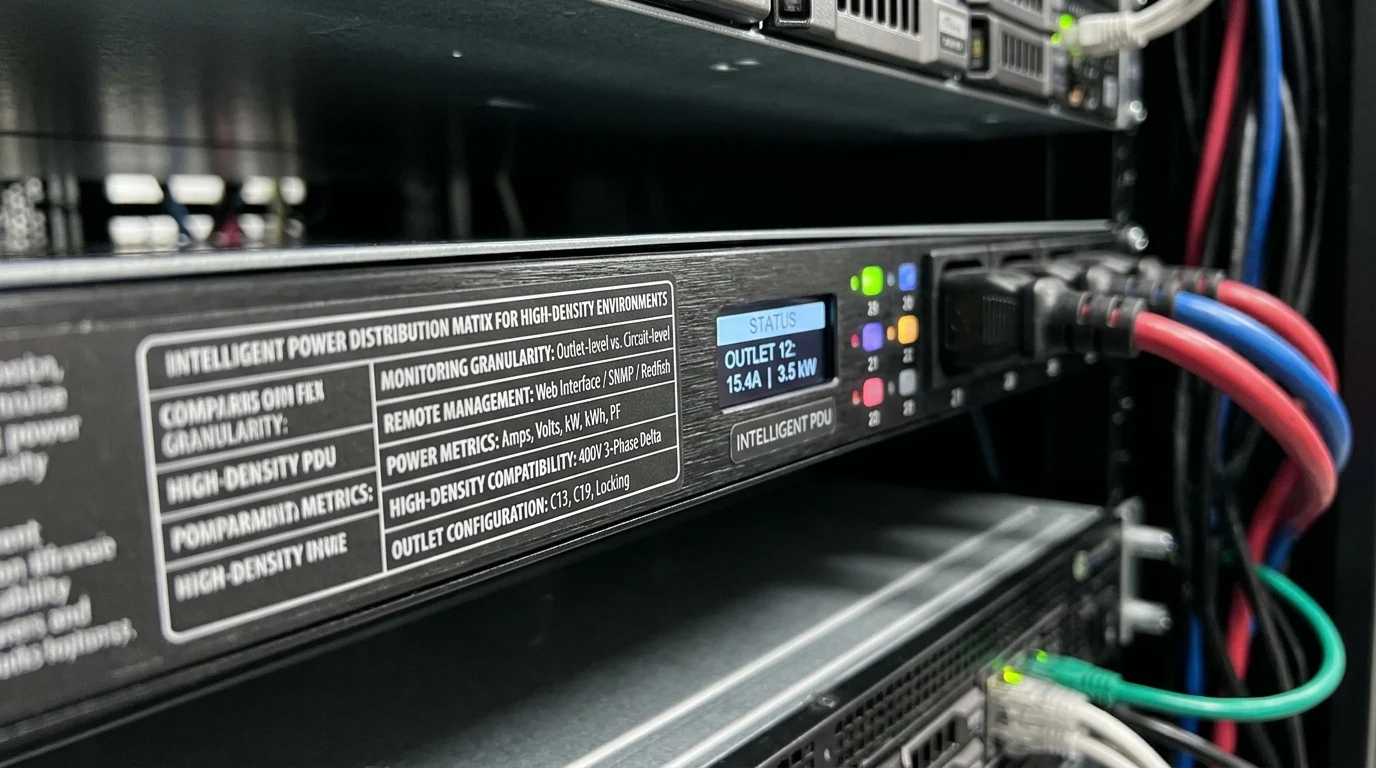
When it comes to outfitting a modern Data Center, you quickly realize that not all smart power distribution units are created equal. You have to balance features, physical space, and budget constraints. Let’s break down how the different options on the market stack up against the extreme demands of high-density compute.
Evaluation Criteria for Intelligent PDU Platforms
When I evaluate a platform, form factor and thermal ratings are my first stops. High-density compute exhausts a massive amount of heat, meaning the PDU itself must survive in scorching hot aisles. I strictly look for units rated for at least 60°C (140°F) continuous operating temperatures. Additionally, high-density C13/C19 combo outlets and alternating phase designs are lifesavers for balancing 3-phase loads without creating a rat’s nest of cables.
Here is a quick breakdown of how I compare the primary tiers of power distribution when planning a new buildout:
| PDU Type | Outlet Level Control | Monitoring Accuracy | Typical Cost per Unit |
|---|---|---|---|
| Basic/Dumb | None | None | $150 – $300 |
| Monitored | None | +/- 1% (Billing Grade) | $600 – $1,200 |
| Switched | Remote Reboot/Cycling | +/- 1% (Billing Grade) | $1,500 – $3,000+ |
This table highlights the massive jump in functionality and price. While basic units are cheap, they offer zero visibility, making them entirely unsuitable for modern AI workloads.
Intelligent PDU Trade-Offs for 2026 Deployments
Of course, there are always trade-offs to navigate. Fully switched units are brilliant for AI Computing because you can remotely hard-reboot a locked-up GPU node at 2 AM without sending remote hands to the facility. But that switching capability adds physical relays, which means more internal points of failure and a significantly higher price tag.
Plus, if you need custom 60A 3-phase switched units to support your new GPU clusters, you might be looking at Minimum Order Quantities (MOQs) of 50+ units and lead times stretching anywhere from 12 to 16 weeks. Sometimes, a high-amperage monitored-only PDU is the safer, faster bet if your compute nodes already have highly reliable out-of-band management interfaces.
How to Choose an Intelligent PDU for 2026 Data Centers
Making the final call on your power distribution architecture isn’t just a procurement exercise; it is an operational backbone decision. If you are planning deployments for 2026, you need a strategy that guarantees uptime while giving you total visibility into your Power Management stack. Here is how I approach the final selection process.
Practical Steps for Selection and Deployment
My first step is always a rigorous load profiling exercise. I don’t just look at the nameplate rating of the servers; I calculate the derated capacity of our circuits (which is legally capped at 80% in North America for continuous loads). You have to model your 2026 peaks, not just your current baseline.
Next, scrutinize the network security of the management card. We are putting network-connected devices into the most critical core of our infrastructure, so they absolutely must support SNMPv3, RESTful APIs, IPv6, and secure boot capabilities. If the API integration is clunky, your automation scripts for dynamic power capping won’t work when you need them most.
Decision Criteria for Final Investment
When it is finally time to sign the purchase order, I use a strict set of decision criteria to validate the investment. First is reliability: I demand a Mean Time Between Failures (MTBF) of greater than 100,000 hours and a standard manufacturer warranty of at least 3 to 5 years. Anything less is a red flag for build quality.
Second,
Key Takeaways
- The most important conclusions and rationale for Intelligent PDU
- Specs, compliance, and risk checks worth validating before you commit
- Practical next steps and caveats readers can apply immediately
Frequently Asked Questions
Why are intelligent PDUs essential for AI racks in 2026?
AI racks can reach 40–120 kW and experience short power spikes. Intelligent PDUs provide real-time monitoring, outlet visibility, and control to reduce breaker trips, overheating, and costly downtime.
What intelligent PDU features matter most for high-density AI deployments?
Prioritize +/-1% billing-grade metering, outlet-level monitoring, remote switching, environmental sensor support, 3-phase load balancing, and 60°C operating tolerance for hot-aisle conditions.
Should I choose a monitored or switched intelligent PDU?
Use monitored PDUs for accurate visibility at lower cost. Choose switched PDUs if you need remote outlet rebooting for GPU servers or unmanned sites, especially in 24/7 AI operations.
How do intelligent PDUs help prevent thermal issues in dense racks?
They connect temperature and humidity sensors to track rack conditions in real time. This helps teams spot hotspots early, rebalance loads, and adjust workloads before thermal limits are exceeded.
Where can I compare intelligent PDU options for AI data centers?
You can review intelligent PDU solutions and specifications on Newsunn PDU at newsunnpdu.com, including options for high-density racks, remote monitoring, and data center power management.
Post time: May-11-2026