

Introduction
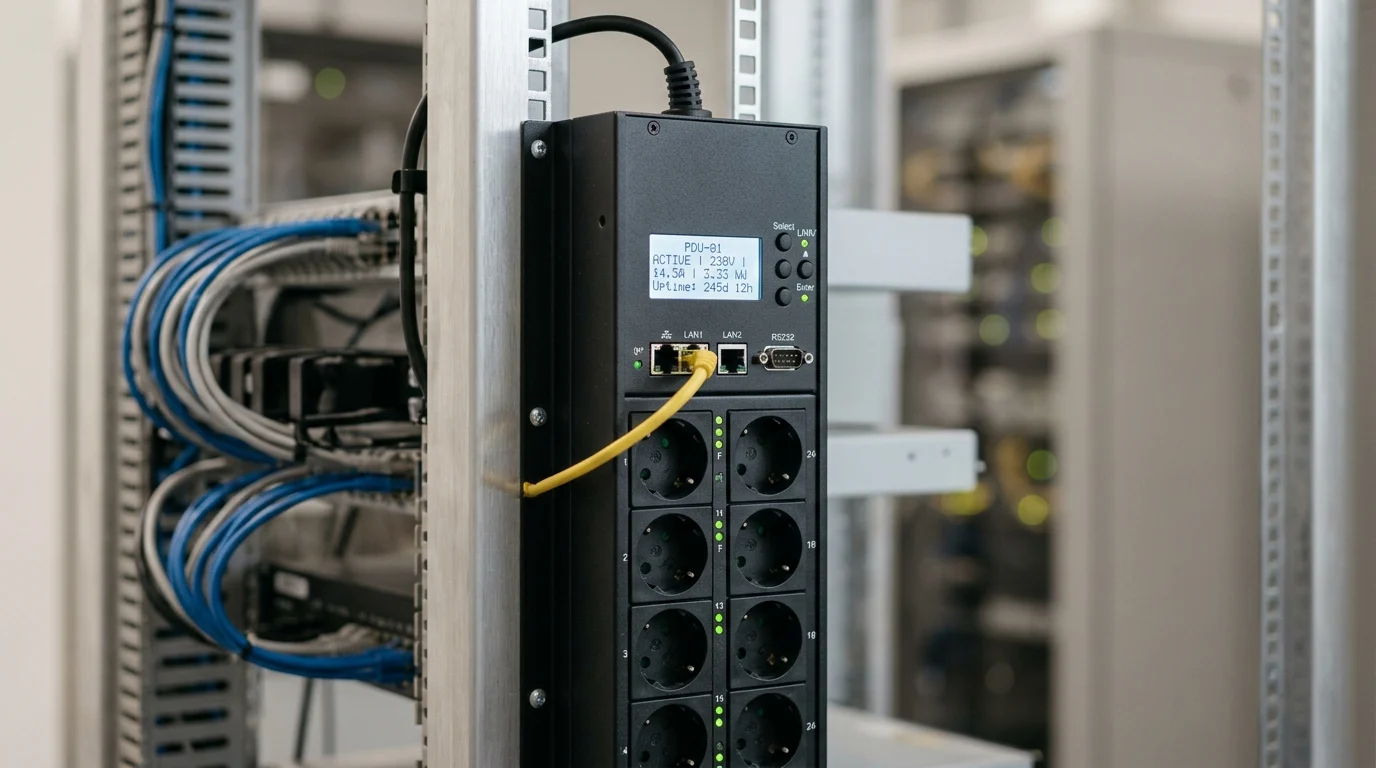
By 2026, the intelligent PDU market is being reshaped by higher rack densities, AI-driven power loads, and stricter expectations for energy visibility in data centers. Monitored intelligent PDUs are gaining B2B procurement share because they provide outlet-level measurement, improve capacity planning, support accurate tenant billing, and reduce the risk of overload-related downtime. This analysis explains the demand shift behind monitored deployments, the technical and commercial factors influencing buying decisions, and why power distribution is moving from a low-profile hardware category to a strategic infrastructure investment.
Why the 2026 Intelligent PDU market matters
As data center power infrastructure evolves toward 2026, the landscape is shifting aggressively. Operators are no longer just plugging in servers and walking away. Managing massive artificial intelligence and edge computing workloads demands granular visibility at the rack level. The days of treating power distribution as a commodity are officially over. To keep facilities running efficiently, upgrading to intelligent infrastructure is no longer optional.
Demand shifts in monitored intelligent PDUs
A major demand shift is the mass migration toward Power Monitoring at the outlet level. Previously, facility managers relied on aggregate power statistics at the breaker panel. Today, with average rack power densities jumping from a legacy 5-8 kW to an expected 15-20 kW by 2026—and AI clusters pushing past 40 kW—aggregate data is no longer sufficient.
Monitored intelligent PDUs pinpoint stranded capacity, track power factor degradation, and prevent tripped breakers before they disrupt critical compute nodes. Facilities increasingly mandate ±1% billing-grade accuracy. This precision allows colocation providers to pass energy costs directly to specific tenants and helps enterprise operators accurately calculate their Power Usage Effectiveness (PUE) down to the decimal.
Commercial signals shaping the 2026 global PDU market
Beyond technical specifications, commercial signals are heavily shaping the Market Analysis for the 2026 cycle. While global supply chains have largely stabilized since the chip shortages of the early 2020s, regional energy compliance and ESG (Environmental, Social, and Governance) reporting mandates are becoming much stricter. Companies now require auditable power consumption data to prove their carbon reduction efforts.
Additionally, hyperscalers are locking in massive multi-year manufacturing contracts, a trend that squeezes available inventory for mid-market colocation deployments. To stay ahead of these constraints, buyers are forecasting an average 15% to 18% year-over-year increase in their intelligent PDU budgets. This accounts for higher unit costs—driven by advanced network controllers and integrated environmental sensors—and the need to hold more buffer stock.
How to evaluate Intelligent PDU specifications

When specifying an Intelligent PDU, procurement and engineering teams must look past marketing claims. Hardware capabilities need to align directly with the facility’s cooling design, network architecture, and density constraints to avoid costly over-provisioning.
Comparing monitored intelligent PDU models
Deciding between monitored intelligent PDU models usually comes down to telemetry depth, DCIM software compatibility, and unit cost. Here is a quick breakdown of how these categories align for facility build-outs:
| PDU Category | Cost Premium | Metering Level | Typical 2026 Application |
|---|---|---|---|
| Basic Monitored | Baseline | Unit/Phase-level | Legacy facility upgrades |
| Outlet-Monitored | +25% to 40% | Individual Outlet | High-density AI and cloud racks |
| Switched & Monitored | +50% to 75% | Outlet-level + Relay Control | Remote edge sites (lights-out) |
For most 2026 deployments, the outlet-monitored tier hits the sweet spot. It provides the necessary data granularity for capacity planning and thermal management without the steep cost penalty of individual outlet switching relays, which many enterprise environments rarely use once servers are racked.
Key factors: form factor, input, and outlets
Physical constraints are equally critical, as rack space directly impacts revenue. Form factor, input feeds, and outlet counts are the physical anchors of any deployment. Vertical 0U configurations are highly recommended for a standard Rack PDU because they save precious U-space for compute gear. However, as densities rise, so do ambient temperatures, making it essential to ensure the chassis is rated for extreme heat.
Look for models certified to operate continuously at 60°C (140°F), as hot-aisle containment systems push rack exhaust temperatures higher than ever. For inputs, standardizing on 3-phase 32A or 60A whips is becoming the norm to feed massive 42-receptacle strips. Furthermore, newer C39 combo outlets that accept both C14 and C20 plugs offer incredible flexibility and drastically reduce the number of unique PDU SKUs required in inventory.
How procurement teams can source Intelligent PDUs

Perfect technical specifications mean little if units cannot be delivered on time. Navigating B2B Procurement for critical power infrastructure requires strategic planning, especially when balancing long lead times against aggressive IT project schedules.
Practical steps to reduce supplier risk
To reduce supplier risk, diversify the vendor pool and test equipment before committing to a facility-wide rollout. Rather than placing large blind orders based on a spec sheet, start by negotiating a Minimum Order Quantity (MOQ) of 20 to 50 units for a pilot phase.
This allows network and security teams to validate SNMP/REST API integrations, test firmware update processes, and perform firsthand vulnerability scans. Additionally, factor in realistic lead times. While standard off-the-shelf SKUs might ship in 2 to 4 weeks, custom cord lengths, specific locking receptacles, or color-coded chassis configurations frequently stretch to 8 to 12 weeks, depending on the manufacturer’s regional assembly footprint.
Balancing total cost, supply, and performance
Ultimately, successful sourcing balances total cost of ownership, supply chain reliability, and long-term hardware performance. The cheapest upfront unit often costs more over a five-year lifecycle if network controllers fail frequently or if firmware updates require manual, disruptive reboots.
Prioritize suppliers that guarantee a hardware defect rate of less than 1%.
Key Takeaways
- The most important conclusions and rationale for Intelligent PDU
- Specs, compliance, and risk checks worth validating before you commit
- Practical next steps and caveats readers can apply immediately
Frequently Asked Questions
Why are monitored intelligent PDUs important in 2026?
They provide rack- and outlet-level visibility needed for high-density AI, cloud, and edge loads, helping prevent overloads, find stranded capacity, and support accurate energy reporting.
Which intelligent PDU type fits most 2026 deployments?
Outlet-monitored models usually offer the best balance of cost and visibility. They give detailed power data for planning and thermal control without the higher price of switched outlets.
What specifications should buyers check first on Newsunn intelligent PDUs?
Prioritize metering accuracy, 0U vertical form factor, operating temperature up to 60°C, input type such as 3-phase 32A or 60A, and outlet flexibility like C39 combo receptacles.
How can B2B buyers reduce procurement risk for intelligent PDUs?
Forecast demand early, confirm lead times, standardize key SKUs, and keep buffer stock. It also helps to verify supplier manufacturing capacity and compatibility with your DCIM platform before ordering.
How do intelligent PDUs support ESG and tenant billing goals?
They capture auditable power data with high accuracy, which supports carbon reporting, tenant-level energy billing, and more precise PUE tracking for colocation and enterprise sites.
Post time: May-11-2026