

Introduction
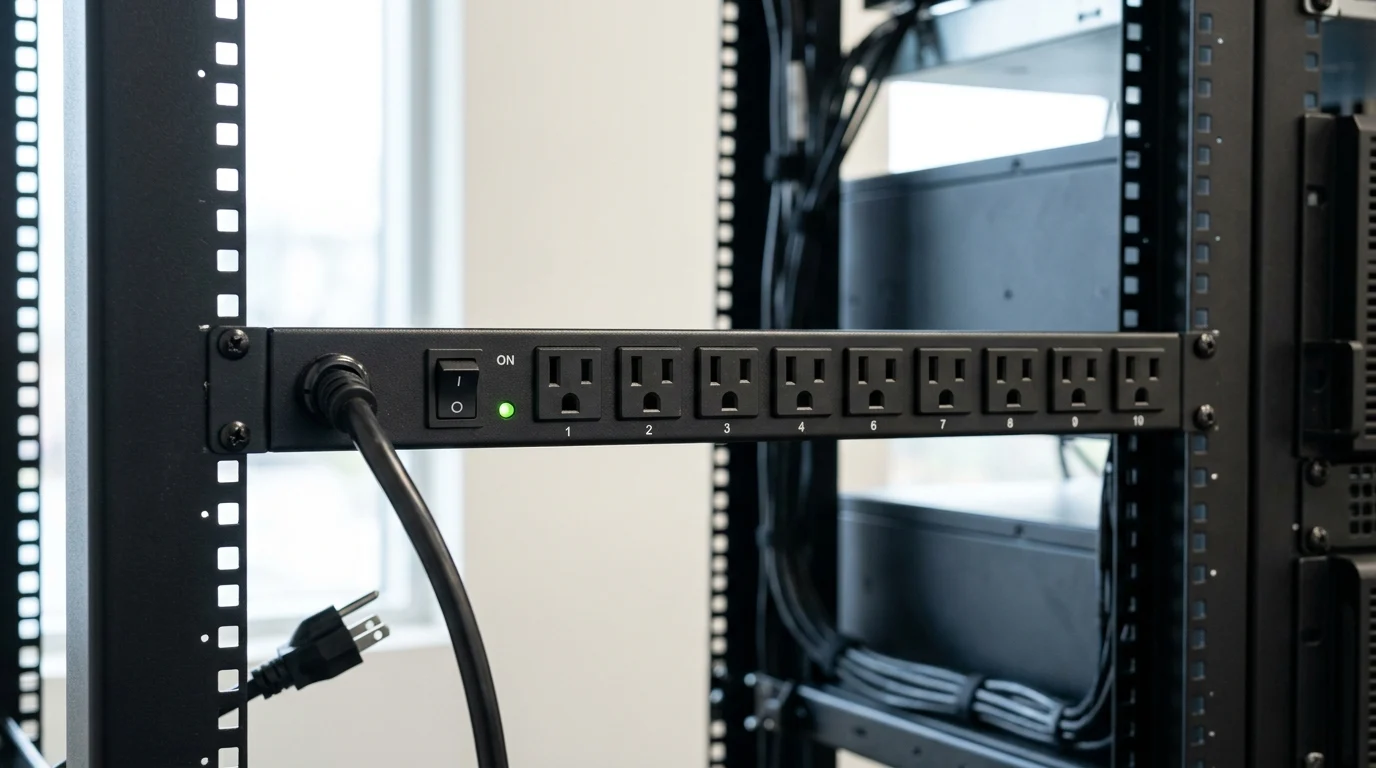
In data centers filled with intelligent, networked hardware, the simplest power components often deliver the most dependable results. Basic PDUs provide straightforward rack-level power distribution without the added cost, maintenance, or failure points that come with metering and remote management features. For operators building at scale, that simplicity can translate into higher reliability, faster deployment, and better budget allocation across entire facilities. This article explains where basic PDUs fit in modern data center design, why they remain a practical choice, and which operating environments benefit most from their no-frills approach.
Why Basic PDUs Still Matter
Walking through newly commissioned data center facilities reveals a massive push toward intelligent, network-connected infrastructure. However, sometimes you just need raw, uninterrupted Data Center Power. Basic PDUs remain the unsung heroes of the industry. They lack IP addresses, do not send SNMP traps, and never require firmware updates. This pure simplicity is exactly why they are still specified for a significant portion of modern infrastructure projects.
Key benefits in modern data centers
The biggest advantage of basic units is their uncompromising reliability. Because they lack internal logic boards, LCD touchscreens, and network interface cards, their Mean Time Between Failures (MTBF) frequently exceeds 100,000 hours. You are simply dealing with copper, breakers, and receptacles. Furthermore, they are incredibly cost-effective. While a switched or metered unit might cost $500 to $1,200 per vertical strip, a robust basic unit typically lands in the $50 to $150 range. That capital expenditure difference adds up massively when outfitting a 100-rack colocation hall, allowing budgets to be reallocated toward compute power or enhanced cooling.
Best-fit operating conditions
Basic PDUs are the perfect fit for environments where upstream systems already handle the heavy lifting. If a facility’s Uninterruptible Power Supply (UPS) or branch circuit monitoring system is already tracking power loads at the panel level, paying for granular rack-level metering is often redundant. They are also highly effective in high-heat edge deployments. Without sensitive microprocessors to protect, a solid basic unit can comfortably operate in ambient temperatures up to 60°C (140°F). This thermal resilience makes them ideal for dusty telecom closets, industrial factory floors, or high-density crypto mining setups where environmental conditions are harsh.
How to Evaluate a Basic PDU

Evaluating a Basic PDU for a new build requires looking beyond the plug count. Internal engineering dictates whether a rack stays online during a massive load spike or fails under pressure. Digging into the technical specifications is essential to understand the hardware’s capabilities and how it will handle specific workloads.
Specifications that affect capacity and uptime
The most critical specifications to check are amperage, voltage, circuit protection, and regulatory compliance. For instance, a standard 30A, 208V unit cannot pull 30 amps continuously. Per National Electrical Code (NEC) regulations, the breaker must be derated to 80%, providing 24A of continuous usable capacity—roughly 4.9kW per strip. Breaker quality is equally important; UL489 listed branch circuit breakers are vastly superior to cheaper supplementary protectors. Finally, verify that the unit passes UL 62368-1, the modern safety standard for IT equipment. Fully welded internal connections or heavy-duty brass busbars—rather than daisy-chained wiring—ensure the voltage drop across a 42-receptacle strip remains strictly under 1%.
Basic vs metered PDU comparison
To put things into perspective, weighing basic models against their metered counterparts helps visualize the trade-offs. Here is a quick breakdown of how they compare when budgeting a new deployment:
| Feature | Basic PDU | Metered PDU |
|---|---|---|
| Average Cost (30A/208V) | $150 – $250 | $600 – $900 |
| Cybersecurity Risk | Zero (Air-gapped) | Low to Medium (IP-based) |
| MTBF (Estimated) | > 100,000 hours | ~ 60,000 hours |
| Best Use Case | Upstream BMS monitoring | Granular rack billing |
If there is no need to bill a colocation tenant based on specific rack usage, the basic option wins on simplicity, security, and lifecycle longevity.
How to Choose and Deploy the Right Basic PDU

Installing the right Server Rack PDU requires planning and spatial awareness. Deployments are frequently bottlenecked when the wrong form factor is ordered or phase balancing is miscalculated. Here is a proven approach to sizing these units and integrating them seamlessly into server racks.
Selection criteria and sizing steps
First, calculate the total peak kW required by the rack’s hardware. For a high-density AI cluster drawing 15kW, a pair of single-phase 120V strips will not suffice. Upgrading to dual 3-phase 208V 30A units (providing about 8.6kW derated per feed) ensures true A/B redundancy. Next, map out receptacle needs. Aim for a strategic mix of C13 and C19 outlets, ideally leaving 20% of the receptacles open for future hardware expansion. For standard 42U and 48U cabinets, 0U vertical form factors are preferred to save precious horizontal U-space for revenue-generating compute servers.
Installation and risk reduction
During physical installation, risk reduction is the top priority. Color-coding Power Distribution feeds—such as red for the primary A feed and blue for the redundant B feed—prevents technicians from accidentally unplugging a live path during routine maintenance. Cable management is equally critical; strapping power cords tightly to the frame prevents them from blocking server exhaust fans, helping maintain strict delta-T cooling targets. Finally, using locking receptacles or retention clips is highly recommended. A standard C14 plug can easily vibrate loose over time due to server fan harmonics, but locking mechanisms require over 100 Newtons of retention force to pull out. This eliminates accidental disconnects and keeps uptime pristine.
Key Takeaways
- The most important conclusions and rationale for Basic PDU
- Specs, compliance, and risk checks worth validating before you commit
- Practical next steps and caveats readers can apply immediately
Frequently Asked Questions
When is a basic PDU better than a metered PDU?
Choose a basic PDU when your UPS or branch circuit monitoring already tracks load and you do not need per-rack billing or network features.
How much continuous load can a 30A, 208V basic PDU safely support?
For continuous loads, apply the 80% NEC rule: 30A becomes 24A usable, which is about 4.9kW per strip.
What should I check before buying a basic PDU from Newsunn?
Confirm amperage, voltage, plug/receptacle types, breaker quality, mounting form factor, and certifications such as UL 62368-1.
Are basic PDUs reliable in hot or harsh environments?
Yes. Without network cards or processors, basic PDUs are well suited for edge sites, telecom closets, and industrial areas, often handling ambient temperatures up to 60°C.
Why do basic PDUs help reduce data center costs?
They provide simple, dependable power distribution at a much lower unit cost, helping large deployments free budget for servers, cooling, or other infrastructure.
Post time: Apr-30-2026