

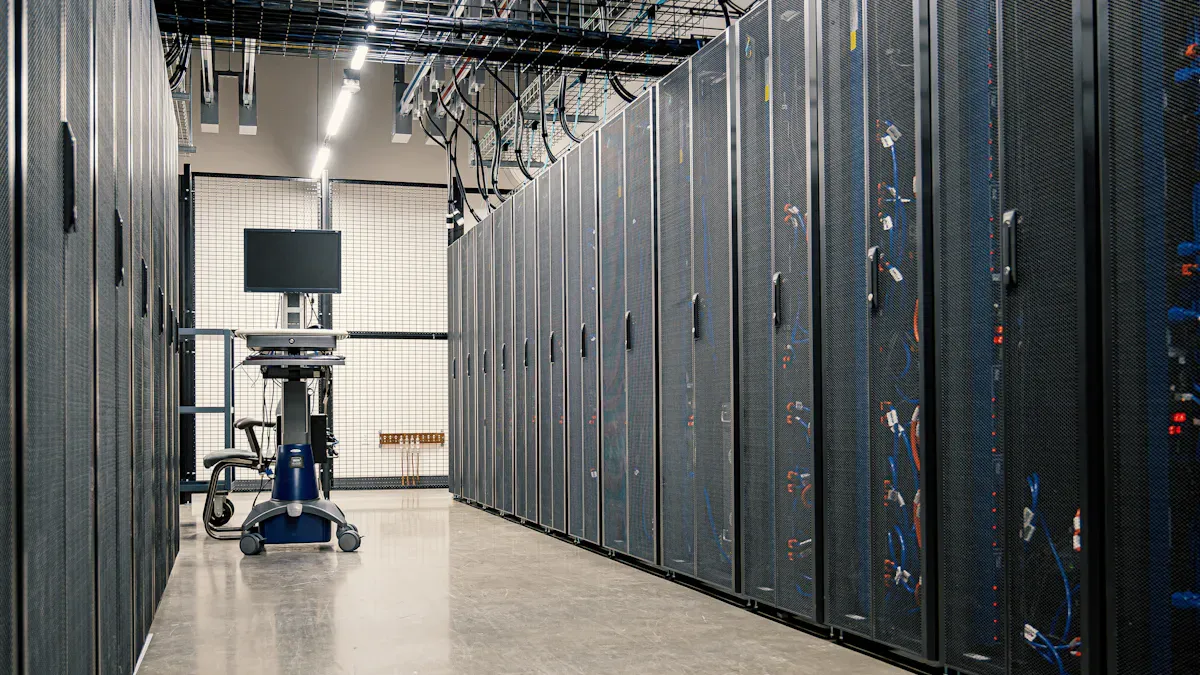
Selecting the right rack-mount Power Distribution Unit (PDU) is crucial for any data center. A well-chosen Power Distribution Unit can significantly impact overall efficiency. It ensures reliable power delivery, centralizes power management, and provides real-time monitoring. These features help identify inefficiencies, optimize energy usage, and prevent operational interruptions.
When considering a PDU, factors like power requirements and outlet types play a vital role. Understanding these elements ensures that the PDU meets the specific needs of your data center. Additionally, it’s important to consider the protocol data unit (PDU) in the context of network communications, particularly the protocol data unit OSI model, which helps in understanding data transmission. Ultimately, the right PDU not only enhances performance but also contributes to long-term energy savings, making it a Basic PDU for efficient operations.
Key Takeaways
- Choose a PDU that meets your total power load to avoid overload risks.
- Select the right outlet types based on your specific devices for optimal compatibility.
- Consider PDUs with Automatic Transfer Switch (ATS) for reliable backup power.
- Look for monitoring capabilities, including sensors for temperature and humidity, to maintain optimal conditions.
- Ensure surge protection features are included to safeguard your equipment from voltage spikes.
- Evaluate your budget to determine if basic, metered, or switched PDUs best fit your needs.
- Research vendor reputation and support to ensure quality products and assistance.
- Plan for future scalability by choosing PDUs that can adapt to increasing power demands.
What is a Rack-Mount PDU?
Definition and Purpose
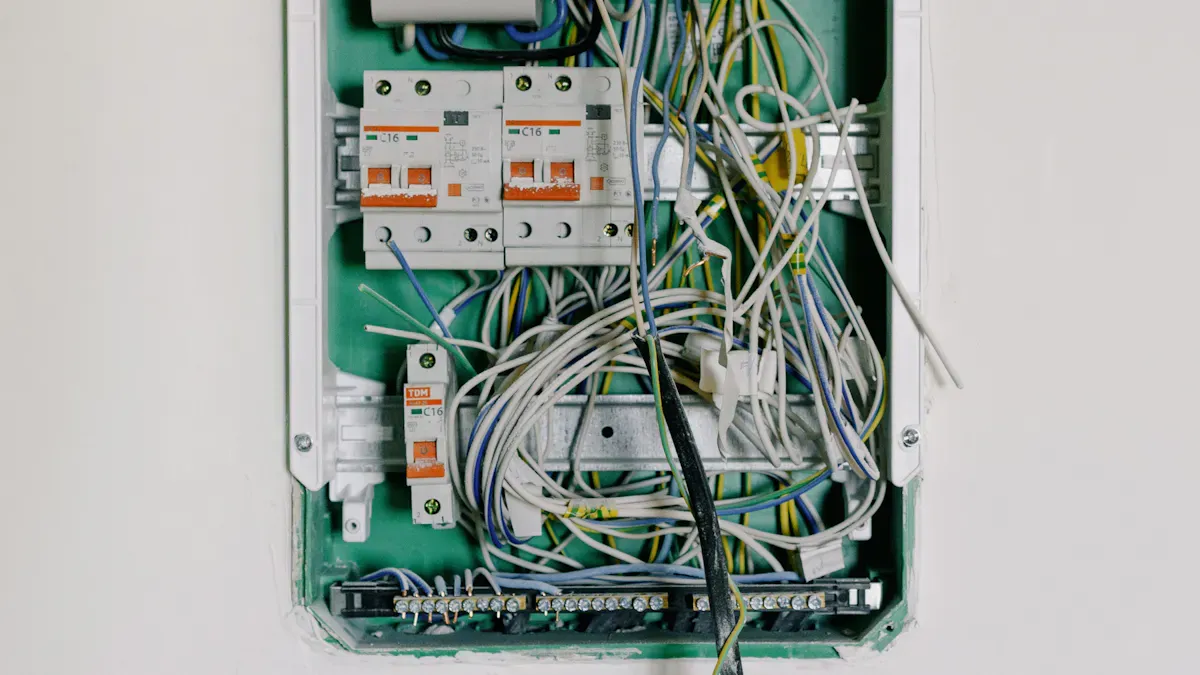
A rack-mount Power Distribution Unit (PDU) is a device designed to distribute electrical power to various IT equipment housed in a data center. It typically mounts directly into a server rack, providing a centralized point for power management. The primary purpose of a rack-mount PDU is to ensure that servers, switches, and other devices receive the necessary power to operate efficiently.
Role in Data Center Operations
In data center operations, a rack-mount PDU plays several critical roles. It not only distributes power but also enhances overall management and efficiency. Here’s a closer look at its primary functions:
| Function/Type | Description |
|---|---|
| Power Distribution | Controls and distributes power to IT equipment such as servers and networking devices. |
| Monitoring | Tracks power consumption data and provides metrics for better management of power usage. |
| Management | Allows for remote access and control of power consumption, enhancing decision-making capabilities. |
| Protection | Safeguards equipment from power abnormalities and helps minimize downtime. |
| Efficiency | Increases operational efficiency and reduces overall operating costs. |
By providing these functions, a rack-mount PDU contributes significantly to power management in data centers. It enables precise monitoring and control of power usage at the rack level, helping to balance load and optimize energy consumption. This capability leads to improved reliability, as redundant power sources ensure critical equipment remains powered during failures.
Moreover, the cost savings associated with using a rack-mount PDU are noteworthy. By reducing energy consumption and minimizing downtime risks, organizations can lower their operational costs. Additionally, these units come in various configurations, making them scalable to meet evolving data center needs.
Environmental monitoring features, such as sensors for temperature and humidity, also play a vital role. They help maintain optimal conditions, protecting sensitive equipment from potential damage.
Types of Rack-Mount PDUs

When it comes to rack-mount PDUs, understanding the different types available can help you make an informed decision. Each type serves unique purposes and offers various features tailored to specific needs. Let’s dive into the three main types: Basic PDUs, Smart PDUs, and Metered PDUs.
Basic PDUs
Basic PDUs are the workhorses of power distribution in data centers. They provide a straightforward solution for distributing electrical power to servers and networking equipment. These units typically come with a set number of outlets and do not include advanced features like monitoring or remote management.
Tip: Basic PDUs are ideal for environments where simplicity and reliability are key. They manage and distribute electrical power efficiently, ensuring that each device receives the necessary electricity for optimal operation. This centralized power management simplifies monitoring and control, which is crucial for effective resource allocation and troubleshooting.
Here’s a quick overview of Basic PDUs:
| Feature | Description |
|---|---|
| Power Distribution | Distributes power to multiple devices |
| Monitoring | No advanced monitoring capabilities |
| Remote Management | Not available |
| Typical Use Cases | Suitable for standard server racks and basic setups |
Smart PDUs
Smart PDUs take power distribution to the next level. They offer advanced monitoring capabilities, allowing data center managers to track power consumption at the outlet level. This feature helps identify inefficiencies and optimize energy allocation.
| Feature | Smart PDUs |
|---|---|
| Advanced Monitoring | Yes (outlet-level data, environmental sensors) |
| Remote Management | Yes (control from any location) |
| Power Sequencing | Yes |
| Integration with DCIM Systems | Yes |
| Energy Efficiency | Up to 30% savings |
| Downtime Reduction | 15% reduction |
Smart PDUs are particularly beneficial for larger data centers where power management is critical. They allow for real-time monitoring and control, which can lead to significant energy savings and reduced downtime.
Metered PDUs
Metered PDUs provide another layer of monitoring by displaying real-time energy consumption data. This feature allows data center operators to track power usage trends and make informed decisions about energy allocation.
| Evidence Description | Source |
|---|---|
| Metered PDUs enable real-time monitoring of power consumption, helping to identify inefficiencies and optimize energy allocation. | Maximizing Efficiency: The Role of PDUs in Large Data Center Power Distribution |
| These units provide built-in meters that display real-time energy consumption data, allowing tracking of power usage trends. | Top Tips for Picking the Right PDU for Your Server Rack |
| Metered PDUs allow for real-time load monitoring, helping to balance loads and prevent overloads at the rack level. | Comparing PDUs with Power Monitoring Features for Data Centers |
Switched PDUs
Switched PDUs offer a powerful solution for managing power distribution in data centers. These units allow operators to control power to individual devices remotely, making them an excellent choice for environments that require flexibility and efficiency. With switched PDUs, IT administrators can turn devices on or off, reboot servers, and implement power cycling—all from a centralized interface.
One of the standout features of switched PDUs is their ability to enhance operational efficiency. By reducing downtime during maintenance and device failures, these units help keep data centers running smoothly. Imagine being able to address power issues without needing to physically access the equipment. This capability not only saves time but also minimizes disruptions to operations.
Here’s a quick look at some of the key advantages of using switched PDUs:
| Advantage | Description |
|---|---|
| Remote Management | Operators can turn devices on/off, reboot servers, and implement power cycling remotely. |
| Increased Efficiency | Reduces downtime from maintenance and device failures, enhancing overall operational efficiency. |
| Energy Monitoring | Real-time monitoring helps identify energy wastage, potentially reducing energy use by 20%. |
| Operational Resiliency | Alerts and logs events, allowing IT administrators to address issues proactively. |
| Cost Savings in Edge Computing | Reduces the need for on-site personnel, leading to lower operational costs and travel downtime. |
Switched PDUs also provide real-time energy monitoring, which is crucial for identifying inefficiencies. By tracking energy consumption, data center managers can make informed decisions that lead to significant cost savings. In fact, many organizations report a reduction in energy use by up to 20% after implementing switched PDUs.
In addition to these benefits, switched PDUs enhance operational resiliency. They come equipped with alert systems that notify administrators of any irregularities. This proactive approach allows teams to address potential issues before they escalate, ensuring that critical systems remain operational.
Overall, switched PDUs represent a smart investment for data centers looking to improve power management. Their combination of remote control, monitoring capabilities, and efficiency enhancements makes them a valuable addition to any IT infrastructure.
Key Considerations for Selection
When selecting a rack-mount Power Distribution Unit (PDU), several key factors come into play. Understanding these considerations can help ensure that you choose the right unit for your data center’s needs.
Power Requirements
Power requirements are fundamental when choosing a rack-mount PDU. You need to assess the total power consumption of your equipment and ensure that the PDU can handle it. Here are some important aspects to consider:
| Feature | Description |
|---|---|
| Power Distribution Options | Ranges from 2kW-6kW per cabinet, available in single-phase and 3-phase configurations. |
| Input Current Monitoring | LEDs display current per phase to prevent overloads and assist in load balancing. |
| Temperature/Humidity Monitoring | Supports external probes for monitoring environmental conditions, crucial for equipment safety. |
| Branch Current Monitoring | Monitors current at each breaker branch, providing alerts on high usage to prevent tripped circuits. |
| High-Density Outlet Technology | Offers the highest outlet density, meeting IEC specifications for efficient power distribution. |
| Alternating-Phase Outlets | Simplifies load balancing and improves airflow by alternating power distribution per outlet. |
Most enterprise data centers commonly operate at 208/240V, but a new trend is emerging towards 400V input. This shift reflects the growing demand for higher efficiency and power density in modern data centers.
Outlet Types
The type of outlets on your PDU can significantly affect compatibility with your data center equipment. Different devices require different outlet types, so it’s essential to choose a PDU that meets these needs. Here’s a quick overview of common outlet types:
| Outlet Type | Description | Rated Capacity |
|---|---|---|
| C13 | Suitable for most servers and network devices | 10A/16A |
| C19 | Used for higher-power devices such as high-end servers, UPS | Above 16A |
Choosing a PDU with versatile outlet types can enhance flexibility in your deployment. For instance, eConnect® PDUs with QuadLock Outlets support multiple outlet types (C13, C15, C19, C21) within a single unit. This design eliminates the need for adapters, making it easier to power a variety of devices while keeping everything organized.
Installation Options
Installation options also play a crucial role in how effectively a PDU integrates into your data center. The mounting type can impact airflow, accessibility, and overall deployment strategy. Here’s a comparison of common installation options:
| Mounting Type | Rack Space Usage | Outlet Capacity |
|---|---|---|
| Vertical PDU | Zero-U (side mounting) | High (often 20+ outlets) |
| Horizontal PDU | 1U or 2U (rack frame) | Moderate (6 to 16 outlets) |
Vertical mounting enhances airflow and is ideal for high-density environments. On the other hand, horizontal mounting is better suited for smaller racks, allowing for easier maintenance access. These factors significantly influence deployment strategies in data centers.
Managing high-density data centers can be challenging due to the increased power, cooling, and cabling requirements. It’s essential to verify that racks and IT equipment are compatible by checking dimensions and reviewing the data center layout before making any purchases.
Features to Look For
Monitoring Capabilities
When selecting a rack-mount Power Distribution Unit, monitoring capabilities are crucial. They allow data center managers to keep an eye on power usage and environmental conditions. Remote management features enhance operational efficiency by enabling real-time monitoring and control. This means operators can reboot devices, cycle power, and receive alerts without being physically present.
Maintaining optimal environmental conditions is crucial for the longevity and performance of your equipment. Managed Rack PDUs with integrated environmental monitoring features provide a proactive approach to managing these conditions.
Additionally, data analytics and reporting are essential components of effective power management. Advanced PDUs offer detailed reports on power usage and environmental conditions, helping teams make informed decisions.
Surge Protection
Surge protection is another vital feature to consider. It safeguards sensitive equipment from voltage spikes that can cause damage. A robust surge protection system typically includes several mechanisms:
| Protection Mechanism | Function |
|---|---|
| MOV/TFMOV Modules | Absorb transient overvoltages and clamp outlet voltage to safe levels. |
| TVS Diodes | Provide rapid response to residual transients, clamping voltage to protect sensitive components. |
| Multistage Design | Combines high-energy surge absorption at the entry with fine protection for critical components. |
These features work together to ensure that your data center equipment remains safe from unexpected power surges, which can lead to costly downtime and repairs.
Energy Efficiency
Energy efficiency is a growing concern for data centers. Selecting a PDU that meets energy efficiency standards can lead to significant cost savings. Here are some key metrics to consider:
| Metric/Certification | Description |
|---|---|
| Power Usage Effectiveness (PUE) | A key efficiency metric for data centers; lower values indicate higher efficiency. |
| Energy Star Ratings | A standard for energy efficiency that allows organizations to compare their performance to norms. |
| LEED Certification Metrics | Metrics used to monitor sustainability and energy efficiency for LEED certification. |
Choosing a PDU that aligns with these standards not only helps reduce energy costs but also supports sustainability efforts. By investing in energy-efficient solutions, data centers can contribute to a greener future while optimizing their operations.
Build Quality and Durability
When selecting a rack-mount PDU, build quality and durability are essential factors to consider. A robust PDU can withstand the demanding conditions of a data center, ensuring reliable performance over time. Here’s what to look for:
- Materials: The chassis of a PDU should be made from durable materials like steel or aluminum. These materials provide excellent protection against physical damage. They help the unit resist wear and tear, which is crucial in busy environments where equipment is frequently accessed.
- Internal Wiring: High-quality internal wiring enhances the long-term reliability of the PDU. Poor wiring can lead to overheating and failures, which can disrupt operations. Investing in a PDU with superior wiring ensures that it can handle the power loads without compromising safety.
- Outlet Receptacles: The design of the outlet receptacles also plays a significant role in durability. Robust receptacles can withstand the frequent plugging and unplugging of devices. This feature is particularly important in data centers where equipment is often changed or upgraded.
Tip: Always check the specifications of the PDU to ensure it meets the durability standards required for your data center. A well-constructed PDU not only protects your equipment but also minimizes downtime and maintenance costs.
In addition to these features, consider the overall design of the PDU. A well-designed unit will have adequate ventilation to prevent overheating. Proper airflow helps maintain optimal operating temperatures, which is vital for the longevity of both the PDU and the connected equipment.
Another aspect to consider is the warranty offered by the manufacturer. A longer warranty period often indicates confidence in the product’s durability. It also provides peace of mind, knowing that you’re covered in case of unexpected failures.
Ultimately, investing in a high-quality rack-mount PDU pays off in the long run. It reduces the risk of equipment damage and operational disruptions. By focusing on build quality and durability, data center managers can ensure that their power distribution solutions remain reliable and efficient for years to come.
Choosing a PDU that combines these elements will help create a stable and efficient data center environment. Remember, the right PDU is not just about power distribution; it’s about ensuring that your entire infrastructure runs smoothly and effectively.
Making the Final Decision
Budget Considerations
When it comes to selecting a rack-mount Power Distribution Unit, budget constraints play a significant role. Organizations should evaluate their financial limits to determine whether to opt for basic, metered, or switched models. Basic PDUs offer a cost-effective solution for straightforward power distribution. They work well in less critical environments where advanced features aren’t necessary. However, if your data center requires better management capabilities, investing in metered or switched PDUs might be worthwhile.
Tip: Always assess the total power load and the number of outlets needed. This evaluation helps decide if the additional features of managed PDUs justify their higher cost. For example, while basic PDUs are reliable, managed PDUs provide real-time monitoring and remote management, which can be essential for maintaining uptime and troubleshooting.
Vendor Reputation and Support
Choosing a reputable vendor is crucial when selecting a rack-mount PDU. A reliable vendor not only provides quality products but also offers excellent customer support. Look for vendors with a proven track record in the industry. Check customer reviews and testimonials to gauge their reliability.
Here are some factors to consider when evaluating vendors:
- Warranty and Support: A solid warranty indicates confidence in the product. Good customer support ensures you can get help when needed.
- Product Range: A vendor with a diverse product range can offer solutions tailored to your specific needs.
- Technical Expertise: Vendors with knowledgeable staff can provide valuable insights and recommendations.
Future Scalability
As data centers grow, scalability becomes essential. When choosing a rack-mount PDU, consider how it will adapt to future needs. Here are some key points to keep in mind:
- Assess total power requirements for all IT equipment and cooling systems.
- Plan for redundancy needs to maintain uptime, such as N+1 configurations.
- Choose between single-phase and three-phase units for efficiency and scalability.
Additionally, ensure the PDU can adapt to increasing power demands as server technology evolves. Investing in customizable PDUs can accommodate future equipment needs and reduce the frequency of upgrades. Custom PDUs are projected to grow at 23.8% through 2028, highlighting the trend toward flexibility in power distribution.
By considering these factors, organizations can make informed decisions that align with their current and future data center needs.
Choosing the right rack-mount Power Distribution Unit is essential for optimizing your data center’s performance. Here are some key factors to remember:
- Power capacity: Ensure the PDU can handle your total load without risk of overload.
- Outlet types: Select the right outlets based on your devices.
- Redundancy: Look for PDUs with Automatic Transfer Switch (ATS) for backup power.
- Monitoring capabilities: Opt for units with sensors for temperature and humidity.
- Surge protection: Protect your equipment from voltage spikes with circuit breakers.
Before making a purchase, assess your specific data center needs. Consider your power requirements, available rack space, and the number of outlets needed. This careful evaluation will help you select a PDU that meets both current and future demands.
FAQ
What is a rack-mount PDU?
A rack-mount PDU distributes electrical power to IT equipment in a data center. It mounts directly into server racks, providing a centralized point for power management.
How do I determine my power requirements?
Calculate the total wattage of all devices in your rack. Ensure the PDU can handle this load, considering both peak and continuous power needs.
What are the benefits of smart PDUs?
Smart PDUs offer advanced monitoring and remote management capabilities. They help optimize energy usage, reduce downtime, and provide real-time data on power consumption.
Can I use a basic PDU in a high-density environment?
Yes, but it may not provide the monitoring and management features needed for high-density setups. Consider smart or metered PDUs for better efficiency and control.
How do I install a rack-mount PDU?
Installation typically involves mounting the PDU in a rack and connecting it to a power source. Follow the manufacturer’s instructions for specific steps and safety precautions.
What is surge protection, and why is it important?
Surge protection safeguards equipment from voltage spikes. It prevents damage from power surges, which can lead to costly repairs and downtime.
How can I ensure my PDU is energy efficient?
Look for PDUs with energy efficiency certifications like Energy Star. Features such as monitoring capabilities and load balancing also contribute to energy savings.
What should I consider for future scalability?
Choose a PDU that supports your current power needs and allows for future expansion. Look for models that can handle increased loads and additional outlets.
Post time: Mar-12-2026