

Introduction
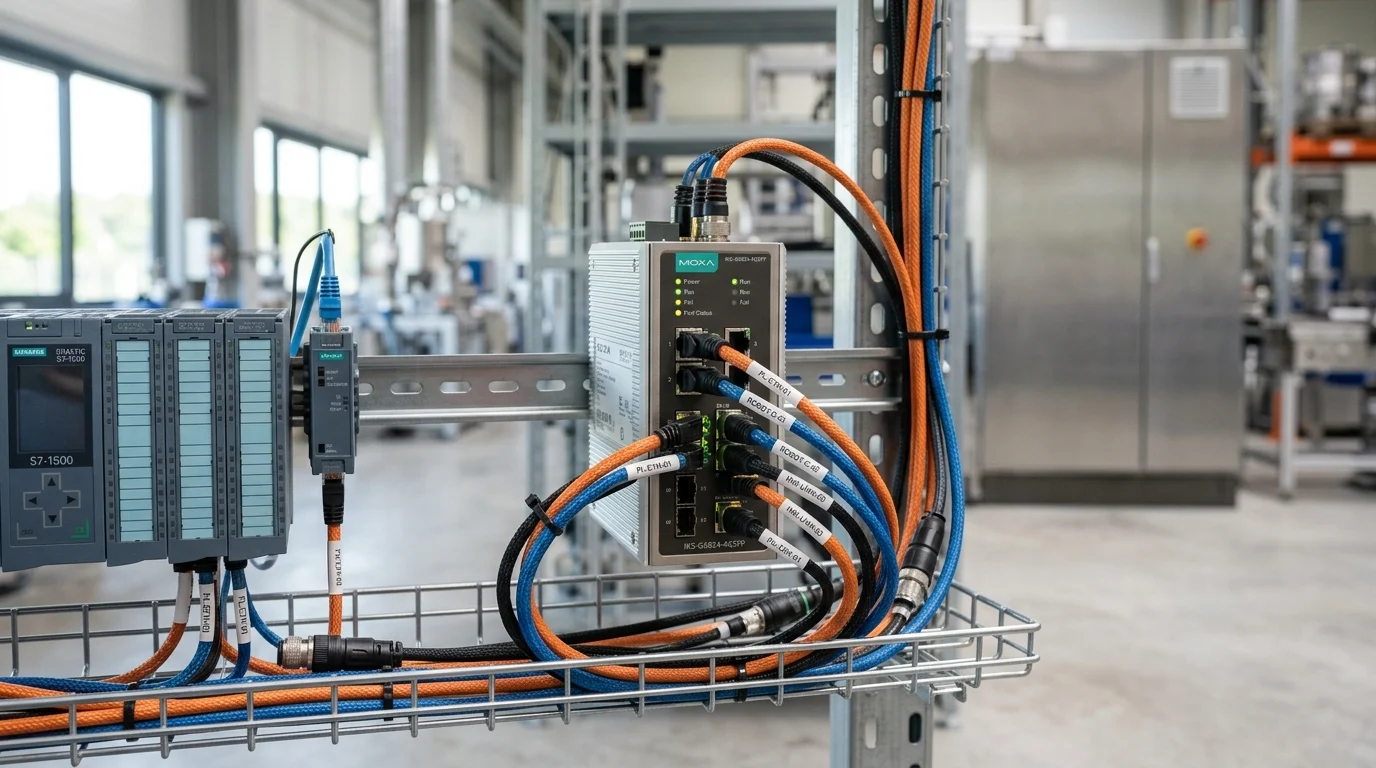
As industrial networks expand across factories, substations, and transport systems, the physical layer must connect legacy copper devices to high-speed fiber without compromising uptime. This introduction explains why robust media converters have become essential in operational environments where vibration, temperature swings, electromagnetic interference, and long transmission distances can quickly expose the limits of standard networking hardware. You will see how hardened conversion equipment supports reliable data flow, extends network reach, and helps integrate older assets into modern Industrial Ethernet and IIoT architectures, setting up a closer look at the technical and operational factors that shape deployment decisions.
Why Robust Media Converters Matter in Modern Industrial Networks
Industrial networks function as the central nervous system of modern manufacturing, energy distribution, and transportation infrastructure. As the Industrial Internet of Things (IIoT) expands, the physical layer of these networks faces unprecedented strain. Facilities are generating massive volumes of data that must be transmitted across sprawling campuses, requiring physical infrastructure that can bridge disparate networking mediums without introducing latency or vulnerabilities.
Media converters serve as critical transitional nodes in this architecture, translating electrical signals from copper Ethernet cables into optical signals for fiber optic transmission. In climate-controlled enterprise environments, this conversion is a straightforward process. However, operational technology (OT) environments introduce severe physical and electrical challenges that render commercial-grade networking equipment unsuitable. The deployment of robust, hardened media converters is no longer an optional upgrade; it is a fundamental requirement for maintaining continuous, reliable workflows in demanding industrial sectors.
How uptime, legacy integration, and fiber expansion increase demand
The integration of legacy equipment represents a primary driver for industrial media converter adoption. Many manufacturing facilities operate Programmable Logic Controllers (PLCs), remote I/O modules, and motor drives equipped exclusively with 10/100Base-TX RJ45 copper ports. Replacing these durable, highly functional legacy systems is often cost-prohibitive and disruptive. Instead, network engineers utilize media converters to seamlessly interface these legacy devices with modern 1000Base-X Gigabit fiber backbones, ensuring that critical control data reaches modern Supervisory Control and Data Acquisition (SCADA) systems.
Furthermore, standard Category 5e or Category 6 copper cabling suffers from a strict distance limitation of 100 meters. By converting the electrical signal to fiber optics, industrial networks can extend transmission distances up to 2 kilometers using multimode fiber, or up to 120 kilometers using single-mode fiber. This expansion is essential for sprawling facilities, such as oil refineries, intelligent transportation systems, or utility-scale solar farms. In these applications, data must travel vast distances back to a central control center without experiencing electromagnetic degradation. To achieve the 99.999% uptime required by critical infrastructure, these transitional nodes must operate flawlessly, guaranteeing that mission-critical packets are neither delayed nor dropped.
Which harsh-environment risks make standard Ethernet converters fail
Deploying standard, commercial-grade Ethernet converters in harsh environments guarantees premature network failure. Commercial converters are typically engineered for indoor, climate-controlled operations with ambient temperatures remaining strictly between 0°C and 40°C. In stark contrast, industrial network enclosures on factory floors, inside traffic control cabinets, or in outdoor substations frequently experience extreme temperature fluctuations ranging from -40°C to 85°C. When a commercial converter is subjected to these extremes, its internal components degrade rapidly, leading to thermal shutdown, clock synchronization errors, or permanent silicon failure.
Beyond extreme temperatures, industrial settings are rife with high-amplitude vibration and severe Electromagnetic Interference (EMI). Large induction motors, variable frequency drives, and heavy welding equipment generate intense electromagnetic noise that induces voltage spikes on copper lines, corrupting data packets and causing ground loops. Robust industrial media converters mitigate these risks through hardened components, fanless thermal dissipation designs, and heavy-duty metal enclosures that provide superior shielding and galvanic isolation. Consequently, an industrial-grade converter often boasts a Mean Time Between Failures (MTBF) exceeding 500,000 hours, whereas a standard unit placed in the same hostile environment might suffer catastrophic failure within its first 10,000 hours of operation.
How to Choose the Right Media Converter
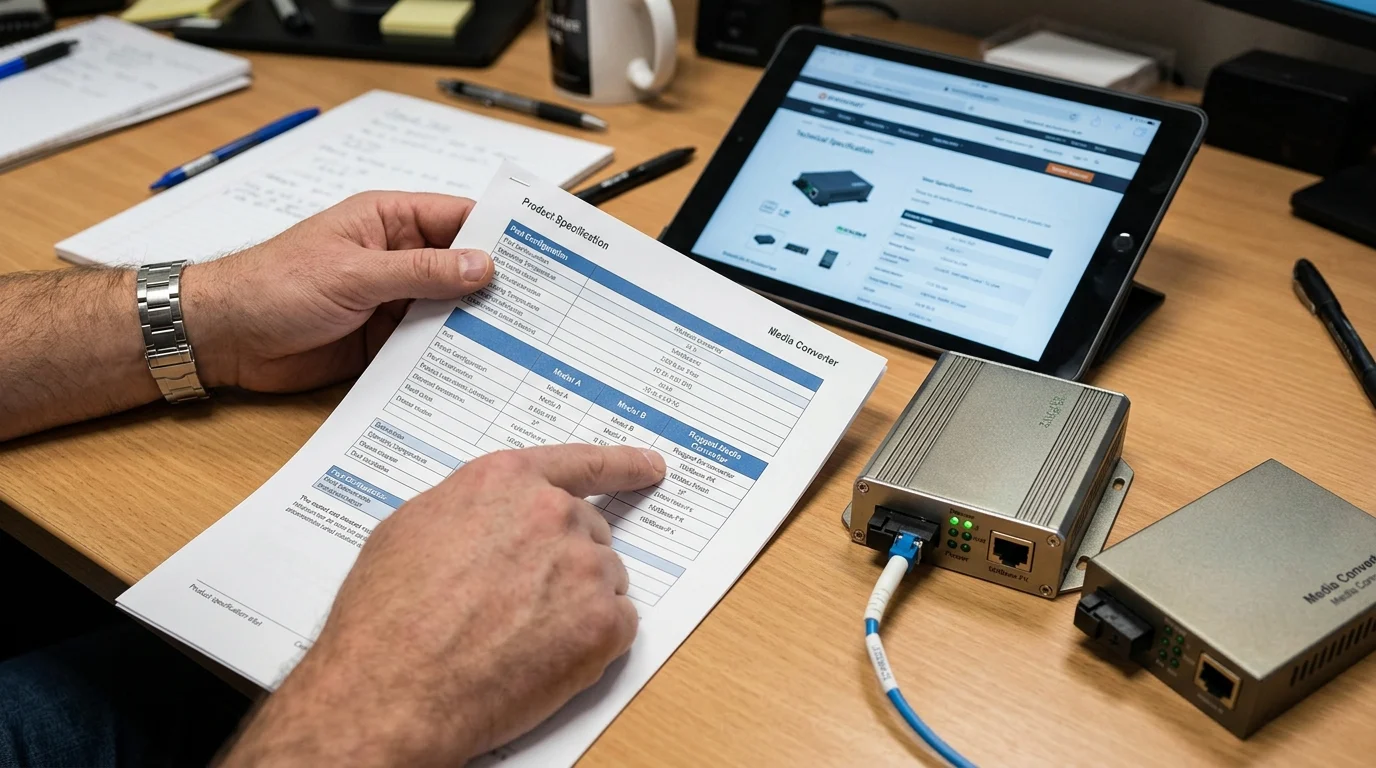
Selecting the appropriate media converter requires network architects to evaluate a complex matrix of physical layer specifications, protocol support, and environmental ratings. The decision-making process extends far beyond identifying matching connector types; it involves aligning the device’s capabilities with the specific bandwidth, distance, and management requirements of the industrial application.
A precise evaluation of both hardware resilience and network intelligence ensures that the selected converters will function reliably within the broader network topology. By carefully matching specifications to operational demands, engineers can prevent bottlenecks, ensure seamless integration with industrial protocols like PROFINET or Modbus TCP, and lay the groundwork for future network scalability.
Which technical specifications matter most in industrial settings
Technical specifications in industrial settings prioritize resilience, power redundancy, and advanced diagnostic capabilities. One critical feature is Link Fault Pass-Through (LFPT). In a standard converter, if the copper link drops, the fiber link often remains active, causing upstream switches to continuously forward data into a void. LFPT forces the fiber port to drop its link state if the copper connection fails, immediately alerting the management system to the localized fault and allowing spanning tree protocols to rapidly reroute traffic. Power redundancy is equally critical; industrial converters typically feature dual DC power inputs (e.g., 12 to 48 VDC) connected to separate power supply units to ensure continuous operation if one power source fails.
Additionally, Power over Ethernet (PoE) capabilities are increasingly vital for powering edge devices. Modern industrial converters often support IEEE 802.3at (PoE+) delivering up to 30W, or IEEE 802.3bt delivering up to 90W per port, eliminating the need to run independent power lines to remote IP cameras, wireless access points, or IIoT sensors.
| Specification Category | Commercial Media Converter | Industrial Media Converter |
|---|---|---|
| Operating Temperature | 0°C to 40°C | -40°C to 75°C (up to 85°C) |
| Power Input Architecture | Single AC Wall Adapter | Dual Redundant DC Terminal Blocks |
| Electrostatic Discharge (ESD) | 2kV to 4kV Protection | 6kV Contact / 8kV Air Protection |
| Enclosure & Mounting | Plastic/Light Metal (Desktop) | Hardened IP30/IP40 Metal (DIN-Rail) |
| Expected MTBF | ~100,000 hours | > 500,000 hours |
How managed vs. unmanaged and copper-to-fiber vs. fiber-to-fiber options compare
The choice between managed and unmanaged converters dictates the level of visibility network administrators will maintain over the edge infrastructure. Unmanaged converters act as simple plug-and-play bridges, offering a lower-cost solution for straightforward point-to-point links where remote troubleshooting is not strictly required. Managed converters, however, support Simple Network Management Protocol (SNMP), web-based graphical user interfaces, and 802.1Q VLAN tagging. These features allow administrators to monitor optical power levels, track port statistics, and segment traffic securely. While managed units typically command a 30% to 50% price premium, the ability to diagnose a degrading optical signal remotely before it causes a hard outage often justifies the initial investment.
Furthermore, engineers must evaluate copper-to-fiber versus fiber-to-fiber conversion architectures. Copper-to-fiber (typically 10/100/1000Base-T to SFP) remains the standard for connecting localized end-devices to the optical backbone. Conversely, fiber-to-fiber converters are utilized to bridge multimode fiber networks with single-mode fiber trunks, extending reach significantly. They are also used to perform wavelength conversion (e.g., shifting a 1310nm signal to 1550nm) to integrate legacy hardware with Dense Wavelength-Division Multiplexing (DWDM) systems. Advanced deployments may also utilize Bi-Directional (BiDi) transceivers, which transmit and receive over a single strand of fiber using distinct wavelengths (e.g., 1310nm TX / 1550nm RX), effectively doubling the capacity of existing fiber infrastructure without laying new cables.
How Reliability, Compliance, and Lifecycle Cost Affect Selection
The long-term viability of an industrial network depends heavily on the rigorous compliance standards and the comprehensive financial modeling applied during the procurement phase. Network architects must look beyond the initial purchase price and evaluate how a media converter’s proven reliability metrics and regulatory certifications impact the broader ecosystem.
In mission-critical environments, the cost of an unexpected network failure exponentially outweighs the capital expenditure of the hardware itself. Understanding specific industry certifications and calculating the true lifecycle costs enables organizations to transition from reactive maintenance to proactive network management.
Which industrial certifications and EMC or ingress requirements matter
Industrial certifications serve as verifiable proof that a media converter can withstand specific, rigorously tested environmental hazards. For substation automation and smart grid applications, devices must comply with IEC 61850-3 and IEEE 1613 standards, which mandate extreme immunity to electromagnetic interference and guarantee zero packet loss during massive electrical surges. In railway and rolling stock applications, EN 50155 certification is mandatory, dictating stringent resistance to continuous shock, vibration, humidity, and rapid temperature fluctuations. For hazardous environments, such as petrochemical refineries or mining operations, converters must carry ATEX Zone 2 or Class I, Division 2 (C1D2) ratings, certifying that under normal operating conditions, the device will not ignite explosive atmospheric gases.
Furthermore, Ingress Protection (IP) ratings dictate the device’s physical survivability against particulates and moisture. While an IP30 or IP40-rated metal housing is generally sufficient for installation inside a sealed control cabinet, applications exposed directly to dust and water demand IP67-rated enclosures equipped with ruggedized M12 industrial connectors instead of standard RJ45 ports. Electromagnetic Compatibility (EMC) is heavily scrutinized against the IEC 61000-4 series; industrial converters must typically achieve Level 3 or Level 4 immunity. This ensures they can safely absorb electrostatic discharges of up to 8kV (air) or 6kV (contact), as well as fast electrical transients, without rebooting or dropping the network link.
How to evaluate total cost of ownership over the device lifecycle
Evaluating the Total Cost of Ownership (TCO) over a device’s lifecycle requires a comprehensive analysis of both Capital Expenditures (CapEx) and Operational Expenditures (OpEx). An unmanaged, commercial-grade media converter might carry an initial cost of just $50, whereas a hardened, fully managed industrial media converter may cost between $300 and $600. However, the true cost lies in operational continuity and maintenance overhead. In a high-volume automotive manufacturing plant, a single hour of network downtime caused by a failed commercial converter can easily result in $20,000 to $50,000 in lost production and idle labor.
The TCO model must heavily factor in the Mean Time To Repair (MTTR) and the cost of physical dispatch. Managed industrial converters lower MTTR by providing remote diagnostics, allowing engineers to pinpoint whether a fault lies in the copper link, the optical transceiver, or the power supply before rolling a truck. Dispatching a technician to a remote wind turbine or offshore platform can cost upwards of $1,000 per visit. Over a standard 5-to-10-year industrial lifecycle, the reduced maintenance overhead, longer replacement intervals, and minimized downtime of industrial converters yield a significantly lower TCO compared to their cheaper commercial counterparts.
| Cost Category (5-Year Projection) | Standard Commercial Converter | Managed Industrial Converter |
|---|---|---|
| Initial Hardware Cost (CapEx) | $50 | $450 |
| Expected Replacement Cost | $150 (Replaced 3 times due to failure) | $0 (Operates through full lifecycle) |
| Estimated Downtime Impact | $25,000 (Based on 2 localized outages) | $0 (Preventative monitoring avoids outages) |
| Remote Diagnostic Savings | $0 (Requires physical inspection) | -$2,000 (Eliminates unnecessary truck rolls) |
| Total Estimated 5-Year TCO | $25,200 | $450 |
How to Deploy and Source Media Converters Effectively
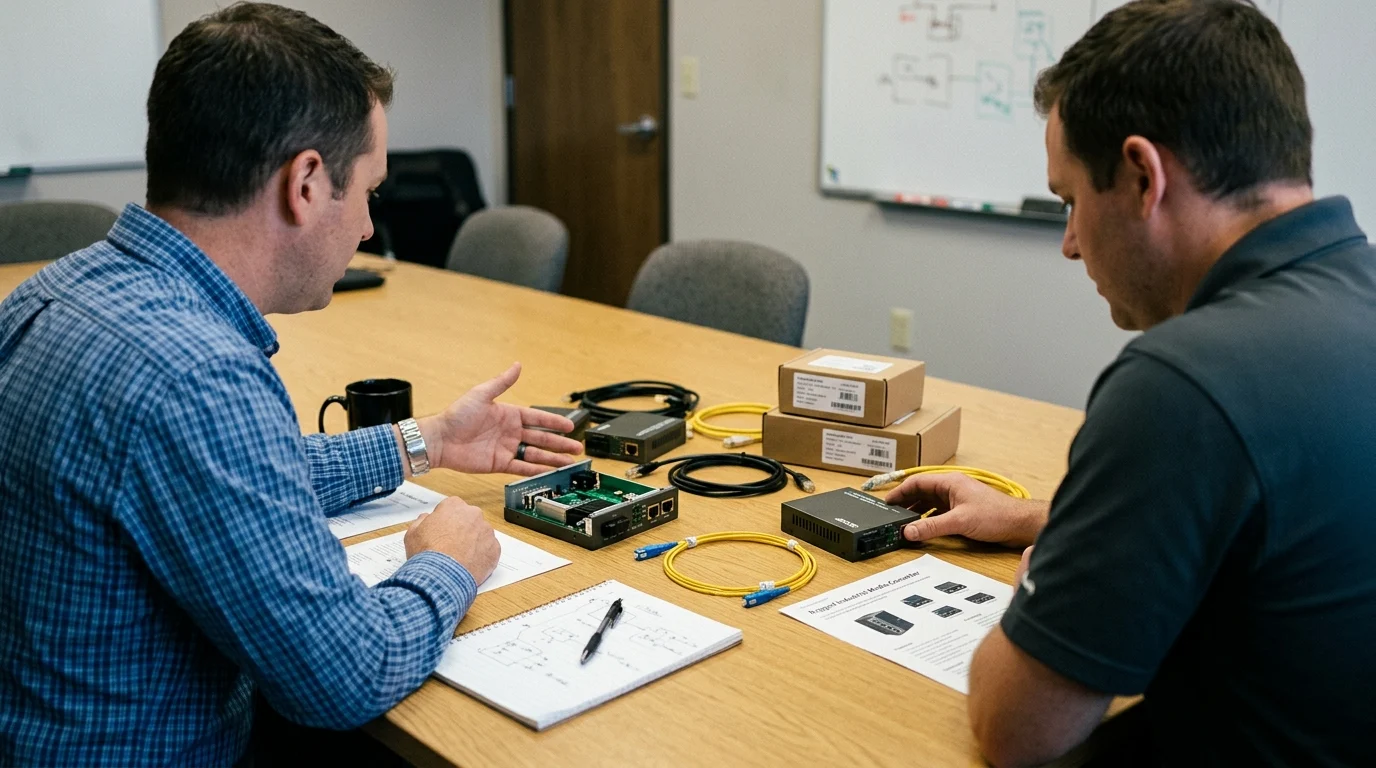
Procuring the correct hardware represents only half the challenge; executing a flawless physical deployment and establishing a resilient supply chain complete the industrial network lifecycle. Without rigorous installation protocols and strategic vendor partnerships, even the highest-rated media converters can become unexpected points of failure.
Network administrators must adopt systematic approaches to hardware installation, vendor evaluation, and error prevention. By standardizing deployment methodologies and avoiding common physical layer mistakes, organizations can ensure that their media converters deliver the maximum possible reliability and performance.
What deployment steps improve industrial network performance
Deployment methodologies directly impact the thermal and electrical stability of industrial networks. When mounting media converters on DIN-rails inside crowded control cabinets, technicians must strictly adhere to the manufacturer’s thermal dissipation spacing guidelines. Fanless industrial designs rely heavily on convective cooling, often requiring at least 20mm of vertical and horizontal clearance around the unit to prevent localized heat pooling. Proper grounding is equally non-negotiable; securing the dedicated grounding wire to a centralized earth busbar is required to safely dissipate the 6kV to 8kV electrostatic discharges common in factory environments, protecting both the converter and connected PLCs.
Furthermore, network administrators must correctly configure hardware dip switches during the physical installation phase. Enabling functions like Link Fault Pass-Through (LFPT) and Far End Fault (FEF) via these physical switches is a critical step. When properly configured, these features ensure that downstream programmable logic controllers are immediately notified of upstream link losses, allowing network failover mechanisms and redundant ring topologies to activate within milliseconds, thereby preserving overall network integrity.
How to compare vendors, channels, and support models
Strategic sourcing of industrial media converters requires evaluating vendors across multiple logistical and support dimensions. Lead times are a critical metric; procurement teams must compare vendors offering standard 2-week turnarounds against those requiring 12-week to 16-week lead times and high Minimum Order Quantities (MOQs) for specialized units. Supply chain resilience can be significantly bolstered by selecting channel partners or distributors who maintain domestic buffer stock of critical SKUs, ensuring rapid availability of replacement parts during emergency expansions or unforeseen failures.
Warranty structures and software support also differentiate tier-one industrial vendors from budget manufacturers. A standard industrial expectation is a robust 5-year warranty, though premium vendors often provide lifetime warranties for passive hardware components and extended coverage for active electronics. Additionally, buyers must assess the vendor’s firmware update policy for managed converters. Access to timely, localized technical support and regular security patches for the web GUI or SNMP agents is essential to protect the network from emerging cybersecurity threats targeting critical operational technology environments.
Which implementation mistakes most often undermine network reliability
Implementation errors frequently undermine the theoretical reliability of newly deployed media converters. One of the most common mistakes is optical transceiver mismatch. Installing a 1310nm Single-Mode Small Form-factor Pluggable (SFP) module on one end of a link and an 850nm Multimode SFP on the other will result in a complete failure to establish an optical link. Similarly, failing to calculate the optical power budget can lead to catastrophic receiver saturation. If a long-haul SFP rated for 40 kilometers is connected to a device only 10 meters away without an inline optical attenuator, the high transmit power can permanently burn out the receiving diode.
On the physical layer, poor optical hygiene and cable management routinely cause intermittent outages. Ignoring the minimum bend radius of fiber optic cables inside the control cabinet causes microbends, which introduce severe insertion loss and lead to dropped packets. Furthermore, failing to inspect and clean fiber end-faces before insertion remains a leading cause of link degradation. Finally, connecting an industrial converter featuring dual power inputs to a single power supply defeats the purpose of hardware redundancy. Technicians must ensure that the primary and secondary terminal blocks are wired to entirely independent power sources, guaranteeing that a single breaker trip does not sever the facility’s network backbone.
Key Takeaways
- The most important conclusions and rationale for Industrial Network
- Specs, compliance, and risk checks worth validating before you commit
- Practical next steps and caveats readers can apply immediately
Frequently Asked Questions
Why are industrial media converters necessary in OT networks?
They bridge copper legacy devices to fiber backbones, extend network distance, and help maintain reliable data transfer in harsh industrial environments.
What harsh conditions can break a standard Ethernet converter?
Extreme temperatures, vibration, and EMI can cause overheating, packet errors, or hardware failure in commercial-grade units.
How do media converters help with legacy PLC and SCADA integration?
They let 10/100Base-TX devices connect to modern Gigabit fiber networks without replacing existing PLCs, I/O modules, or drives.
How far can fiber extend a network compared with copper?
Copper Ethernet is usually limited to 100 meters, while fiber can reach about 2 km with multimode or up to 120 km with single-mode.
What should I prioritize when choosing an industrial media converter?
Look for wide temperature support, EMI resistance, redundant power, and protocol compatibility with systems like PROFINET or Modbus TCP.
Post time: May-07-2026