

Introduction
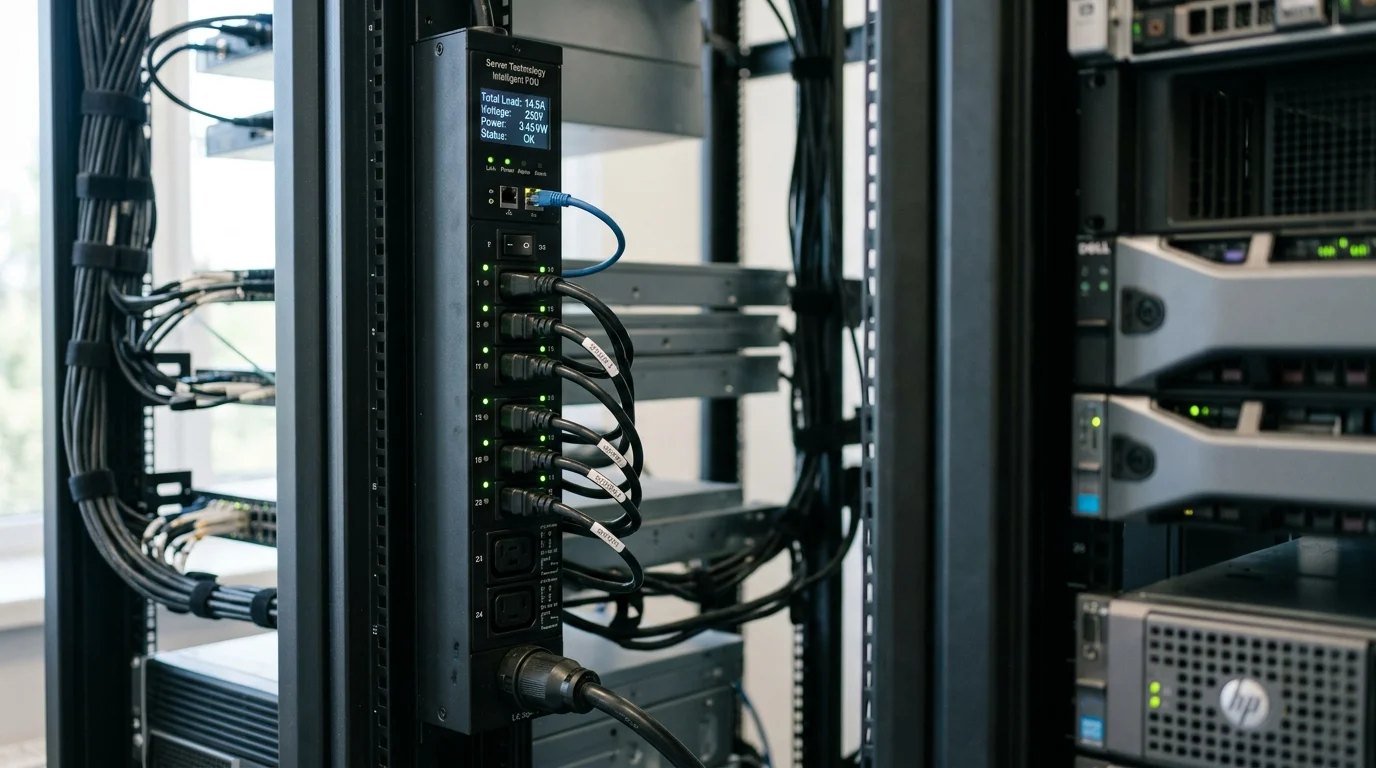
As AI clusters push rack densities far beyond traditional server loads, power distribution has become a design decision rather than a background utility. An intelligent PDU now plays a central role in supporting high-density compute, giving operators real-time visibility into load, environmental conditions, and branch-level behavior while enabling remote control and faster fault response. This guide explains what matters most when evaluating intelligent PDU options for 2026, from metering accuracy and outlet management to scalability, integration, and reliability. With that foundation, the rest of the article helps you compare features against actual AI data center requirements and buying priorities.
Why Is an Intelligent PDU a Strategic Choice for AI-Driven
The rapid adoption of artificial intelligence (AI) and machine learning is fundamentally redesigning the modern data center. As facility operators prepare for 2026, legacy power distribution methods are no longer sufficient to support the massive energy requirements of next-generation hardware. Intelligent Power Distribution Units (PDUs) represent a critical strategic investment for modern infrastructure, providing the visibility, control, and reliability necessary to keep high-performance computing clusters operational.
Transitioning to an intelligent power architecture allows organizations to move from reactive maintenance to proactive facility management, safeguarding sensitive equipment while optimizing ongoing operational expenditures.
How do AI workloads change power distribution requirements
?
AI workloads, driven by high-performance graphics processing units (GPUs) and specialized hardware accelerators, draw significantly more power than traditional enterprise servers. While a standard cloud server rack historically consumed between 5 and 10 kilowatts of power, modern AI training clusters frequently demand 40 to 100 kilowatts per rack. This exponential increase in power density creates severe electrical and thermal stress on facility infrastructure.
Furthermore, AI workloads are highly dynamic, causing rapid spikes in power draw during intense computational phases followed by sudden drops when idle. Intelligent PDUs are essential to monitor these micro-fluctuations in real time. Without intelligent monitoring, these rapid shifts can trip circuit breakers, leading to cascading failures across the data floor. By maintaining continuous visibility into power draw, facility managers can balance workloads dynamically and prevent catastrophic downtime during critical data processing cycles.
Why are intelligent PDUs becoming a baseline rather than
an upgrade?
In previous hardware generations, intelligent power monitoring was often viewed as a premium upgrade reserved for specialized testing environments or high-security government installations. Today, it is a strict baseline requirement for operational viability. Facility managers must optimize their power usage effectiveness (PUE) to remain competitive and compliant with emerging environmental standards. Achieving a highly optimized facility rating requires billing-grade metering accuracy, typically within a tight 1 percent margin of error.
Without this granular data at the rack and device level, operators cannot accurately map thermal profiles or identify stranded power capacity. Intelligent PDUs eliminate the guesswork from capacity planning by providing exact measurements of active power, apparent power, and power factor. Consequently, deploying basic, unmonitored power strips in an AI environment is now considered an unacceptable operational risk, making intelligent distribution a foundational pillar of modern data center design.
What business outcomes should buyers expect from better power
visibility?
Deploying intelligent power infrastructure delivers measurable business outcomes, primarily through risk mitigation and improved capacity utilization. Unplanned downtime in a high-performance data center can cost an organization more than $9,000 per minute, a figure that escalates rapidly when specialized AI training jobs are interrupted and must be restarted from scratch. By providing real-time alerts on phase imbalances or current overloads, intelligent PDUs allow technicians to resolve issues long before an outage occurs.
Additionally, highly accurate power utilization data enables facility teams to safely deploy more hardware within existing power envelopes. Instead of over-provisioning power by 30 to 40 percent as a safety buffer, operators can safely run infrastructure closer to actual capacity limits. This precise utilization delays the need for expensive facility expansions, maximizes the return on capital investments, and directly improves the overall profitability of the data center operation.
Which Intelligent PDU Specifications Matter Most for AI Infrastructure
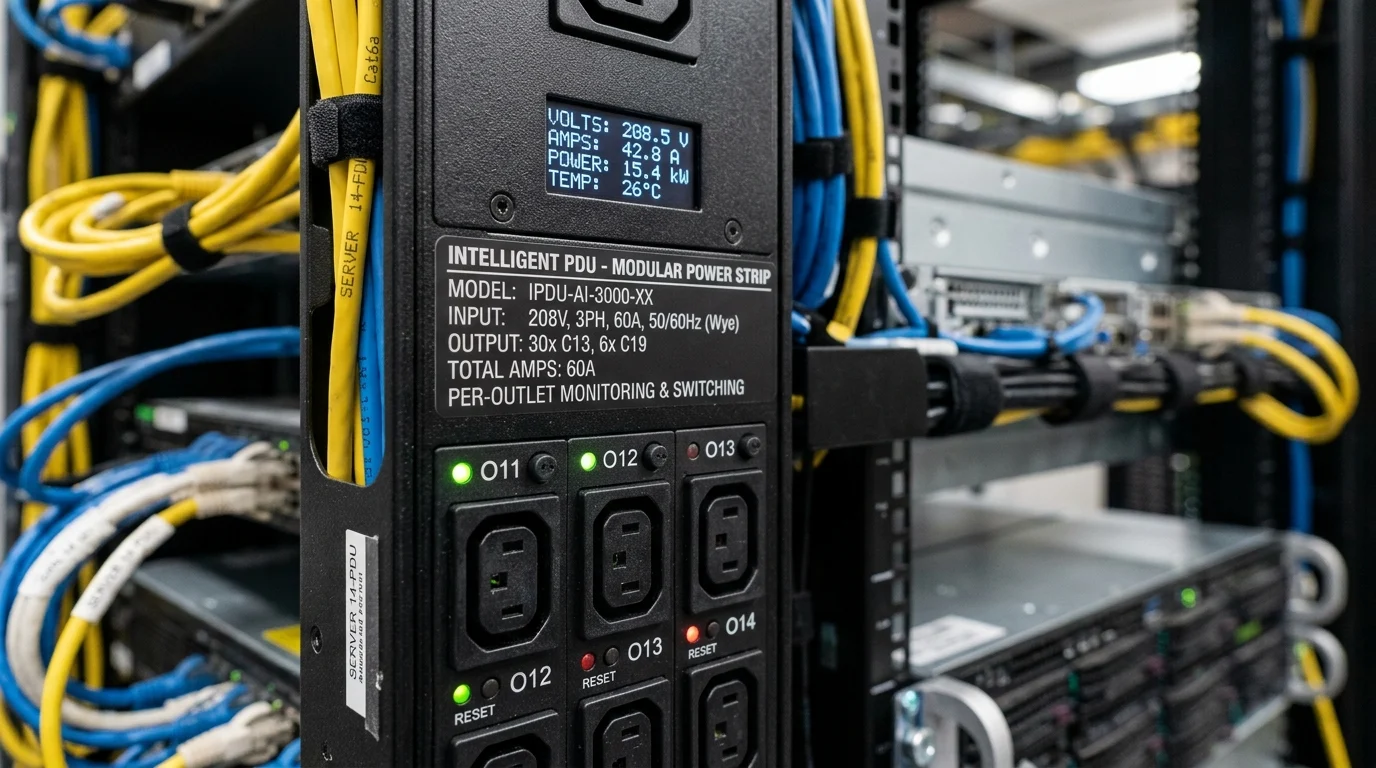
Selecting the right hardware specifications is the most complex aspect of procuring intelligent power infrastructure. Buyers must carefully match the capabilities of the distribution unit with the rigorous demands of their AI hardware to ensure long-term compatibility and safety.
What electrical, metering, and outlet features should buyers com
pare?
Buyers must evaluate electrical input capacity, metering granularity, and outlet configurations with extreme care. High-density AI environments typically require three-phase power inputs supporting 60-amp or even 100-amp connections at 415 volts. Metering should occur not just at the phase or circuit breaker level, but at the individual outlet level to track specific server consumption.
Furthermore, the physical outlets must accommodate modern hardware requirements. Many buyers now prefer combination outlets, such as C13/C39 or Cx receptacles, which accept multiple plug types and reduce the need to stock distinct hardware configurations.
| Feature | Standard Enterprise Rack | AI-Ready Rack |
|---|---|---|
| Power Density | 5 to 10 kW | 40 to 100+ kW |
| Input Voltage | 120V / 208V Single-Phase | 415V Three-Phase |
| Amperage Capacity | 16A to 30A | 60A to 100A |
| Metering Granularity | Unit or Phase Level | Outlet Level (1% Accuracy) |
How should rack density, phase balance, and redundancy influence
selection?
Rack density, phase balance, and redundancy are critical factors in maintaining uninterrupted operations. High-density racks require a 2N redundancy model, meaning two completely independent power paths feed the equipment. If one path fails or requires maintenance, the secondary path must immediately assume the full load without exceeding the 80 percent continuous load safety threshold recommended by electrical codes.
Balancing three-phase power is equally crucial in these dense environments. If one phase carries significantly more load than the others, it can cause dangerous overheating and breaker trips. Modern intelligent PDUs assist administrators in visualizing phase distribution, ensuring that heavy AI servers are plugged into the correct sequence of outlets to maintain a perfectly balanced electrical load across all three phases.
Which management, security, and environmental functions justify
the cost?
The management, security, and environmental functions embedded in an intelligent PDU often justify its higher initial cost. Secure communication protocols, such as SNMPv3 and RESTful APIs, are mandatory for integrating power data into broader facility management software without exposing the network to cyber threats. Security features like role-based access control and encrypted communications ensure that unauthorized users cannot maliciously disrupt power delivery.
Environmental monitoring is another vital function that transforms the PDU into a comprehensive rack management tool. Many intelligent PDUs support plug-and-play environmental sensors that track temperature, humidity, and fluid leaks. A single unit can often support a daisy-chain of up to 16 sensors, providing a detailed thermal map of the rack. This data is essential for identifying hot spots near high-wattage processors and optimizing computer room air conditioning (CRAC) units.
How Should Buyers Compare Intelligent PDU Types, Form Factors, and
Beyond pure electrical specifications, facility operators must determine the appropriate operational type, physical footprint, and management integration model for their PDUs. This decision dictates how easily technicians can maintain the environment and resolve hardware anomalies.
What are the trade-offs between basic, metered, monitored, and
switched PDUs?
The primary distinction in intelligent PDUs lies between metered, monitored, and switched varieties. Metered units provide local digital displays for technicians standing in the aisle, while monitored units transmit that power data over the network to central management systems. Switched units offer the highest level of control, allowing administrators to remotely turn individual outlets on or off.
While switched units carry a higher initial cost, they eliminate the need for technicians to physically visit the data center to reboot locked servers. For remote or lights-out data centers managing AI workloads, the ability to execute a hard reboot from a centralized operations center is invaluable.
| PDU Classification | Outlet-Level Metering | Remote Switching | Average Cost Premium |
|---|---|---|---|
| Basic (Unintelligent) | No | No | Baseline |
| Metered | Optional | No | + 50% to 100% |
| Monitored | Yes | No | + 100% to 150% |
| Switched | Yes | Yes | + 200% to 300% |
Which vertical, horizontal, and high-density rack configurations
fit best?
Physical form factor is dictated by the dimensions of the server rack and the density of the equipment. Zero U (0U) units mount vertically along the back of the rack, consuming no traditional server space. In high-density AI deployments, these vertical units often extend up to 72 inches or more, supporting 42 to 48 receptacles to accommodate densely packed switches and computing nodes.
Conversely, 1U or 2U horizontal units mount directly within the standard server slots. These are typically reserved for smaller network racks or environments where vertical space is obstructed. For 2026 infrastructure planning, vertical high-density configurations are overwhelmingly preferred, as they keep heavy power cables organized and away from the critical exhaust airflow pathways of high-heat GPUs.
How do local, cloud, and integrated management models affect
operations?
The chosen management model dictates how power data is aggregated and utilized. Local management involves accessing the unit’s built-in web interface, which is sufficient for small deployments but unscalable for massive AI clusters. Integrated management models feed data directly into data center infrastructure management (DCIM) platforms, allowing operators to view power, cooling, and space metrics on a single dashboard.
Cloud-based management is rapidly becoming the standard for modern facilities. By pushing telemetry data to a secure cloud environment, administrators can leverage machine learning algorithms to predict power failures before they occur. Cloud models also simplify firmware distribution, allowing teams to patch hundreds of PDUs simultaneously to address newly discovered security vulnerabilities.
What Sourcing, Compliance, and Lifecycle Risks Should Be Reviewed Before
Procuring intelligent power infrastructure involves navigating complex global supply chains, stringent safety regulations, and long-term maintenance commitments. Buyers must evaluate vendor reliability and lifecycle support just as rigorously as technical specifications.
Which certifications, safety standards, and regional regulations
apply?
Navigating certifications, safety standards, and regional regulations is critical to avoiding compliance violations and ensuring facility safety. Modern PDUs must comply with the UL 62368-1 standard, which has replaced the older IEC 60950-1 standard for information technology equipment. This updated standard focuses on hazard-based safety engineering, ensuring that equipment is designed to prevent electrical fires and thermal events.
In addition to safety certifications, buyers must ensure compliance with environmental regulations such as the Restriction of Hazardous Substances (RoHS) directive and regional energy efficiency mandates. Deploying non-compliant power hardware can result in failed building inspections, nullified insurance policies, and significant legal liabilities, particularly in highly regulated markets like the European Union and North America.
How do lead times, warranty terms, firmware support, and
replacement parts affect risk?
Supply chain logistics and warranty terms directly impact project timelines and long-term risk. Due to high demand in the AI sector, lead times for high-amperage intelligent PDUs have occasionally expanded to 12 to 16 weeks. Facility managers must factor these extended delivery windows into their construction and deployment schedules to avoid costly project delays.
Warranty terms and repairability are equally important. Enterprise-grade intelligent PDUs should carry a minimum 3 to 5-year warranty. Furthermore, buyers should prioritize units with hot-swappable network intelligence modules. If a network controller fails, a hot-swappable module allows a technician to replace the brain of the unit in under 10 minutes without cutting power to the attached servers, drastically reducing mean time to repair (MTTR).
What procurement questions help separate reliable vendors from w
eaker ones?
Asking the right procurement questions helps separate reliable manufacturing partners from weaker vendors. Buyers should inquire about the vendor’s supply chain transparency, specifically asking where critical microprocessors and sub-components are sourced. Diversified supply chains are less vulnerable to geopolitical disruptions and sudden component shortages.
Additionally, buyers must question the vendor’s commitment to software lifecycle support. Because intelligent PDUs are networked devices, they require regular firmware updates to patch security vulnerabilities. Vendors should provide a documented history of releasing quarterly security patches and guarantee firmware support for at least five years after the product reaches its end-of-sale date.
How Should Teams Build a 2026 Intelligent PDU Buying Decision
Synthesizing electrical requirements, operational needs, and procurement logistics into a cohesive purchasing decision requires a structured evaluation process. As teams plan for 2026, they must balance immediate budget constraints with the long-term flexibility required by evolving AI hardware.
What evaluation steps should be used for pilots and
testing?
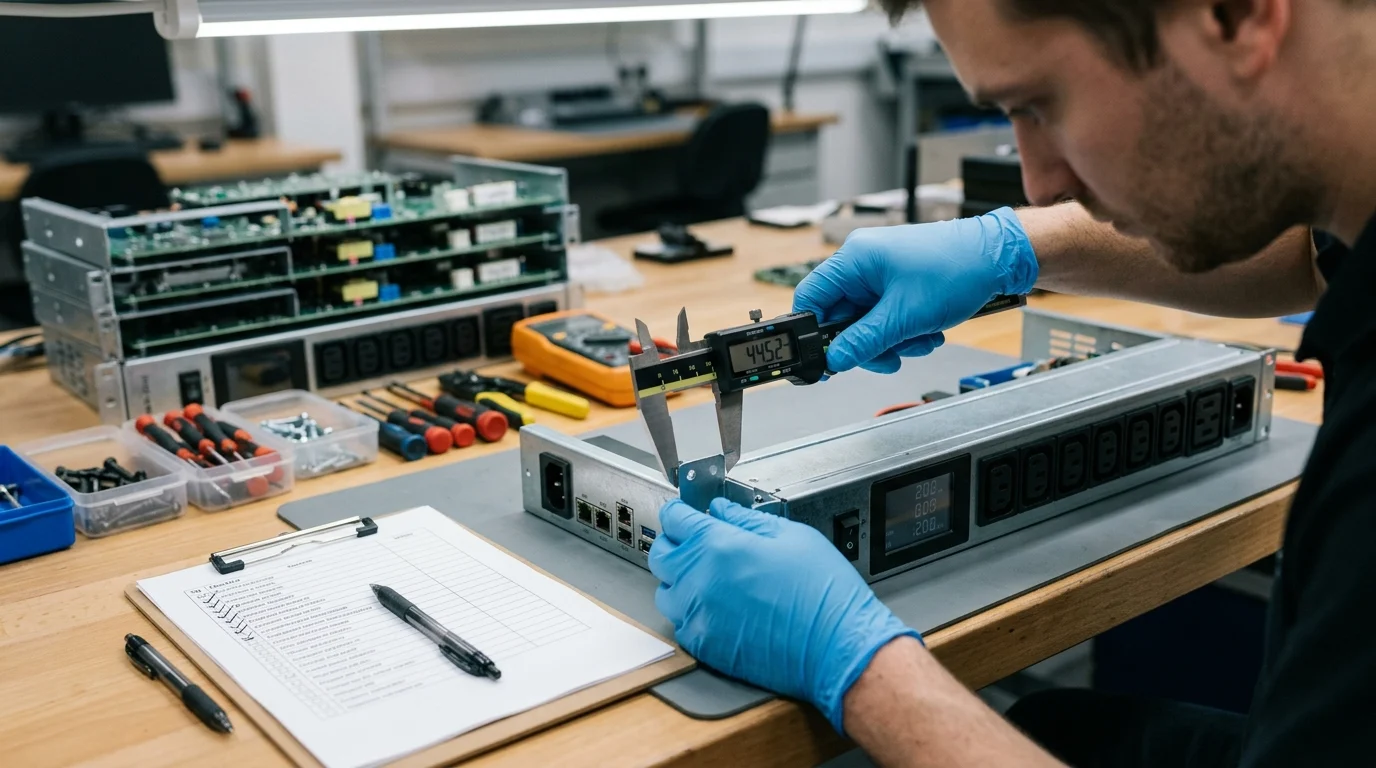
A rigorous evaluation should always begin with a structured pilot program and hands-on testing. Facility teams should request evaluation units to conduct a 30 to 90-day proof of concept (PoC) within a controlled environment. This testing phase allows technicians to verify metering accuracy, test network management integrations, and evaluate the physical ergonomics of the unit.
During the PoC, administrators should deliberately simulate failure scenarios. Testing should include triggering environmental sensor alarms, simulating a network module failure to verify hot-swap capabilities, and testing the remote reboot functions under full electrical load. A successful pilot across 5 to 10 high-density racks provides the empirical data needed to justify a larger facility-wide rollout.
How should technical requirements, budget, and deployment timing
be balanced?
Balancing technical requirements, budget, and deployment timing requires careful compromise. While switched, outlet-metered units represent the gold standard, they carry a 200 to 300 percent cost premium over basic unmonitored strips. However, buyers must calculate the total cost of ownership rather than just the initial purchase price.
In many high-performance environments, the return on investment for premium intelligent PDUs is achieved in as little as 18 months. This rapid payback is driven by avoided downtime, reduced travel costs for remote technicians, and the ability to reclaim stranded power capacity. When budgets are tight, buyers should prioritize outlet-level metering and hot-swappable intelligence modules, as these features provide the highest immediate operational value.
What final criteria should determine the best intelligent PDU
choice?
The final criteria for selecting an intelligent PDU should center on future-proofing and scalability. Data center infrastructure is typically expected to operate for five to seven years, meaning units purchased today must support the AI hardware generations of the late 2020s. Buyers should look for manufacturers demonstrating a clear roadmap toward supporting ultra-high densities, potentially scaling up to 120 kilowatts per rack.
Ultimately, the best intelligent power choice is one that transforms a static electrical component into a dynamic, data-generating asset. By prioritizing robust security, granular visibility, and seamless management integration, facility teams can build a resilient power foundation capable of supporting the relentless innovation of the AI era.
Key Takeaways
- The most important conclusions and rationale for Intelligent PDU
- Specs, compliance, and risk checks worth validating before you commit
- Practical next steps and caveats readers can apply immediately
Frequently Asked Questions
Why is an intelligent PDU important for AI data centers?
It gives real-time power visibility, helps prevent overloads, and supports high-density AI racks that traditional power strips can’t handle.
What power density should buyers expect in AI racks?
AI training racks often draw 40 to 100 kW per rack, far above typical enterprise server loads.
What metering accuracy should an intelligent PDU provide?
Look for billing-grade accuracy, ideally within about 1% error, for reliable capacity planning and PUE reporting.
Which electrical specs matter most when choosing an intelligent PDU?
Check input voltage, amperage, and three-phase support; many AI deployments need 60A or 100A at 415V.
Why is outlet-level monitoring useful in AI infrastructure?
It shows exactly which devices are using power, helping spot imbalance, prevent downtime, and use rack capacity more efficiently.
Post time: May-15-2026