


Why High-Current IEC C19 Outlets Matter
The rapid deployment of artificial intelligence (AI) and machine learning (ML) workloads is fundamentally reshaping data center infrastructure. Traditional 19-inch server racks, which historically consumed between 5 kW and 10 kW, are now being engineered to support unprecedented thermal and electrical loads. Central to this electrical redesign is the transition to high-current connectivity, specifically the IEC 60320 C19 outlet. Designed to handle significantly higher amperage than standard IT connectors, C19 outlets have become non-negotiable components for rack Power Distribution Units (PDUs) feeding next-generation AI hardware.
Procurement teams, wholesale distributors, and data center architects must understand the trajectory of these power demands to ensure infrastructure longevity, safety, and operational efficiency. As hyperscale facilities scale operations, the reliance on robust, high-capacity power interfaces dictates new supply chain priorities, revised bill of materials (BOM) strategies, and updated inventory thresholds.
How AI server power density changes rack power needs
AI servers, particularly those equipped with multiple high-performance GPUs or specialized ASICs, draw exponentially more power than standard 1U compute nodes. A single AI training server, such as those utilizing the latest enterprise accelerators, can consume between 3.0 kW and 10.2 kW under peak load. Consequently, high-density AI clusters routinely push rack power densities into the 30 kW to 50 kW range, with advanced liquid-cooled configurations scaling even higher.
Standard C13 outlets, rated for 10A under IEC standards or 15A under UL standards, are mathematically and physically insufficient to support these individual node requirements. For instance, a 3.5 kW power supply unit operating at 230V draws over 15 Amps, immediately exceeding the safe operational threshold of a standard C13 connector. The IEC C19 outlet, rated for 16A at 250V internationally and 20A at 250V in North America, provides the necessary electrical overhead. This ensures that 3kW+ power supply units can operate safely without tripping breakers, risking severe voltage drops, or causing dangerous thermal degradation at the contact point.
Why distributors and wholesale buyers prioritize C19 outlets
For distributors, OEM PDU manufacturers, and wholesale buyers, the surge in AI infrastructure investment dictates a strategic shift in inventory and component sourcing. The demand ratio between traditional C13 and high-capacity C19 outlets is narrowing rapidly as data centers retrofit existing spaces or build new high-density zones. Distributors are increasingly prioritizing C19 connectors because they represent higher-margin components that cater directly to lucrative enterprise and hyperscale expansions.
Furthermore, purchasing these components at scale requires navigating distinct commercial dynamics. Minimum Order Quantities (MOQs) for specialized C19 outlets—such as those with custom colors for A/B power feeds or integrated locking mechanisms—typically range from 5,000 to 10,000 units per production run. Wholesale buyers must secure reliable, high-volume pipelines of C19 outlets to prevent production bottlenecks for intelligent PDUs. Proactive procurement ensures that manufacturers capture the growing market share of high-density power solutions while maintaining healthy profit margins and fulfilling large-scale data center contracts on time.
Key Specifications for Selecting IEC C19 Outlets
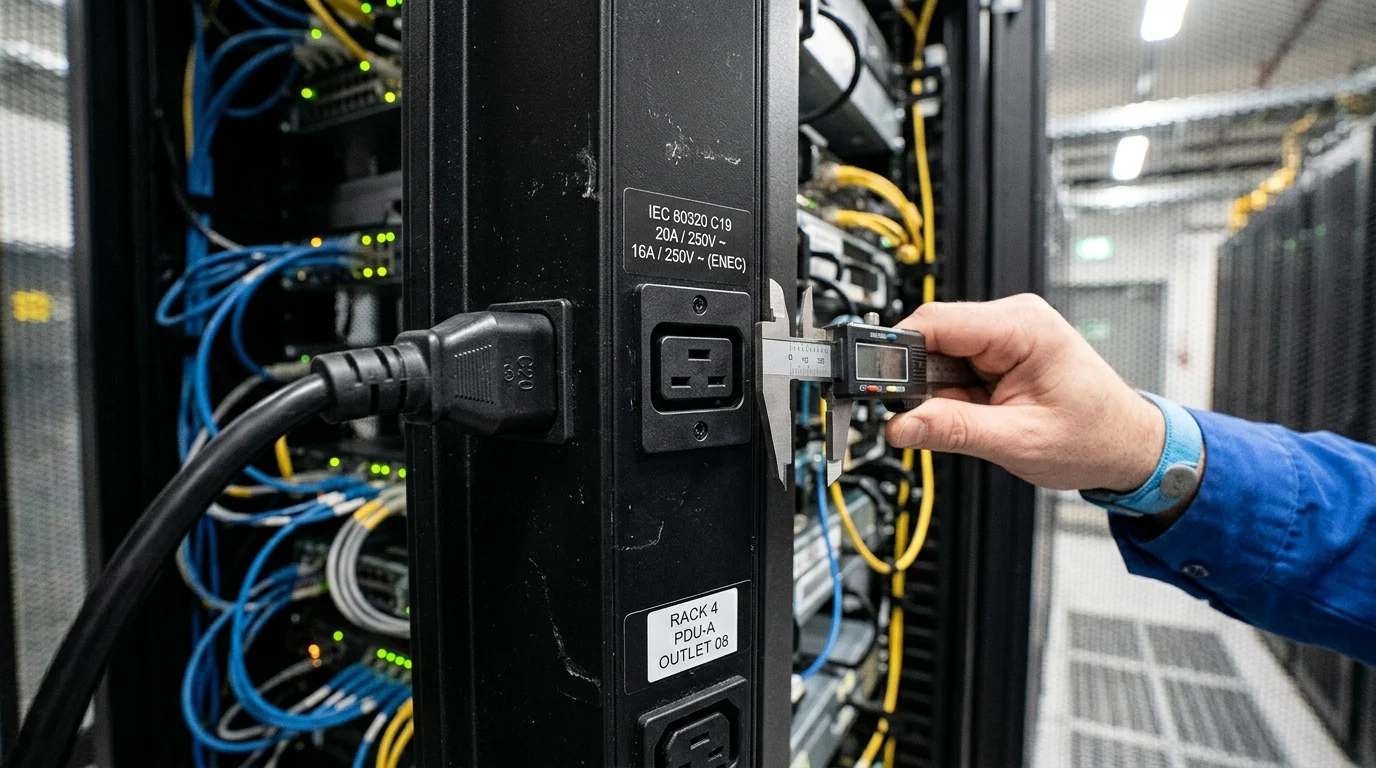
Procuring IEC C19 outlets requires a rigorous evaluation of electrical, mechanical, and material specifications to guarantee compatibility with global data center standards. Buyers must align the physical characteristics of the outlets with the internal wiring, busbars, and chassis designs of their 19-inch rack PDUs. Failing to specify the correct parameters can result in catastrophic electrical failures or costly manufacturing delays.
How to compare amperage, voltage, phase, and PDU compatibility
The fundamental specifications of a C19 outlet dictate its operational limits and regional compliance. Globally, the standard is bifurcated: under IEC and VDE standards (predominantly Europe and Asia), the C19 is rated for 16 Amps at 250 Volts AC. Under UL and CSA standards (North America), the identical form factor is certified for 20 Amps at 250 Volts AC. Buyers sourcing components for global PDU platforms must ensure dual-certification (UL/cUL and VDE/ENEC) to streamline their BOM and avoid regional SKU fragmentation.
Additionally, buyers must consider the phase configuration of the target PDU. While the C19 outlet itself is inherently single-phase (incorporating Line, Neutral, and Ground terminals), high-density PDUs often utilize three-phase input power, such as 400V 3-phase Wye configurations. In these designs, power is distributed across multiple C19 banks to balance the 20A/16A load limits effectively. The internal terminal design of the C19—whether utilizing 6.3mm quick-connect tabs, solder lugs, or direct PCB mounting pins—must match the PDU’s phase distribution architecture.
Which specifications matter by application type
The specific application environment dictates mechanical and material requirements beyond basic electrical ratings. In mission-critical AI clusters, accidental disconnection due to server maintenance, vibration, or cable routing errors is catastrophic. Therefore, procurement teams often specify locking C19 outlets. These specialized outlets feature integrated retention mechanisms, such as P-Lock or V-Lock compatibility, that require a dedicated release action. Enterprise-grade locking C19s must maintain a pull-out force resistance exceeding 100 Newtons.
Material selection is equally vital depending on the application. High-end C19 outlets utilize phosphor bronze contacts rather than standard brass, offering superior spring properties and lower electrical resistance over repeated use. For edge computing deployments, where environmental controls may be less stringent than in hyperscale facilities, buyers might prioritize outlets with higher ingress protection or conformal coating on internal PCB connections if the outlets are integrated into a smart, metered PDU module.
How to use comparison tables in procurement
Procurement engineers and sourcing managers frequently rely on technical comparison matrices to standardize component selection across different product tiers. Utilizing clear comparison tables prevents over-specification on low-density PDUs while ensuring adequate power overhead for high-density AI racks.
The table below illustrates the stark operational differences between standard C13 outlets and the high-capacity C19 outlets required for AI workloads. This data provides a baseline for BOM cost analysis, wire gauge selection, and capability forecasting.
| Specification | IEC C13 Outlet | IEC C19 Outlet |
|---|---|---|
| Max Amperage (UL / IEC) | 15A / 10A | 20A / 16A |
| Max Voltage | 250V AC | 250V AC |
| Max Power at 230V (IEC) | 2,300 Watts | 3,680 Watts |
| Pin Orientation | Vertical | Horizontal |
| Typical Wire Gauge | 14-18 AWG | 12-14 AWG |
| Primary Application | Standard 1U/2U Servers, Switches | AI Servers, Blade Chassis, Core Routers |
How to Source IEC C19 Outlet Solutions
Transitioning from technical specification to physical procurement involves navigating complex global supply chains. For OEM PDU builders and wholesale distributors, establishing a resilient sourcing strategy for IEC C19 outlets is as critical as validating the component’s engineering parameters. Effective sourcing requires stringent supplier vetting, optimized logistics, and a structured introduction process to ensure quality at scale.
What supplier qualification criteria buyers should assess
Qualifying a supplier for high-current connectors demands rigorous auditing of their manufacturing and quality control capabilities. Wholesale buyers should mandate ISO 9001:2015 certification at a minimum, supplemented by direct factory audits focusing on automated assembly and testing procedures. High-tier suppliers utilize automated pin-insertion and ultrasonic welding machines to maintain strict mechanical tolerances, resulting in defect rates consistently below 50 parts per million (PPM).
Production capacity is another vital metric; suppliers must demonstrate the ability to scale production to 500,000 units or more per month to accommodate sudden surges in PDU manufacturing demands. Furthermore, buyers should assess the supplier’s vertical integration. Manufacturers that produce their own copper alloy stamping and plastic injection molding in-house generally offer more stable pricing and shorter lead times than those relying heavily on sub-contractors.
How packaging, labeling, and Incoterms affect sourcing
Logistics, packaging, and commercial terms significantly impact the landed cost and assembly line efficiency of bulk C19 outlets. For high-volume PDU manufacturing, buyers must specify bulk tray packaging—typically 100 units per anti-static vacuum-formed tray, and 1,000 units per master carton—rather than individually bagged consumer packaging. This prevents pin deformation during transit and allows for rapid deployment on automated pick-and-place or manual assembly lines.
Sourcing terms usually pivot around Free On Board (FOB) from major manufacturing hubs like Shenzhen or Taiwan, shifting to Cost, Insurance, and Freight (CIF) depending on the buyer’s freight forwarding agreements. Clarifying these Incoterms upfront ensures predictable cost models. Additionally, buyers must factor in transit times: ocean freight (LCL or FCL) can add 30 to 45 days to the delivery schedule, whereas air freight, while significantly more expensive, can reduce transit to under a week for urgent production runs.
Which sourcing steps align drawings, samples, and production
A structured New Product Introduction (NPI) process is essential to align supplier output with buyer expectations. Sourcing teams should initiate the process by exchanging 3D CAD step files and detailed 2D engineering drawings to verify panel cutout dimensions. Standard snap-in C19 outlets typically require a 32.5mm x 24.5mm panel cutout and must be specified to match the PDU chassis panel thickness, which usually ranges from 0.8mm to 2.0mm.
Following drawing approval, the Production Part Approval Process (PPAP) requires the supplier to provide First Article Inspection (FAI) reports alongside a batch of 50 to 100 physical samples for mechanical fit and electrical testing. Once validated by the buyer’s engineering team, mass production lead times generally span 4 to 6 weeks. This necessitates accurate demand forecasting and a tight feedback loop between the buyer’s procurement division and the supplier’s production floor.
Compliance and Reliability Requirements
In the data center infrastructure market, electrical failures translate into unacceptable downtime and severe fire hazards. Because AI servers draw continuous, heavy loads, the connectors supplying them are subjected to immense thermal stress. Consequently, IEC C19 outlets must adhere to stringent international compliance frameworks and undergo rigorous reliability testing to ensure long-term stability.
Which regional certifications and test reports are required
Regulatory compliance is a strict gatekeeper for international trade and data center deployment. To legally import and integrate C19 outlets into PDUs destined for global markets, the components must carry specific third-party safety marks. In North America, UL 60320-1 certification is mandatory, verifying the outlet’s performance at 20A. For the European Economic Area, EN/IEC 60320-1 compliance, validated by agencies like VDE, TÜV, or ENEC, is required for 16A operation.
Shipments into the Chinese market demand the CCC mark, while South Korea requires KC certification. Beyond electrical safety, wholesale buyers must secure documentation proving compliance with RoHS 3 (Restriction of Hazardous Substances) and REACH directives. Failure to provide valid compliance certificates can result in costly customs rejections, legal liabilities, and exclusion from enterprise data center procurement contracts.
How to evaluate temperature limits, insertion cycles, and durability
Reliability testing separates commodity connectors from enterprise-grade infrastructure components. Buyers must evaluate the outlet’s continuous operating temperature limits; standard C19 outlets are rated for a maximum pin temperature of 70°C. The plastic housing must achieve a UL94 V-0 flammability rating, ensuring the material self-extinguishes within 10 seconds. High-quality components are also subjected to the Glow Wire Test (GWT) at 850°C to verify thermal resistance.
Durability is measured in mating cycles, with enterprise-grade C19 outlets guaranteed for a minimum of 3,000 insertion and extraction cycles without degrading contact retention force. Furthermore, contact resistance must remain consistently below 10 milliohms to prevent localized heating. The table below outlines the critical testing benchmarks buyers should demand from their suppliers.
| Test Parameter | Standard Requirement | Enterprise Grade Benchmark |
|---|---|---|
| Flammability Rating | UL94 V-2 | UL94 V-0 |
| Mating Cycles | 1,500 Cycles | > 3,000 Cycles |
| Contact Resistance | < 20 mΩ | < 10 mΩ |
| Dielectric Withstand | 2000V AC for 1 min | 2500V AC for 1 min |
| Pin Operating Temp | 70°C (Standard) | 70°C (Continuous Max Load) |
How to Make the Final Buying Decision
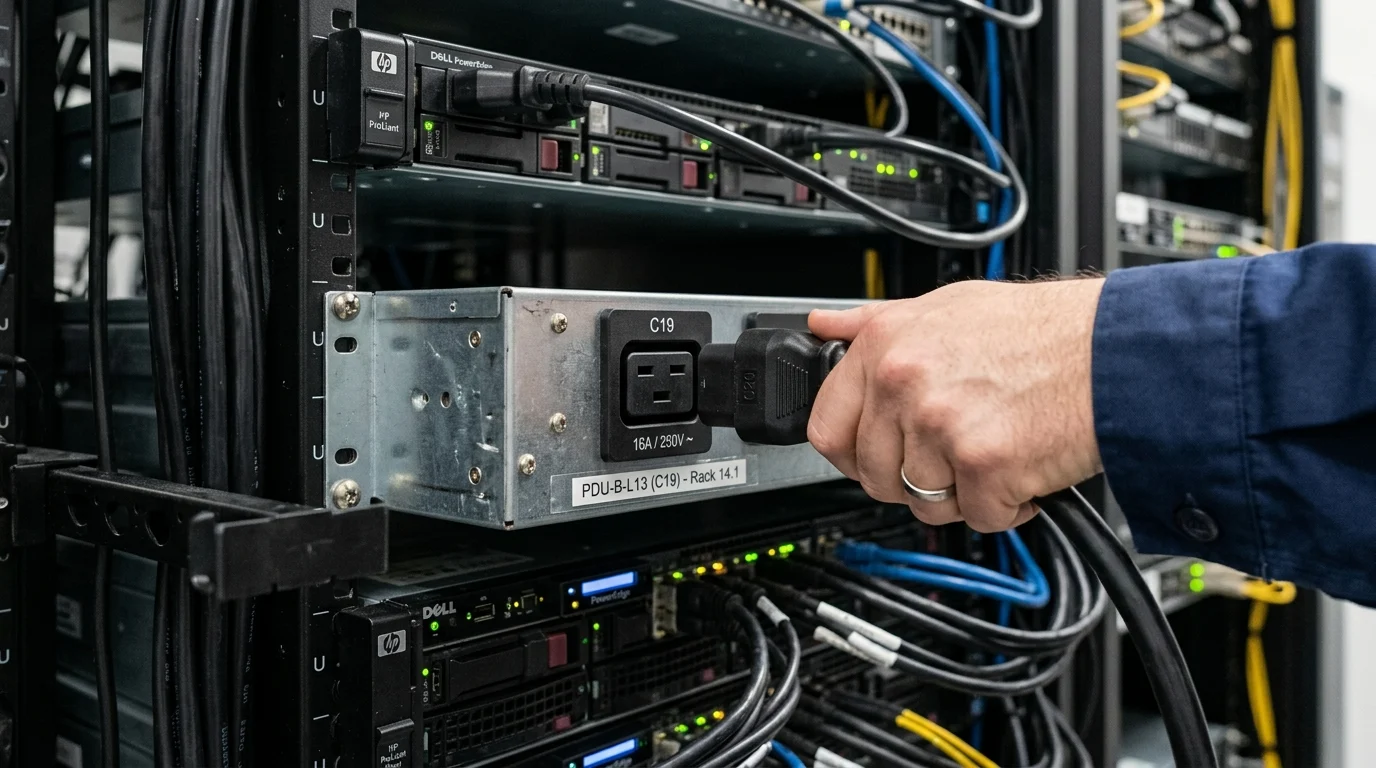
Moving from technical evaluation to final procurement execution requires balancing unit economics, supply chain risk, and operational integration. Procurement leaders must synthesize these variables to select manufacturing partners that align with their commercial objectives, ensuring that the transition to high-density AI power infrastructure is both profitable and sustainable.
What decision matrix helps compare cost, availability, and certification
Creating a robust decision matrix enables procurement teams to objectively compare competing suppliers. This matrix should assign weighted scores to unit cost, lead time, certification breadth, and engineering support. For bulk orders exceeding 50,000 units, the cost per standard snap-in C19 outlet typically ranges from $0.65 to $0.95. Conversely, locking variants or those integrated with smart-metering current transformers can scale from $1.20 to over $2.50 per unit depending on the complexity.
Buyers must weigh these Total Cost of Ownership (TCO) variables against availability. A supplier offering a $0.05 discount per unit but requiring a 12-week lead time may negatively impact the PDU manufacturer’s time-to-market. In the fast-paced AI hardware sector, delayed revenue from missed infrastructure deployment schedules will ultimately cost significantly more than the incremental savings generated on the component BOM.
How to balance standardization, margin, and supply continuity
Establishing long-term supply continuity relies on strategic risk mitigation and component standardization. Rather than relying on a single source, high-volume PDU manufacturers should implement a dual-sourcing strategy. A common approach is allocating 70% of the procurement volume to a primary supplier to maximize volume discounts, and 30% to a secondary, geographically distinct supplier to mitigate geopolitical, labor, or logistical disruptions.
To protect profit margins while ensuring uninterrupted production, wholesale buyers should negotiate Service Level Agreements (SLAs) or Vendor Managed Inventory (VMI) programs that require the supplier to hold a 60-day buffer stock of finished goods. By standardizing panel cutouts and terminal types across both suppliers, buyers maintain maximum manufacturing flexibility, ensuring their AI data center infrastructure projects proceed without delays.
Key Takeaways
- Wholesale sourcing and supply-chain implications for Data center infrastructure
- Specifications, compliance, and commercial terms buyers should validate
- Actionable recommendations for distributors and procurement teams
Frequently Asked Questions
When should a 19-inch rack use IEC C19 outlets instead of C13?
Use C19 when a server or PSU can exceed about 15A at 230V, typically 3kW+ AI servers, to avoid overloads, breaker trips, and connector overheating.
What rating should buyers expect from IEC C19 outlets in different regions?
For Europe and Asia, expect 16A at 250V under IEC/VDE. In North America, look for 20A at 250V under UL/CSA.
Why is dual certification important for C19 outlet sourcing?
Dual-certified C19 outlets, such as UL/cUL plus VDE or ENEC, help standardize global PDU BOMs, reduce regional SKU splits, and simplify compliance.
How do AI workloads change PDU outlet planning in data centers?
AI racks often reach 30-50kW, so PDUs need more high-current outlets. Plan outlet mix, breaker capacity, and busbar design around C19-heavy deployments.
What procurement factors matter most when buying C19 outlets at scale?
Confirm current rating, certifications, mechanical fit, lead times, and MOQ. For custom colors or locking versions, production runs often start around 5,000-10,000 units.
Post time: Apr-17-2026