

Introduction
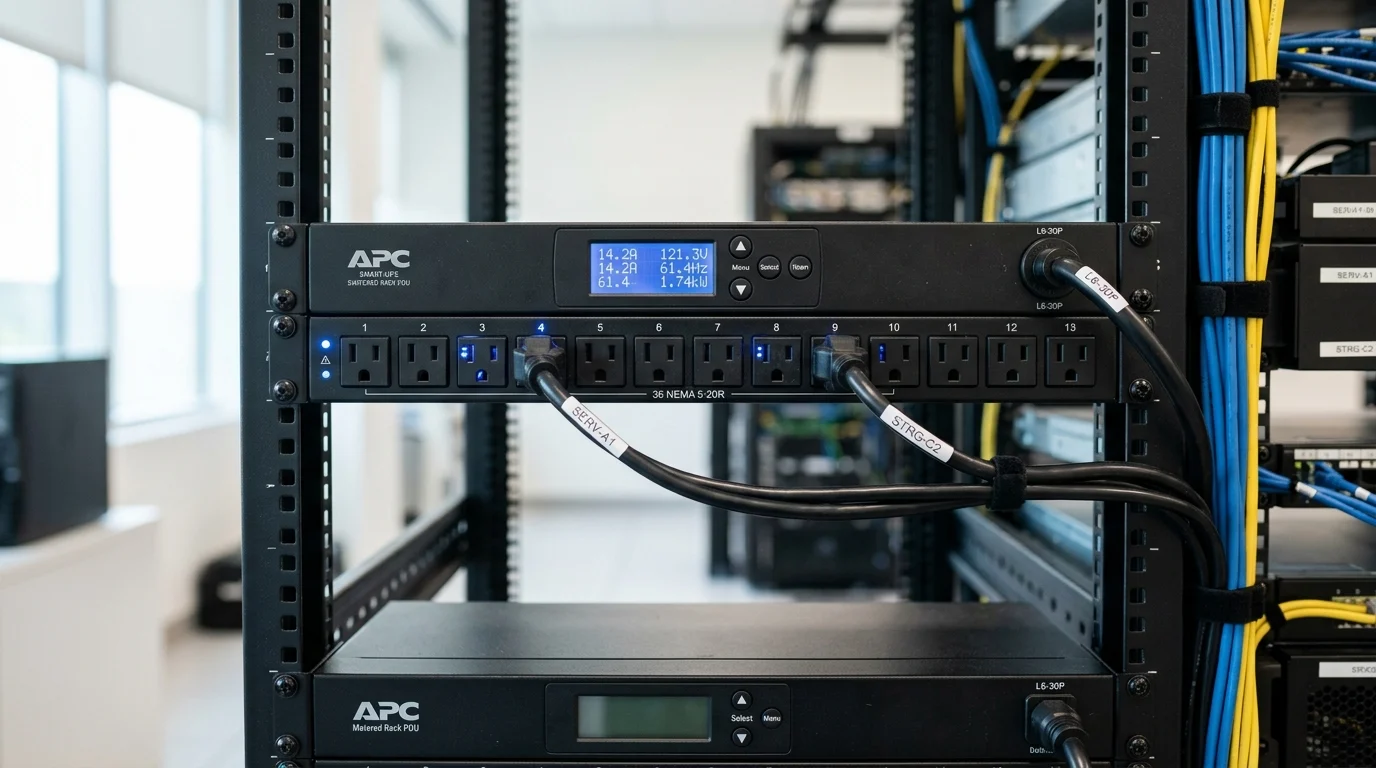
As data center racks carry heavier, more variable loads, basic power strips can no longer provide the visibility or control operators need. Smart Rack PDUs add metering, remote switching, and real-time monitoring at the rack level, helping teams track consumption, balance capacity, and respond faster to faults. This review explains how they support higher-density environments, improve operational efficiency, and reduce the risk of downtime.
How Smart Rack PDUs Improve Data Center Efficiency
As average data center rack power densities escalate from a historical baseline of 3 to 5 kW to 15 to 20 kW for artificial intelligence (AI) and high-performance computing (HPC) workloads, traditional power strips are no longer sufficient. Smart Rack Power Distribution Units (PDUs) have emerged as critical infrastructure components, acting as the primary interface between the facility’s uninterruptible power supply (UPS) and the IT equipment. These intelligent devices provide the granular telemetry and remote management capabilities required to maintain uptime in mission-critical environments.
By transitioning to smart rack PDUs, facility operators can shift from reactive maintenance to proactive power management, fundamentally altering the efficiency profile of the modern data center. The adoption of these units allows infrastructure teams to monitor electrical parameters dynamically, ensuring that power delivery is both safe and optimized for evolving server configurations.
What smart rack PDUs are
Smart rack PDUs are networked power distribution devices installed directly within server cabinets, typically in a vertical 0U orientation to preserve valuable U-space for compute hardware. Unlike basic PDUs that merely distribute power through a set of breakers and receptacles, smart variants incorporate embedded microprocessors, network communication modules, and precision current transformers.
These units are categorized into several tiers based on their functional depth: inlet-metered, outlet-metered, switched, and fully managed units that combine outlet-level metering with individual receptacle switching. This embedded intelligence allows the PDU to act as a localized data aggregation point, constantly monitoring the electrical characteristics of the attached IT load and communicating that data back to Data Center Infrastructure Management (DCIM) software.
How metering and switching improve visibility
The integration of metering and switching capabilities transforms the server rack from an opaque black box into a highly visible asset. Metering modules in enterprise-grade smart PDUs typically offer billing-grade accuracy, adhering to an error margin of ±1% or better. This precision allows operators to measure voltage, amperage, active power (kW), apparent power (kVA), and power factor in real-time across the entire rack or at the individual device level.
Switching functionality adds a layer of operational control, enabling administrators to remotely cycle power to locked-up servers, thereby eliminating the need for physical “remote hands” interventions. This remote toggling capability can reduce the mean time to recovery (MTTR) for specific server fault states from several hours to mere minutes, significantly preserving service level agreements (SLAs).
Why they support energy management
Effective energy management relies heavily on accurate baseline data, which smart rack PDUs supply continuously. By tracking power consumption at the outlet level, operators can reliably identify underutilized or “zombie” servers that draw baseline power without contributing meaningful compute output to the network.
Furthermore, smart PDUs facilitate the accurate calculation of Power Usage Effectiveness (PUE) at a highly granular level. Facility managers can leverage this real-time thermal and power telemetry to safely increase ambient data center temperatures without risking equipment degradation. Implementing these data-driven setpoint adjustments frequently yields reductions of 10% to 20% in overall facility cooling and power expenditures over a standard three-year operational cycle.
Key Smart Rack PDU Specifications
Selecting the right smart rack PDU requires aligning the hardware’s electrical and physical capabilities with the data center’s overarching electrical topology. Because the PDU serves as the final link in the critical power chain, its specifications dictate both the maximum capacity of the rack and the reliability of the IT deployment.
Evaluating these specifications involves looking beyond basic power delivery to understand how the unit handles environmental extremes, network security protocols, and fault tolerance.
Power, phase, and outlet configuration
Data center power distribution relies heavily on matching the PDU input phase and voltage to the facility’s upstream power train. Configurations generally fall into single-phase (120V, 208V, or 230V) and three-phase (208V, 400V, or 415V) deployments. High-density server racks increasingly necessitate three-phase 400V/415V power distribution, which can efficiently deliver 11 kW, 22 kW, or even up to 55 kW per rack while utilizing smaller, lighter copper cabling.
Outlet configuration is equally critical. Modern smart PDUs typically feature a mix of C13 and C19 receptacles, often utilizing combination C13/C19 outlets that allow either plug type to be connected to the same port. A standard high-density 0U PDU might feature 36 to 48 outlets, providing sufficient density for heavily populated 42U or 48U cabinets while incorporating locking mechanisms to prevent accidental cable disconnections.
Monitoring and environmental sensing
Beyond power delivery, smart PDUs serve as the environmental nervous system for the server rack. Enterprise units feature dedicated sensor ports designed to interface with external probes measuring temperature, humidity, differential air pressure, and fluid leaks. They also support dry contact sensors for monitoring physical cabinet door security.
Because high-density deployments utilize hot aisle/cold aisle containment systems, the PDU itself must withstand elevated ambient temperatures. Premium smart rack PDUs are engineered with an operating temperature threshold of up to 60°C (140°F). This high thermal tolerance ensures the PDU’s internal microprocessors and network cards do not fail when exposed to the intense exhaust heat generated by HPC servers and GPU clusters.
Build quality, redundancy, and security
Build quality and redundancy dictate the lifespan and reliability of the PDU. Leading manufacturers utilize hot-swappable network management cards (NMCs), allowing administrators to replace a failed network interface or upgrade firmware without interrupting power to the connected IT load. Dual network ports are also standard on premium units, enabling daisy-chaining architectures that can link 16 to 32 devices on a single IP address, significantly reducing top-of-rack switch port utilization.
Security specifications are non-negotiable for networked power infrastructure. Smart PDUs must support modern cryptographic protocols, including TLS 1.2/1.3 for secure web management, SNMPv3 for encrypted telemetry polling, and integration with RADIUS or TACACS+ for centralized authentication. Physical security features, such as low-profile chassis designs and color-coded locking receptacles, further protect the infrastructure from accidental or malicious physical interference.
How to Compare Smart Rack PDU Options
Navigating the diverse landscape of smart rack PDU vendors requires a structured comparison framework. With multiple tiers of intelligence and varying form factors available, buyers must align the hardware’s feature set with their specific operational requirements and budget constraints.
A rigorous comparison methodology prevents over-provisioning in low-tier environments while ensuring that mission-critical racks receive the necessary telemetry and control mechanisms to guarantee uptime.
Core comparison criteria
When comparing smart rack PDUs, the core criteria revolve around form factor, metering granularity, and control capabilities. Form factors are generally split between horizontal (1U or 2U) units for smaller network closets and vertical (0U) units that mount in the rear of the cabinet. The physical dimensions must be validated against the cabinet’s cable management space to ensure proper airflow.
Metering levels provide the primary differentiation between product lines. Inlet-metered units provide aggregate data for the entire PDU or individual circuit breakers, which is sufficient for broad capacity planning. In contrast, outlet-metered units measure power draw at each individual receptacle, providing the precise data necessary for department-level chargebacks and granular efficiency calculations.
Cost versus features and interoperability
The relationship between capital expenditure and feature sets is steep in the PDU market. While a basic, unmanaged PDU might cost between $100 and $300, a high-density, fully switched and outlet-metered smart PDU can range from $1,200 to over $2,500 per unit. Buyers must weigh this upfront cost against the value of interoperability and downtime prevention.
Interoperability with existing DCIM platforms is a major cost factor. PDUs that support Redfish APIs, JSON-RPC, and open RESTful architectures integrate more cleanly into automated data center environments than those relying solely on proprietary MIBs. When factoring in the average cost of data center downtime—often cited at approximately $9,000 per minute—the premium paid for switched PDUs that enable rapid remote reboots frequently achieves a return on investment (ROI) after a single averted outage.
Using comparison tables for buying decisions
Utilizing structured comparison tables simplifies the procurement process by mapping specific PDU classifications to their ideal use cases and expected pricing. Below is a comparative breakdown of standard PDU tiers.
| PDU Classification | Visibility Level | Control Capability | Typical Price Band | Primary Use Case |
|---|---|---|---|---|
| Basic | None | Local breaker only | $100 – $300 | Non-critical network closets |
| Metered Inlet | Aggregate phase/circuit | None | $300 – $700 | Standard enterprise capacity planning |
| Metered Outlet | Per-receptacle data | None | $600 – $1,200 | Colocation billing, accurate PUE tracking |
| Switched | Aggregate phase/circuit | Remote on/off/reboot | $700 – $1,500 | Remote edge sites, branch offices |
| Switched + Outlet Metered | Per-receptacle data | Remote on/off/reboot | $1,200 – $2,500+ | High-density HPC, mission-critical AI clusters |
By cross-referencing this data with facility requirements, infrastructure architects can strategically deploy different PDU types across a single data center. For example, deploying fully managed units in high-density AI clusters while utilizing metered-inlet units for legacy storage racks optimizes the budget without sacrificing necessary visibility.
Deployment Best Practices for Smart Rack PDUs
Procuring advanced hardware is only the first step; unlocking the full value of smart rack PDUs requires rigorous adherence to deployment best practices. Physical installation, logical configuration, and ongoing lifecycle management must be executed systematically to ensure infrastructure resilience.
Implementing standardized operating procedures for PDU deployment minimizes human error, optimizes load distribution, and guarantees that the monitoring software receives accurate, actionable data.
Planning for load balancing and capacity
Effective capacity planning begins at the rack level. When deploying three-phase smart PDUs, it is critical to balance the electrical load across all three phases (L1, L2, L3). Premium PDUs facilitate this by featuring alternating phase outlets, which group receptacles by phase sequentially down the length of the PDU, simplifying the physical cable routing required to achieve a balanced load.
Furthermore, deployment teams must adhere to National Electrical Code (NEC) guidelines, which mandate that continuous loads must not exceed 80% of the branch circuit’s rated capacity. For instance, a 30-amp circuit should be loaded to a maximum of 24 amps. Smart PDUs can enforce these limits by allowing administrators to set hard thresholds that trigger automated alerts before a tripped breaker causes an outage.
Commissioning, monitoring, and maintenance
Commissioning hundreds of smart PDUs individually is highly inefficient. Best practices dictate using mass configuration tools, leveraging DHCP/TFTP servers or USB flash drives to push standardized network settings, SNMP trap destinations, and firmware versions to all units simultaneously. This ensures uniformity across the data center floor.
Once active, monitoring thresholds should be configured with tiered alerting. A standard practice is to set a “Warning” alert at 70% circuit utilization and a “Critical” alert at 80%. Maintenance protocols must also include a strict firmware upgrade schedule. Because smart PDUs are networked devices, failing to patch known vulnerabilities can expose the data center’s critical power infrastructure to cyber threats.
Procurement, warranty, and lifecycle support
Procurement strategies must account for manufacturing lead times, which can vary significantly. While standard configurations might ship within days, custom cable lengths or specific chassis colors (often used to visually differentiate A and B power feeds) can introduce lead times of 4 to 12 weeks. Lifecycle support should also dictate vendor selection; enterprise buyers should prioritize manufacturers offering extended 5-year warranties over standard 3-year terms.
| Deployment Phase | Critical Action Item | Target Metric / Threshold |
|---|---|---|
| Capacity Planning | Balance loads across L1, L2, L3 phases | < 10% variance between phases |
| Circuit Sizing | Adhere to continuous load limits | Max 80% utilization of branch circuit |
| Network Configuration | Consolidate IP addresses via daisy-chaining | Up to 16-32 PDUs per single IP drop |
| Environmental | Deploy cascading temperature sensors | Top, middle, and bottom of rack zones |
Following these best practices ensures that the deployment scales smoothly and that the hardware remains fully supported by the vendor throughout its operational lifespan, maximizing the return on the initial capital expenditure.
How to Evaluate Smart Rack PDUs Before Purchase
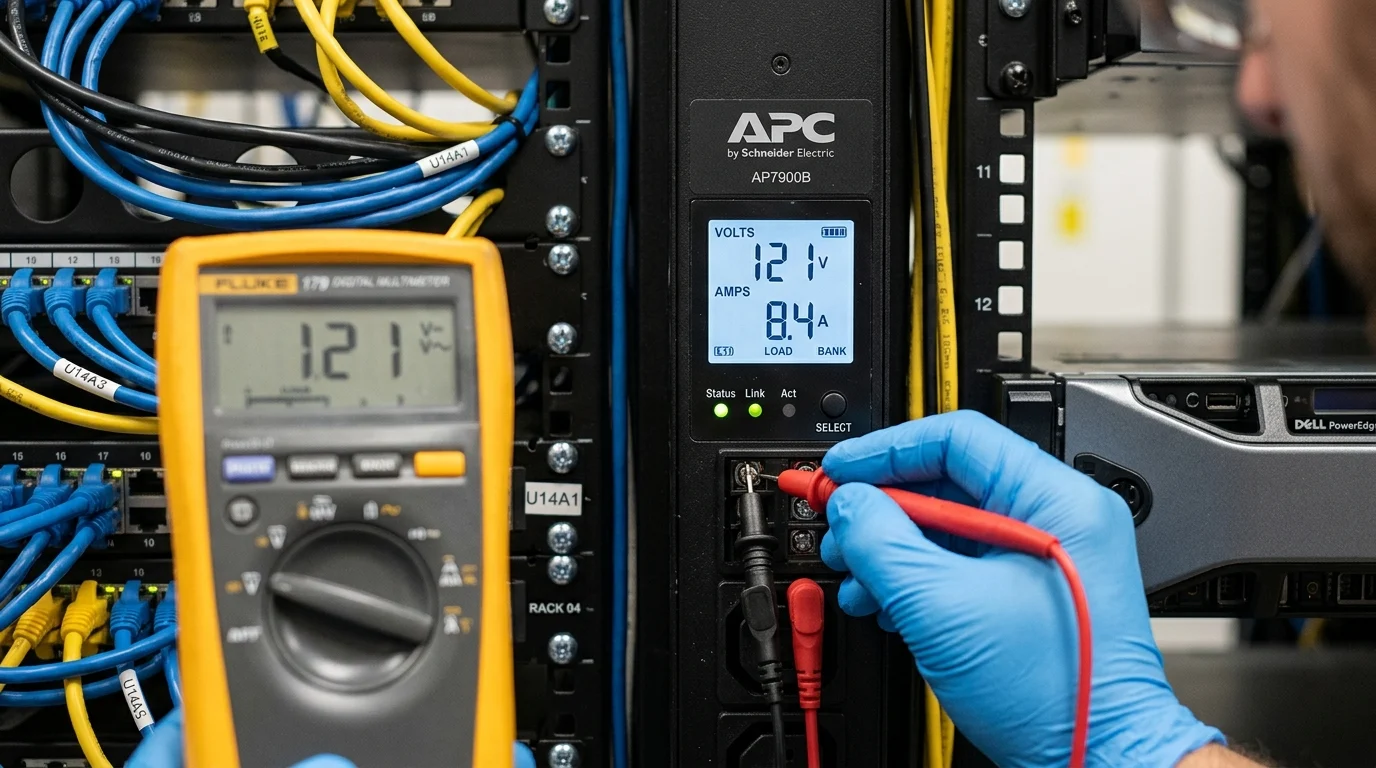
The final evaluation of smart rack PDUs before purchase requires a holistic view of the total cost of ownership (TCO) rather than a narrow focus on unit pricing. Decision-makers must synthesize technical specifications, integration costs, and operational efficiencies to formulate a comprehensive procurement strategy.
By thoroughly evaluating the long-term implications of their hardware choices, organizations can future-proof their data centers against rising power densities and increasingly stringent energy efficiency regulations.
Balancing cost and long-term value
Balancing cost and long-term value requires evaluating the hidden operational savings enabled by smart PDUs. For example, deploying units with advanced daisy-chaining capabilities can drastically reduce networking costs. By linking 16 PDUs to a single switch port, a facility can save approximately $500 per network drop in switch hardware, cabling, and installation labor.
Additionally, features like toolless mounting buttons reduce physical installation time from 15 minutes per unit to under 2 minutes. When outfitting a 500-rack data center, this reduction in manual labor translates to hundreds of hours saved, directly offsetting the higher initial purchase price of premium hardware.
Building a shortlist from technical requirements
Building a shortlist of viable PDU options starts with filtering vendors based on strict technical and compliance requirements. Ensure that all prospective units hold necessary regional certifications, such as UL in North America, CE in Europe, and RoHS compliance globally. The shortlist should also filter for specific IT requirements, such as the need for high-retention outlets or integrated residual current monitoring (RCM) to detect grounding faults.
Buyers must also consider vendor minimum order quantities (MOQs). If a data center requires customized input cord lengths to match specific overhead busway drop locations, some manufacturers may require an MOQ of 50 to 100 units. Evaluating these logistical constraints early in the process prevents delays during the final procurement phase.
When to standardize across facilities
Standardizing on a single PDU vendor across multiple global facilities offers compounding benefits. It radically simplifies the spare parts inventory, ensuring that a single pool of replacement network controllers or sensors can service multiple sites. Furthermore, standardization reduces the training burden on operations staff, as they only need to master one management interface and one set of API endpoints.
While mixing vendors might yield minor cost savings on a per-project basis, the resulting fragmentation in the DCIM environment often negates these savings. A unified smart PDU ecosystem provides seamless data aggregation, enabling executive leadership to generate accurate, cross-facility sustainability reports and energy efficiency metrics from a single, centralized dashboard.
Key Takeaways
- The most important conclusions and rationale for Smart Rack PDUs
- Specs, compliance, and risk checks worth validating before you commit
- Practical next steps and caveats readers can apply immediately
Frequently Asked Questions
What is a smart rack PDU?
A smart rack PDU is a networked power distribution unit installed in a server rack that monitors and manages electrical load in real time.
How do smart rack PDUs improve data center efficiency?
They provide outlet-level visibility, remote control, and accurate power data, helping operators reduce waste, speed recovery, and optimize cooling.
What metrics can a smart rack PDU monitor?
Most models track voltage, current, kW, kVA, and power factor, often with billing-grade accuracy.
Why is outlet-level metering useful?
It helps identify underused or zombie servers and supports better capacity planning and energy management.
How do switched smart PDUs reduce downtime?
They let admins remotely power-cycle frozen servers, avoiding on-site intervention and cutting MTTR from hours to minutes.
Post time: May-15-2026