

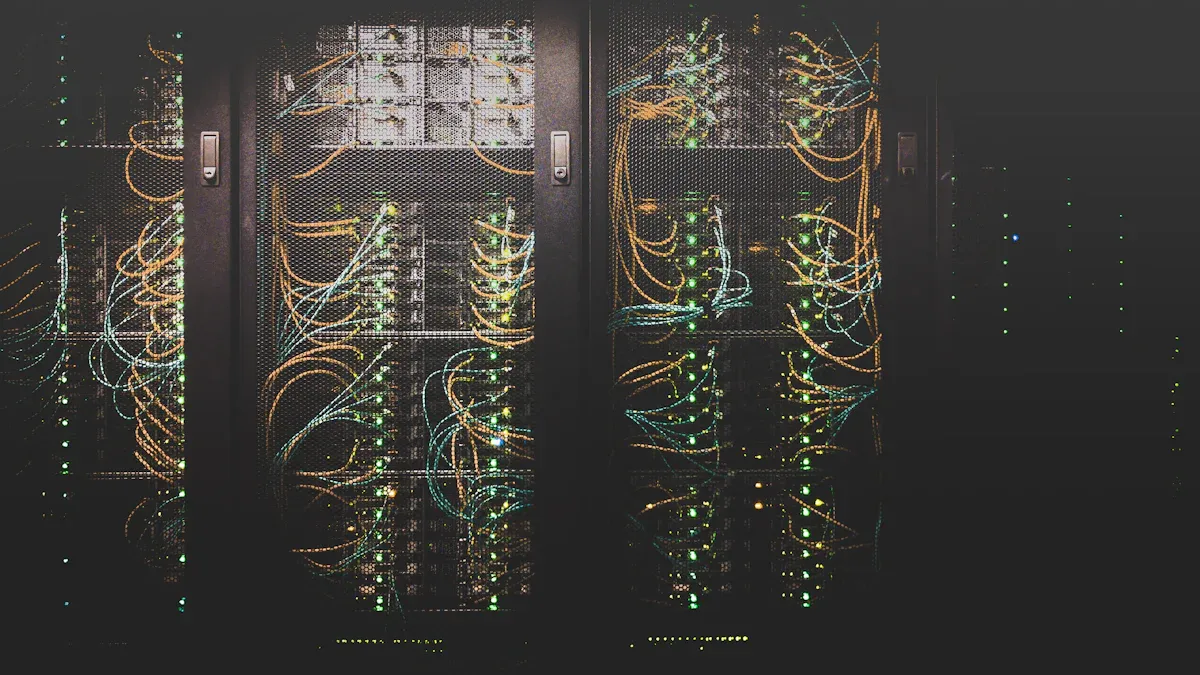
A Power Distribution Unit (pdu) distributes electrical power to multiple components. These devices are critical for managing energy distribution safely and efficiently within IT environments like data centers. Power-related issues frequently cause data center downtime. PDUs actively mitigate these risks by efficiently distributing power and preventing overloads, which often lead to outages. They relay AC power from a power source to connected devices without conditioning or generating power. While a Basic PDU provides fundamental power delivery, an Intelligent PDU offers advanced monitoring and control features.
Key Takeaways
- A PDU sends electricity from one source to many devices. It helps manage power safely in places like data centers.
- Basic PDUs just give power. Intelligent PDUs also watch and control power use, which is better for modern data centers.
- PDUs keep data centers running smoothly. They prevent power problems that can shut down computers.
- Intelligent PDUs help save energy. They show you which devices use a lot of power so you can make smart choices.
- You can turn devices on or off from far away with intelligent PDUs. This makes fixing problems easier and faster.
- Choosing the right PDU means looking at how much power your devices need. You also need to check the types of plugs and outlets.
- A PDU gives out power, a UPS gives backup power when electricity goes out, and a PSU changes power inside a device.
What is a PDU and How It Works
Defining a PDU
Power Distribution Function
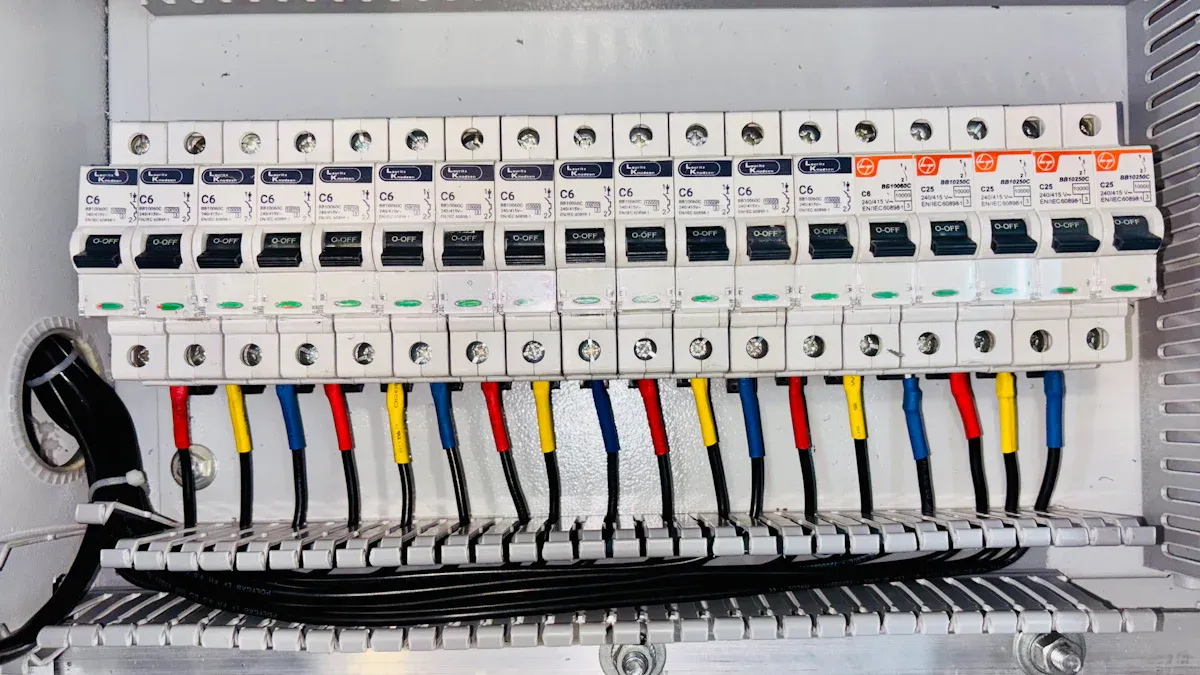
A Power Distribution Unit (PDU) serves as a crucial component in electrical systems, primarily distributing power from a single input source to multiple output devices. It does not generate or condition power; instead, it efficiently manages the flow of electricity. The fundamental electrical engineering principles governing PDU operation ensure safe and effective power delivery. PDUs operate based on the voltage and the number of phases in the electrical circuit. This includes distinguishing between single-phase wiring, common in homes and offices, and three-phase wiring, which provides more consistent power and supports higher power demands. The current capacity of a PDU is determined by the wire thickness and the type of receptacle. The PDU’s plug must be compatible with the branch circuit outlet, with three-phase units typically having thicker power cords. Furthermore, PDUs must accommodate various device plug types and voltages, such as 120V and 208V, to ensure compatibility and prevent equipment damage. A three-phase PDU can offer both 120V and 208V outlets for flexibility. A critical principle involves preventing circuit overload. In North America, PDUs should not draw more than 80% of the rated current. PDUs exceeding 20 amps typically include built-in circuit breakers to protect the wiring, often with a slight delay to handle brief power surges during equipment startup.
Role in Data Centers
In data centers, PDUs play an indispensable role by providing a centralized and organized method for delivering power to racks of servers, networking equipment, and other critical IT infrastructure. They simplify cable management, reduce clutter, and ensure that each piece of equipment receives the necessary power. This organized distribution minimizes the risk of power outages caused by overloaded circuits or improper wiring, directly contributing to the reliability and continuous operation of the data center.
How a PDU Operates
Power Input and Output
A PDU receives power from an uninterruptible power supply (UPS), a utility power source, or a generator. It then distributes this power through multiple outlets to connected devices. The input specifications for data center PDUs vary significantly to accommodate diverse power requirements. For instance, high voltage three-phase PDUs typically accept 2x [3Ph. (4W+ground)] 230/400 Vac, 50/60 Hz (nominal 220V – 240V AC) with a maximum of 18A per phase. High voltage single-phase units often take 3x [1Ph. (2W+ground)] 230 Vac, 50 Hz (nominal 220V – 240V AC) with a maximum of 32A per input. Low voltage three-phase PDUs might use 2x [3Ph. (3W+ground)] 208 Vac, 50/60 Hz (nominal 190V – 220V AC) with a maximum of 34.6A per phase. Server Technology rack PDUs offer input current options ranging from 16 Amps to 100 Amps. Voltage inputs vary from -48VDC to 415V for three-phase configurations.
| PDU Type | Voltage Input Rating | Amperage Input Rating (per phase/input) |
|---|---|---|
| High Voltage 3 Phase | 2x [3Ph. (4W+ground)] 230/400 Vac, 50/60 Hz (nominal 220V – 240V AC) | Max. 18A per phase |
| High Voltage 1 Phase | 3x [1Ph. (2W+ground)] 230 Vac, 50 Hz (nominal 220V – 240V AC) | Max. 32A per input |
| Low Voltage 3 Phase | 2x [3Ph. (3W+ground)] 208 Vac, 50/60 Hz (nominal 190V – 220V AC) | Max. 34.6A per phase |
Basic Circuit Protection
PDUs integrate various circuit protection mechanisms to ensure safety and system integrity. Input over-current protection is a standard requirement, often met by appropriately rated circuit breakers that comply with standards like UL489 or IEC60947. These typically include Molded Case Circuit Breakers (MCCBs) rather than Miniature Circuit Breakers (MCBs) approved to UL1077. Additionally, PDUs may incorporate EMI filters for electromagnetic compatibility and surge suppression devices to protect connected equipment from power surges, adhering to standards such as IEC-61000. For branch circuits, overcurrent protection is achieved through circuit breakers, fuses, or electronic over-current protection devices, with downstream breakers potentially only needing to meet UL1077 if the input breaker meets UL489 or IEC60947.
While not all PDUs include built-in surge protection, it is an optional feature. PDUs with surge protection typically feature an ‘SPD’ label, surge status indicator lights, and display surge performance parameters like Joule rating on their nameplate. Internally, these PDUs contain surge protection modules, commonly composed of MOVs (Metal Oxide Varistors), TFMOVs (Thermally Fused Metal Oxide Varistors), and TVS (Transient Voltage Suppressor) diodes, along with other auxiliary components like inductors, capacitors, resistors, and grounding wires. These components work together to protect connected equipment from input power surges.
Other critical protection mechanisms include:
- Short-Circuit Protection: Utilizes high-voltage fuses and contactors to quickly disconnect current, preventing damage from short-circuit faults.
- Overcurrent Protection: Employs contactors or fuses to disconnect the circuit when the load current exceeds the rated range, avoiding equipment overload.
- Overtemperature Protection: Incorporates temperature sensors to monitor device temperatures in real-time, safeguarding against heat-induced damage from high currents.
Types of PDUs for Data Center Needs

Data centers employ various Power Distribution Units to meet diverse power requirements and management strategies. These units range from simple power strips to highly sophisticated intelligent systems.
Basic PDUs
Basic PDUs offer straightforward power distribution without advanced monitoring or control features. They function primarily as reliable power conduits.
Simple Power Strips
Simple power strips are the most fundamental type of PDU. They provide multiple outlets from a single power input. People commonly use them in small office environments or for non-critical applications where advanced power management is not necessary. They offer a cost-effective solution for basic power distribution.
Rack-Mounted Basic PDUs
Rack-mounted basic PDUs integrate into server racks, providing multiple outlets for IT equipment. They come in horizontal or vertical configurations to optimize space within the rack. These units distribute power efficiently to servers, switches, and other devices. They do not offer monitoring or remote control capabilities.
| Feature/Application | Basic PDUs | Intelligent PDUs |
|---|---|---|
| Primary Function | Distributes power without advanced monitoring or control. | Advanced power management, monitoring, and control. |
| Monitoring & Control | No monitoring or control features; functions as a basic power strip. | Real-time monitoring of power usage, temperature, and environmental parameters; remote control of individual outlets. |
| Network Connectivity | None | Built-in intelligence and network connectivity. |
| Energy Management | No specific features for energy optimization. | Helps optimize energy usage and identify power-saving improvements. |
| Outlet Control | No individual outlet control. | Allows remote on/off, reboot, and power sequencing for individual outlets. |
| Environmental Sensors | None | Some models include sensors for temperature, humidity, etc. |
| Typical Applications | Small office environments, non-critical applications, budget-constrained setups. | Data centers, server rooms, remote locations where uptime and energy management are crucial. |
| Cost-Effectiveness | Cost-effective for basic power distribution. | Higher cost due to advanced features, but offers long-term efficiency benefits. |
Intelligent PDUs
Intelligent PDUs provide advanced functionalities beyond basic power distribution. They offer critical monitoring and control features essential for modern data centers.
Metered PDUs
Metered PDUs provide local power monitoring through a built-in display. They show aggregate current draw, voltage, and other power metrics. This allows data center personnel to monitor power usage directly at the rack.
Monitored PDUs
Monitored PDUs offer remote monitoring capabilities. They collect data on various power metrics such as voltage, current, active power, apparent power, energy, and power factor. Data center personnel can access this information remotely via web interfaces, SNMP, SSH, Telnet, or RESTful APIs. This integration with DCIM and BMS systems helps prevent overloads and understand consumption.
Switched PDUs
Switched PDUs combine monitoring with remote control over individual outlets. This feature enables IT staff to control individual outlets on the PDU via the network. They facilitate remote power cycling of equipment and prevent accidental overloads. Switched PDUs significantly improve data center management. They allow local and remote tracking, control, and regulation of power usage, enhancing efficiency and dependability. They also help identify and eliminate “zombie servers” that consume power idly.
Outlet-Level Control PDUs
Outlet-level control PDUs offer the most granular control. They allow users to remotely switch individual outlets on or off. This capability helps optimize power usage and manage equipment remotely.
Specialized PDU Solutions
Specialized PDU solutions address unique power distribution challenges in specific data center environments.
Automatic Transfer Switch (ATS) PDUs
Automatic Transfer Switch (ATS) PDUs provide power redundancy. They automatically switch between two power sources in milliseconds if one fails. This prevents downtime in critical operations. ATS PDUs ensure a continuous power supply, integrating seamlessly with generators for automatic power restoration. They enhance safety by protecting against power surges and reducing equipment damage risks.
High-Density PDUs
High-density PDUs are crucial in modern data centers with high-density workloads. A rack with 8kW to 10kW of electronics is considered high-density. These PDUs provide greater power capacity and ensure stable power delivery to critical equipment like servers, routers, and switches. They simplify cabling by allowing a single, thicker cable for power delivery. High-density PDUs are essential in data centers, server rooms, and manufacturing facilities.
AC and DC PDUs
PDUs are available for both Alternating Current (AC) and Direct Current (DC) environments. AC PDUs are common in most data centers, distributing standard utility power. DC PDUs serve specific applications, such as telecommunications equipment or certain specialized computing environments that operate on DC power.
Benefits of Intelligent PDUs
Intelligent PDUs offer significant advantages for data center operations, moving beyond basic power distribution to provide critical monitoring, management, and efficiency capabilities. They empower data center managers to maintain optimal performance and reliability.
Enhanced Power Monitoring
Intelligent PDUs provide comprehensive visibility into power infrastructure. They collect crucial data, allowing for proactive management.
Real-time Data Collection
Intelligent PDUs continuously gather real-time data on various power metrics. They monitor power consumption, voltage, current, and frequency. Some models also track environmental parameters like temperature and humidity. This detailed monitoring occurs at multiple levels: the infeed, branch circuits, and individual outlets. For instance, infeed power sensing can track current, voltage, power, apparent power, crest factor, reactance, power factor, and accumulated energy. Branch monitoring helps detect power supply issues, such as a decrease in power factor, and identifies harmonic distortion. Outlet-level monitoring provides insights into individual device power consumption, helping identify idle equipment. This continuous data collection is crucial for enhancing energy efficiency and ensuring compliance with energy regulations.
Threshold Alerting
Intelligent PDUs allow users to configure custom power threshold alerts. These systems send notifications via SMS, SNMP traps, or email when power levels exceed predefined warning or critical thresholds. This proactive notification of impending issues helps prevent potential overloads and avoids unplanned downtime. Real-time alerts notify users of potential overloads, preventing costly interruptions.
Improved Power Management
Intelligent PDUs provide advanced tools for managing power distribution within the data center. They offer remote control and sophisticated load management.
Remote Power Cycling
Intelligent PDUs enable remote power cycling of individual outlets. This feature allows IT staff to turn devices on, off, or reboot them from any location. Remote power management optimizes workflow and reduces the need for on-site interventions. This capability is particularly useful for troubleshooting equipment or managing power to specific devices without physical access.
Load Balancing Capabilities
Intelligent PDUs actively monitor and manage load balancing across power phases and circuits. Three-phase PDUs are designed to evenly distribute electrical loads, reducing stress on circuits and preventing overloads. They report on phase differences and issue alerts when these differences exceed a predetermined percentage. Maintaining balanced loads minimizes disruptions and wasted electricity. Alternating outlet wiring between phases simplifies cord management and promotes more efficient load balancing.
Increased Energy Efficiency
Intelligent PDUs play a vital role in optimizing energy usage and reducing operational costs within data centers.
Identifying Power Consumption
Intelligent PDUs track real-time power consumption at the outlet, pdu, or rack level. This precise monitoring helps identify power-hungry hardware and underutilized servers. By analyzing this data, data center managers can compare hardware energy efficiency and make informed decisions about equipment upgrades or consolidation. Metered PDUs measure power usage at the unit or outlet level for accurate energy tracking and overload avoidance.
Optimizing Power Usage
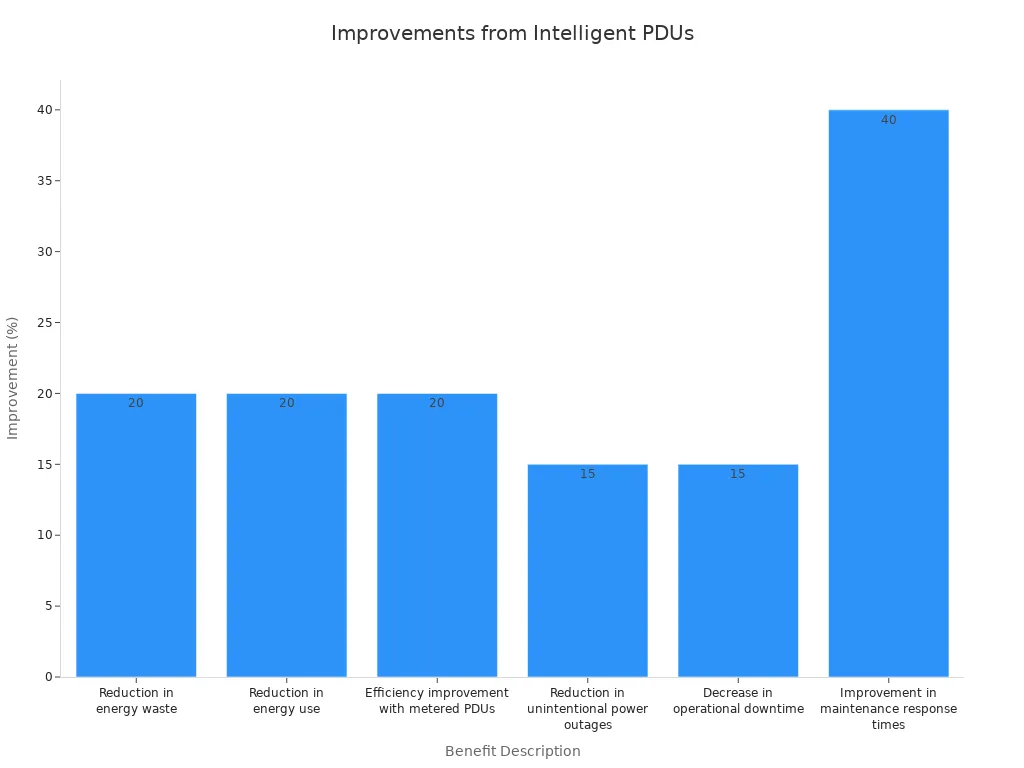
Intelligent PDUs contribute significantly to optimizing power usage. They enable efficient energy distribution by matching supply to demand. Intelligent load management allows for load shedding during peak demand or when devices are idle. Scheduled power cycling can remotely power down unused IT equipment, further reducing energy consumption. Organizations have reported energy savings of up to 20% after deploying intelligent PDUs. Companies like eBay have cut operational costs by 50% through strategic use of smart PDUs.
Maximizing Uptime and Reliability
Intelligent PDUs significantly enhance data center uptime and reliability. They provide tools for proactive problem-solving and effective overload prevention. These capabilities ensure continuous operation of critical IT infrastructure.
Proactive Problem Solving
Intelligent PDUs offer individual outlet-level metering and monitoring. This provides insights into power usage. Operators use this data to identify inefficiencies, optimize capacity planning, and enhance energy efficiency. This ensures balanced loads and prevents overloading. Intelligent PDUs play a vital role in capacity planning and scalability. They provide granular power usage data for accurate forecasting of power requirements. This supports future growth and resource allocation decisions. Remote monitoring and control capabilities allow data center operators to manage power distribution across multiple PDUs from a centralized interface. This eliminates the need for physical presence and reduces response times during critical situations. It also enables proactive identification of issues like unusual power consumption patterns. Built-in sensors monitor environmental conditions such as temperature and humidity. They trigger immediate alerts for abnormal changes. This prevents potential equipment failures and reduces downtime. Remote monitoring systems, often combined with AI and machine learning, detect equipment issues before they cause downtime. They trigger alarms and provide forensic insights. Data analytics and reporting tools provide valuable insights for operators. They track historical and real-time data, supporting trend analysis and capacity planning. This helps identify high energy-consuming equipment and enables targeted improvements.
Preventing Overloads
Intelligent PDUs track power and environmental data in real-time. They send alerts for threshold breaches. This supports load balancing, energy savings, trend analysis, and capacity planning. Real-time monitoring features track power consumption and environmental conditions. They provide immediate alerts for power spikes or irregularities. This prevents downtime and equipment damage. Outlet-level monitoring identifies inefficient devices. It supports better load balancing and extends equipment lifespan through proactive alerts against circuit overloads. Surge protection devices (SPDs) built into a PDU prevent costly failures and downtime. They protect sensitive electronics from power surges and lightning strikes. These events are responsible for significant annual costs and outages. Unplanned downtime costs Fortune Global 500 companies about $1.5 trillion each year. Power surges cost US companies over $80 billion annually. This highlights the importance of surge protection in PDUs. Companies like eBay have achieved up to a 50% reduction in operating costs through detailed energy monitoring provided by Smart PDUs. Reports show that when PDUs work with DCIM systems, operational costs drop by 20%. Downtime can fall by up to 25%. Power Usage Effectiveness (PUE) improves to as low as 1.2.
PDU Form Factors and Placement
Power Distribution Units come in various physical forms, or “form factors,” designed to fit different data center layouts and equipment configurations. Choosing the correct form factor ensures efficient power delivery and optimal space utilization.
Rackmount PDUs
Rackmount PDUs are the most common type found in data centers. They integrate directly into server racks, providing power to the equipment housed within.
Horizontal Rackmount PDU
Horizontal rackmount PDUs occupy space within the standard rack unit (U) system. They typically mount horizontally across the front or back of a server rack, consuming 1U or 2U of rack space. These units often feature fewer outlets, usually between 8 and 16, due to the limited width of the rack. They are suitable for less dense racks or when specific devices require power at a particular horizontal level. While easier to install in any available U-slot from the front, they can contribute to cable clutter if not managed carefully.
Vertical Rackmount PDU
Vertical rackmount PDUs, also known as 0U PDUs, mount vertically along the side or back of a server rack. This design allows them to occupy no usable rack unit space, making them highly space-efficient. Vertical PDUs can accommodate a large number of outlets, often up to 48 or more, because of their length. They simplify cable management by allowing power cables to run directly up or down the rack. Vertical PDUs also generally improve airflow as they do not obstruct the front-to-back airflow path of rack-mounted equipment. They are ideal for high-density environments where rack space is at a premium.
| Feature | Vertical PDUs (0U) | Horizontal PDUs (1U or 2U) |
|---|---|---|
| Space Efficiency | Mounts vertically in the back or side of the rack, taking up 0U of rack space. | Mounts horizontally within the rack, consuming 1U or 2U of rack space per PDU. |
| Outlet Density | Can accommodate a large number of outlets (up to 48 or more) due to their length. | Limited by the width of the rack, typically offering fewer outlets (8-16 per PDU). |
| Cable Management | Often simplifies cable management by allowing power cables to run directly up or down the rack to the PDU. | Can contribute to cable clutter if not managed carefully, as cables often need to be routed across the rack. |
| Cooling | Generally better for airflow as they do not obstruct the front-to-back airflow path of rack-mounted equipment. | Can slightly impede airflow if not properly positioned or if cables are poorly managed. |
Floor-Standing PDUs
Floor-standing PDUs are larger units that sit outside or adjacent to server racks. They handle higher power capacities and serve as central distribution points.
Cabinet PDUs
Cabinet PDUs are large, self-contained units that resemble small electrical cabinets. They typically stand on the data center floor, often near rows of server racks. These units distribute power to multiple racks or entire sections of a data center. They provide a robust and centralized power distribution solution for significant power loads.
Main Distribution Units
Main Distribution Units (MDUs) represent the largest scale of floor-standing PDUs. They serve as the primary power distribution point for an entire data center or a large section of it. MDUs receive power directly from the utility or a large UPS system. They then distribute this power to smaller PDUs, cabinet PDUs, or directly to high-power equipment. MDUs are critical for managing the overall power infrastructure of large-scale data centers.
Key Considerations for Choosing a PDU
Selecting the right power distribution unit is crucial for optimizing data center performance and ensuring operational reliability. Data center managers must evaluate several factors to match the PDU to specific infrastructure needs.
Power Requirements for Your PDU
Understanding the electrical demands of your equipment is the first step in PDU selection.
Voltage and Amperage
The PDU must align with the voltage and amperage of your data center infrastructure. Rack PDUs offer various input voltage options. Common voltage outputs for computing gear are 208/240V, with a growing trend towards 400V input. It is crucial to confirm your infrastructure’s voltage to select the appropriate PDU voltage. Amperage also dictates the PDU’s power rating. For instance, a 30A PDU with a 30A fuse will trip if the circuit exceeds 30A for an extended period. The National Electrical Code mandates that PDUs rated 30A or higher must include a 20A breaker for safety. PDU voltage ranges from 120V to 480V, while amperage can go up to 400A. For typical rack equipment, common ranges are 120V-208V and 15A-30A.
Phase Configuration
Data centers must choose between single-phase and three-phase power configurations. Three-phase power distribution systems are strongly recommended for data centers with heavy workloads. Single-phase systems are rarely used in modern data centers due to their inability to meet the higher electricity demands of dense cabinets.
| Feature | Single-Phase PDU | Three-Phase PDU |
|---|---|---|
| Cost | Less expensive | More expensive |
| Cord | Thinner, lighter | Thicker, heavier (due to additional wires) |
| Number of PDUs | More needed for equivalent power | Fewer needed for equivalent power |
| Cable Management | More cords for high power, potentially complex | Fewer, thicker cords simplify installation and save rack space |
| Voltage Support | Typically 120V (North America), 230V (Europe) | Can provide outlets for both 120V and 208V devices |
| Resilience | Less resilient; tripping a breaker affects more outlets | More resilient; more circuit breakers mean fewer outlets lost if one trips |
| Power Capacity | Lower power requirements, suitable for homes/offices | Higher power density, suitable for data centers and industrial equipment |
Outlet Configuration of a PDU
The type and number of outlets on a PDU directly impact its utility and safety.
Number and Type of Outlets
A PDU’s power rating reflects the amount of electrical power it supports, expressed in amps, volts, and watts. Amps reflect the actual electrical current. Load capacity refers to the maximum power required by devices. For safety, the load capacity for circuits in North America is typically 80 percent of the circuit’s maximum capacity. For example, a 15 amp circuit has a maximum load capacity of 12 amps. Common outlet types include NEMA 5-15R, NEMA 5-20R, NEMA L5-20R, NEMA L5-30R, NEMA L6-20R, NEMA L6-30R, IEC C13, and IEC C19. IEC C13/C14 outlets are most common in modern data centers, handling up to 15 amps (US) or 12 amps (elsewhere) at up to 250V. IEC C19/C20 outlets are larger, handling up to 20 amps at up to 250V.
Locking Outlets
Integrated outlet-level locking mechanisms on PDUs prevent accidental disconnection of server power cords. This design securely holds cords in place, eliminating the need for proprietary power cords or external accessories. Such integrated locking outlets are particularly effective in high-traffic or high-vibration environments. They ensure cord security and prevent costly downtime. Locking outlets eliminate the risk of accidental disconnects, preventing power losses and associated costs. They also prevent data loss by stopping loose or pulled cords. Using colored locking power cords, coordinated with colored PDUs, simplifies identifying which cord belongs to a device, leading to quicker troubleshooting and improved data center efficiency.
Management Features of a PDU
PDU management features range from basic local monitoring to advanced remote control and security.
Local vs. Remote Access
Basic PDUs do not support remote monitoring or control, requiring personnel to be physically present to make changes. Intelligent PDUs, however, enable remote power control through web interfaces. They provide alerts for power issues and integrate with other management tools. This remote access facilitates quick problem resolution and maintains operational continuity. Intelligent PDUs offer local control, but remote capabilities are their distinguishing feature.
Software Integration
Intelligent PDUs incorporate robust security measures. These include encryption for private messages, password protection, firewalls to block malicious traffic, and digital certificates for user authentication. They also use access controls, enforce strong passwords, encrypt all data, and implement multiple security steps to prevent network attacks. Basic PDUs lack these advanced security tools, providing only power distribution without extra protection. Switched PDUs and Intelligent PDUs, being networked embedded systems, are more susceptible to cyber vulnerabilities from software flaws, insecure configurations, weak authentication, or protocol vulnerabilities. They require comprehensive security measures like strong authentication, role-based access control, encryption, and network segmentation.
Environmental Factors for PDU Deployment
Data center environments significantly impact PDU performance and the longevity of connected equipment. Therefore, careful consideration of environmental factors is essential for optimal PDU deployment.
Temperature and Humidity Monitoring
Maintaining stable temperature and humidity levels is critical for data center operations. High temperatures can lead to equipment overheating and premature failure. Excessive humidity can cause condensation and corrosion, while very low humidity can increase static electricity risks. Intelligent PDUs often integrate environmental sensors. These sensors monitor ambient temperature and humidity directly within the rack. They provide real-time data to data center managers. This real-time monitoring allows for proactive adjustments to cooling systems. It helps prevent thermal runaway conditions. The PDU can also trigger alerts when environmental parameters exceed predefined thresholds. This immediate notification enables quick intervention, protecting valuable IT assets from environmental damage. Effective temperature and humidity monitoring through PDUs contributes directly to equipment reliability and extended operational life.
Security Features
As PDUs become more intelligent and network-connected, their security becomes paramount. Intelligent PDUs are essentially network devices. They require robust security measures to protect against unauthorized access and cyber threats. Modern intelligent PDUs incorporate several security features. They include strong password protection and user authentication mechanisms. Role-based access control (RBAC) ensures only authorized personnel can perform specific actions. For example, an administrator might have full control, while a technician only has monitoring access.
Encryption protocols, such as SSL/TLS, secure communication between the PDU and management systems. This protects sensitive data from interception. Network segmentation can isolate PDUs from broader corporate networks, reducing the attack surface. Built-in firewalls further enhance security by blocking malicious traffic. Digital certificates authenticate the PDU itself, ensuring it is a trusted device on the network. Basic PDUs, lacking network connectivity, do not require these advanced security features. However, for intelligent PDUs, implementing comprehensive security protocols is crucial. These measures safeguard the power infrastructure and prevent potential breaches that could disrupt data center operations.
PDU vs. UPS vs. PSU: Clarifying the Differences
Data center professionals often encounter various power-related acronyms. Understanding the distinct roles of a PDU, UPS, and PSU is crucial for effective power management. Each device serves a unique purpose in maintaining a stable and reliable power supply for IT infrastructure.
Understanding the PDU
Power Distribution Focus
A power distribution unit (pdu) primarily distributes electrical power. It takes power from a single source and delivers it to multiple devices. PDUs do not generate power; they act as conduits. They also do not condition power. This highlights a fundamental difference in their operational roles, with PDUs being passive distributors. PDUs are solely for power distribution. They simplify power management and organize power delivery on a per-rack basis. In critical setups, multiple PDUs connected to separate power sources enable failover. This ensures continuous operation if one source or PDU fails. For high-density systems like blade servers or GPU-intensive systems, multiple PDUs are essential. They safely deliver sufficient current and prevent load imbalances or overloads.
PDUs enable precise power distribution, monitoring, and control. This reduces the workload for data center managers. They help in load balancing to prevent overloads and ensure uninterrupted service. Advanced PDUs provide real-time data on power consumption and remote power control, aiding in efficiency. PDUs include circuit breakers and surge protectors. These safeguard critical hardware from power spikes and electrical faults. Intelligent PDUs can save operational costs. They reduce power waste and minimize unintentional power outages through load-balancing features.
Understanding the UPS
Battery Backup and Power Conditioning
An Uninterruptible Power Supply (UPS) provides battery backup power during outages and disturbances. It ensures continuous operation, preventing data loss and downtime. UPSs protect equipment from power outages and quality issues. They act as backup batteries. This highlights a fundamental difference in their operational roles, with UPSs being active power providers during outages.
| Feature | UPS (Uninterruptible Power Supply) | PDU (Power Distribution Unit) |
|---|---|---|
| Function | Provides battery backup power during outages and disturbances. | Distributes electrical power to multiple devices. |
| Purpose | Ensures continuous operation, prevents data loss and downtime. | Manages and distributes power efficiently to various equipment. |
| Key Role | Protects equipment from power outages and quality issues. | Organizes power delivery, often from a UPS or main supply. |
| Features | Battery backup, surge protection, data protection. | Power distribution, monitoring capabilities (advanced PDUs), rack-mountable. |
The primary function of a UPS is to provide emergency power. It uses stored energy in its batteries during outages. The runtime, which can vary from minutes to hours, depends on battery capacity and connected load. This allows for safe equipment shutdown or bridging until main power is restored. UPS systems also filter and regulate incoming power. They protect against quality issues like surges, sags, spikes, and noise. Standby and Line-Interactive UPS offer basic conditioning. Online UPS provides the highest level by continuously converting AC to DC and back to AC for stable power.
UPS units offer power conditioning to protect against surges and voltage spikes. They utilize active filters to remove harmonic distortions and ensure a clean AC waveform. Different UPS types (Single-conversion, Line-interactive, Double-conversion, Multi-mode) provide varying levels of power conditioning. Double-Conversion UPS systems continuously convert AC power to DC and then back to AC. This isolates loads from raw utility power and provides clean, reliable electricity. They feature a robust AC-to-DC battery-charger/rectifier and inverter designed for continuous operation. Hybrid Topology/Double Conversion on Demand UPS systems operate as off-line/standby units for high efficiency when power conditions are stable. When power fluctuates outside preset windows, they switch to online/double-conversion mode. This adjusts for voltage variations, filters noise, and controls frequency without using battery power.
Several factors influence the useful service life of UPS batteries. Ambient temperature significantly impacts battery life; higher temperatures reduce it. Battery chemistry diminishes over time. Discharge cycling reduces capacity with each cycle. Maintenance, including periodic care, ensures maximum service life.
Understanding the PSU
Internal Device Power Conversion
A Power Supply Unit (PSU) is an internal component found within individual electronic devices, such as servers, computers, or network switches. Its primary function involves converting the alternating current (AC) electricity from the wall outlet or a PDU into direct current (DC) power. The internal components of the device require this DC power to operate. PSUs also regulate the voltage to ensure a stable and consistent power supply to the device’s sensitive electronics. They often include built-in protection mechanisms against overvoltage, undervoltage, and short circuits. Unlike PDUs, which distribute power externally, or UPSs, which provide backup power, PSUs are dedicated to the internal power conversion and regulation for a single piece of equipment.
Power Distribution Units (PDUs) are indispensable for efficient and reliable power distribution in data centers. They ensure stable power delivery to critical IT equipment. Intelligent PDUs offer critical monitoring and control capabilities for modern IT infrastructure. These features enhance operational efficiency and prevent costly downtime. Selecting the right pdu is vital for optimizing performance, ensuring uptime, and managing power effectively. Proper selection supports a robust and resilient data center environment.
FAQ
What is the primary function of a PDU?
A PDU distributes electrical power from a single source to multiple devices. It acts as a conduit, efficiently managing power flow without generating or conditioning electricity. PDUs ensure organized and safe power delivery to connected equipment.
How do intelligent PDUs differ from basic PDUs?
Intelligent PDUs offer advanced monitoring and control features. They provide real-time data on power usage, remote outlet control, and threshold alerting. Basic PDUs only distribute power without these sophisticated management capabilities.
Why are PDUs important in data centers?
PDUs provide a centralized and organized method for delivering power to IT equipment. They simplify cable management, prevent circuit overloads, and contribute to the continuous operation and reliability of the data center infrastructure.
Can a PDU protect equipment from power outages?
No, a PDU does not protect against power outages. It distributes power. An Uninterruptible Power Supply (UPS) provides battery backup during outages. Some PDUs include surge protection, safeguarding against voltage spikes, but not sustained power loss.
What is the difference between a PDU and a UPS?
A PDU distributes power to multiple devices. A UPS provides battery backup power during outages and conditions incoming power. The UPS ensures continuous operation, while the PDU manages power delivery from the UPS or main source.
What are the benefits of outlet-level control in a PDU?
Outlet-level control allows remote power cycling of individual devices. This feature helps troubleshoot equipment, manage power to specific devices, and optimize energy usage without requiring physical presence. It enhances operational flexibility.
How does a PDU help with energy efficiency?
Intelligent PDUs track real-time power consumption at various levels. This data identifies power-hungry hardware and underutilized servers. Data center managers use this information to optimize power usage, leading to significant energy savings.
Post time: Oct-22-2025