

Introduction
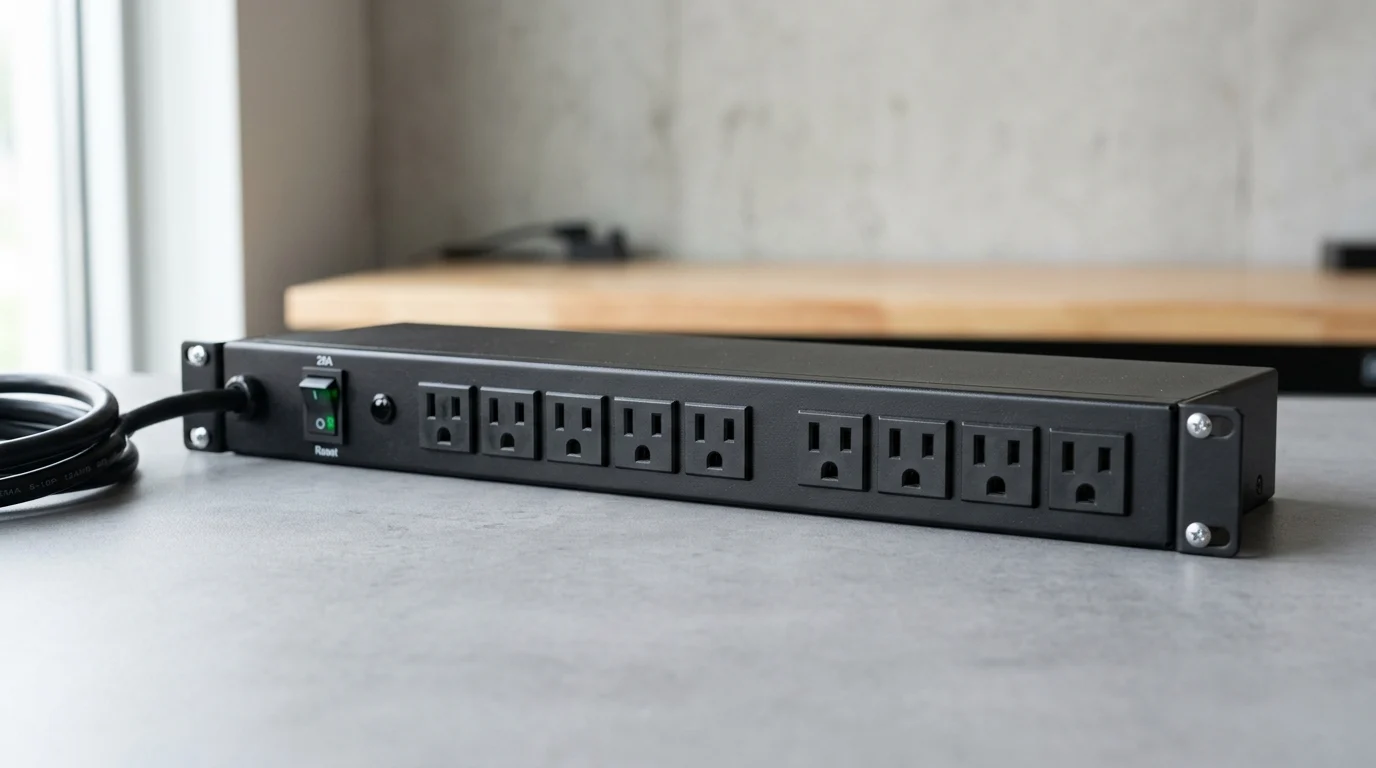
As power distribution gets more feature-heavy, many facilities still benefit most from a basic PDU that does one job well: deliver reliable electricity to rack equipment without added complexity. This article explains where basic PDUs fit in modern IT environments, why they remain a practical choice for server rooms, network closets, and edge sites, and how they can reduce cost, deployment time, and operational risk. By the end, readers will have a clearer view of when simple, unmanaged power distribution is the smarter option and what to consider before selecting a unit.
Why Basic PDUs still matter
I’ll start by addressing the elephant in the room. Everyone in the IT infrastructure space is talking about smart, switched, and metered power strips, but I still see massive, consistent demand for the humble Basic PDU. When you are managing sprawling server deployments or upgrading simple wiring closets, you don’t always need per-outlet monitoring or remote switching. Sometimes, simple, unmanaged Power Management is exactly what keeps your infrastructure resilient and your budget intact.
You’re often saving 60% to 80% per unit compared to intelligent alternatives. When you are outfitting a 50-rack data hall, freeing up thousands of dollars in your IT budget allows you to invest more heavily in active hardware like high-performance switches or SSDs. The value proposition of going back to basics is stronger than ever.
Core use cases in commercial settings
I often recommend basic units for edge computing sites, AV racks, and network closets where remote switching simply isn’t a priority. If you have a standard 42U rack drawing under 5kW, slapping a high-tech, IP-enabled power strip on it is usually overkill.
Basic models thrive in environments requiring pure, unfiltered power distribution without the risk of firmware glitches or network vulnerabilities taking down the rack. I’ve been in data centers where an over-engineered smart unit decided to reboot its network interface, accidentally power-cycling a critical database server. Basic hardware eliminates that specific attack vector and failure point completely.
Operational pain points they solve
Let’s talk about day-to-day Operations. Complex setups inherently introduce more points of failure. By stripping away the IP modules, sensors, and LCD screens, a basic unit dramatically cuts down the mean time between failures (MTBF). You are looking at MTBF rates easily exceeding 100,000 hours because there are no delicate microprocessors baking in the hot aisle.
Streamlining your deployment also becomes an absolute breeze. You literally plug it in, and it works. There are no IP addresses to configure, no secondary network drops to run, and zero firmware updates to schedule during your tight weekend maintenance windows. It just delivers power, 24/7, without asking for your attention.
How to evaluate Basic PDU specifications

Just because it’s “basic” doesn’t mean all units are created equal. I’ve seen cheap commercial power strips masquerading as enterprise-grade hardware, and the resulting downtime is never pretty. When evaluating this Technology, you have to look under the hood.
To ensure your infrastructure stays up, we need to focus heavily on amperage, receptacle types, internal build quality, and the specific form factors that fit your physical space.
Specifications that affect reliability and safety
First, look closely at the amperage and voltage ratings. A standard 15A or 20A 120V unit might be perfectly fine for a telecom closet, but for high-density server racks, I always steer clients toward 30A 208V/240V units with C13 and C19 outlets. If you are deploying in North America, UL 62368-1 certification is a non-negotiable baseline. In Europe, you should be verifying CE and RoHS compliance.
Pay close attention to the internal wiring. You want to see heavy-duty busbars or solid copper wiring—at least 12 AWG for 20A units—to prevent overheating under continuous load. Surge protection is another critical variable. If you aren’t already protected at the UPS level, look for internal surge modules with clamping voltages under 400V and a minimum rating of 1000 Joules.
Key trade-offs and comparison points
The main trade-off you will navigate is balancing outlet density, form factor, and cost. Do you go with a 0U vertical strip to save rack space, or a 1U/2U horizontal unit for a smaller enclosure? A 0U vertical unit saves valuable U-space, but if your racks are narrower than 600mm, it can block airflow or cable management pathways.
Here is a quick breakdown of what I usually see in the field when comparing standard form factors:
| Form Factor | Typical Outlet Count | Max Load Capacity | Average Cost Band | Best For |
|---|---|---|---|---|
| 1U Horizontal | 6 to 8 | 1.4kW – 2.8kW | $50 – $150 | Shallow network switches, AV gear |
| 2U Horizontal | 12 to 16 | 2.8kW – 5.0kW | $100 – $250 | Mixed IT gear, UPS distribution |
| 0U Vertical (Half) | 14 to 24 | 3.6kW – 7.3kW | $150 – $350 | Mid-density server racks |
| 0U Vertical (Full) | 24 to 42 | 5.0kW – 11.0kW+ | $250 – $500+ | High-density enterprise racks |
How to choose the right Basic PDU supplier

Finding the right hardware specifications is really only half the battle. Finding a manufacturing partner who can deliver that hardware reliably, without causing supply chain headaches, is just as crucial.
I’ve learned the hard way that a flawless spec sheet means absolutely nothing if the supplier can’t handle the logistics, misses shipping deadlines, or drops the ball on basic communication when a container is delayed.
Practical sourcing and shipping considerations
When sourcing internationally, you need a supplier whose sales team truly understands the mechanics of global trade. I can tell you from our own experience—our team has more than 8 years of experience in international trade, and we pride ourselves on having zero obstacles in communication with customers from all over the world.
We are deeply familiar with trade terms (like FOB, CIF, or DDP), the exact shipping and payment processes required, and the specific customs and habits in most countries. A reliable supplier should also keep Minimum Order Quantities (MOQs) flexible—say, starting around 50 to 100 units for custom configurations—while maintaining aggressive standard lead times of 15 to 25 days.
How to make the final decision
The final call usually comes down to trust, quality control, and the ease of doing business. You should always feel easy and comfortable dealing with your supplier. I always recommend testing the waters with a pilot or sample order first.
Check their documented defect rate; anything above a 0.5% defect rate is a red flag.
Key Takeaways
- The most important conclusions and rationale for Basic PDU
- Specs, compliance, and risk checks worth validating before you commit
- Practical next steps and caveats readers can apply immediately
Frequently Asked Questions
When is a Basic PDU the best choice?
Choose a Basic PDU for edge sites, AV racks, network closets, and standard server racks where remote switching or outlet monitoring is unnecessary.
How much can a Basic PDU save compared with intelligent models?
Basic PDUs often cost 60% to 80% less, making them a practical option for multi-rack deployments with tight infrastructure budgets.
What specifications should I check before buying from Newsunn?
Confirm amperage, voltage, outlet types like C13/C19, form factor, and certifications such as UL 62368-1, CE, or RoHS for your region.
Is a 0U or 1U Basic PDU better for my rack?
Use 0U vertical units to save rack space in full cabinets; choose 1U horizontal units for smaller enclosures or when side clearance is limited.
Do Basic PDUs improve reliability?
Yes. With no network card, firmware, or display, they reduce failure points and provide simple always-on power distribution with minimal maintenance.
Post time: Apr-24-2026