

Why Upgrading to a Basic PDU Lowers Power Costs
At Newsunn, we’ve spent over 10 years manufacturing power distribution units. We’ve seen firsthand how upgrading to professional rack-mounted solutions stabilizes power delivery, prevents costly downtime, and streamlines bulk purchasing. By focusing on robust, non-metered units, distributors can offer their customers enterprise-grade reliability without the premium price tag attached to smart devices. If you are supplying data centers or telecom installers, understanding the cost-saving mechanics of these units is crucial. It’s not just about the sticker price; it’s about reducing replacement cycles, minimizing maintenance truck rolls, and offering a highly competitive product in your distribution channel. Using consumer-grade strips in professional environments is a recipe for disaster. Flimsy plastic housings and inadequate internal wiring lead to overheating, electrical waste, and frequent breaker trips. By upgrading to an aluminum-housed rack PDU, you drastically reduce overload risks and energy dissipation. The commercial case is simple: you spend slightly more upfront on a commercial-grade unit to completely eliminate the recurring costs of hardware failure and system downtime. For importers, landed cost is everything. Basic units have fewer delicate electronic components, meaning they are less prone to damage during transit, which lowers your defect rate. Additionally, their straightforward design allows for denser packing in shipping containers. From a service perspective, the lack of complex software means zero IT troubleshooting calls. This combination of low landed cost, zero software maintenance, and high reliability protects your resale margins. These units are the workhorses of the industry. They are the perfect fit for edge computing cabinets, standard telecom network racks, AV installations, and harsh industrial environments where remote monitoring isn’t strictly necessary. Anywhere your clients need stable, continuous power distribution without the fuss of IP addresses and network security protocols, a basic rack-mount unit is the ideal choice. When you’re buying in bulk, every single component impacts your bottom line. I always advise my B2B clients to look closely at the bill of materials (BOM). The cost of a PDU isn’t arbitrary; it’s directly tied to the raw materials—like the gauge of the copper wire, the thickness of the aluminum alloy profile, and the quality of the internal brass connections. Understanding these specifications allows you to negotiate better with manufacturers. If you know exactly what your local market requires, you can strip away unnecessary features and build a product that hits your target price point while maintaining safety and compliance. Let’s break down the exact specifications that dictate wholesale pricing. In procurement terms, a non-metered basic unit is a hardware-only power distribution device. It lacks digital displays, IP networking, and individual outlet switching. Its sole function is to take a single power input and safely distribute it to multiple outlets within a standard 19-inch (or vertical 0U) rack environment. To control costs, you need to dial in your specs. A 16A unit is cheaper than a 32A unit because it requires thinner copper wiring. Single-phase is more affordable than three-phase. The number and type of sockets (e.g., standard Schuko vs. locking IEC C13) significantly alter the price. Furthermore, cord length is a major cost driver; don’t order a 3-meter cord if a 1.5-meter cord fits your clients’ standard rack setup. Finally, choosing standard mounting brackets over custom toolless designs keeps manufacturing costs low. Many buyers fall into the trap of over-specifying. They order intelligent units with remote switching for small network closets that are manually serviced anyway. If an IT technician is physically present in the room most of the time, paying a 300% premium for remote reboot capabilities is a complete waste of capital. Deciding between basic, metered, and intelligent power distribution units is a daily conversation I have with distributors. The truth is, while intelligent units get all the marketing hype, basic units quietly power the vast majority of standard IT installations. Knowing when to deploy which type is the key to winning bids and maximizing your project budgets. I always tell buyers to look at the client’s operational maturity. Do they have a dedicated data center infrastructure management (DCIM) software? If not, selling them an intelligent PDU is like selling a sports car to someone who only drives in school zones. Let’s look at how these options compare. Basic units shine in budget-sensitive, high-volume deployments. If you are outfitting 50 wiring closets for a school district, or providing OEM power strips for a standard AV rack manufacturer, cost and reliability are your main drivers. You need a standard Power Strip PDU that simply works the moment it’s plugged in, without requiring a network engineer to configure it. Advanced PDUs are necessary only when the cost of an on-site visit exceeds the cost of the unit itself. Colocation data centers, remote edge computing sites, and high-density server racks where thermal monitoring is critical justify the investment in intelligent units. Here, remote rebooting and phase-level power monitoring save real money. Sourcing the right product at the right margin requires partnering with a factory that actually understands export markets, not just a middleman. Over the last decade, we built our production base in the Cidong Industrial Zone, Cixi City, specifically because its proximity to the Ningbo port dramatically cuts down inland freight costs. For B2B buyers, sourcing is about risk management. You want a supplier that can handle your volume, customize your socket mix, and ship on time without compromising on the internal copper quality. If you want to secure Budget Power Distribution without sacrificing safety, you need a strict supplier vetting process. Evaluate your supplier based on their manufacturing ecosystem. Do they extrude their own aluminum? Do they have in-house testing for ground continuity and high voltage? A supplier located near major ports (like Ningbo or Shanghai) will save you days in lead time and hundreds of dollars in trucking fees per container. Negotiating minimum order quantities (MOQ) is easier with basic units because the core components are standardized. You can often mix and match socket types (e.g., a few batches of UK sockets and a few of IEC sockets) within the same master order. Be clear on your branding requirements—laser-etched logos on black aluminum housings look premium but cost very little at the factory level. Always demand a pre-production sample before wiring the deposit. To protect your margins, negotiate a spare parts rate (e.g., 1% free spare units for bulk orders) rather than dealing with the nightmare of returning a $15 item across the ocean. Clear warranty terms and a documented defect handling process will save your channel relationships. You can negotiate the best price in the world, but if your shipment gets stuck in customs because it lacks a CE mark or UL listing, you’ve lost money. Compliance isn’t just a legal hurdle; it’s a critical component of your total landed cost. I’ve seen importers try to cut corners by using uncertified internal wiring, only to have their entire batch rejected by major distribution partners. It is absolutely vital that you align your factory’s production standards with your destination market’s legal requirements before a single unit is assembled. Every market has its quirks. The EU requires strict RoHS compliance and CE marking. The US demands UL or ETL listings for commercial building codes. Furthermore, your cartons must be labeled correctly with origin marks, voltage ratings, and safety warnings. Missing a simple barcode or warning label can result in expensive re-labeling fees at the destination port. A cheap, non-compliant unit has a massive hidden cost. If a unit fails and causes a server rack to short-circuit, your liability is immense. Even minor issues, like customs holding your container for three weeks to verify electrical safety reports, rack up demurrage fees that obliterate your profit margin. Before shipping, mandate that your supplier provides full documentation. You need the third-party test reports for the specific SKUs you are buying. Request the raw material specifications (especially the copper purity and plastic fire-retardant ratings like UL94V-0). Having traceability and a clear pre-shipment inspection report gives you complete peace of mind. Logistics is where good importers become great importers. Because PDUs are long, relatively heavy items, optimizing your packaging can drastically reduce your freight costs. At Newsunn, we spend a lot of time engineering our master cartons so they perfectly cube out a standard shipping pallet. If you don’t plan your packaging and shipping carefully, you will end up shipping a lot of empty air. By calculating your landed cost accurately from the start, you can set competitive wholesale prices that still leave plenty of room for your business to grow. For B2B distribution, individual retail gloss boxes are usually a waste of money. Opt for sturdy, unbleached kraft inner boxes with clear SKUs and barcodes. Master cartons must be double-corrugated and designed to pass standard drop tests, ensuring the aluminum flanges don’t get bent during rough warehouse handling. Work with a factory that understands container loading. Because our facility is near Ningbo port, we can load containers directly at the factory floor, minimizing the handling of the cartons. Plan your orders around peak shipping seasons to avoid premium freight surcharges, and strictly control your factory lead times. Your true cost is: (Factory Unit Price + Custom Branding/Packaging) + (Third-Party Inspection Fees) + (Ocean Freight + Port Fees) + (Import Duties/Tariffs) + (1-2% Warranty Reserve). Only when you calculate this full formula can you determine your actual profit margin. This is your opportunity to step in as a consultant. By guiding them toward a high-quality basic unit, you save them money, which they can then spend on your other networking products like switches or patch panels. It’s a win-win that builds long-term channel loyalty. Look at the environment. Telecom racks and OEM enclosures usually need “set and forget” power. Workshops need rugged, metal-housed strips that can take a beating. In all these scenarios, a basic unit is the superior choice. Reserve the complex units for massive data centers. Tell your clients to audit their current setups. Are they using plastic consumer strips? Upgrade them to basic rack PDUs. Avoid over-specifying. Match the PDU outlets exactly to the server plugs to avoid messy adapters. Finally, standardize on 3 or 4 main SKUs (e.g., one 8-way C13, one 12-way mixed) to simplify your inventory. Over the years, I’ve fielded thousands of questions from global buyers trying to optimize their power distribution category. The questions almost always revolve around balancing cost with reliability. Creating an Affordable PDU strategy doesn’t mean buying the cheapest thing on the market; it means buying the smartest configuration for your specific needs. Below, I’ve compiled the most common questions procurement teams ask when they are looking to transition their product lines or optimize their supply chain for basic power distribution. By eliminating the failure rates of consumer-grade strips and avoiding the premium of unused smart features, companies can often reduce their power hardware procurement costs by 40% to 60%. Furthermore, avoiding just one hour of downtime caused by a melted plastic power strip pays for the commercial PDU upgrade ten times over. For standard configurations, MOQs can be as low as 100 to 200 units. However, if you are customizing the aluminum profile color or requiring highly specific cord lengths and proprietary plugs, expect factories to request an MOQ of 500+ units to justify the raw material purchasing and production line setup. Essential features include a robust aluminum housing, proper grounding, fire-retardant internal plastics, and market-specific safety certifications. Unnecessary costs for basic setups include individual outlet LED indicators, oversized LCD screens, and premium retail blister packaging that just gets thrown away by the installer. To maximize your margin, standardize your SKUs, avoid over-specifying features your clients don’t need, and source from experienced factories near major export hubs. A well-sourced basic PDU is a low-risk, high-reward product that forms the stable foundation of any B2B IT infrastructure catalog. Related reading: Budget Power Distribution
Why upgrading to a basic PDU can lower power costs
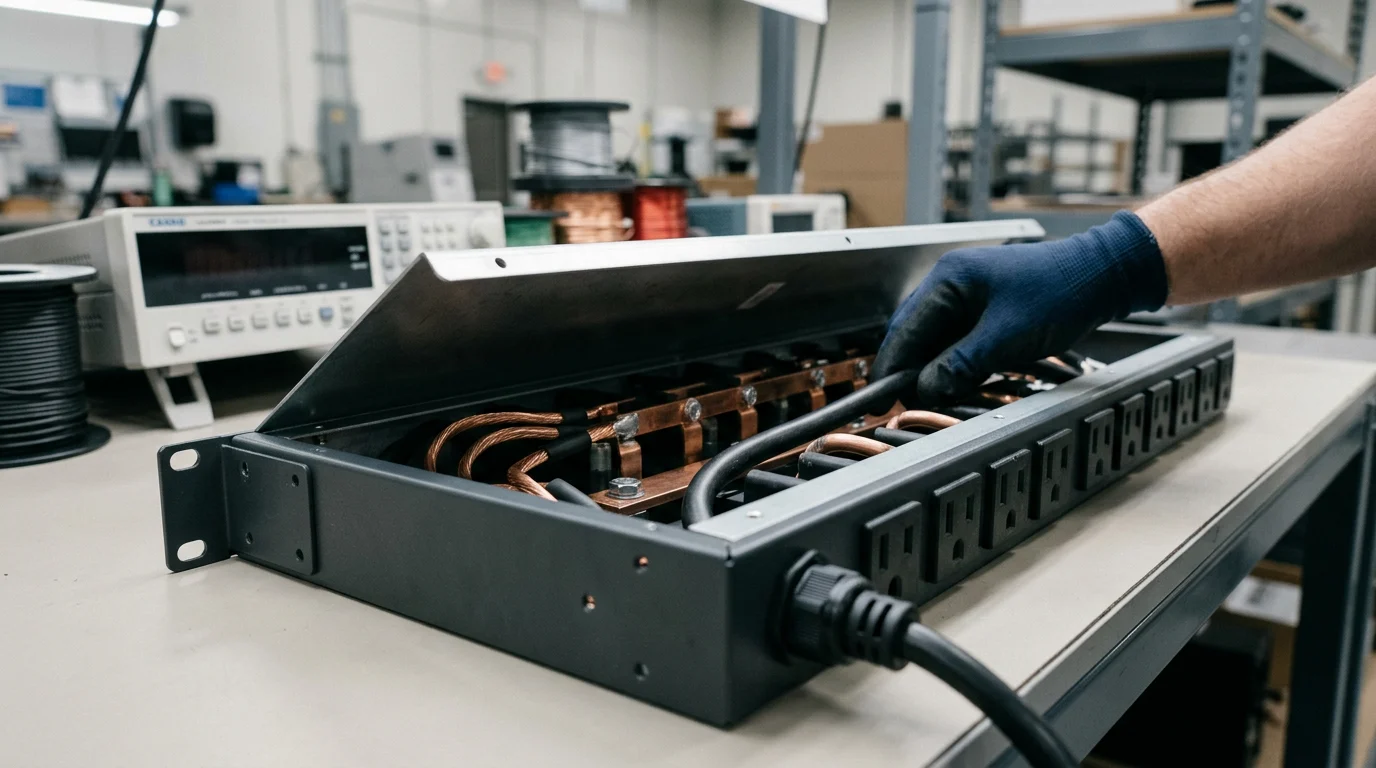
Commercial case for reducing waste, overload risk, and rack-level power issues
How a basic PDU affects landed cost, service cost, and resale margin
Where basic PDUs fit in data cabinets, network racks, and industrial projects
What specifications affect basic PDU cost
Procurement definition of a non-metered basic PDU
Key cost-control specs: current, voltage, phase, sockets, plug, cord, breaker, and mounting
When buyers overpay for switched or intelligent functions
Comparison table: specifications, project needs, and avoidable cost drivers
Specification
Typical Project Need
Avoidable Cost Driver
Cord Length
Rack to standard wall/floor outlet
Ordering 3m+ cords when 1.5m is sufficient
Socket Type
Standard server plugs (C13/C19)
Specifying proprietary locking sockets
Housing
Standard 1U 19-inch rack
Custom painted colors or non-standard lengths
Protection
Basic surge or overload protection
Adding digital current meters for unmonitored rooms
Basic PDU vs metered and intelligent PDU options
Best-fit use cases for stable and budget-sensitive deployments
When advanced PDUs justify the higher cost
Comparison table: unit cost, installation complexity, maintenance, and target segment
PDU Type
Unit Cost
Installation Complexity
Maintenance Level
Target Segment
Basic
Low
Plug-and-play
Zero software maintenance
SMBs, Telecom closets, AV racks
Metered
Medium
Plug-and-play
Minimal (local display checks)
Mid-size server rooms
Intelligent
High
High (IP setup required)
High (firmware updates, security)
Enterprise data centers, Colocation
How to source basic PDUs at the right margin
Supplier evaluation: experience, capacity, QC, customization, and export location
MOQ, lead time, socket mix, housing, branding, packaging, cord, and plug options
Margin protection through samples, warranty terms, spare rate, and defect handling
Supplier audit checklist for wholesale sourcing
Compliance and safety checks before importing basic PDUs
Destination-market requirements for plug standards, ratings, labels, and cartons
How failures, returns, and customs delays increase true cost
Documents to request: test reports, material specs, traceability, and inspection criteria
Packaging, shipping, and landed cost planning
Wholesale packaging: inner box, master carton, pallet, barcode, and drop-test needs
Freight planning, port access, container loading, and lead-time control
Landed cost formula: unit price, customization, packaging, inspection, freight, duty, and warranty reserve
Process flow from RFQ to sample, production, inspection, and shipment
When distributors should choose a basic PDU upgrade

Decision criteria for telecom racks, server cabinets, OEM projects, workshops, and resale
Buying framework: audit installed strips, avoid overspec products, match outlets, and standardize SKUs
Decision matrix: keep current units, upgrade to basic PDU, or step up to metered models
FAQ about basic PDU cost savings and sourcing
How much can a basic PDU reduce operating costs
What MOQ makes sense for customized basic PDUs
Which export features are essential and which add unnecessary cost
Key takeaways for cost reduction, sourcing efficiency, and channel margin
Key Takeaways
Post time: Apr-14-2026