

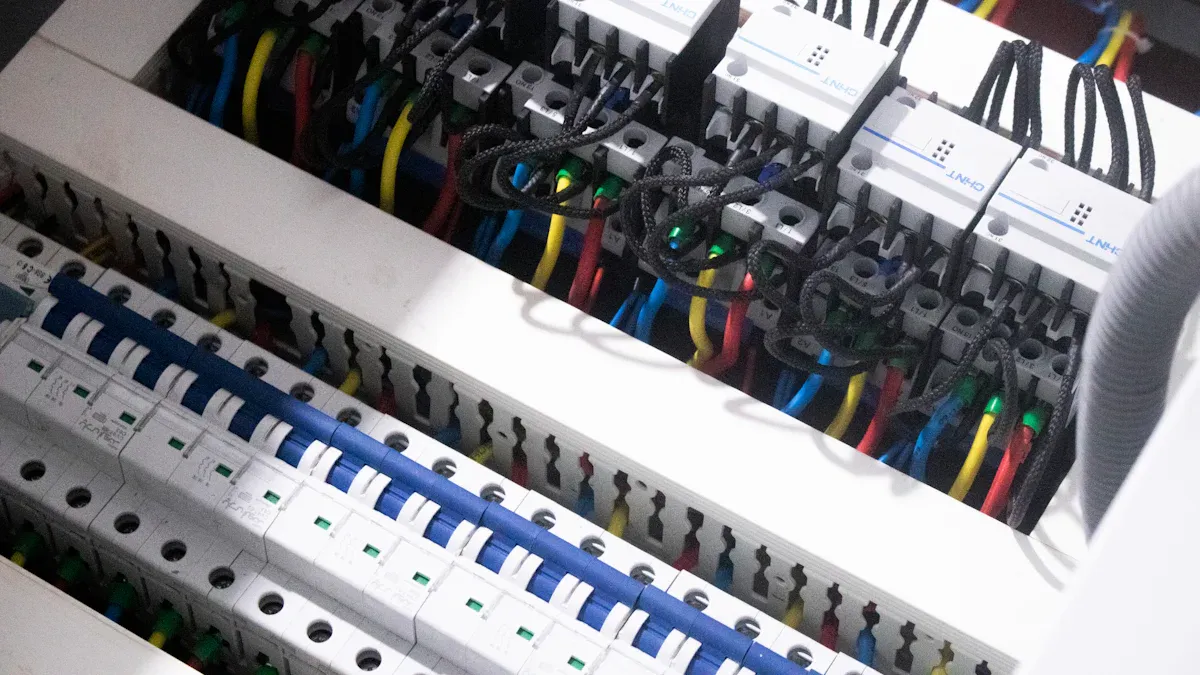
In today’s fast-paced world, Intelligent Power Distribution Units (PDUs) play a critical role in managing energy effectively. As industries demand more efficiency and reliability, these advanced systems step up to meet expectations. For instance, the rise in data center demand is staggering, with projections indicating a fivefold increase in power needs by 2035.
Intelligent Power Distribution Units not only enhance operational efficiency but also help future-proof energy infrastructure. They allow seamless integration of new equipment, ensuring growth without extensive rewiring. With features like real-time monitoring and predictive maintenance, these Intelligent PDUs minimize downtime risks, making them indispensable for any organization looking to thrive in the evolving energy landscape. In contrast, a Basic PDU may not offer the same level of sophistication and adaptability, highlighting the importance of investing in advanced solutions for modern energy management.
Key Takeaways
- Intelligent PDUs provide real-time monitoring, allowing organizations to track energy usage and environmental conditions instantly.
- Remote management capabilities enable operators to control power distribution from anywhere, enhancing operational efficiency.
- Predictive maintenance features help identify potential equipment failures before they occur, reducing downtime and costs.
- Load balancing ensures efficient power distribution, preventing overloads and maintaining system reliability.
- Organizations can achieve energy savings of 30% to 50% by optimizing power distribution with Intelligent PDUs.
- Integration with IoT platforms enhances communication between devices, leading to smarter energy management.
- User-friendly interfaces simplify data access, allowing operators to respond quickly to issues and improve efficiency.
- Investing in Intelligent PDUs future-proofs energy infrastructure, supporting growth and sustainability efforts.
Enhanced Efficiency of Intelligent Power Distribution Units

Real-time Monitoring
Real-time monitoring stands out as one of the most significant features of Intelligent Power Distribution Units. This capability allows organizations to keep a close eye on their power usage and environmental conditions. With real-time data, operators can quickly identify issues before they escalate into costly downtime.
Here are some common features found in Intelligent PDUs that enhance real-time monitoring:
- Outlet Level Monitoring: This feature tracks power consumption at the outlet level, providing detailed insights into energy usage.
- Environmental Monitoring: It ensures optimal operating conditions by tracking factors like temperature and humidity.
- Alerts and Alarms: Users receive notifications based on predefined thresholds, helping to prevent unexpected downtime.
Additionally, remote management capabilities enable operators to access critical infrastructure data from anywhere. This flexibility reduces response times during emergencies, allowing for quicker resolutions.
Tip: By utilizing built-in sensors, Intelligent PDUs can monitor environmental conditions and trigger alerts for any abnormal changes. This proactive approach helps prevent equipment failures and minimizes downtime.
Load Balancing
Load balancing is another area where Intelligent Power Distribution Units excel. These units optimize energy distribution by ensuring that no single circuit becomes overloaded. This capability is crucial for maintaining efficiency and reliability in power management.
Intelligent PDUs achieve load balancing through real-time monitoring and outlet-level control. This advanced functionality allows for precise energy management, preventing overloads and ensuring efficient power distribution. In fact, studies show that using the Probabilistic Systematic Processing Method (PSPM) can lead to a 25% improvement in distribution efficiency and a 30% reduction in disconnections.
Unlike traditional PDUs, which often lack these sophisticated features, Intelligent PDUs provide a more effective solution for energy management. They help organizations avoid potential disruptions and maintain a steady power supply.
Energy Consumption Analytics
Energy consumption analytics play a vital role in helping organizations identify inefficiencies and reduce costs. Intelligent Power Distribution Units offer various metering capabilities that provide insights into power usage at different levels:
- Metering at the unit, inlet, or outlet level: This allows for tracking power usage and capacity data, improving efficiency and resource provisioning.
- Metered inlet PDUs: These help determine power usage and available capacity of circuits, aiding in equipment provisioning and preventing circuit overload.
- Metered outlet PDUs: These provide insights into power consumption at the device or server level, facilitating cost allocation and resource utilization.
Organizations that leverage these analytics report energy savings of up to 41%, leading to substantial annual savings. Moreover, real-time monitoring enables continuous tracking of energy consumption, allowing for quick action on potential failures.
| Feature | Benefit |
|---|---|
| Real-time monitoring | Enables continuous tracking of energy consumption, identifying inefficiencies. |
| Predictive maintenance | Helps in identifying equipment issues before they occur, saving costs. |
| Energy savings | Organizations report energy savings of up to 41%, leading to substantial annual savings. |
| Automated alerts | Reduces downtime by enabling quick action on potential failures. |
Improved Reliability with Intelligent Power Distribution Units
Redundancy Features
Redundancy features in Intelligent Power Distribution Units significantly enhance reliability. These features ensure that power remains available even during unexpected failures. Here are some key aspects:
- Dual Power Inputs: This feature guarantees continuous power availability. If one power source fails, the other takes over seamlessly.
- Automatic Transfer Switching: This technology allows for smooth switching between power sources, maintaining an uninterrupted power supply during failures.
- Failover Capabilities: Backup power paths drastically reduce the likelihood of power failures, ensuring that critical systems remain operational.
These redundancy features help organizations avoid costly downtime. Facilities using Intelligent Power Distribution Units have documented improvements in operational efficiency due to real-time voltage, current, and energy usage measurements. This integration with Data Center Infrastructure Management tools provides valuable insights into power usage trends.
Predictive Maintenance
Predictive maintenance is another crucial aspect of Intelligent Power Distribution Units. These units monitor and manage the power consumption of multiple devices, providing real-time data that helps organizations make informed decisions. Key features include:
- Output Level Monitoring: This allows for tracking power usage at the device level, ensuring optimal performance.
- Environmental Monitoring: Keeping an eye on temperature and humidity helps prevent equipment failures.
- Alerts and Alarms: Users receive notifications based on predefined thresholds, minimizing downtime.
By leveraging these predictive maintenance capabilities, organizations can address potential issues before they escalate. This proactive approach not only reduces downtime but also optimizes energy usage, leading to significant cost savings.
Fault Detection and Isolation
Fault detection and isolation technologies in Intelligent Power Distribution Units are advanced compared to traditional systems. These technologies enable quick identification and resolution of issues, minimizing disruptions. Some notable technologies include:
| Technology Type | Description |
|---|---|
| FLA (SVM with RBF kernel) | Correctly classifies faults using voltage deviations and sequence evaluation. |
| FIA (Rule-based + Decision tree) | Detects affected phases and isolates faults effectively. |
| Wavelet-based methods | Detects fault transients efficiently but requires significant computational resources. |
| Distance protection schemes | Computes fault distances accurately under stable conditions but is less precise in fluctuating grids. |
| Deep learning methods | CNN-LSTM and CNN-GRU models enhance real-time fault detection accuracy. |
The SOGI-THD method showcases rapid fault detection and isolation capabilities, achieving response times of just 6–8.5 milliseconds. This efficiency, combined with a self-healing framework, allows Intelligent Power Distribution Units to respond to faults quickly. When a fault occurs, the system can isolate the issue within 0.02 seconds, minimizing the impact on overall operations.
Smart Features of Intelligent Power Distribution Units
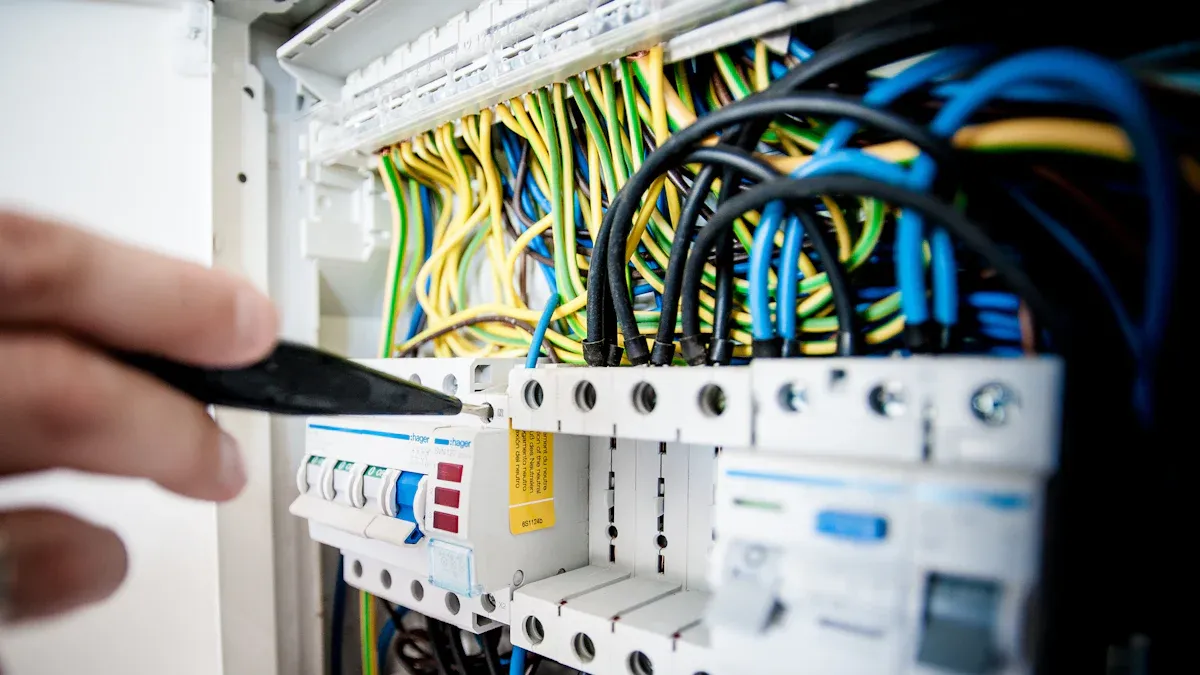
Remote Management
Remote management transforms how organizations handle power distribution. With this feature, IT administrators can monitor and control power usage in real-time, even from afar. This capability is especially beneficial for unmanned facilities, where physical presence isn’t always possible. Here are some key benefits of remote management:
- Real-time monitoring and control of power distribution
- Efficient management of power usage without needing to be on-site
- Support for unmanned facilities, enhancing operational flexibility
- Reduction of downtime through remote rebooting
- Facilitation of load balancing and capacity planning
By enabling these functionalities, Intelligent Power Distribution Units help organizations maintain efficiency and adaptability in dynamic IT environments.
Integration with IoT
Integrating Intelligent Power Distribution Units with IoT platforms takes power management to the next level. This connection allows for seamless communication between devices, leading to smarter energy management. Here are some advantages of this integration:
- Real-time monitoring: Provides immediate insights into power usage and potential issues, preventing downtime.
- Predictive maintenance: Allows for proactive repairs, reducing the likelihood of unexpected failures.
- Automated alerts: Notifies staff of potential problems, enabling quick responses to prevent outages.
- Surge protection: Protects equipment from electrical surges, enhancing safety.
- Dehumidifying functions: Maintains optimal environmental conditions, reducing the risk of equipment failure.
- Hot-swappable components: Facilitates maintenance without system shutdown, ensuring continuous operation.
- Dual power automatic transfer: Ensures continuous power supply by switching between sources, protecting sensitive equipment.
These features not only enhance operational efficiency but also contribute to sustainability efforts, making Intelligent Power Distribution Units a valuable asset in modern energy management.
User-friendly Interfaces
User-friendly interfaces are essential for maximizing the effectiveness of Intelligent Power Distribution Units. These interfaces simplify complex data, making it accessible to users of all skill levels. A well-designed interface allows operators to quickly navigate through various functionalities, ensuring they can respond to issues promptly. Key aspects of user-friendly interfaces include:
- Intuitive dashboards that display real-time data clearly
- Customizable settings to suit specific operational needs
- Easy access to historical data for analysis and reporting
- Simplified controls for managing power distribution and monitoring
By prioritizing user experience, organizations can empower their teams to make informed decisions, ultimately leading to improved efficiency and reliability in power management.
Cost Savings from Intelligent Power Distribution Units
Reduced Energy Costs
One of the most compelling reasons to invest in an Intelligent Power Distribution Unit is the significant reduction in energy costs. Organizations that have made the switch report energy savings ranging from 30% to 50%. This impressive decrease stems from the unit’s ability to optimize power distribution and monitor usage in real-time. By identifying inefficiencies, these units help organizations make informed decisions about their energy consumption.
Tip: Regularly reviewing energy analytics can reveal patterns that lead to further savings.
Lower Maintenance Expenses
Intelligent Power Distribution Units also contribute to lower maintenance expenses over time. Their advanced features streamline operations and reduce the need for frequent interventions. Here’s how:
| Feature | Benefit |
|---|---|
| Hot-swap capability | Allows for easy installation of hardware upgrades, reducing downtime and maintenance needs. |
| Color-coded connections | Simplifies understanding of circuit breaker and power supply connections, enabling faster maintenance. |
| Remote management features | Enhances efficiency and reliability, leading to fewer maintenance interventions. |
These features not only save time but also minimize the costs associated with maintenance. Organizations can focus on their core operations instead of worrying about power distribution issues.
Long-term ROI
Investing in an Intelligent Power Distribution Unit offers a strong long-term return on investment (ROI). While the initial costs may seem high, the savings in energy and maintenance quickly offset these expenses. Organizations can expect to see a positive ROI within a few years due to reduced operational costs and increased efficiency.
Moreover, as energy prices continue to rise, having an Intelligent Power Distribution Unit becomes even more valuable. It not only helps organizations save money but also positions them as leaders in energy efficiency.
Future Trends in Intelligent Power Distribution Units
AI and Machine Learning Integration
The integration of artificial intelligence (AI) and machine learning into Intelligent Power Distribution Units is set to revolutionize power management. As data centers expand, moving from 5-10 megawatts to 50-megawatt facilities, the demand for intelligent PDUs increases. Legacy systems simply can’t support these new AI workloads, pushing organizations to adopt next-generation solutions.
Here are some key benefits of AI integration:
- Precision Monitoring: AI enables real-time accuracy of 1% for critical parameters, ensuring reliable data for decision-making.
- Harmonic Distortion Control: Intelligent PDUs can monitor Total Harmonic Distortion (THD), optimizing efficiency and reducing electrical disturbances.
With these advancements, organizations can expect improved operational reliability and energy efficiency, making AI a game-changer in power distribution.
Sustainability and Green Energy
Sustainability is becoming a priority for many organizations, and Intelligent Power Distribution Units play a crucial role in supporting green energy initiatives. These units enhance the use of renewable energy sources like solar and wind power, making them essential in urban settings.
Consider the following points regarding sustainability:
| Evidence Description | Key Points |
|---|---|
| Role in Renewable Energy | PDUs support solar and wind power systems, enhancing the use of renewable energy. |
| Energy Efficiency | New PDUs can reduce energy waste, with some users reporting up to 30% savings on power bills. |
| Carbon Emission Reduction | By integrating renewable energy, PDUs help lower carbon emissions, contributing to sustainability goals like carbon-neutral buildings by 2050. |
As organizations strive to meet their sustainability goals, adopting Intelligent Power Distribution Units becomes a strategic move.
Evolving Regulatory Standards
Evolving regulatory standards are shaping the design and deployment of Intelligent Power Distribution Units. Organizations must comply with new energy usage regulations, which emphasize energy efficiency and adaptability.
Here’s how these standards influence PDUs:
| Aspect | Description |
|---|---|
| Energy Efficiency | Increased focus on energy efficiency in design and deployment of Intelligent PDUs. |
| Compliance with Regulations | Necessity to comply with evolving energy usage regulations. |
| Granular Measurement | The ability to measure energy consumption at a granular level is becoming essential. |
| Adaptability | Development of adaptable power distribution solutions to meet current and future requirements. |
By aligning with these evolving standards, organizations can mitigate compliance risks and enhance their operational efficiency.
Adopting an Intelligent Power Distribution Unit brings numerous benefits. Organizations can enjoy energy savings, improved reliability, and enhanced operational efficiency. Here are some key takeaways:
- Smart PDUs enable live monitoring of energy usage.
- They allow for remote control, improving operational efficiency.
- They help in preventing equipment breakdowns, ensuring system reliability.
Staying ahead in power management technology is crucial. As energy demands grow, investing in Intelligent Power Distribution Units becomes essential for future-proofing your infrastructure. Embrace this technology for a sustainable future and watch your organization thrive.
FAQ
What is an Intelligent Power Distribution Unit?
An Intelligent Power Distribution Unit (PDU) manages and distributes electrical power efficiently. It offers features like real-time monitoring, load balancing, and predictive maintenance to enhance energy management.
How does real-time monitoring benefit organizations?
Real-time monitoring allows organizations to track power usage and environmental conditions instantly. This capability helps identify issues early, preventing costly downtime and optimizing energy consumption.
Can Intelligent PDUs integrate with existing systems?
Yes, Intelligent PDUs can seamlessly integrate with existing infrastructure. They support various protocols, making it easy to connect with current systems and enhance overall power management.
What are the cost savings associated with Intelligent PDUs?
Organizations can save 30% to 50% on energy costs by using Intelligent PDUs. These units optimize power distribution and reduce maintenance expenses, leading to significant long-term savings.
How do Intelligent PDUs support sustainability efforts?
Intelligent PDUs enhance the use of renewable energy sources and reduce energy waste. They help organizations meet sustainability goals, such as lowering carbon emissions and improving energy efficiency.
What role does predictive maintenance play in Intelligent PDUs?
Predictive maintenance helps organizations identify potential equipment failures before they occur. By monitoring power consumption and environmental conditions, Intelligent PDUs enable proactive repairs, minimizing downtime.
Are Intelligent PDUs user-friendly?
Yes, Intelligent PDUs feature user-friendly interfaces that simplify data access and management. Intuitive dashboards and customizable settings make it easy for operators to monitor and control power distribution.
How can organizations ensure compliance with evolving regulations?
Organizations can stay compliant by adopting Intelligent PDUs designed to meet new energy efficiency standards. These units offer granular measurement capabilities, helping organizations adapt to changing regulatory requirements.
Post time: Feb-09-2026