

Framing the PDU Decision
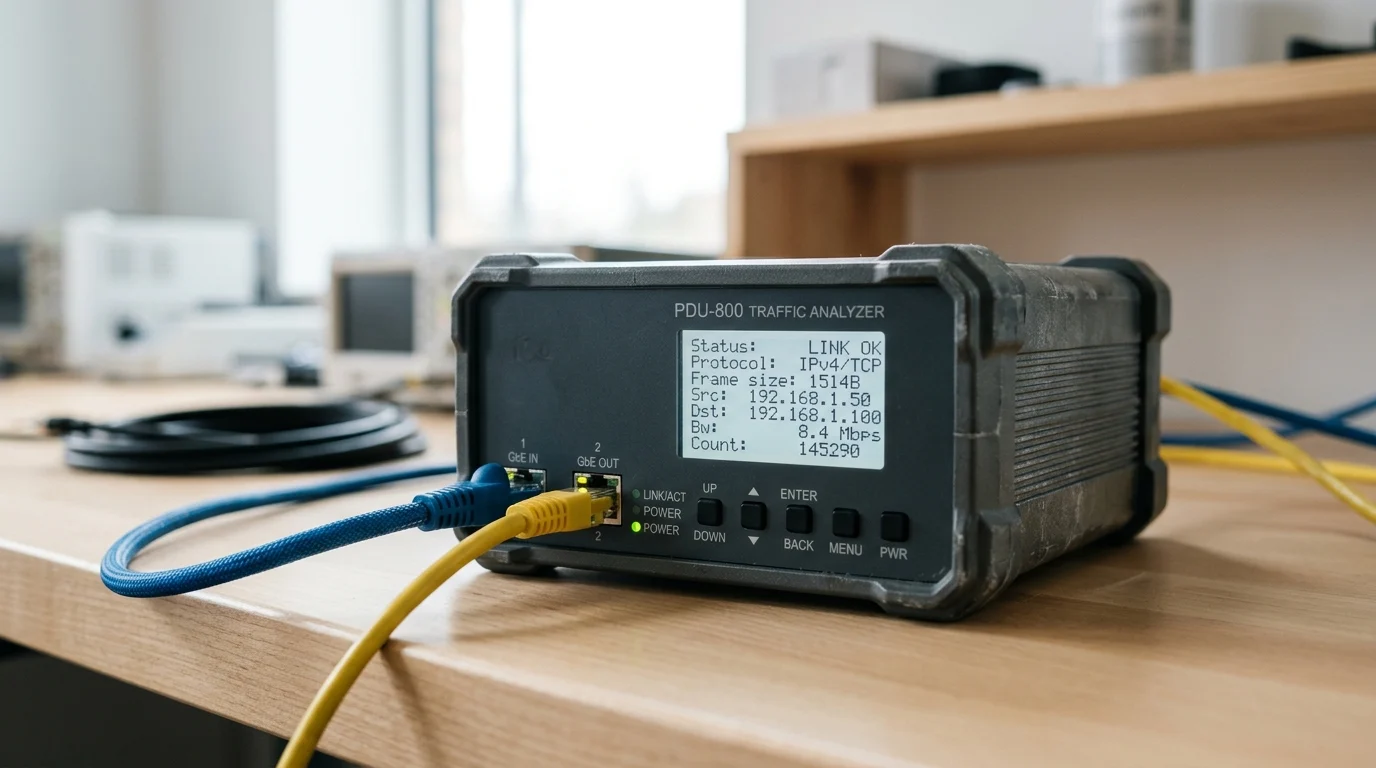
Data center infrastructure management relies on precise, resilient power distribution to maintain continuous operations. Before diving into hardware specifications and procurement strategies, it is necessary to establish clear operational terminology. While network engineers and software architects frequently use the acronym to refer to a protocol data unit transmitting data frames across the OSI model layers, facility managers operate under a completely different pdu meaning. Within the physical infrastructure domain, a Power Distribution Unit is the critical piece of electrical hardware responsible for delivering appropriate amperage directly to IT equipment.
Selecting the right power distribution hardware is no longer a trivial matter of purchasing industrial power strips. As cabinet densities rise and the margin for error shrinks, the procurement process requires a structured decision framework. Facility operators must evaluate electrical topologies, environmental constraints, management interfaces, and long-term reliability metrics to ensure the chosen infrastructure can support current and future compute loads.
Distinguish Rack PDUs from Other Power Equipment
Distinguishing rack-level power distribution from upstream electrical infrastructure is the first necessary step in the procurement process. A facility’s power chain contains several components that might broadly be termed power distribution units, but they serve distinct roles. Uninterruptible Power Supplies (UPS) provide temporary battery backup and power conditioning. Floor-mount PDUs and transformers step down high-voltage facility feeds (such as 480V) to usable distribution voltages. Remote Power Panels (RPPs) act as intermediate breaker boxes that route power out to the data hall floor.
Rack PDUs (rPDUs), however, are installed directly within the server cabinet itself. They act as the final power gateway in the electrical chain, taking a single high-amperage feed—typically via an overhead busway or an under-floor whip connected to an RPP—and splitting it into multiple lower-amperage receptacles. These receptacles supply direct power to individual servers, network switches, and storage arrays. Because they are the last point of distribution before the IT load, they are uniquely positioned to monitor, manage, and secure the power draw of specific hardware assets.
Connect PDU Selection to Uptime and Capacity Planning
The selection of this final power gateway directly impacts facility uptime and long-term capacity planning. Industry standards for data center reliability, such as the Uptime Institute’s Tier classification system, impose strict availability requirements. Tier III and Tier IV data centers, which target 99.982% and 99.995% uptime respectively, require fully fault-tolerant power paths extending all the way to the server rack. Deploying sub-standard power strips introduces a single point of failure that can negate millions of dollars invested in upstream redundancy.
Furthermore, cabinet power densities have escalated significantly, altering how capacity is planned. Legacy data centers historically provisioned 3kW to 5kW of power per rack. Today, modern facilities supporting artificial intelligence, machine learning, and high-performance computing (HPC) frequently demand 20kW to 40kW per cabinet, with liquid-cooled AI clusters pushing beyond 100kW. At these extreme densities, selecting an underspecified rack PDU creates a severe bottleneck. It limits the deployment of new hardware, risks severe phase imbalances across the electrical panel, and increases the likelihood of tripped circuit breakers during compute-intensive workload spikes.
Electrical Specifications and Rack Fit

Establishing the correct electrical specifications ensures that the hardware can safely handle the required electrical load while physically fitting within the constrained dimensions of a server cabinet. This phase of the decision framework requires close coordination between facility electrical engineers and IT hardware architects to match supply with demand.
Evaluate Input Power, Voltage, and Phase
Input power configuration is strictly dictated by the facility’s upstream electrical topology. Historically, 120V and 208V single-phase power dominated North American enterprise data centers. However, as power demands have surged, modern high-density environments increasingly utilize 400V or 415V three-phase power routed directly to the rack. Delivering 415V three-phase power at 30 amps yields approximately 17.3kW of continuous capacity (when derated to 80% per National Electrical Code safety standards) over a single power whip. Upgrading to a 60-amp circuit at 415V pushes that continuous capacity to nearly 35kW per rack.
This transition to higher voltage three-phase power reduces copper cabling costs, minimizes line losses over long distances, and improves overall power supply efficiency. When specifying the input configuration, facility managers must identify the exact input plug type—such as NEMA L15-30P for locking applications or IEC 60309 for high-amperage pin-and-sleeve connections—to match the facility’s overhead busway tap boxes or under-floor receptacles. Additionally, operators must choose between Wye (five-wire) and Delta (four-wire) three-phase configurations, depending on whether a neutral line is required for 120V convenience outlets.
Match Outlet Mix, Density, Form Factor, and Cord Length
Once the input capacity is established, the output configuration must perfectly match the physical IT footprint. Unlike a pdu in computer network architecture that routes logical packets between subnets, the rack PDU physically routes amperage via specific receptacle types. The outlet mix typically consists of IEC C13 receptacles (rated for 10A continuous load) for low-power servers, and IEC C19 receptacles (rated for 16A continuous load) for high-draw chassis switches and blade servers. Premium high-density models now feature universal C39 outlets, which accept both C14 and C20 plugs, maximizing deployment flexibility and eliminating the need to guess the exact outlet ratio ahead of time.
Form factor and physical dimensions are equally critical. The most common form factor is the 0U vertical PDU, which mounts in the rear channel of the cabinet, distributing outlets along the height of the rack without consuming valuable standard rack units (U-space). Conversely, 1U or 2U horizontal models are typically reserved for shorter networking racks or specialized telecommunications enclosures. Standard input cord lengths are generally 3 meters (10 feet), though custom lengths can be specified during procurement to eliminate dangerous cable slack that can obstruct airflow in the hot aisle.
Compare Basic, Metered, Monitored, and Switched PDUs
The market offers four primary categories of rack power distribution, each providing a progressively deeper level of visibility, control, and unit cost. Selecting the appropriate category is the most consequential financial decision in the PDU procurement process.
| PDU Category | Local Display | Network Monitoring | Remote Outlet Switching | Typical Application |
|---|---|---|---|---|
| Basic | No | No | No | Low-cost, unmanaged environments |
| Metered | Yes | No | No | Manual load balancing at the rack |
| Monitored | Yes | Yes (Phase/Circuit or Outlet) | No | Enterprise DCIM integration |
| Switched | Yes | Yes (Phase/Circuit or Outlet) | Yes | Edge sites, remote reboot needs |
Basic units distribute power reliably but offer zero telemetry, making them suitable only for highly standardized, low-budget deployments. Metered units add a local digital display, allowing technicians to manually verify current draw and avoid overloading breakers during installation. Monitored units introduce network connectivity, continuously transmitting power data to centralized management systems. Finally, Switched units provide both deep telemetry and the mechanical capability to toggle power to individual outlets remotely. The cost delta is significant: a switched model can cost 300% more than a basic model of the same amperage.
Monitoring, Switching, and Network Management
As data center footprints scale from dozens of racks to thousands, manual power monitoring becomes operationally unsustainable. The intelligence layer of modern power distribution relies on embedded network controllers, transforming passive electrical strips into active environmental and power sensors.
Choose the Right Metering Level
For monitored and switched models, administrators must determine the necessary granularity of the telemetry. Input-level (or phase-level) metering measures the aggregate power draw of the entire unit and its individual internal circuit breakers. This macro-level data is generally sufficient for broad capacity planning, identifying stranded power, and ensuring that the main input feed remains below the 80% continuous load threshold.
Conversely, outlet-level metering provides highly granular data for every single receptacle on the strip. This level of detail is absolutely necessary for colocation providers executing chargeback billing models, or for enterprise IT departments needing to isolate the specific power consumption of individual server workloads for sustainability reporting. To support legally binding financial chargebacks, the internal metering module must be certified to guarantee +/- 1% billing-grade accuracy across its entire operating range.
Decide When Remote Outlet Switching Is Worth the Cost
The decision to invest in remote outlet switching hinges heavily on the operational profile and staffing of the data center. Switched PDUs typically carry a 30% to 50% cost premium over standard monitored models. In a centralized, hyperscale facility with 24/7 on-site technical staff, paying this premium for remote reboot capabilities may yield a poor return on investment, as a technician can easily walk the floor to physically power-cycle a locked server.
However, for remote edge computing sites, unstaffed network closets, or highly secure colocation cages, the ability to power-cycle a hung server via a secure web interface eliminates the need for a costly emergency truck roll. The operational savings from preventing just one or two emergency dispatch calls—which can easily exceed $500 per incident in labor and travel—often pays for the upgraded hardware entirely. Furthermore, switched outlets allow administrators to lock out unused receptacles, preventing unauthorized hardware from being plugged in and compromising the rack’s power budget.
Assess Protocols, Firmware, and Access Controls
Integrating these intelligent devices into the overarching management infrastructure requires robust pdu networking capabilities. A comprehensive network pdu definition encompasses not just the physical Ethernet port, but the entire software stack driving the onboard controller. The network module must support modern, secure protocols such as SNMPv3, IPv6, and RESTful APIs to ensure seamless, automated integration with third-party Data Center Infrastructure Management (DCIM) software.
Security is paramount when network-connected devices can physically disable infrastructure. The firmware must support encrypted communications (HTTPS, SSH) and integrate seamlessly with enterprise identity management systems via LDAP, Active Directory, or RADIUS to enforce strict role-based access controls. To minimize switch port consumption, advanced models support daisy-chaining (or cascading), allowing up to 16 PDUs to share a single IP address and uplink port. Finally, hot-swappable network controllers are a critical feature, allowing administrators to upgrade firmware or replace faulty management cards without interrupting the critical power path to the connected IT equipment.
Reliability, Compliance, and Procurement
A power distribution unit is generally expected to outlast the IT equipment it powers, often remaining bolted into the rack for two to three server refresh cycles (typically 6 to 10 years). Consequently, hardware reliability, stringent regulatory compliance, and supply chain logistics form major pillars of the procurement framework.
Assess Redundancy and Failover Design
High-availability environments demand robust, fault-tolerant hardware design. Premium intelligent power units utilize bistable (latching) relays rather than standard electromechanical relays. Unlike standard relays that require continuous low-voltage power to remain closed, bistable relays mechanically latch into place and maintain their state even if the PDU’s internal management board fails, reboots, or loses auxiliary power. This ensures that IT equipment continues receiving uninterrupted utility power during firmware updates or catastrophic network module failures.
Additionally, thermal stability directly impacts reliability. Standard commercial circuit breakers are prone to nuisance tripping when exposed to the high temperatures of a data center hot aisle. Industrial-grade PDUs solve this by utilizing low-profile magnetic-hydraulic circuit breakers, which trip based on magnetic flux rather than thermal expansion, ensuring consistent trip curves regardless of the ambient temperature. In A/B dual-feed architectures, selecting color-coded chassis (e.g., red for feed A, blue for feed B) drastically reduces human error during server installation and maintenance.
Verify Safety, Compliance, and Regional Requirements
Hardware must comply with rigorous international and regional safety standards to satisfy insurance requirements and local building codes. In North America, the UL 62368-1 standard has superseded older certifications for IT and audio-visual equipment safety. European markets require CE marking and strict adherence to RoHS (Restriction of Hazardous Substances) directives. Electromagnetic interference is strictly governed by FCC Part 15 regulations to ensure the power strip’s internal electronics do not disrupt nearby networking gear.
Beyond legal compliance, ambient thermal ratings are a critical specification. As facilities aggressively adopt hot-aisle containment and raise ambient setpoints to improve Power Usage Effectiveness (PUE) and reduce cooling costs, the rear channel of the cabinet can become exceptionally hot. Procurement specifications should mandate that the hardware is tested and certified to operate continuously in ambient temperatures up to 60°C (140°F) without derating its power capacity or suffering accelerated component degradation.
Account for Lead Times, Support, and Vendor Stability
Procurement logistics frequently dictate project timelines and deployment schedules. While standard basic and metered units are often stocked in high volumes by major IT distributors, custom configurations—featuring specific cord lengths, custom chassis colors, or unique combinations of C13 and C19 outlets—require built-to-order manufacturing. Lead times for custom configurations typically range from 6 to 12 weeks, depending heavily on global supply chain conditions and raw copper availability.
Furthermore, manufacturers often impose a Minimum Order Quantity (MOQ) of 25 to 50 units for custom builds, which can complicate procurement for smaller edge deployments. Buyers must also evaluate the vendor’s post-sale support and financial stability. This includes scrutinizing the standard warranty period (typically 3 to 5 years) and verifying the vendor’s track record of releasing timely firmware security patches for vulnerabilities discovered in the network management card.
Decision Framework for Selecting a PDU
Selecting the optimal power distribution hardware requires balancing strict technical specifications against budget constraints and operational realities. Relying on a structured evaluation framework prevents both costly over-provisioning and dangerous under-provisioning, ensuring the facility is prepared for future density increases.
Score Electrical Fit, Features, Reliability, and Cost
Facility managers should employ a weighted scoring matrix to evaluate competing models from different vendors. Electrical fit—ensuring the voltage, phase, plug type, and total amperage perfectly align with the facility’s upstream topology—must be scored as a strict pass/fail criterion. A unit that cannot plug into the existing busway is useless, regardless of its features.
Once the electrical baseline is met, features such as universal C39 outlets, +/- 1% metering accuracy, and remote switching are weighted on a 1-to-5 scale based on specific operational needs. Reliability metrics, including 60°C ambient temperature ratings and the inclusion of bistable relays, should heavily influence the score for mission-critical Tier III and Tier IV deployments. Finally, the Total Cost of Ownership (TCO) must be calculated, accounting for the baseline hardware cost, shipping and freight fees (which are substantial for heavy copper equipment), and the projected 10-year lifespan of the unit.
Match Recommendations to Different Data Center Environments
The final hardware recommendation will vary drastically depending on the specific deployment environment. No single PDU type is universally optimal for every scenario.
| Deployment Environment | Primary Challenge | Recommended Configuration | Key Justification |
|---|---|---|---|
| Edge / Remote Sites | Zero on-site IT staff, costly dispatch | Switched, Outlet-Level Metered | Enables remote troubleshooting and power-cycling of locked servers without a truck roll. |
| Enterprise Data Center | High density, complex capacity planning | Monitored, Input-Level Metered | Provides sufficient telemetry for DCIM integration without the high cost of per-outlet switching. |
| Colocation Facility | Multi-tenant billing accuracy | Monitored, Outlet-Level Metered | Allows precise chargeback billing with +/- 1% accuracy per tenant, maximizing revenue recovery. |
| Hyperscale / Cloud | Massive scale (100+ racks per phase) | Basic or Custom Metered | Economies of scale prioritize low unit cost; redundancy is handled at the software layer, not the rack. |
By applying this rigorous decision framework, data center managers can standardize their physical infrastructure, streamline their supply chain logistics, and ensure that their power delivery network remains as resilient, scalable, and intelligent as the digital services it supports.
Key Takeaways
- Clarify whether PDU refers to a protocol data unit or a Power Distribution Unit before making technical or procurement decisions.
- Treat the rack PDU as the final critical power gateway because it distributes power directly to servers, switches, and storage devices.
- Match rack PDU capacity to current and future density, especially where modern AI or HPC racks may require 20kW to 40kW or more.
- Do not let low-grade power strips undermine Tier III or Tier IV redundancy, where target uptime reaches 99.982% and 99.995%.
- Evaluate input feeds, outlet configuration, monitoring capability, environmental constraints, and scalability before standardizing a PDU model.
Frequently Asked Questions
Does PDU mean protocol data unit or power distribution unit?
It depends on context. In networking, a PDU is a protocol data unit used to describe data at OSI layers. In data center facilities, a PDU usually means a Power Distribution Unit that delivers electrical power to IT equipment.
Why is rack PDU selection important for uptime?
Rack PDUs are the final power gateway before servers, switches, and storage. A weak or underspecified unit can become a single point of failure, undermining upstream redundancy in Tier III or Tier IV facilities.
How is a rack PDU different from a UPS?
A UPS provides battery backup and power conditioning during utility interruptions. A rack PDU distributes power inside the cabinet to multiple devices and may also provide monitoring, switching, and outlet-level control.
What rack power density should managers plan for?
Legacy racks often used 3kW to 5kW, but modern AI, HPC, and high-density environments may require 20kW to 40kW per cabinet, with some liquid-cooled AI clusters exceeding 100kW.
When should a data center choose an intelligent PDU?
Choose an intelligent PDU when you need remote power monitoring, capacity visibility, outlet control, energy reporting, or faster fault diagnosis across cabinets and IT loads.
Post time: Jun-22-2026