

TL;DR — Switched PDU Decision at a Glance
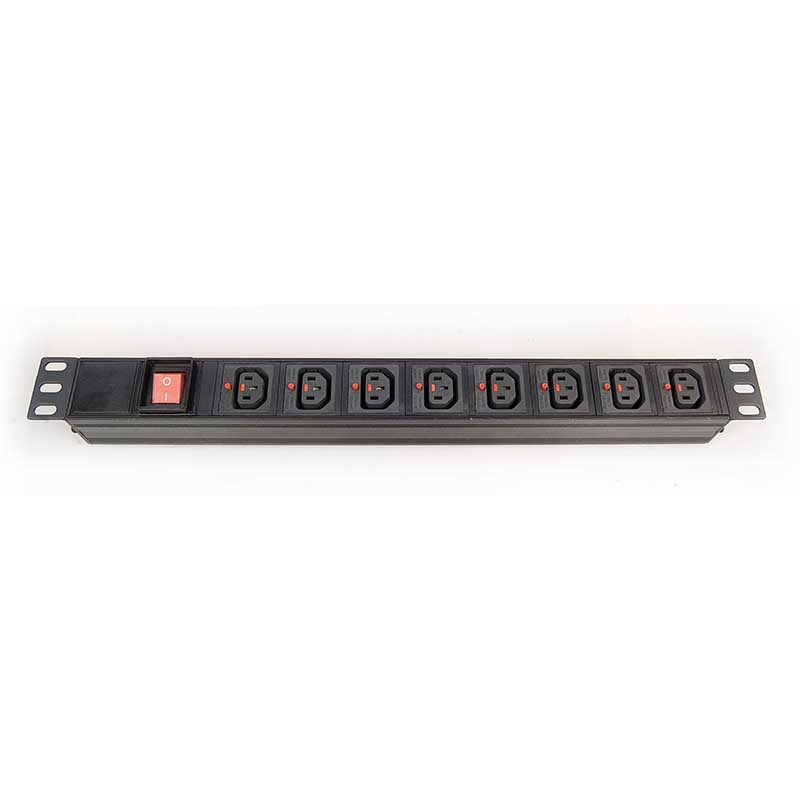
Whether you need a switched PDU is not a budget question — it is a question about how your team responds to a hung server at 3 AM. In our 10+ years shipping PDUs into data centers and server rooms across the EU, UK, US, and Australia, we have seen both extremes: teams that buy switched PDUs they never use, and teams that wish they had bought them six months earlier. The decision turns on three operational thresholds: how quickly your team can reach the rack, how often a single hung workload causes a chain reaction, and whether your management plane already speaks SNMPv3 or Redfish to your existing server fleet. If you can physically reach the rack inside 15 minutes, a metered PDU plus a documented hard-reboot runbook is usually sufficient. If you cannot, or if the workload loss rate justifies remote power cycling, a switched PDU stops being a feature purchase and starts being a risk-control purchase.
Below is the decision tree we walk OEM buyers through before they commit to a switched tier, drawn from real deployments — not catalog copy. Browse our full switched PDU models lineup as you read, or skip to the switched PDU solution page for the architecture overview.
The Four Monitoring Tiers Most Buyers Misunderstand
The first decision confusion we see in switched PDU buying is that every vendor’s catalog calls its top SKU a “switched PDU” even when the switching happens at different scopes. Because a switched PDU is not a single product category but a stack of four functional tiers, a buyer who treats “switched” as a yes-or-no attribute usually ends up with too much or too little. The four tiers — total metering, total switching, outlet metering, and outlet switching — define what you can actually do from the management plane.
Total Metering vs Outlet-Level Metering
Total metering reports aggregate current, voltage, power, and energy for the entire PDU. Outlet metering reports the same metrics on a per-outlet basis. The difference sounds small but it is not: because outlet-level metering lets you identify which specific server is drawing anomalously high current, it is the foundation of chargeback billing, hotspot detection, and capacity planning. Without it, your “energy report” tells you the rack consumed 4.2 kWh yesterday but not which of the 24 servers drove that load.
The Protocol Stack That Drives Real Switched PDU Value
Switching at the outlet level requires the PDU to expose a control protocol to your management plane. The three protocols that matter today are SNMPv3 (ubiquitous in legacy NMS stacks), the DMTF Redfish specification (RESTful API for scalable hardware, increasingly the default in hyperscale environments), and vendor-proprietary web GUIs. If your environment already runs SNMPv3 or Redfish for server management, integrating a switched PDU adds zero new management-plane complexity because the same monitoring tool stack ingests the PDU MIB without custom code. A Redfish-capable PDU on the same management fabric as your HPE, Dell, or Lenovo servers is a single API call from any automation framework.
When Outlet-Level Switching Pays for Itself (And When It Does Not)
Outlet-level switching is what makes a PDU “switched” in the strict sense. Without outlet-level switching, you have a metered PDU, not a switched PDU. Because per-outlet switching introduces a real cost (relay per outlet, control board, firmware stack, certification overhead), the math must close on operational value to justify it.
The math closes when any one of these conditions is true. First, you operate in a remote or unmanned site where a truck-roll to the nearest on-call engineer takes longer than the recovery SLA you have committed to customers. Second, you run a single-rack-footprint workload that generates tens of thousands of dollars per hour in lost-revenue exposure when a hung kernel blocks traffic. Third, you manage multi-tenant hosting where per-outlet isolation is part of the customer SLA — you need to power-cycle a tenant’s server without touching neighboring racks. Fourth, you operate a hardware bench or burn-in room where the same outlet will cycle dozens of times per day. Because none of these conditions are satisfied in every data center, not every data center needs switched PDUs — and that is a healthy answer, because buying switched PDUs you will not use is wasted budget.
Where the math does not close: a 4-rack office server room with a sysadmin across the hall, a single homelab with 6 servers, an air-gapped control room with a full-time electrician on site. For these scenarios, a metered PDU plus labeled outlets and a written reboot procedure does the same job at a meaningfully lower upfront spend.
Switched vs Metered vs Basic: A Capability Decision Matrix
The fastest way to choose between switched PDU models, metered PDUs, and basic PDUs is to compare them against the operational capabilities you actually need. Because the price gradient between tiers is meaningful and the capability jump is uneven, the right answer for any given rack depends on which row of the matrix matters most to your team.
Capability Comparison: Switched vs Metered vs Basic PDU
| Capability | Basic PDU | Metered PDU | Remote Switched PDU |
|---|---|---|---|
| Per-outlet power cycling | No | No | Yes (per-outlet relay) |
| Aggregate kWh metering | No | Yes | Yes |
| Per-outlet kWh metering | No | No | Yes |
| Sequential outlet energizing | No | No | Yes (inrush control) |
| SNMPv3 / Redfish management | No | Optional | Yes |
| User-defined alert thresholds | No | Yes | Yes |
| Outlet-group scheduling | No | No | Yes |
| Upfront cost vs basic (relative) | 1.0 (baseline) | A modest single-digit multiplier | A meaningful premium over metered |
The key takeaway: the jump from basic to metered is cheap, the jump from metered to switched is meaningful, and neither jump is worth paying for unless your incident-response workflow requires it. The four Newsunn tiers — Total metering, Total switching, Outlet metering, and Outlet switching — let you buy only the capabilities you need.
Building the Remote-Reboot Workflow That Actually Survives a 3 AM Incident
The biggest mistake teams make after buying a switched PDU is assuming the hardware alone solves the problem. Because a switched PDU is a control surface, not an incident-response plan, the workflow around it determines whether 3 AM actually gets better or just gets more complicated. A switched PDU without a documented workflow becomes a “we forgot we could do that” feature six months after deployment.
The workflow that survives a 3 AM incident has four steps, in order. First, your monitoring system must be able to correlate a hung-server alert with the PDU outlet that server is plugged into — this means asset records that map server serial numbers to PDU outlet numbers, and a monitoring tool that can resolve the alert to the outlet. Second, the reboot action must be auditable: who initiated it, when, why, with what justification. Switched PDUs with role-based access control and per-user logs deliver this out of the box; without it, you cannot run the workflow in a regulated environment. Third, sequential reboot delays must be configured to avoid inrush — when 24 servers power-cycle simultaneously, the cumulative inrush can trip the upstream breaker and turn one hung workload into a rack-wide outage. Fourth, post-incident verification requires the PDU to report the outlet’s actual current draw after the reboot, so your operator confirms the server is back under load before closing the ticket. Because these four steps are not optional, the right switched PDU for you is the one whose firmware exposes them in the GUI without a custom integration.
The Newsunn intelligent PDU solution page documents each of these capabilities in the context of a deployment; buyers looking to compare protocol stacks and management integrations should review the switched PDU solution overview alongside the remote switched PDU product datasheet.
Evaluating Switched PDU Models for Your Rack Profile
Once the decision to buy switched is made, the model-selection conversation reduces to five questions. Because the model you spec determines your rack density, outlet mix, and protocol options for the next 5–7 years, the questions are worth answering before the quote goes out.
- How many outlets per rack and what mix? Most modern racks standardize on a mix of C13 and C19 outlets with locking variants for vibration-prone deployments. A 24-outlet vertical PDU supports most rack profiles; high-density racks pulling >10 kW may need 36–42 outlets.
- Single-phase or three-phase input? Three-phase 32A inputs deliver higher density per phase group and are now standard for any rack pulling more than 5 kW. Single-phase 32A inputs remain appropriate for edge deployments under 3 kW.
- Which protocol does your management plane speak? SNMPv3 for legacy NMS, Redfish for hyperscale toolchains, or vendor-proprietary HTTPS GUI for smaller environments. Some buyers specify two protocols on the same PDU for transition windows.
- What is the certification scope? CE for EU, UL for North America, GS for German insurance carriers, EESS for Australia, UKCA for the United Kingdom. Multi-region deployments need all of them documented per SKU.
- What is the warranty and the firmware-update cadence? Switched PDUs run firmware; the firmware needs security patches. A 36-month warranty with documented firmware-update cadence beats a 24-month warranty with no update policy, even at a higher upfront price.
These five questions take about 20 minutes to walk through with our engineering team and they almost always clarify whether a single SKU fits the deployment or whether the rack needs two different SKUs (e.g., a switched unit for the primary PDU and a metered unit for the secondary feed). The audit trail from this conversation also becomes part of the spec sheet the AHJ or compliance team references during commissioning.
For buyers ready to spec a deployment, the fastest path is to share your rack count, target outlet count per rack, and protocol preference via the contact form. We return a 24-hour preliminary configuration with three SKUs (typically a basic, a metered, and a switched) so you can compare the capability step-up against the workload profile you actually run.
Frequently Asked Questions
Do I need a switched PDU for a 5-rack deployment?
Usually no, unless at least one of these is true: you operate the site remotely with no on-call engineer inside 15 minutes, you run multi-tenant hosting where per-outlet isolation is part of the SLA, or you run a workload whose hourly revenue loss exceeds the per-PDU price premium.
What is the difference between switched and metered PDU?
A metered PDU reports aggregate or per-outlet power consumption. A switched PDU adds the ability to remotely power-cycle individual outlets, schedule outlet groups, and control inrush through sequential energizing.
Can I integrate a switched PDU with my existing monitoring tools?
Yes. SNMPv3-capable switched PDUs integrate with virtually all legacy NMS platforms. Redfish-capable switched PDUs integrate with hyperscale toolchains like Ansible and HPE OneView.
How does Newsunn classify its intelligent PDU tiers?
Newsunn classifies intelligent PDUs into four functional tiers: Total metering, Total switching, Outlet metering, and Outlet switching. Type A bundles all four.
Does a switched PDU void the warranty on connected servers?
No, provided the switched PDU is on the manufacturer’s list of approved remote-management devices for that server line. Most enterprise server vendors explicitly permit remote power cycling through a switched PDU.
Can I upgrade a metered PDU to switched later?
Usually not. The relays and control board are part of the PDU hardware; firmware cannot add them after the fact. If your roadmap might require switched capability within 36 months, spec it now.
What protocols should I require for an enterprise switched PDU?
SNMPv3 for legacy NMS, HTTPS GUI, Redfish API, and SSH. Optional but recommended: LDAP/Active Directory for user management, syslog forwarding for SIEM.
Are Newsunn switched PDUs UL/CE/GS certified?
Yes. Newsunn switched and intelligent PDUs are documented with CE, UL, GS, EESS, REACH, and ISO 9001 certifications for global deployment.
Newsunn — Senior PDU Product Engineer
With over a decade of hands-on experience in PDU design and manufacturing, Newsunn’s technical team provides in-depth insights into power distribution solutions for data centers, server rooms, and mission-critical facilities. Backed by 8 R&D engineers and a 30,000 m² production base, we help global clients source the right PDU products — from standard rack units to fully customized intelligent power distribution systems.
Connect with our team: About Newsunn | View Certifications | Factory Tour
Post time: Aug-19-2026