

Quick Answer
Rack Power Distribution Units (PDUs) are specialized devices that distribute electrical power to multiple pieces of equipment within data centers, server rooms, and network closets. They enhance power distribution reliability through built-in circuit protection, load monitoring, and standardized outlet configurations. According to industry estimates, the global rack PDU market continues growing as data center operators prioritize uptime and energy efficiency. Modern intelligent PDUs can monitor power consumption per outlet with ±1% measurement accuracy, enabling proactive capacity planning and preventing overload conditions before they trigger outages.
Key Takeaways:
- Rack PDUs provide centralized power distribution with circuit protection, remote monitoring, and load balancing capabilities
- Intelligent PDUs reduce unplanned downtime by enabling proactive capacity management and environmental alerts
- IEC C13/C19 standardized outlets ensure compatibility with IT equipment worldwide
- Load monitoring accuracy of ±1% or better supports precise power budgeting
- Proper PDU selection impacts both system reliability and data center energy efficiency
Introduction
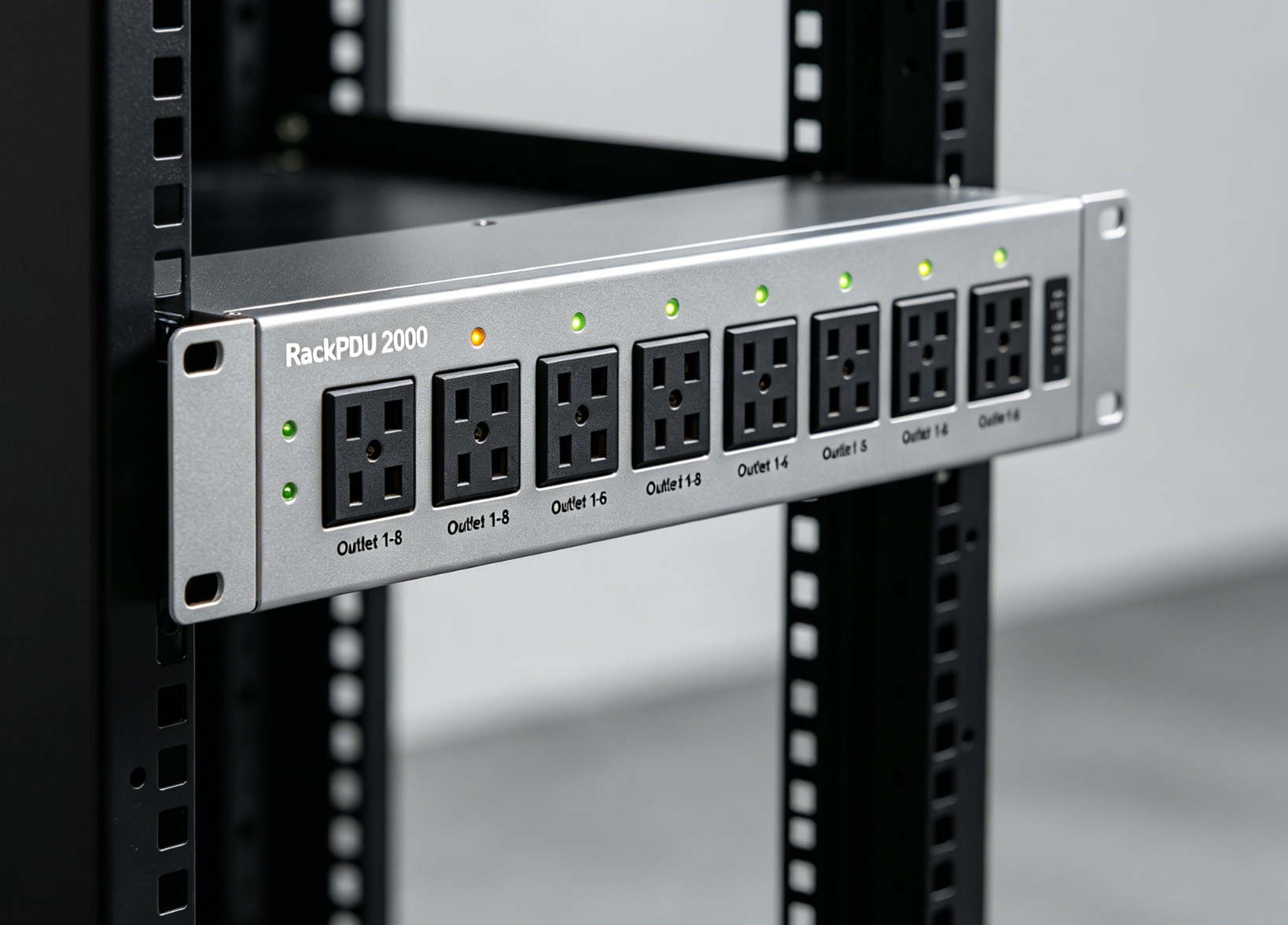
Power distribution in mission-critical facilities requires precision, predictability, and resilience. A rack PDU serves as the final link between the facility’s electrical infrastructure and the IT equipment housed in server racks. Unlike basic power strips, rack PDUs are engineered for continuous operation in 24/7 environments, with features that support both reliability and operational efficiency.
The core function of a rack PDU is deceptively simple: take power from one or more input feeds and distribute it safely to multiple outlets. What distinguishes a quality rack PDU from a consumer power strip is the combination of protective devices, monitoring capabilities, and build quality that ensure continuous uptime. A data center experiencing a power event—whether a circuit overload, voltage anomaly, or environmental threshold breach—depends on the PDU layer to contain the event and alert operators before cascading failures occur.
Modern rack PDUs span a spectrum from basic pass-through units to fully intelligent, network-manageable devices with per-outlet switching, environmental sensing, and integration with data center infrastructure management (DCIM) platforms. The choice of PDU type directly affects how reliably power reaches critical loads, how efficiently capacity is utilized, and how quickly operations teams can respond to anomalies.
What Is a Rack PDU?
A rack PDU is a fixed or modular power distribution unit designed for installation in standard 19-inch server racks or network cabinets. The term “rack PDU” encompasses both basic distribution units and intelligent power distribution units with advanced monitoring and control features.
Basic vs. Intelligent PDUs
Basic PDUs function as passive power strips with circuit protection. They distribute AC power from a single input to multiple outputs without any monitoring or control capabilities. These units typically include a circuit breaker, internal wiring, and outlets configured in a horizontal or vertical form factor. Basic PDUs serve environments where simple, reliable power distribution is required without the need for remote visibility into power consumption.
Intelligent PDUs (also called switched PDUs, metered PDUs, or iPDUs) add communication modules, monitoring sensors, and often per-outlet switching capability. Operators can access real-time power data via web interface, SNMP, or command-line protocols. Intelligent PDUs enable remote power cycling of individual outlets, which is essential for managing hung servers without on-site intervention.
PDU Form Factors: Horizontal vs. Vertical
Rack PDUs are available in two primary physical configurations:
- Horizontal PDUs mount in 1U to 4U rack spaces, similar to other rack-mounted equipment. These units are typically used when rack space is abundant or when a limited number of outlets is needed.
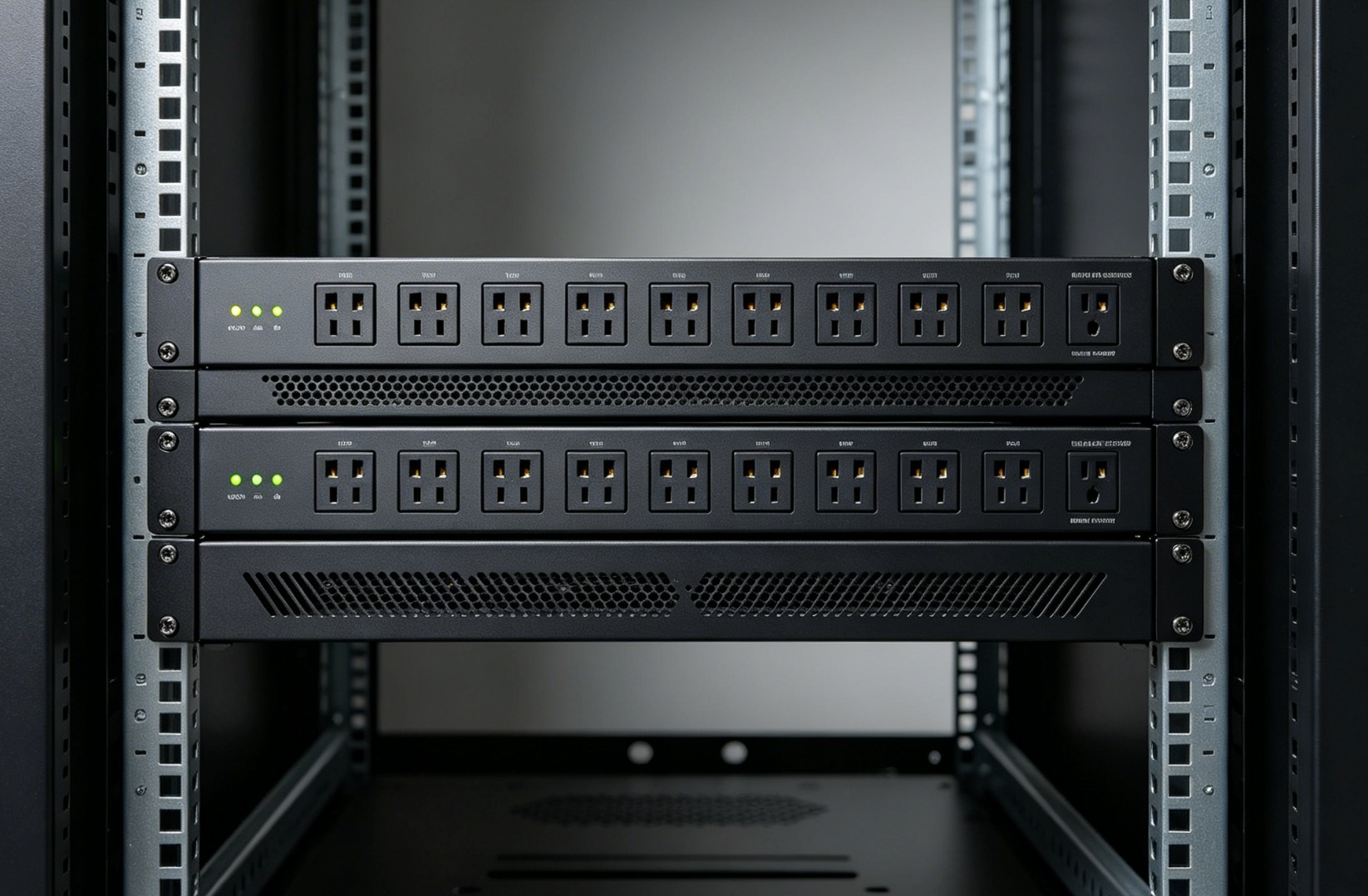
- Vertical PDUs (also called 0U PDUs) mount on the side rails of a rack, running the full vertical height. Vertical PDUs can accommodate many more outlets—16 to 48 or more—without consuming equipment mounting space.
The selection between horizontal and vertical form factors depends on outlet density requirements, rack design, and thermal considerations.
How Rack PDUs Enhance Power Distribution Reliability
1. Built-In Circuit Protection
Rack PDUs incorporate circuit breakers or fuses that protect downstream equipment and the PDU itself from overcurrent conditions. Circuit breakers in modern PDUs are typically rated between 15A and 63A per phase, depending on the input configuration. When a fault occurs—such as a short circuit or sustained overload—the breaker trips, isolating the faulted section while preserving power to other loads.
Quality PDUs use thermal-magnetic circuit breakers with a trip curve calibrated to handle inrush current from IT equipment without nuisance tripping. Inrush current occurs when servers, storage arrays, and networking equipment power on, drawing 3 to 5 times their steady-state current for brief periods. A properly selected PDU breaker accommodates these transients while still protecting against sustained overloads.
Many PDUs also include surge protection (SPD—Surge Protective Device) modules that clamp voltage spikes caused by lightning strikes, switching transients, or utility grid disturbances. SPDs divert transient energy to ground, preventing damaging overvoltages from reaching connected equipment.
2. Redundant Power Feed Support
High-availability facilities often feed critical racks from two independent power paths. Dual-corded servers and network equipment have two power supplies, each connected to a separate PDU on separate circuits. If one power feed fails, the equipment continues operating from the redundant feed with no interruption.
Rack PDUs designed for redundant configurations include features such as:
- Dual input terminals accepting power from separate sources
- Automatic transfer switching (ATS) on some switched PDU models
- Phase monitoring alerts when a feed loses voltage or drops below threshold
- Load balancing controls to distribute current evenly across feeds
For single-corded equipment, redundant PDUs in the same rack provide resilience against localized PDU failures. If one PDU fails, equipment can be redistributed to the remaining unit during maintenance windows.
3. Per-Outlet Monitoring and Alerting
Intelligent rack PDUs measure voltage, current, power (watts), apparent power (VA), and power factor at the outlet level. This granular visibility enables operations teams to:
- Identify servers or devices drawing abnormal power (a potential hardware fault indicator)
- Track power consumption trends to plan capacity expansions
- Receive alerts when outlets approach load thresholds
- Verify that new equipment deployments stay within planned power budgets
Monitoring accuracy specifications for quality PDUs are typically ±1% or better for current and ±2% for voltage. This precision supports enterprise billing applications and accurate PUE (Power Usage Effectiveness) calculations in green data center initiatives.
4. Remote Power Control and Reboot Capability
Switched PDUs allow operators to remotely control individual outlets—powering equipment on, off, or performing a power cycle. This capability eliminates the need for on-site visits to reboot hung servers, recover from firmware lock-ups, or address equipment that fails to respond to software commands.
Remote power control also supports:
- Scheduled power cycling for non-critical devices during off-peak hours
- Outlet-level access control to prevent unauthorized equipment connections
- Graceful shutdown sequencing when integrating with building management or DCIM systems
- Energy savings programs by selectively powering down idle equipment
The practical impact is faster incident resolution. Instead of waiting for a technician to travel to the data center, remote reboot commands can restore service within minutes.
5. Environmental Monitoring Integration
Many intelligent PDUs include sensor ports for external environmental probes. Common sensors monitor:
- Temperature at rack inlets or within the rack interior
- Humidity levels that could indicate cooling system issues
- Door contacts that log rack access events
- Airflow and differential pressure where applicable
Environmental data correlates power consumption with cooling performance. When rack inlet temperatures rise, operators can identify over-loaded PDUs driving hot spots and redistribute loads before thermal thresholds trigger protective shutdowns.
Technical Specifications and Standards
Electrical Ratings
Rack PDUs are classified by input voltage, current capacity, and phase configuration:
| Parameter | Typical Range |
|---|---|
| Input Voltage | 100-120V (US/Japan), 200-240V (EU/Asia) |
| Input Current | 10A, 16A, 20A, 30A, 32A, 63A |
| Frequency | 50/60 Hz |
| Phase | Single-phase or Three-phase |
| Output Configuration | 12 to 48 outlets |
Three-phase PDUs are increasingly common in high-density deployments because they distribute loads more evenly across facility infrastructure. A three-phase 415V PDU can deliver more power through a single feed than multiple single-phase circuits, reducing cable complexity.
IEC Outlet Types
Standardized outlets on rack PDUs ensure compatibility with IT equipment across vendors and geographies:
| Outlet Type | Description | Common Use |
|---|---|---|
| IEC C13 | 10A, 250V耦合器 | Servers, storage, networking |
| IEC C19 | 16A, 250V耦合器 | High-power servers, UPS |
| NEMA 5-15P plug | 15A, 125V | US-compatible equipment |
| NEMA 6-20P | 20A, 250V | US high-power equipment |
| BS 1363 (UK) | 13A, 250V | UK and compatible regions |
| CEE 7/7 (Schuko) | 16A, 250V | Continental Europe |
Lockable outlets (C13L, C19L) prevent accidental disconnection of critical equipment. The locking mechanism engages when a standard C13/C19 connector is inserted, requiring a deliberate release action to disconnect.
Safety and Performance Standards
Rack PDUs are evaluated against international safety standards:
- IEC 60906 — General requirements for plugs, socket-outlets, and couplers
- IEC 60320 — Standardized coupler specifications for IT equipment
- UL 60950-1 (or newer UL 62368-1) — Safety of information technology equipment
- EN 62368-1 — European harmonized safety standard for audio/video and IT equipment
- RoHS — Restriction of Hazardous Substances directive compliance
Enterprise-grade PDUs undergo third-party testing and carry certifications from NRTL laboratories (UL, CSA, TÜV, Intertek) before installation in critical facilities.
Comparison: PDU Types and Their Applications
Feature Comparison Table
| Feature | Basic PDU | Metered PDU | Switched PDU | ATS PDU |
|---|---|---|---|---|
| Outlet count | 8-48 | 8-48 | 8-48 | 8-24 (per feed) |
| Current monitoring | No | Per PDU or per outlet | Per outlet | Per feed and outlet |
| Remote on/off control | No | No | Per outlet | Per outlet |
| Network management | Optional | Yes | Yes | Yes |
| Environmental sensors | No | Optional | Yes | Yes |
| Automatic transfer | No | No | No | Yes |
| Surge protection | Optional | Optional | Optional | Optional |
| Typical cost range | Low | Medium | Medium-High | High |
Selection Criteria
Choose Basic PDUs when:
- Deploying in low-density, low-criticality environments
- Budget constraints limit expenditures
- No remote monitoring is required
- Simple rack power distribution is sufficient
Choose Metered PDUs when:
- Capacity planning requires visibility into power consumption
- Facility management needs outlet-level data for billing or PUE calculations
- Alerting on approaching load limits is important
- Network management is needed without individual outlet control
Choose Switched PDUs when:
- Remote reboot capability is required for distributed or unmanned sites
- Outlet-level access control is mandated for security compliance
- Integration with DCIM or BMS is planned
- Zero-touch provisioning and configuration management are needed
Choose ATS PDUs when:
- Supporting single-corded equipment that requires automatic failover to a backup feed
- Maximizing uptime for mixed single and dual-corded loads
- Reducing the number of UPS units or PDUs required for redundancy
Real-World Applications and Use Cases
Data Center Power Distribution Architecture
A typical enterprise data center uses a tiered power distribution model:
- Utility power → UPS systems (primary protection against outages and voltage anomalies)
- UPS → Power Distribution Units (floor-level PDUs) — large branch circuit panels
- Floor PDUs → Rack PDUs — final power distribution to equipment
Rack PDUs at the bottom of this hierarchy serve as the last metering and protection point before power reaches IT equipment. Their reliability directly impacts overall facility uptime.
Edge Computing and Telecom Central Offices
Edge data centers and telecom central offices house computing infrastructure in environments with limited on-site support. Switched PDUs enable remote management of power in these locations, reducing the need for technicians to travel to remote sites. Temperature monitoring through PDU-integrated sensors provides early warning of HVAC failures before thermal events damage equipment.
Broadcast and Media Production Facilities
Television broadcast facilities, production studios, and post-production houses rely on rack PDUs to power servers, storage arrays, and editing workstations. These environments require clean, reliable power for equipment that processes live video streams. PDUs with surge protection and noise filtering ensure signal integrity for broadcast equipment sensitive to electrical disturbances.
Healthcare and Laboratory IT Infrastructure
Hospital data centers and clinical IT systems require high availability for electronic health records, imaging systems, and real-time monitoring equipment. Rack PDUs in healthcare IT environments must meet additional requirements for reliability, often specified in terms of MTBF (Mean Time Between Failures). Quality PDUs specify MTBF figures exceeding 100,000 hours under rated load conditions.
Energy Efficiency and Capacity Optimization
Power Usage Effectiveness (PUE) Improvement
Data center operators track PUE as a measure of how efficiently power is used for computing versus supporting infrastructure (cooling, lighting, etc.). Intelligent PDUs contribute to PUE improvement by:
- Enabling precise identification of low-utilization equipment that can be powered down
- Supporting hot/cold aisle containment strategies by monitoring temperature at rack level
- Providing data for workload placement algorithms that optimize server utilization
- Detecting and alerting on unbalanced loads that waste capacity
Studies indicate that many data centers operate at average server utilization rates below 50%. By identifying underutilized servers through power monitoring, operators can consolidate workloads, reduce the number of active servers, and improve both PUE and operational costs.
Load Balancing Across Phases
In three-phase PDUs, load imbalance—where one phase carries significantly more current than others—reduces the effective capacity of the PDU and can trigger premature breaker trips. Advanced intelligent PDUs display phase-by-phase load information and can alert operators when imbalance exceeds thresholds (typically 10-20% of rated capacity). Proactive load balancing extends PDU lifespan and maximizes usable capacity.
Capacity Planning and Right-Sizing
Power capacity is often the limiting factor in rack density expansion. Without accurate power monitoring, operators risk overloading circuits when adding new equipment. Metered and intelligent PDUs provide the data needed to:
- Track historical power trends to predict when a rack will reach capacity
- Plan infrastructure upgrades with actual consumption data rather than nameplate estimates
- Reserve power capacity for future growth based on measured utilization
- Identify opportunities to increase density in underutilized racks
Selection Checklist: Choosing the Right Rack PDU
Use this checklist when evaluating rack PDUs for a specific deployment:
Electrical Configuration
- Input voltage matches facility supply (100-240V regional variants)
- Input current rating accommodates expected load with 80% headroom minimum
- Single-phase or three-phase selection matches facility infrastructure
- Outlet types match equipment power cords (C13, C19, NEMA, BS 1363, etc.)
- Total outlet count accommodates current and planned equipment
Reliability and Protection
- Circuit breaker rating and trip characteristics suit connected loads
- Surge protection included if required by facility standards
- Operating temperature range covers expected ambient conditions
- MTBF specification meets application reliability requirements
- Certifications from recognized NRTL laboratory (UL, CSA, TÜV, etc.)
Monitoring and Management
- Metering accuracy meets application requirements (±1% typical for enterprise)
- Communication interfaces available: SNMP, web, Modbus, or vendor-specific
- Management platform integration (DCIM, BMS) compatibility verified
- Alerting capabilities cover threshold violations and environmental conditions
- User access controls support role-based permissions and audit logging
Physical Installation
- Form factor (horizontal 1U-4U or vertical 0U) fits rack design
- Mounting hardware compatible with standard 19-inch racks
- Cable management features support clean installation
- LED status indicators visible without opening rack doors
- Warranty length and support terms acceptable
Common Problems Solved by Rack PDUs
Problem: Repeated circuit breaker trips causing equipment downtime
Solution: Upgrade to metered PDUs to identify which equipment combinations cause overloads. Redistribute loads across circuits based on actual measurements rather than nameplate estimates.
Problem: Unable to reboot remote equipment without on-site technician
Solution: Deploy switched PDUs with per-outlet control. Remote power cycling can restore service within minutes for hung servers, storage arrays, and networking equipment.
Problem: Unplanned capacity expansion due to unknown power consumption
Solution: Install intelligent PDUs with per-outlet monitoring. Historical power data supports accurate capacity planning and prevents overloading circuits during expansions.
Problem: Hot spots in specific racks causing premature hardware failures
Solution: Use PDUs with environmental monitoring to correlate temperature anomalies with power distribution. Relocate high-heat-generating equipment or add cooling capacity based on measured data.
Problem: Difficulty auditing power connections during maintenance windows
Solution: Choose PDUs with outlet-level current monitoring and management logging. Audit trails document which equipment was connected to which outlet at any given time.
Problem: Expansion stalls due to uncertainty about available power capacity
Solution: Metered PDUs provide documented evidence of available capacity. Facility managers can confidently approve expansions when measurements confirm headroom exists.
Installation and Operational Best Practices
Pre-Installation
Before installing rack PDUs, document the existing power infrastructure:
- Identify the number and rating of available circuits at each rack location
- Verify that rack power strips and UPS systems have compatible capacities
- Confirm that PDU mounting configurations (horizontal or vertical) match rack designs
- Plan cable routing to minimize clutter and maintain airflow paths
Installation
Follow these practices during installation:
- Mount PDUs securely using manufacturer-supplied hardware
- Route input power cables separately from data cables to minimize electromagnetic interference
- Torque breaker terminals and input connections to specification (typically 8-12 in-lbs for small terminals)
- Label PDUs with circuit assignments, voltage, and amperage ratings
- Record outlet assignments for all connected equipment in asset management systems
Commissioning
After installation, verify PDU operation:
- Confirm that network management connectivity is established and accessible
- Configure monitoring thresholds based on expected loads and facility standards
- Enable alerting for overcurrent, undervoltage, and environmental conditions
- Integrate PDU data feeds into DCIM or monitoring platforms
- Document the as-built configuration for future maintenance reference
Ongoing Maintenance
Rack PDUs require minimal routine maintenance, but periodic checks improve long-term reliability:
- Inspect connections annually for signs of thermal stress or corrosion
- Verify that circuit breakers trip correctly under load test conditions
- Update firmware when manufacturers release security or reliability patches
- Recalibrate sensors per manufacturer recommendations (typically every 2-3 years)
- Review load trends to identify shifts that may indicate equipment changes
Frequently Asked Questions
1. What is the difference between a rack PDU and a power strip?
A rack PDU is designed for permanent installation in data center/server rack environments, with features such as circuit protection, standardized outlets, and often network monitoring capabilities. Consumer power strips lack these features and are not rated for continuous operation in mission-critical environments. Rack PDUs also comply with safety standards (UL, IEC) that consumer strips do not meet.
2. How do I calculate the right PDU capacity for my rack?
Add up the power consumption (in watts) of all equipment planned for the rack. Divide by the input voltage to get amperage. Select a PDU rated for at least 20% more current than the calculated load to provide headroom for expansion and accommodate inrush currents during power-on events.
3. What does “intelligent PDU” mean?
An intelligent PDU includes communication hardware and software that enables remote monitoring of power consumption, often at the outlet level. Many intelligent PDUs also support per-outlet power switching for remote reboot and access control. These features distinguish them from basic PDUs, which distribute power without any monitoring or control capability.
4. How many outlets do I need on a rack PDU?
Count the number of power cords from servers, storage, networking equipment, and any other devices that will receive power from that rack. Include outlets for patch panels, KVM switches, and other rack infrastructure. Plan for 10-20% growth capacity beyond the initial count to avoid running out of outlets during expansions.
5. Can I mix 120V and 240V equipment on the same PDU?
No. Rack PDUs are designed for a single input voltage. Mixing voltages creates a serious safety hazard and will damage equipment. Select PDUs that match the voltage standard used in your facility’s region: 100-120V in the US and Japan, or 200-240V in Europe, Asia, and most other regions.
6. What network protocols do intelligent PDUs typically support?
Most enterprise PDUs support SNMP (Simple Network Management Protocol) for integration with data center management systems. Many also include web-based management interfaces, command-line access via SSH or Telnet, and support for Modbus TCP for industrial control system integration. Some manufacturers offer proprietary management platforms or cloud-based monitoring services.
7. How do rack PDUs contribute to data center energy efficiency?
Intelligent PDUs provide granular power consumption data that enables operators to identify underutilized servers, uneven load distribution, and capacity waste. This data supports workload consolidation, right-sizing of servers, and strategic decisions about when to power down idle equipment. Efficient power distribution also reduces conversion losses and improves the accuracy of PUE measurements used in sustainability reporting.
Conclusion
Rack PDUs are foundational components in data center and server room infrastructure. Their role extends far beyond simple power distribution—they are critical assets for maintaining uptime, optimizing capacity, and ensuring that electrical power reaches IT equipment safely and predictably.
The selection of rack PDUs should be driven by the specific reliability and operational requirements of each deployment. Basic PDUs serve simple needs adequately, while intelligent PDUs deliver the monitoring, control, and alerting capabilities that modern mission-critical facilities require. By understanding the technical distinctions between PDU types, their protective features, and their management capabilities, facility managers and IT administrators can make informed decisions that directly impact system reliability and operational efficiency.
Investing in quality rack PDUs with appropriate monitoring and protection features reduces unplanned downtime, supports capacity planning, and provides the visibility needed to manage power resources effectively in increasingly dense and complex data center environments.
Internal Links:
- Basic PDU — Horizontal & vertical rack power strips
- Intelligent PDU — Remote monitoring & smart management
- Desktop Socket — Surge protection & USB charging
- PDU Solutions — Custom power distribution systems
External References:
- IEC 60320 Standard — Couplers for IT equipment
- Uptime Institute Tier Standards — Data center reliability classifications
- ASHRAE Data Center Thermal Guidelines — Environmental specifications for IT equipment

Newsunn
Post time: Jun-26-2026