

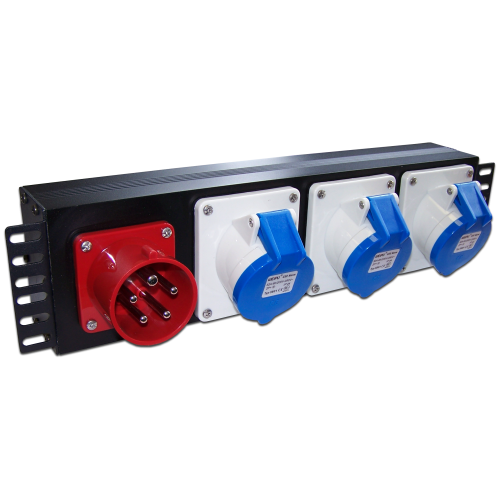
Quick read for first-time PDU importers:
- HS code for PDU imports is typically 8473.30 (parts of ADP machines) or 8537.10 (boards for electric control) — the choice drives both duty rate and import documentation.
- Incoterms 2020 has 11 rules; first-time importers usually pick FOB or CIF; experienced importers who want full control pick FCA; importers who want the factory to handle everything pick DDP.
- Ocean freight below 12 CBM is LCL (consolidated); above 18-20 CBM is FCL (20ft or 40ft HQ); PDUs nest well into standard containers.
- Customs clearance differs by destination — US (HTS / CBP / Section 301), EU (TARIC / import VAT), UK (UKCA + customs declaration), Australia (ABN + ACN check).
- Total import timeline from inquiry to receiving typically spans 50-70 days: 18-35 days production + 14-40 days ocean transit + 5-7 days customs + 7-14 days receiving QA.
4 modules define every PDU import from China, and most first-time importers underestimate how tightly the four are coupled. The HS code classification drives the customs duty rate. The Incoterm chosen determines who books freight and who carries risk in transit. The LCL vs FCL ocean freight decision determines the landed cost per unit. The customs clearance step in the destination country determines how long the shipment waits at the port before it can be picked up.
Because the 4 modules are coupled, importing PDUs from China is not 4 independent decisions — it is 1 decision with 4 branches. Get the HS code wrong and the wrong duty rate applies; get the Incoterm wrong and the wrong party books freight; get the freight wrong and landed cost balloons; get the customs wrong and the shipment sits at the port. Newsunn’s export-ready PDU catalog and Australian / Asian / African export-market rack PDU line both ship with full HS code documentation, and Newsunn’s 10+ years of export experience covers the documentation side of the customs process.
TL;DR — The 4-Module PDU Import Playbook
4 modules cover every PDU import from China, and each module has 1 critical decision the importer must make before the production line starts. Below is the quick-read summary that fits on 1 page.
- Module 1 — HS code: 8473.30 for basic / metered PDU used in IT racks; 8537.10 for intelligent / switched PDU with network monitoring.
- Module 2 — Incoterm: FOB if the buyer books ocean freight; CIF if the factory arranges ocean freight + insurance; DDP if the factory handles everything including duties.
- Module 3 — Ocean freight: LCL below 12 CBM; FCL above 18-20 CBM; check freight forwarder’s tariff structure in the 12-20 CBM gray zone.
- Module 4 — Customs clearance: US (HTS + CBP + Section 301); EU (TARIC + import VAT 17-27%); UK (UKCA + customs declaration); Australia (ABN + ACN).
HS Code Classification — 8473.30 vs 8537.10 for PDU Imports
8473.30 covers parts of automatic data processing machines and units — typical for basic, metered, monitored PDUs used inside IT server racks where the PDU is a passive or metered power-distribution accessory. 8537.10 covers boards, panels, consoles for electric control or distribution of electricity — typical for intelligent, switched, network-monitored PDUs with remote switching capability.
3 rules decide which HS code a specific PDU falls under:
- Function: If the PDU only distributes power (basic / metered / monitored), 8473.30 fits. If the PDU actively switches, monitors, or controls power (intelligent / switched), 8537.10 fits.
- Intended use: If the PDU is sold exclusively to data centers / IT rooms, 8473.30 fits. If the PDU is sold across IT rooms, industrial control rooms, telecom infrastructure, 8537.10 fits.
- Customs ruling in destination country: Final classification is the destination country’s customs authority decision. The WCO Harmonized System provides the 6-digit heading; the destination country adds 8-10 digit subheadings and binding rulings.
Getting the HS code wrong creates 3 predictable problems: (1) Wrong duty rate — 8473.30 may carry 0% MFN in the US while 8537.10 carries 2.7% MFN. (2) Wrong Section 301 tariff list — US Section 301 covers different HTS subheadings, and applying the wrong one can trigger 7.5-25% additional tariff. (3) Wrong import documentation — the certificate of origin and Form A / E / F applicability depends on the HS subheading.
For first-time importers, the safe move is to confirm with a customs broker before the production line starts. The cost of a binding-ruling request is small relative to the cost of a shipment sitting at the destination port for 2 weeks because the HS code was challenged. The WCO maintains the master Harmonized System nomenclature; the destination country’s customs authority publishes binding advance rulings.

Incoterms 2020 Decision Tree — 11 Rules for PDU Import
11 Incoterms 2020 rules govern PDU import contracts between Chinese exporters and destination-country buyers. The rules split into 4 groups based on who books the main carriage and who handles import clearance.
Group 1 — Any Mode (EXW / FCA / CPT / CIP / DAP / DPU / DDP)
7 rules apply to any mode of transport, including air freight and ocean freight. EXW (Ex Works) places maximum responsibility on the buyer — the buyer picks up at the factory. FCA (Free Carrier) hands over to the buyer’s nominated carrier at a named place. CPT (Carriage Paid To) and CIP (Carriage and Insurance Paid To) include main carriage paid by the seller. DAP (Delivered At Place) and DPU (Delivered at Place Unloaded) deliver to a named place in the destination country. DDP (Delivered Duty Paid) handles everything including import duties.
Group 2 — Sea and Inland Waterway (FAS / FOB / CFR / CIF)
4 rules apply only to sea or inland waterway transport. FAS (Free Alongside Ship) delivers alongside the vessel at the origin port. FOB (Free On Board) delivers on board the vessel at the origin port. CFR (Cost and Freight) includes ocean freight to the destination port. CIF (Cost, Insurance and Freight) adds insurance to CFR.
Decision Tree — Which Incoterm Fits a PDU Importer
| Importer Profile | Recommended Incoterm | Why |
|---|---|---|
| First-time importer, no freight forwarder | CIF | Factory books ocean freight + insurance; buyer takes over at destination port. |
| Importer with own freight forwarder | FOB | Buyer books ocean freight at potentially better rate; factory delivers on board vessel at origin port. |
| Importer wants factory to handle customs | DDP | Factory handles import duties + customs clearance; buyer just receives. |
| Importer with own pickup truck at factory | EXW | Buyer picks up at factory; minimum factory responsibility. |
| Importer with complex multi-leg logistics | FCA | Handover at named inland place; factory handles pre-carriage to that place. |
3 common mistakes first-time PDU importers make on Incoterm: (1) Choosing EXW because it appears cheapest on the quote — but EXW excludes origin port handling fees that can add 5-10% of the cargo value. (2) Choosing DDP because it appears easiest — but DDP puts customs compliance liability on the factory, which may inflate the unit price. (3) Choosing FOB without understanding that the buyer must book freight before the production finishes — late booking triggers storage fees at the origin port.
The 11 Incoterms 2020 rules are governed by the International Chamber of Commerce (ICC) and updated every 10 years; the next revision is expected in 2030.

Ocean Freight — LCL vs FCL for PDU Imports
2 ocean freight options exist for PDU imports from China: LCL (less-than-container-load) and FCL (full-container-load). The choice between them is driven by shipment volume in CBM (cubic meters), and PDUs nest well into both options because of their box-shaped form factor.
LCL — Consolidated Container for Shipments Below 12 CBM
LCL consolidates multiple shipments from different exporters into a single container at the origin port. The freight forwarder charges by volume (CBM) or weight (ton), whichever is greater. For PDU shipments below 12 CBM, LCL is typically cheaper than booking a full container because the cost is split across multiple shippers. Because LCL involves one more consolidation + de-consolidation handling step, transit time is typically 3-7 days longer than FCL.
FCL — Full Container for Shipments Above 18-20 CBM
FCL means the buyer books a full 20ft or 40ft HQ container. A 20ft container typically holds 25-28 CBM; a 40ft HQ holds 60-68 CBM. For PDU shipments above 18-20 CBM, FCL is typically cheaper per CBM because the buyer pays a flat rate for the entire container. FCL transit is faster because there is no consolidation step.
PDU Container Math
Typical PDU carton dimensions are 50x40x30 cm (≈0.06 CBM per carton). A 20ft container (25-28 CBM) holds ~420-460 standard PDU cartons; a 40ft HQ container (60-68 CBM) holds ~1,000-1,130 cartons. For 1,500+ PDU orders, a 40ft HQ is more economic per CBM.
| Route | LCL Threshold | FCL Threshold | 20ft Container | 40ft HQ Container | Transit Time |
|---|---|---|---|---|---|
| Ningbo → U.S. West Coast | <12 CBM | >18 CBM | ~420 cartons | ~1,000 cartons | 14-18 days |
| Ningbo → U.S. East Coast | <12 CBM | >18 CBM | ~420 cartons | ~1,000 cartons | 28-35 days |
| Ningbo → EU (Rotterdam) | <12 CBM | >18 CBM | ~420 cartons | ~1,000 cartons | 32-40 days |
| Ningbo → UK (Felixstowe) | <12 CBM | >18 CBM | ~420 cartons | ~1,000 cartons | 35-42 days |
| Ningbo → Australia (Sydney) | <12 CBM | >18 CBM | ~420 cartons | ~1,000 cartons | 22-28 days |
Major ocean carriers serving Ningbo port for PDU exports include Maersk, MSC, CMA CGM, COSCO, and Evergreen. Booking 7-10 days before production finishes gives the freight forwarder time to confirm the vessel schedule, the container yard slot, and the bill of lading number.
Customs Clearance in 4 Major Destinations — US / EU / UK / Australia
4 destination countries cover the majority of PDU imports from China, and each has its own customs framework. The differences are not cosmetic — they change which documents the factory must provide and which forms the importer must file.
US Customs (HTS / CBP / Section 301)
US imports of PDUs typically file under HTS 8473.30 (parts of ADP machines) or HTS 8537.10 (boards for electric control). Section 301 tariffs on China-origin goods may add 7.5-25% depending on the HTS subheading. The customs broker files CBP Form 7501 (Entry Summary) along with the commercial invoice, packing list, bill of lading, and any applicable certificates of origin. US importers must also hold a valid Importer of Record (IOR) number and, for FCC-regulated electronics, the FCC test report.
EU Customs (TARIC / Import VAT / CE)
EU imports of PDUs typically file under TARIC 8473.30 or 8537.10, with MFN duty rates typically 0% for parts of ADP machines. Import VAT applies at the destination country’s standard rate — typically 17-27% (Hungary 27%, Germany 19%, France 20%, Netherlands 21%, Spain 21%, Italy 22%). The EU also requires CE marking for electrical products; the factory should provide a Declaration of Conformity and CE test report. The importer files the customs declaration through the EU’s electronic customs system (e.g., ATLAS in Germany, DELT@ in France).
UK Customs (UKCA / CDS / Post-Brexit)
Post-Brexit UK imports of PDUs file under the UK Global Tariff, which mirrors the EU TARIC for most headings. UKCA marking replaced CE marking for most products placed on the UK market from 2025 onward; the factory should provide a UKCA Declaration of Conformity alongside the CE documents. UK imports require a CDS (Customs Declaration Service) entry rather than the old CHIEF system. UK importers must also hold a valid EORI number starting with GB.
Australia Customs (ABN / ACN / RCM)
Australian imports of PDUs typically file under HS 8473.30 or 8537.10 with MFN duty rates of 0-5%. Australian importers may also need RCM (Regulatory Compliance Mark) for electrical products — the factory’s existing CE / FCC test reports typically suffice as evidence of compliance. The Australian Border Force requires the importer to hold a valid ABN (Australian Business Number) and the foreign supplier’s ACN (Australian Company Number) if registered. For goods above AUD 1,000 declared value, a customs broker must lodge a Full Import Declaration (FID).
| Destination | HS Code | MFN Duty Rate (8473.30) | Section 301 / VAT | Marking Required |
|---|---|---|---|---|
| United States | HTS 8473.30 / 8537.10 | 0% / 2.7% | Section 301 may add 7.5-25% | FCC Part 15 |
| European Union | TARIC 8473.30 / 8537.10 | 0% / 2.7% | Import VAT 17-27% | CE marking |
| United Kingdom | UK Global Tariff 8473.30 / 8537.10 | 0% / 2.7% | Import VAT 20% | UKCA + CE |
| Australia | HS 8473.30 / 8537.10 | 0% / 5% | GST 10% on imported value | RCM (electrical) |
The 4 customs frameworks share 3 common elements: (1) HS classification is the starting point; (2) commercial invoice + packing list + bill of lading are universal documents; (3) the destination country applies its own marking, certification, and tax requirements on top of the HS classification. The U.S. Commercial Service trade.gov provides country-specific import guides, EU TARIC covers EU import duty lookups, and the Australian Border Force covers Australian import clearance.
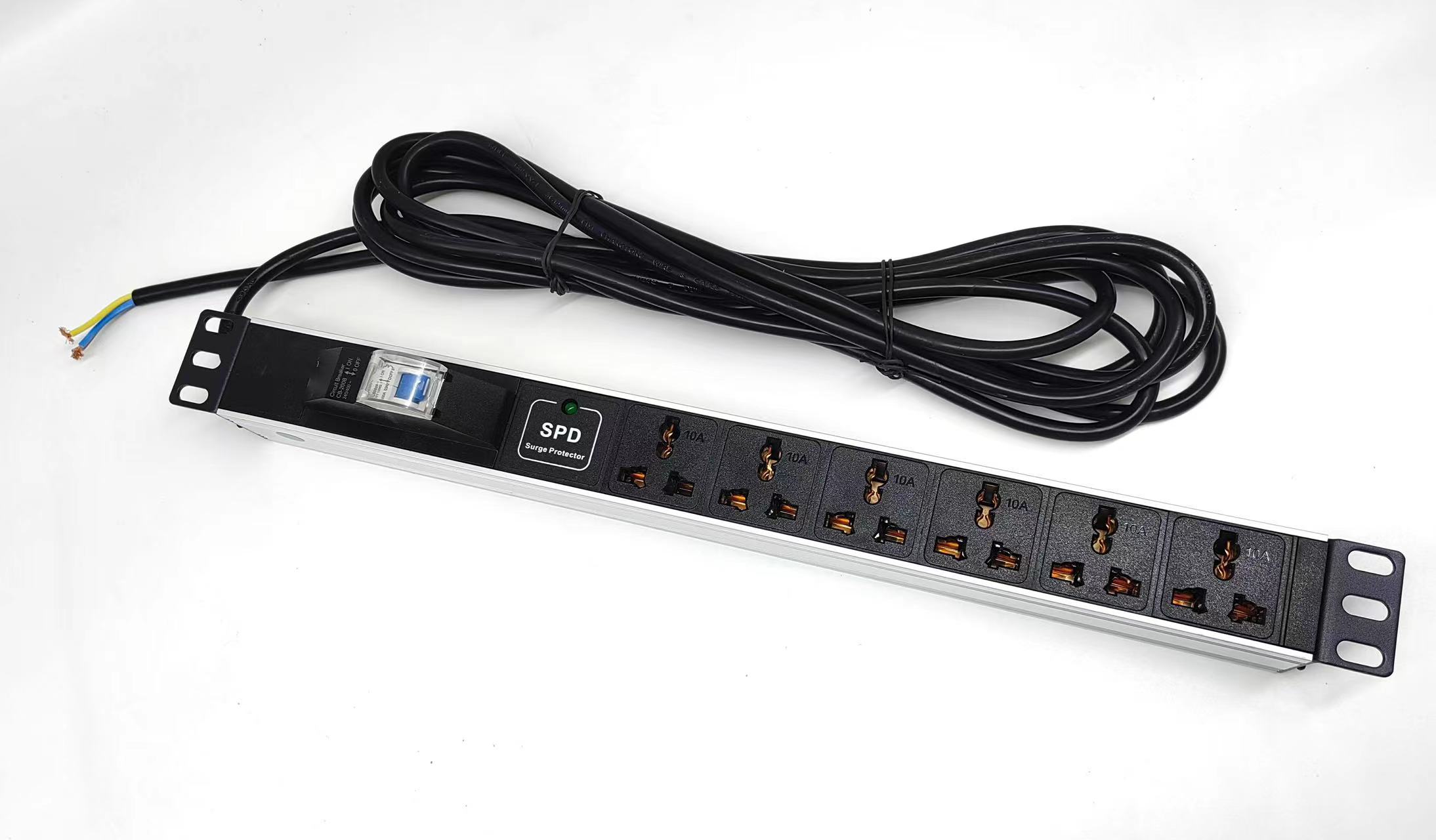
HS Code × Incoterm × Freight × Customs Cross-Table
The cross-table below maps the 4 import modules onto a single decision view. Each row is a common PDU import scenario; each column is one of the 4 modules. Use the table to confirm the 4 decisions are aligned before issuing the PO.
| Scenario | HS Code | Incoterm | Freight | Customs |
|---|---|---|---|---|
| First-time importer, 500 PDUs to US | 8473.30 (basic) | CIF | LCL (≈5 CBM) | HTS 8473.30 + Section 301 review |
| Experienced importer, 2,000 PDUs to EU | 8473.30 (basic) | FOB | FCL 20ft | TARIC + CE + import VAT 19-21% |
| UK buyer, 800 switched PDUs | 8537.10 (intelligent) | CIF | LCL (≈8 CBM) | UK Global Tariff + UKCA + VAT 20% |
| Australian buyer, 1,200 PDUs | 8473.30 + 8537.10 (mixed) | FOB | FCL 20ft | HS + ABN + RCM + GST 10% |
| Middle East buyer, 300 PDUs | 8473.30 | DDP | LCL (≈3 CBM) | Local customs + GCC conformity |
| Southeast Asia buyer, 1,500 PDUs | 8473.30 | CIF | FCL 20ft | ASEAN ATIGA + Form D (preferential) |
3 patterns emerge from the cross-table: (1) Volume <12 CBM usually pairs with LCL; volume >18 CBM usually pairs with FCL. (2) Incoterm choice follows the importer’s logistics capability, not the PDU type. (3) Customs framework is determined by destination country; HS code may change within a single shipment if the PDUs are mixed basic + intelligent.
6-Step Import Workflow — From Inquiry to Receiving
6 steps span the full PDU import cycle, from RFQ to receiving QA. The total duration is typically 50-70 days, with production (18-35 days) and ocean transit (14-40 days) accounting for 70-80% of the timeline.
| Stage | Day | Step | Owner | Critical Document |
|---|---|---|---|---|
| 1 | Day 1-3 | Issue RFQ, confirm HS code, request Incoterm quote | Buyer | RFQ with HS code proposal |
| 2 | Day 4-10 | Sample approval, confirm production line (18d or 35d) | Buyer + Factory | Sample approval + PI |
| 3 | Day 11-15 | Issue PO with FOB / CIF, pay 30% deposit | Buyer | PO + Deposit receipt |
| 4 | Day 16-50 | Production + QA + pre-shipment inspection | Factory | PSI report (if 3rd-party) |
| 5 | Day 51-90 | Ocean freight LCL / FCL + customs clearance | Freight forwarder + Customs broker | Bill of Lading + Entry Summary |
| 6 | Day 91-100 | Receiving QA + putaway | Buyer | Receiving inspection report |
10 working days is the typical customs clearance window after vessel arrival at the destination port. US imports clear in 3-5 days if Section 301 review is not triggered; EU imports clear in 5-7 days including VAT payment; UK imports clear in 5-10 days depending on CDS queue length; Australian imports clear in 5-7 days including FID processing.
For the factory side, the production schedule must align with the freight forwarder’s vessel cut-off time. Late production by 3-5 days can miss the vessel and add 7-10 days of port storage fees at the origin port.
Frequently Asked Questions
What HS code do I use to import PDUs from China?
Standard rack-mount PDUs (basic, metered, monitored, switched, intelligent) typically classify under HS 8473.30 (parts of automatic data processing machines) or HS 8537.10 (boards/panels for electric control). Final classification depends on PDU function and the destination country’s customs ruling. Confirm with your customs broker before the first shipment.
What is the difference between HS 8473.30 and HS 8537.10 for PDUs?
HS 8473.30 covers parts of automatic data processing machines and units — typical for basic / metered PDUs used inside IT server racks. HS 8537.10 covers boards, panels, consoles for electric control or distribution — typical for intelligent / switched PDUs with network monitoring. Both headings exist in the WCO Harmonized System; the destination country may apply additional 6-digit subheadings.
Which Incoterm should first-time PDU importers choose?
First-time importers usually pick FOB (Free On Board) or CIF (Cost, Insurance, Freight). FOB means the buyer books ocean freight and insurance from the origin port (typically Ningbo or Shanghai); CIF means the factory arranges ocean freight + insurance and the buyer takes over at the destination port. Experienced importers who already have a freight forwarder prefer FOB; newcomers who want the factory to handle logistics prefer CIF.
When is LCL cheaper than FCL for PDU imports?
LCL (less-than-container-load, consolidated) is typically cheaper for shipments below 12 CBM. FCL (full-container-load) becomes cheaper above 18-20 CBM. The 12-20 CBM gray zone depends on the freight forwarder’s tariff structure, the destination port, and the trade lane. For PDUs, a 20ft container typically holds 25-28 CBM; a 40ft HQ holds 60-68 CBM.
How long does ocean freight from China to the US take for PDUs?
Ocean transit from Ningbo / Shanghai to U.S. West Coast (Long Beach / Oakland) typically takes 14-18 days; to U.S. East Coast (New York / Savannah) 28-35 days; to Northwest (Seattle / Tacoma) 16-20 days; to EU (Rotterdam / Hamburg) 32-40 days; to UK (Felixstowe / Southampton) 35-42 days; to Australia (Sydney / Melbourne) 22-28 days.
Do I need an FCC / CE / UKCA certification when importing PDUs?
FCC Part 15 (US), CE marking (EU), and UKCA marking (UK) are typically required for PDUs entering those markets. The factory should provide the relevant test reports (FCC, CE, UKCA) along with the commercial invoice, packing list, and bill of lading. Importers should request these documents at the sample-approval stage, not at the production stage, to avoid customs delay.
What documents do Chinese PDU factories typically provide for export?
A standard PDU export shipment typically includes: (1) Commercial Invoice, (2) Packing List, (3) Bill of Lading (B/L) issued by the shipping line, (4) Certificate of Origin (Form A / Form E / Form F / RCEP depending on trade agreement), (5) FCC / CE / UKCA test reports, (6) Insurance Certificate (if CIF), (7) HS code declaration on the customs declaration form.
What customs duties apply to PDU imports from China?
Customs duty rates vary by destination country and HS subheading. U.S. imports under HTS 8473.30 typically carry MFN duty rates of 0% for parts of ADP machines, but Section 301 tariffs (China-specific) may add 7.5-25%. EU imports under TARIC 8473.30 typically carry 0% MFN but are subject to import VAT at the destination country’s standard rate (typically 17-27%). Always confirm with your customs broker before the first shipment, as rates change frequently.
Ready to import rack-mount PDUs from China?
Newsunn’s 10+ years of export experience, 30,000 m² production base, and full OEM / ODM service support global buyers across US, EU, UK, Australia, Middle East, and Southeast Asia with full HS code documentation, FCC / CE / UKCA test reports, and Incoterms 2020-compliant export contracts.
View export-ready PDU catalog →
About the Author
Written by Newsunn — Senior PDU Product Engineer
With over a decade of hands-on experience in PDU design and manufacturing, Newsunn’s technical team provides in-depth insights into power distribution solutions for data centers, server rooms, and mission-critical facilities. Backed by 8 R&D engineers and a 30,000 m² production base, we help global clients source the right PDU products — from standard rack units to fully customized intelligent power distribution systems. Our facility in Cidong Industrial Zone, Cixi City, near Ningbo port covers 30,000 square meters with four buildings for injection molding, painting, aluminum machining, and assembly, including test room and packing room. With 10+ years of expertise, we serve data centers, server rooms, and mission-critical facilities worldwide.
Sources: International Chamber of Commerce (ICC) Incoterms 2020, World Customs Organization (WCO) Harmonized System nomenclature, U.S. Customs and Border Protection (CBP), U.S. International Trade Commission (USITC) HTS, EU TARIC, UK Customs Declaration Service (CDS), Australian Border Force, ISO 9001:2015.
Post time: Sep-07-2026