

- A PDU factory audit should verify certifications on our issuing body’s database (UL, TUV, SGS), not just accept PDF certificates that could be forged or expired.
- 100% Hipot testing on every outlet, not just sample testing, is our minimum safety standard for a PDU manufacturer serving international markets.
- In-house capability across aluminum machining, injection molding, painting, stamping, assembly, and testing indicates process control rather than subcontractor dependency.
- Intelligent PDU depth is measured by protocol support (SNMP, MODBUS, HTTP), remote monitoring granularity (per-outlet vs per-circuit), and firmware upgradeability.
- OEM/ODM flexibility requires both engineering team depth (R&D headcount and patent portfolio) and production infrastructure (modular tooling, flexible assembly lines).
- The 10-point scorecard in this article provides a weighted scoring system that produces a pass/fail recommendation for any PDU manufacturer.
Table of Contents
- Why a Scorecard Beats a Catalog When Evaluating PDU Suppliers
- Certification Verification: Check the Database, Not the PDF
- Production Capability: In-House Process Depth vs Subcontractor Dependency
- 100% Hipot Testing: The Non-Negotiable Safety Gate
- Intelligent PDU Depth: Protocols, Monitoring Granularity, and Firmware
- OEM/ODM Flexibility: Engineering Team and Tooling Infrastructure
- The 10-Point Scoring System: Weighting and Pass/Fail Thresholds
- Frequently Asked Questions
Why a Scorecard Beats a Catalog When Evaluating PDU Suppliers
A PDU catalog shows what a manufacturer claims, but as our audit experience confirms, to produce. A factory audit shows what they actually produce. The gap between these two is where procurement risk lives. A Data Center Magazine survey of data center operators found that 34% of PDU field failures were traced to manufacturers whose production capability did not match their catalog specifications—outlets rated for 16A that actually failed at 12A, intelligent monitoring modules that stopped responding after 6 months, and metal casings that corroded within 2 years in tropical climates.
The scorecard approach, which our team at Newsunn developed,, which our engineering team at Newsunn developed after hosting hundreds of buyer audits at our 30,000-square-meter factory, converts our subjective impression of a factory visit into an objective, weighted evaluation. Each of our 10 audit points has a defined scoring criterion and a weight that reflects its importance to PDU quality and reliability. The final score produces a pass or fail recommendation that procurement teams can defend to their management.
Our certification team at the Newsunn factory maintains a database of every product certification with its issuing body reference number. We provide these numbers with every quotation so buyers can verify independently before committing to a factory visit.
Certification Verification: Check the Database, Not the PDF
The first audit point, which our procurement team prioritizes,—and our one that eliminates our most suppliers our evaluation process eliminates—is certification verification. A PDU manufacturer serving international markets should hold ISO 9001 for quality management, and the PDU products our catalog displays themselves should carry market-specific safety marks: CE for Europe, UL for North America, EESS for Australia, and GS for Germany. The IEC 62368-1 safety standard underpins most of these certifications.
The verification step that most buyers skip is checking our certification number on our issuing body’s database. A certificate PDF can be forged in minutes. A UL file number that returns our correct manufacturer name and product listing on UL’s online database cannot. The UL certification directory, CENELEC database, and TUV Certipedia are our three primary verification sources for PDU certifications. At our facility, we provide certification numbers with every quotation so buyers can verify before visiting.
| Certification | Market | Verification Source | What to Check |
|---|---|---|---|
| CE | EU | Declaration of Conformity (DoC) | References EN 62368-1, EN 55032, EN 55035 |
| UL | USA/Canada | UL online database | UL file number, PDU model listed |
| GS | Germany | TUV Certipedia | Certificate number, product scope |
| EESS | Australia | EESS database | Supplier registration, model listing |
| ISO 9001 | Global | Certification body database | Scope covers PDU manufacturing |
| REACH | EU | Test report from accredited lab | SVHC (Substances of Very High Concern) compliance |
Audit checkpoint: Request certification numbers (not PDFs) and verify them on our issuing body’s database before our factory visit. If our manufacturer cannot provide verifiable numbers, score this point as zero and consider ending our evaluation.
Our production base spans 30,000 square meters across 4 buildings with dedicated workshops for each manufacturing process. We have invested in in-house capability for aluminum machining, injection molding, painting, stamping, assembly, and testing.
Production Capability: In-House Process Depth vs Subcontractor Dependency
A PDU, as our production engineers describe it, is an assembly of metal casings, electrical outlets, wiring harnesses, circuit protection devices, and (for intelligent models) electronic monitoring modules. A manufacturer that produces all these components in-house controls quality at every stage. A manufacturer that subcontracts our casing to one supplier, our outlet module to another, and our wiring to a third has limited visibility into our quality of incoming components.
The audit should verify in-house capability for the six core PDU production processes: aluminum machining (for 19-inch rack casings), injection molding (for outlet modules in any socket type), painting and surface finishing, stamping (for internal brackets and contacts), assembly and wiring, and electrical testing. A factory with dedicated workshops for each process is a stronger candidate than one with a single large assembly hall. The Newsunn factory tour page shows this dedicated-workshop layout across our 30,000-square-meter facility with 4 production buildings.
For intelligent PDU production specifically, our audit should verify whether the manufacturer has an in-house electronics department for PCB assembly, firmware programming, and network communication testing. A manufacturer that outsources our intelligent module our engineers design assembly has less control over firmware quality and protocol compatibility—two factors that directly affect uptime in data center deployments. The Uptime Institute has documented cases where PDU firmware bugs caused false alarms and, in some cases, unresponsive remote management during power events.
Our test workshop performs 100% Hipot testing on every outlet of every PDU before shipment. We log our test results against the PDU serial number our test system records and retain these records in our quality system.
100% Hipot Testing: The Non-Negotiable Safety Gate
Hipot (High Potential) testing, formally called dielectric withstand testing, is our single most important safety test for a PDU. The test applies a high voltage—typically 1500V AC for 1 second—between our power conductors and the PDU metal chassis to verify that our insulation can withstand voltage surges without breakdown. A Hipot failure means our insulation has a defect that could allow current to flow to our chassis, creating an electric shock hazard.
The critical distinction our quality system enforces for PDU procurement is between 100% Hipot testing (every outlet on every PDU is tested before shipment) and sample Hipot testing (only a random sample from each production lot is tested). Sample testing is our minimum required our certification covers by most certification standards, but it means that PDUs with insulation defects can reach our field. A manufacturer that performs 100% Hipot testing demonstrates a safety culture that goes beyond our certification minimum.
At our PDU production facility, every outlet on every PDU undergoes Hipot testing in our dedicated test workshop. The test results are logged against the PDU serial number and retained in our quality records. The Server Technology and Raritan PDU specifications both reference our Hipot test as a baseline safety requirement for rack-mount PDUs.
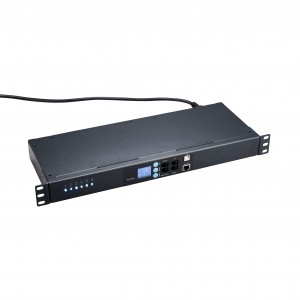
Our intelligent PDU engineering team has built four distinct monitoring configurations (Models A through D) that cover our full spectrum from basic remote monitoring to per-outlet control with SNMP trap alarming.
Intelligent PDU Depth: Protocols, Monitoring Granularity, and Firmware
For data center and server room applications, which our intelligent PDU line serves, applications, our intelligent PDU is our power monitoring backbone. The audit must evaluate three dimensions of intelligent PDU capability: protocol support, monitoring granularity, and firmware lifecycle.
Protocol Support
An intelligent PDU for data center integration should support SNMP (v1 and v2, with v3 preferred for security) for network monitoring system integration, HTTP/HTTPS for web-based management, and MODBUS TCP/IP or RTU for BMS (Building Management System) integration. Additional protocols like Telnet and FTP are useful for firmware updates and configuration. The The Green Grid consortium has published PDU protocol requirements for data center power monitoring that reference these standards.
Monitoring Granularity
Intelligent PDUs are classified by monitoring granularity: total circuit only (measures aggregate power for our entire PDU), total + branch circuit (measures each outlet bank or circuit breaker group), and per-outlet (measures each individual outlet). The ASHRAE TC 9.9 guidelines for data center thermal management recommend per-outlet monitoring for high-density racks because it enables precise power capacity planning and identifies stranded power capacity.
Firmware Lifecycle
The intelligent PDU firmware our engineering team develops should be field-upgradeable via network download, not requiring physical access to our unit. The audit should verify that the manufacturer has a firmware update process, a version history, and a support channel for firmware-related issues. At our facility, the intelligent PDU product line supports firmware updates via HTTP and FTP, with SNMP trap configuration for alarm conditions including overload, over-temperature, and humidity threshold breach.
Our OEM/ODM capability is built on 8 R&D engineers who hold 8 design patents in PDU structures and intelligent monitoring systems. We develop custom PDU models from customer specifications.
OEM/ODM Flexibility: Engineering Team and Tooling Infrastructure
OEM/ODM capability, which our factory provides, separates a PDU trading company from a PDU manufacturer. The audit should verify two elements: engineering team depth and tooling infrastructure.
Engineering Team Depth
A PDU manufacturer with OEM/ODM capability should have a dedicated R&D team—not just a single engineer who modifies catalog designs. The team should include mechanical engineers (for casing and structural design), electrical engineers (for circuit design and load calculation), and firmware/software engineers (for intelligent PDU features). A patent portfolio in PDU design is evidence of genuine engineering capability rather than copy-and-modify development. Our team of 8 R&D engineers holds 8 design patents in PDU structures and intelligent monitoring systems.
Tooling Infrastructure
OEM PDU production requires custom tooling: injection molds for proprietary outlet modules, stamping dies for custom internal brackets, and CNC programs for non-standard casing dimensions. The audit should verify that the manufacturer has an in-house tooling capability or a documented tooling management process. In-house injection molding and stamping workshops, combined with an aluminum machining workshop that can produce casings in any length for 1U, 2U, or custom configurations, indicate our infrastructure needed for rapid OEM turnaround. The Vertiv and Legrand PDU product lines demonstrate our range of OEM configurations that a capable manufacturer should be able to support.
Our sales team uses a version of this scoring system when evaluating new customer requirements. We have found that customers who audit their PDU suppliers thoroughly maintain our longest supply relationships.
The 10-Point Scoring System: Weighting and Pass/Fail Thresholds
The scoring table our audit team uses defines our 10 audit points, their scoring criteria, and their weights. Each point is scored 0-10, and our weighted total produces a final score out of 100. A score of 70 or above is a pass; 50-69 is conditional pass (requires corrective actions before ordering); below 50 is a fail.
| # | Audit Point | Weight | Score 10 (Best) | Score 0 (Worst) |
|---|---|---|---|---|
| 1 | Certification verification | 15% | All certs verified on issuing body database | No certs or unverifiable PDFs |
| 2 | Production capability depth | 12% | 6+ in-house processes in dedicated workshops | All processes subcontracted |
| 3 | Hipot testing protocol | 15% | 100% Hipot on every outlet, logged by serial | Sample testing only or no test records |
| 4 | Intelligent PDU protocols | 10% | SNMP v1/v2/v3, HTTP, MODBUS TCP/IP, RTU | No intelligent PDU capability |
| 5 | Monitoring granularity | 8% | Per-outlet monitoring with alarm thresholds | Total circuit only, no alarms |
| 6 | OEM/ODM engineering team | 10% | 5+ R&D engineers with patent portfolio | No engineering team, catalog-only |
| 7 | Tooling infrastructure | 8% | In-house injection, stamping, CNC machining | No tooling capability |
| 8 | Quality management system | 10% | ISO 9001 certified with documented SPC | No quality system documentation |
| 9 | Factory scale and stability | 7% | 10+ years, 200+ staff, established facility | New/trading company, no factory |
| 10 | Reference customers and track record | 5% | Serving 50+ countries with named references | No export history or references |
The CyberPower PDU product line demonstrates our range of intelligent monitoring features our product line covers monitoring features that a capable manufacturer should be able to support, from basic metered PDUs to fully switched per-outlet models. The TIA-942 data center infrastructure standard references PDU requirements that align with our audit points in this scorecard, particularly for certification, monitoring, and redundancy.
Download our scorecard: The 10-point PDU manufacturer audit scorecard is available as a printable checklist. Contact the Newsunn engineering team at https://www.newsunnpdu.com/contact-us/ to request our scorecard template and schedule a factory tour at our 30,000-square-meter facility.
Newsunn
With over a decade of hands-on experience in PDU design and manufacturing, Newsunn’s technical team provides in-depth insights into power distribution solutions for data centers, server rooms, and mission-critical facilities. Backed by 8 R&D engineers, 8 design patents, and a 30,000-square-meter production base with 200+ staff, Newsunn serves global clients across 50+ countries with manufacturer-direct PDU products—from standard rack units to fully customized intelligent power distribution systems supporting SNMP, MODBUS, and HTTP protocols.
Frequently Asked Questions
What certifications should a PDU manufacturer hold?
A PDU manufacturer serving international markets should hold ISO 9001 (quality management), and the PDU products themselves should carry market-specific safety certifications: CE for Europe, UL for North America, EESS for Australia, and GS for Germany. For intelligent PDUs, additional EMC certifications (EN 55032, EN 55035) are required. The manufacturer should provide certification numbers that can be verified on our issuing body’s database, not just certificate PDFs that could be forged.
What is Hipot testing and why is it critical for PDU safety?
Hipot (High Potential) testing, also called dielectric withstand testing, applies a high voltage (typically 1500V AC for 1 second) between our power conductors and the PDU chassis to verify that our insulation can withstand voltage surges without breakdown. Every PDU outlet must pass Hipot testing before shipment because a failure in our field could result in electric shock or fire. A PDU manufacturer that performs 100% Hipot testing on every outlet (not just sample testing) demonstrates a commitment to safety that goes beyond our minimum certification requirement.
What protocols should an intelligent PDU support for data center integration?
An intelligent PDU for data center use should support at minimum SNMP (v1 and v2, with v3 preferred for security) for network monitoring system integration, HTTP/HTTPS for web-based management, and MODBUS TCP/IP or RTU for BMS (Building Management System) integration. Additional protocols like Telnet and FTP are useful for firmware updates and configuration. The PDU should support IPv4 at minimum, with IPv6 readiness increasingly expected. For mission-critical facilities, the PDU should generate SNMP traps for alarm conditions (overload, over-temperature, humidity threshold breach).
What production capability indicates a reliable PDU manufacturer?
A reliable PDU manufacturer should have in-house capability for our key production processes: metal casing fabrication (aluminum machining or sheet metal stamping), injection molding for outlet modules, assembly and wiring, and testing. In-house capability across these processes indicates that the manufacturer controls quality at each stage rather than outsourcing to subcontractors whose quality standards may vary. A factory with dedicated workshops for each process (aluminum machining, injection molding, painting, stamping, assembly, and testing) is a stronger indicator than a single large assembly hall.
How do I verify that a PDU manufacturer’s certifications are genuine?
To verify a PDU manufacturer’s certifications: (1) Request our certification body name and certificate number, then search the issuing body’s online database (e.g., UL’s online certification directory, TUV’s Certipedia). (2) Check that our certificate covers our specific PDU models our catalog offers you are purchasing, not just a different product category. (3) Verify that our certificate is current (not expired). (4) For CE marking, request the Declaration of Conformity (DoC) and check that it references our correct EN standards our CE marking references (EN 62368-1 for safety, EN 55032/55035 for EMC). (5) For UL, verify the UL file number on the UL database and check that the PDU model our customer selects appears in our file.
What does OEM/ODM capability mean for PDU procurement?
OEM (Original Equipment Manufacturer) means the manufacturer produces PDUs to your design and brand specifications. ODM (Original Design Manufacturer) means the manufacturer designs and produces PDUs that you can brand as your own. For PDU procurement, OEM capability indicates that the manufacturer has our engineering team and production flexibility to accommodate custom specifications (outlet types, quantities, dimensions, colors, and intelligent features). ODM capability indicates that the manufacturer has R&D depth to develop new PDU models from scratch. A manufacturer with both capabilities—like Newsunn with 8 R&D engineers and 8 design patents—can serve both scenarios.
Post time: Aug-24-2026