

The Southeast Asian digital economy expands at an unprecedented rate, driving massive investments into hyper-scale server infrastructure. Hyperscale cloud deployments concentrate heavily across regional hubs like Singapore, Johor in Malaysia, and Jakarta in Indonesia. This rapid expansion forces data center facility managers to prioritize high-capacity power distribution networks within server enclosures. Because many Southeast Asian nations maintain historic colonial ties to British engineering traditions, local electrical grids adhere strictly to British safety specifications. Consequently, infrastructure architects operating in these areas demand highly specialized, server-rack-compatible power blocks that feature British standard sockets. Identifying competitive equipment manufacturers overseas requires evaluating specific technical competencies and operational capabilities. Industry buyers frequently consult trade publications to locate the Top 10 Suppliers Of UK Type Rack PDU In China to establish reliable international hardware pipelines. This deliberate vendor vetting process helps regional system integrators protect sophisticated network hardware from power instability. Furthermore, establishing a transparent engineering framework ensures that overseas production facilities align perfectly with the harsh operational demands of tropical cloud hubs.
Engineering the BS 1363 Standard for Hyper-Scale Density: Shutter Mechanisms and Contact Integrity
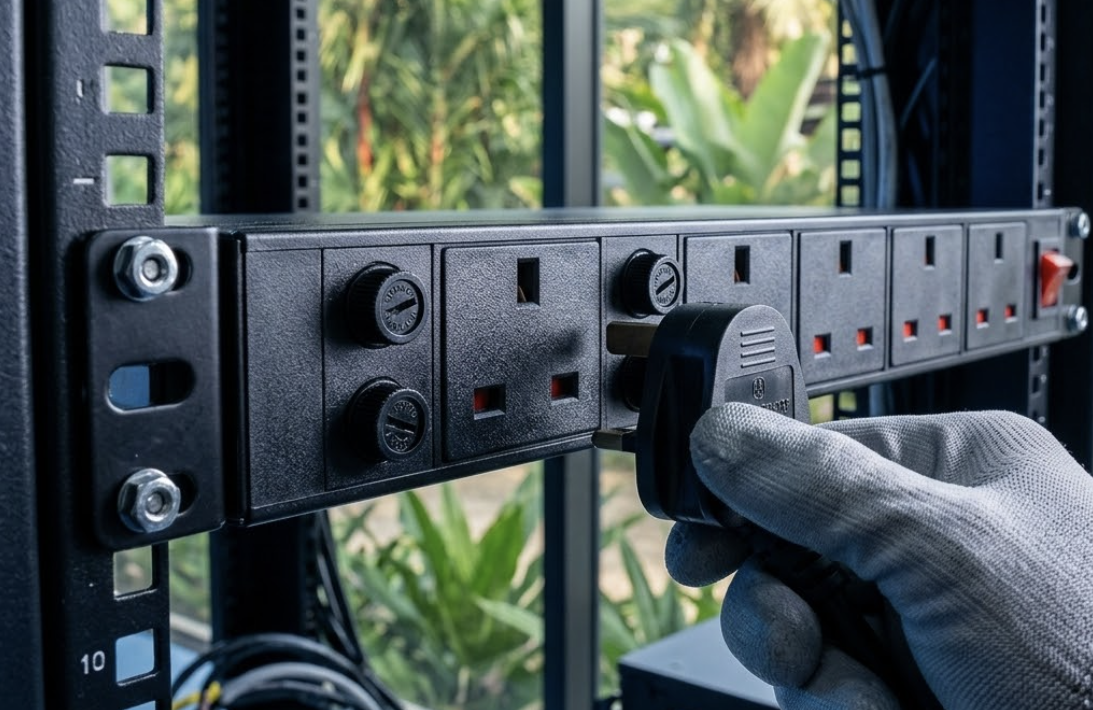
Deploying standard commercial electrical components into dense, high-powered enterprise computing racks introduces significant engineering hazards. Standard domestic power strips easily fail when subjecting their internal structures to continuous 16-ampere loads at 250 volts. In particular, the British BS 1363 standard mandates specific mechanical safety features, such as built-in internal protective shutter mechanisms. Low-tier manufacturing operations often use inferior plastics that warp under the persistent heat generated inside closed server cabinets. This thermal degradation causes the internal shutters to jam, preventing operators from hot-swapping critical network connections during emergency maintenance routines. Therefore, selecting a world-class manufacturing partner requires an intense technical focus on specialized material composition. Elite component suppliers utilize advanced engineering plastics that incorporate high oxygen factors to achieve a verified UL94-V0 flame-retardant classification. This resilient material withstands high thermal thresholds without structural deformation, keeping safety shutters fully functional over years of continuous deployment. In addition, internal contact metallurgy plays a decisive role in preventing localized arcing incidents. Premier factories replace common brass components with high-conductivity, precision-engineered phosphor bronze alloy sleeves. This superior alloy exhibits excellent natural elasticity and corrosion resistance, which helps maintain a secure physical grip on plug pins. As a direct result, the power strip eliminates high contact resistance and drops thermal signatures significantly.
Critical Vendor Evaluation: Balancing Chinese Manufacturing Velocity Against Cross-Border Supply Chain Risks
Procuring critical electrical equipment from overseas supply chains offers distinct commercial advantages alongside complex operational hurdles. Chinese electrical manufacturing ecosystems present incredible benefits, such as concentrated raw material clusters and massive pools of specialized engineering talent. These concentrated regional advantages allow factories to maintain high assembly speeds while keeping overall production costs highly competitive. However, Southeast Asian infrastructure buyers must carefully balance these production efficiencies against clear cross-border operational risks. Long maritime transit paths across shipping lanes can introduce unexpected delivery delays that disrupt strict data center construction timelines. Furthermore, complex international customs clearance protocols occasionally stall cargo at regional entry ports for weeks. Another major vulnerability stems from communication friction during complex non-standard product modifications. When a regional system integrator requires customized rail lengths or specific outlet orientations, multi-layered trading companies often misinterpret engineering drawings. This disconnect results in costly manufacturing errors and wasted development cycles. To bypass these issues, smart infrastructure buyers avoid intermediary brokers entirely. Instead, buyers establish direct partnerships with fully autonomous, asset-owning manufacturers that manage their own internal development pipelines. Direct engineering communication eliminates technical misunderstandings and ensures that custom hardware fabrications match exact engineering specifications perfectly.
Mitigating Operational Vulnerabilities via Vertically Integrated Production Ecosystems
Navigating international supply chain threats requires selecting an established manufacturer that controls its entire production environment. Choosing a supplier with comprehensive vertical integration allows enterprise buyers to de-risk overseas sourcing completely. A prominent example of this operational model is Newsunn (Ningbo Newsun Network Ltd.), which runs an expansive 30,000 square meters manufacturing base. This large-scale facility contains independent workshops dedicated to specialized tasks like injection molding, aluminum machining, surface painting, and final product assembly. By maintaining absolute control over the entire fabrication loop, the manufacturer eliminates dependencies on volatile third-party component vendors. This independent infrastructure helps the factory maintain a stable annual capacity of 1,200k units, ensuring predictable material availability. Consequently, Newsunn optimizes its production flows to deliver reliable lead times of 25 to 30 days for international shipments. Vertical integration also provides immense flexibility for engineering customization without forcing clients to accept massive financial risks. The factory comfortably handles specialized technical orders with minimum order thresholds starting at only 100 units. Because engineers manage the tool design and molding processes in-house, the facility implements changes quickly. This structural agility allows regional data center developers to procure specialized hardware tailored exactly to irregular cabinet profiles.
From Passive Copper to Active Edge Telemetry: Navigating the Tropical Power Efficiency Mandate
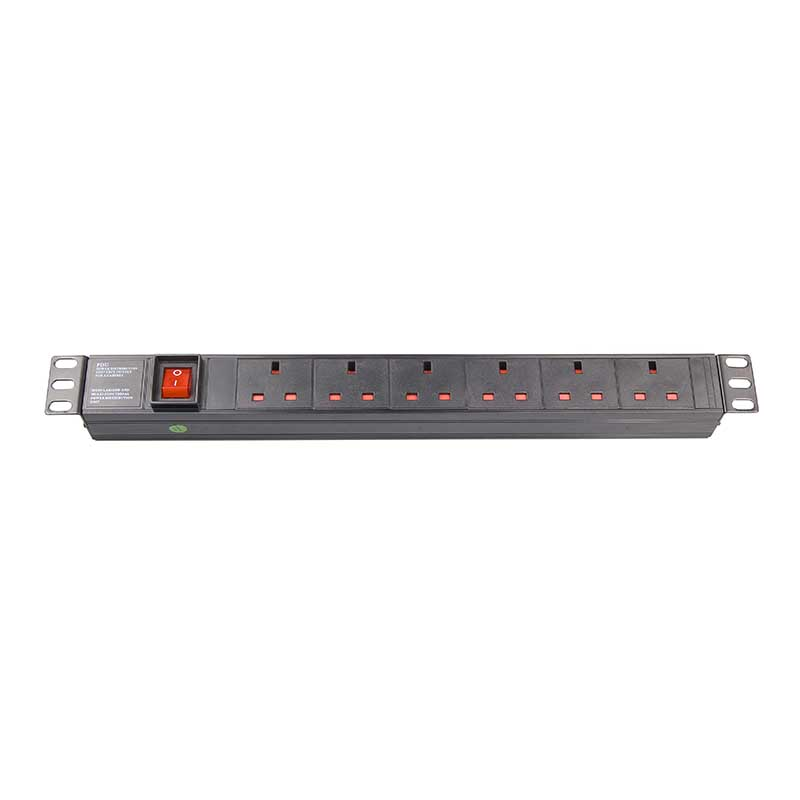
Southeast Asian data center installations operate in harsh equatorial environments characterized by elevated outdoor temperatures and high relative humidity levels. These intense ambient conditions put extra stress on cooling infrastructure and naturally narrow the safety margins of electrical components. To maintain high operational efficiency, modern facilities must abandon passive power rails and transition toward intelligent monitoring platforms. Integrating advanced communication and telemetry circuits allows local operators to track electrical consumption in real-time, preventing catastrophic circuit blowouts. For example, Ningbo Newsun Network Ltd. manufactures advanced intelligent architectures that feature diverse functional layouts divided from Type A to Type D. Type A configurations offer maximum visibility by delivering total circuit metering alongside individual socket monitoring and independent outlet switching controls. This granular level of oversight enables remote engineers to reboot frozen servers individually without cutting power to adjacent computing hardware. Conversely, Type D designs provide a highly economical solution by focusing exclusively on aggregate total circuit load monitoring. To integrate smoothly into centralized network operations centers, these smart power units support standard open protocols like HTTP, SNMP V1/V2, and MODBUS TCP/IP. Furthermore, operators can attach external environmental sensors to track rack temperature, humidity, airflow, and door security. These smart features reveal the overall product advantages of choosing high-quality engineering over low-cost commodity hardware. Utilizing proactive edge telemetry allows regional facility managers to detect power anomalies early, significantly reducing the need for costly manual interventions.
A Roadmap for Regional System Integrators: Selecting a Resilient Overseas PDU Partner
Developing a resilient digital infrastructure across Southeast Asia requires a structured, data-driven approach to vendor qualification. Procurement teams must look past basic cost sheets and prioritize rigorous technical benchmarks during factory selection. An effective audit must evaluate structural metallurgy, regulatory compliance certificates, and the completeness of factory testing routines. Premier manufacturers prove their engineering superiority by executing exhaustive quality check loops before boxing any items. For instance, top-tier factories conduct a mandatory 2000V high-voltage Hi-pot isolation routine to verify physical creepage distances. Additionally, implementing a comprehensive 48-hour online continuous aging test ensures total electronic component stability prior to overseas export. These verifiable safety checks confirm that the hardware can withstand the harsh realities of maritime transit and long-term deployment. Ultimately, partnering with a vertically integrated manufacturing enterprise minimizes supply chain volatility and protects critical computational equipment. By selecting suppliers that combine advanced craftsmanship with open telemetry systems, regional system integrators secure a reliable foundation for long-term computing growth. For comprehensive product dimensions and customizable electrical configurations, industry procurement professionals can explore the complete technical portfolio at https://www.newsunnpdu.com/.
Post time: Sep-18-2026