

The expansion of telecom networks across Oceania demands robust infrastructure components. As 5G installations and edge data centers multiply throughout Australia, power stability remains a paramount concern for network operators. Carrier-grade environments require continuous power distribution to protect sensitive communication systems. Consequently, identifying an Advanced Australia Standard PDU Supplier becomes a critical decision for procurement managers who supervise modern network installations. Specialized hardware ensures seamless compatibility with regional power grids while supporting high-density server configurations. These specialized distribution units must provide steady performance under relentless operational conditions. Standard off-the-shelf equipment rarely satisfies the unique specifications that telecommunication exchange facilities dictate. Therefore, modern data centers require advanced engineering solutions to maintain high service availability. Reliable power architecture prevents unexpected system interruptions and minimizes localized hardware failures. Infrastructure developers must prioritize engineering excellence when they select power components for long-term projects. Choosing the right technical partner streamlines the supply chain and enhances overall system efficiency.
Decoding the Oceanian Telecom Mandate: Compliance Beyond Standard Safety
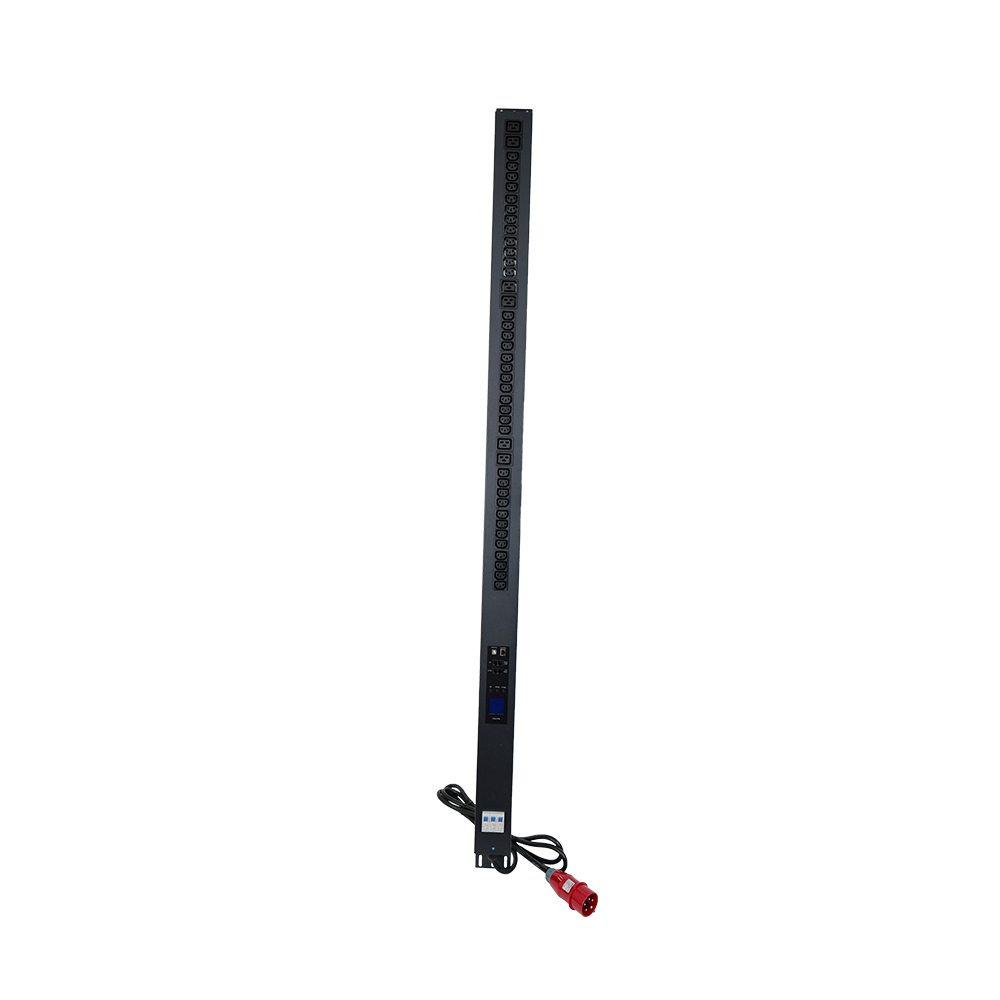
The Australian telecommunications sector operates under a comprehensive framework of strict guidelines. Compliance with local regulations forms the baseline for any hardware deployment within the region. Specifically, the AS/NZS 3112 standard dictates precise design parameters for electrical plugs and socket-outlets to ensure public safety. Hardware suppliers must obtain stringent product certifications to guarantee their equipment satisfies these local requirements. Telecom environments demand superior surge protection due to the critical nature of communication infrastructure. A single power surge can destroy high-value processing cards and disrupt regional connectivity. To prevent such catastrophes, power distribution units require advanced raw materials with superior insulation properties. For instance, high-grade socket modules utilize premium PC/ABS composite engineering plastics. This material selection offers high wear resistance and excellent stamping endurance. More importantly, it meets the rigorous UL94-V0 flame-retardant standard to protect against fire hazards within the equipment rack. Beyond thermal safety, structural isolation keeps technicians safe during maintenance routines. Internal designs must isolate live electrical elements entirely from the metal outer enclosure. Effective grounding devices redirect stray currents safely into the facility ground network. By addressing these compliance standards through proactive manufacturing, operators avoid regulatory bottlenecks at the border. Ultimately, choosing pre-certified hardware accelerates project deployment timelines and ensures smooth field integration.
Mitigating Phase Imbalance: The Technical Logic of 3-Phase Modular Customization
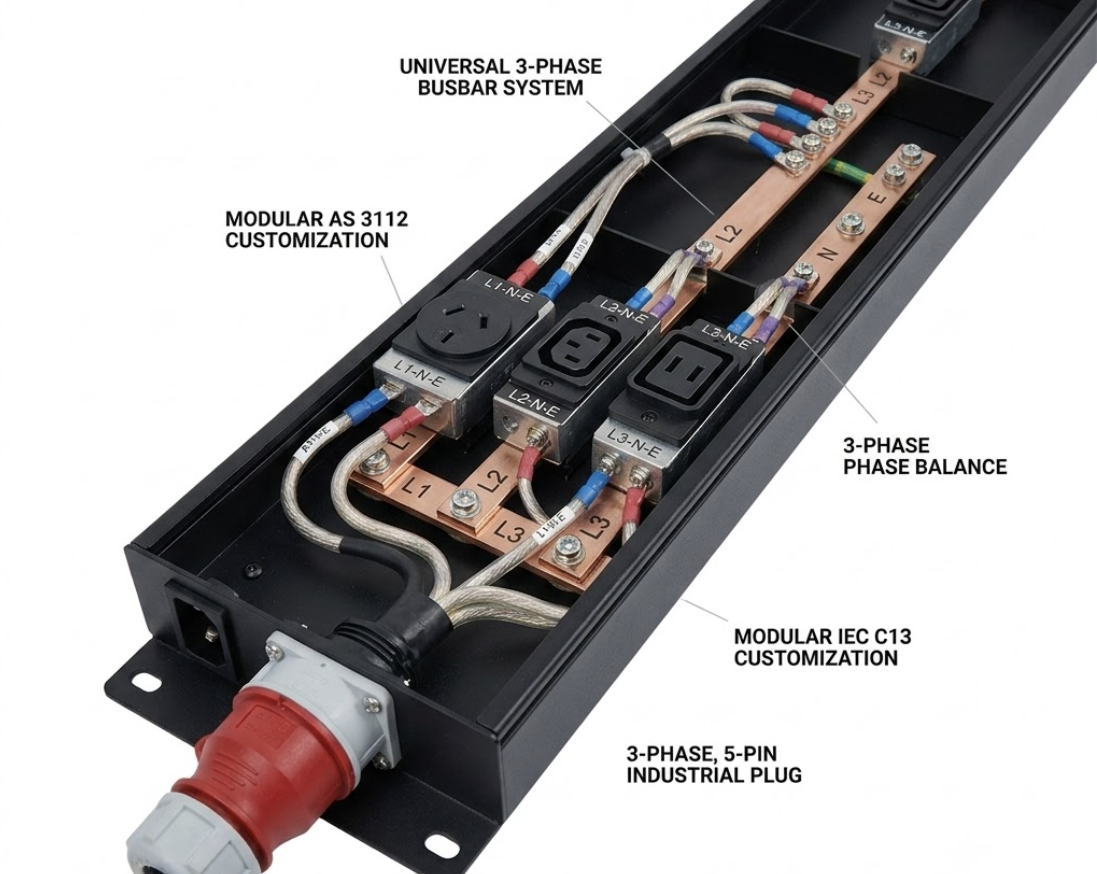
Modern telecommunication nodes integrate a complex mixture of legacy single-phase appliances and modern high-density three-phase processing systems. This diverse hardware profile often causes significant phase imbalance within the data facility power network. When one electrical phase carries a disproportionate load, local circuit breakers trip unexpectedly and trigger systemic downtime. Consequently, electrical engineers require sophisticated 3-phase power distribution units to balance electrical current effectively. Advanced manufacturing brands like Newsunn design intelligent architectures that distribute power evenly across all three phases. The utilization of a modular structure allows engineers to configure precise outlet layouts tailored to distinct carrier needs. For example, a single three-phase unit can integrate multiple Australian standard sockets alongside international IEC configurations. This flexible approach eliminates the need to rewrite the underlying busbar system for every unique installation. Pure copper internal connections, specifically crafted from high-elasticity phosphor bronze, maintain high conductivity. This material exhibits exceptional corrosion resistance and easily endures elevated operational temperatures. As a result, the physical interface remains stable under heavy, continuous power loads. Modular customization allows infrastructure teams to optimize rack space while maximizing total power utilization. Operators can match the exact power requirements of their hardware without purchasing excess distribution components.
Surpassing the Friction of Rigorous Field Acceptance Testing (FAT)
Before a telecom facility goes live, network operators conduct rigorous Field Acceptance Testing to verify every component. This audit phase uncovers hidden manufacturing defects and validates structural durability under extreme stress. Hardware providers must build equipment to withstand these uncompromising quality checks without failure. To ensure out-of-the-box reliability, Newsunn (Ningbo Newsun Network Ltd.) enforces an exhaustive four-step testing protocol during product manufacturing. Every unit undergoes a comprehensive 2000V high-voltage Hi-pot isolation test. This process verifies necessary creepage distances and ensures that no internal wire damage occurred during assembly. Furthermore, engineers execute a mandatory 48-hour online continuous aging test to discover and eliminate early component failures. A 120% full-load threshold stress test confirms that the internal wiring handles unexpected current spikes effortlessly. Physical durability also plays a key role during the facility validation process. The outer casing features an advanced aluminum alloy profile with a tensile strength of 480 mpa. This high-strength material provides excellent heat dissipation properties to prevent dangerous thermal accumulation inside narrow cabinets. Ground resistance testing verifies absolute insulation between the electrical poles and the grounded frame. These documented quality control practices ensure that the power systems pass field audits easily.
Carrier-Grade Telemetry: Orchestrating Telecom NOC Visibility
Telecommunication network operations centers require absolute visibility into their remote infrastructure assets to maximize efficiency. Technicians must monitor power consumption trends from a centralized location to catch operational anomalies early. Intelligent power distribution units solve this visibility challenge by providing extensive network telemetry. These systems integrate multiple communication protocols, including HTTP, SNMP V1/V2, and MODBUS TCP/IP, to transmit data smoothly. Operators choose from various functional models, such as Type A, Type B, Type C, and Type D, depending on their specific telemetry needs. Type A units offer total metering, individual outlet metering, total switching, and independent outlet switching controls. This granular capability allows a remote engineer to reboot a single stalled network switch without affecting neighboring hardware. Conversely, Type D models provide cost-effective total load metering for simpler installations. Digital displays on the hardware show real-time metrics like amperage, voltage, and system IP addresses for on-site staff. Ningbo Newsun Network Ltd. also supports auxiliary environmental sensors to track rack conditions closely. These accessories monitor temperature, humidity, smoke levels, and door access states around the clock. Automated SNMP traps send instantaneous alerts to the network operations center when any factor violates pre-set limits. Proactive remote telemetry drastically lowers field maintenance costs and shortens system recovery times.
Conclusion
Meeting the intense demands of the contemporary telecommunications market requires specialized hardware and deep engineering expertise. As network installations grow more complex, reliable power distribution plays a foundational role in maintaining carrier-grade uptime. Advanced three-phase intelligent units provide the exact blend of regulatory compliance, structural endurance, and granular visibility that Oceania operators require. Partnering with an experienced manufacturer minimizes deployment risks and safeguards critical infrastructure. For detailed technical specifications regarding customizable power distribution systems, please visit the enterprise hub at https://www.newsunnpdu.com/.
Post time: Sep-21-2026