

This article walks through what a monitored PDU adds over a metered PDU, what a switched PDU adds over a monitored PDU, the hung server recovery use case, sequenced startup, SOC 2 and NIST SP 800-53 compliance, network architecture options, and the failure modes that operators must understand before deploying switched PDUs at scale.
Why Remote Control Matters for Rack PDUs
Remote control of rack PDUs matters because the data center industry has moved from centralized, fully-staffed facilities to a hybrid model that includes edge sites, colocation facilities, and managed service deployments where on-site engineering staff are not always available. In this hybrid model, any unplanned service trip to a remote site costs the operator money and time, and the cost is amplified by the Service Level Agreement (SLA) penalties that cloud and colocation providers impose on downtime events. A switched PDU is the foundation of the remote operations model because it allows the operator to recover from a hung server without sending an engineer to the site.
Remote control also matters for compliance. SOC 2 CC6.1 and NIST SP 800-53 AC-3 require that physical access to IT assets be controlled and auditable; a switched PDU with outlet-level access logging satisfies both. The trade-off is cost: a switched PDU costs USD 300 to USD 600 more than a monitored PDU with the same outlet count, and pays for itself at remote sites with high service trip costs.
Monitored PDU: What It Measures and Reports
A monitored PDU adds remote network access to the metering capability that a metered PDU already provides. The measurement set is the same: voltage, current, power (kW), energy (kWh), power factor, frequency, and demand (peak power over a rolling interval). The remote access layer adds the ability to read the measurements from a network client (SNMP, Modbus, or REST), to display the measurements on a web interface, and to forward the measurements to a DCIM platform.
The measurement capability is the same as a metered PDU. The remote access layer is what differentiates the monitored tier. The remote access enables the DCIM dashboard, the threshold alarms, and the email notifications. The thresholds can be configured to fire on high current (e.g., 80 percent of breaker rating), high kVA (e.g., 90 percent of PDU rating), or low voltage (which can indicate an upstream power problem). The notifications can be sent to one or more email addresses or to a DCIM platform via SNMP trap.
For data center operators who need per-rack power measurement but do not need outlet-level switching, the monitored PDU is the right answer. The monitored PDU is also the practical minimum for SOC 2 and NIST compliance when outlet-level access control is not required.
The Newsunn smart rack PDU series covers the full capability range from monitored to switched, with a shared platform architecture that lets the operator upgrade from monitored to switched via a license key or a hardware add-on without replacing the PDU.
Switched PDU: What Remote Outlet Switching Adds
A switched PDU adds remote outlet switching on top of the monitoring capability. Each outlet can be turned on, off, or power-cycled via the network interface, with state tracking and per-outlet access logging. The switching is implemented via a per-outlet relay that is controlled by the PDU microcontroller and exposed to the network via the same protocols that the monitored PDU supports.
The per-outlet relay is the defining hardware addition. The relay is typically a latching type that holds its state without continuous power, which is what allows the PDU to remember the outlet state across power cycles and to recover automatically after a power event. The relay contact rating is typically 10A or 16A continuous, which matches the IEC C13 and C19 outlet ratings. The relay actuation speed is in the 100-300 ms range, which is fast enough to support per-outlet sequencing with 1-second delay intervals.
The per-outlet access log meets SOC 2 CC6.1 and NIST SP 800-53 AC-3 requirements; a monitored PDU alone does not provide the log because it does not control the outlets.
Side-by-Side Capability Matrix
The side-by-side capability matrix below shows the features that differentiate the monitored and switched PDU tiers. The matrix is the working reference for the procurement team that must specify the right tier for each deployment scenario.
| Capability | Monitored PDU | Switched PDU | Differentiator |
|---|---|---|---|
| Local measurement display | Yes | Yes | Same |
| Remote network access | Yes | Yes | Same |
| DCIM integration (SNMP/Modbus/REST) | Yes | Yes | Same |
| Threshold alarms | Yes | Yes | Same |
| Email notifications | Yes | Yes | Same |
| Per-outlet remote on/off | No | Yes | Switching capability |
| Per-outlet power cycling | No | Yes | Hung server recovery |
| Per-outlet sequencing | No | Yes | Inrush management |
| Per-outlet access log | No | Yes | SOC 2 / NIST compliance |
| Outlet-level security lockdown | No | Yes | Physical security |
| Typical price premium | +1.5-2x basic | +2-3x basic | USD 300-600 vs monitored |
The two tiers share the same measurement and remote access capabilities. The differentiator is the per-outlet switching and the per-outlet access log. The procurement specification should call out the specific capability that requires the switched tier (e.g., “per-outlet switching for SOC 2 CC6.1 compliance” or “per-outlet sequencing for inrush management”), not just “switched PDU.”
For most data center deployments, the choice between monitored and switched is not a binary decision. The operator can deploy a mix of tiers within the same data center: monitored PDUs for non-critical or non-remote racks, switched PDUs for remote or unmanned racks or for racks hosting compliance-sensitive workloads. The mix optimizes the cost per rack while meeting the operational and compliance requirements.
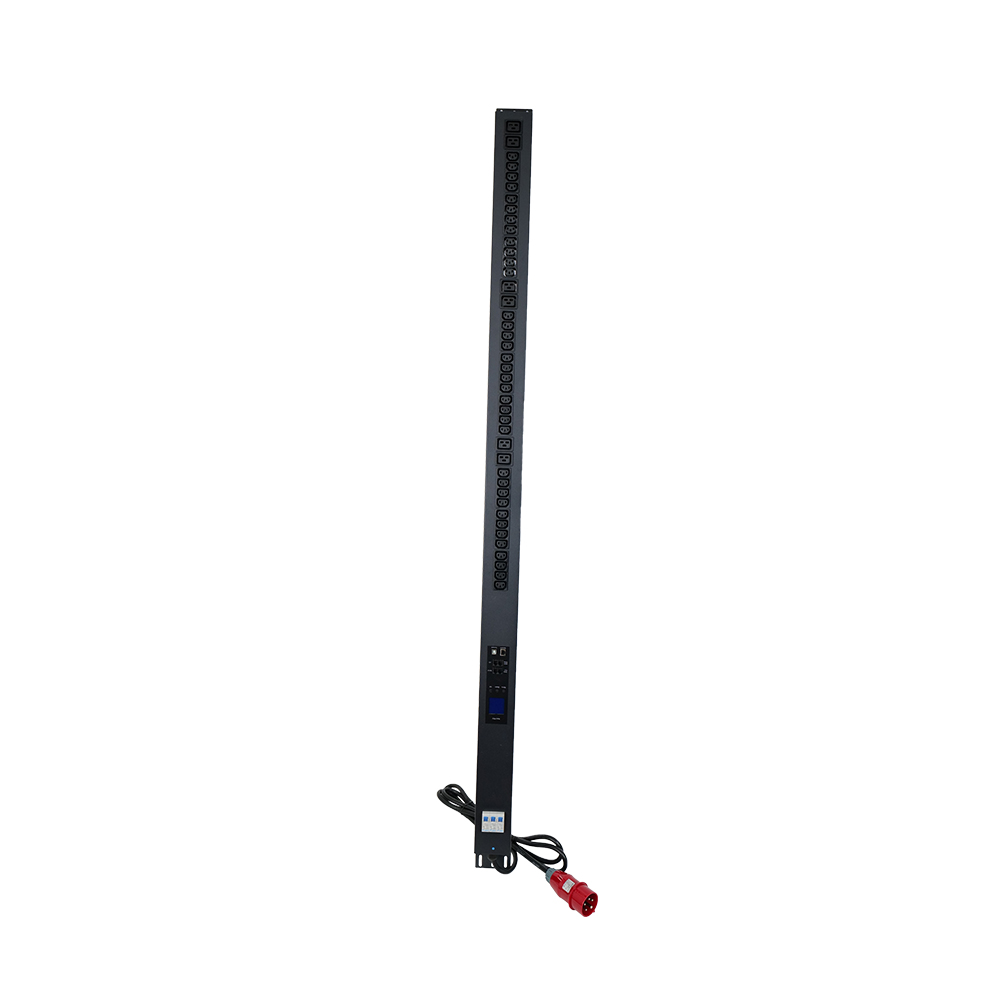
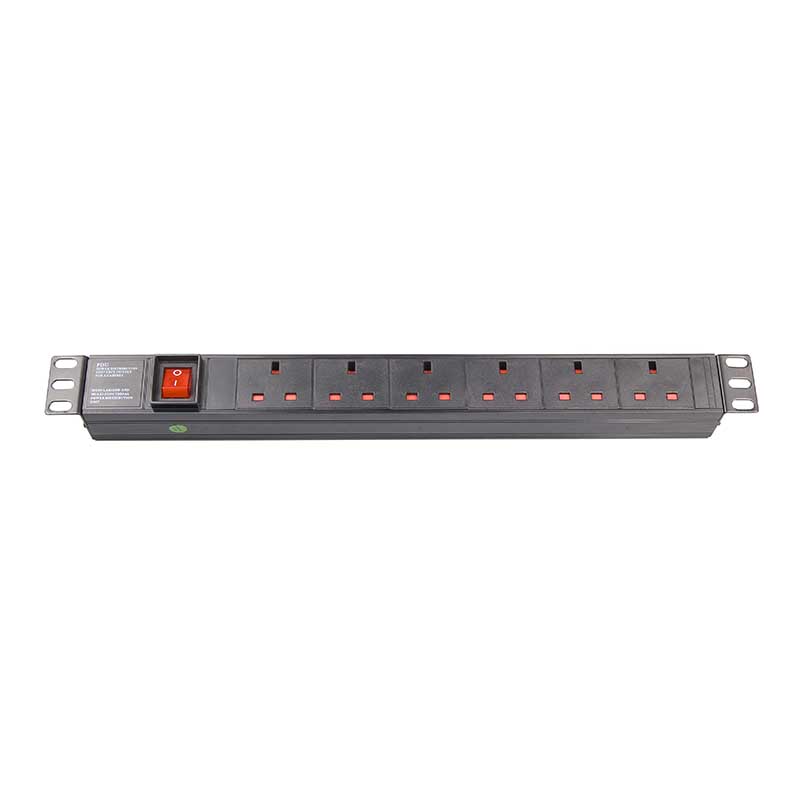
Remote Power Cycling: Hung Server Recovery Without a Truck Roll
A hung server stops responding to the network but has not lost power; the only recovery is a power cycle. At a fully-staffed site, an engineer walks to the rack and pulls the cord. At a remote site, that same action requires a USD 500-2,000 service trip. A switched PDU eliminates the trip via a 5-15 second DCIM power-cycle command. Payback is 6-24 months at 2-4 hung server events per rack per year.
Sequenced Startup: Managing Inrush Current
Sequenced startup is the second most common use case for switched PDUs. Many IT devices draw a high inrush current when they are first powered on: a typical server power supply draws 2 to 3 times its rated current for 100 to 500 milliseconds during the initial charge of the bulk capacitors. When multiple devices are powered on simultaneously, the combined inrush can trip the upstream breaker even though the steady-state load is well within the breaker rating.
A switched PDU with per-outlet sequencing prevents the simultaneous inrush by staggering the power-on of each outlet. The operator configures a delay interval (typically 1 to 30 seconds) between outlets, and the PDU applies power to each outlet in sequence with the configured delay. The combined inrush is therefore limited to the single largest device inrush, which the upstream breaker can handle. The sequencing is configured via the PDU web interface or via the DCIM platform, and the configuration is saved as a profile that runs automatically on power restoration.
The typical sequencing for a 24-outlet PDU groups outlets by device type with staggered delays: storage arrays first (30 seconds), network switches next (15 seconds), servers last (5 seconds). For high-density racks with multiple storage arrays, sequenced startup is the difference between a successful power restoration and a breaker trip event.
Security and Audit: Outlet-Level Lockdown and SOC 2
Security and audit are the third use case for switched PDUs, and the one that compliance-driven operators most often cite. SOC 2 Common Criteria CC6.1 (logical access controls) and NIST SP 800-53 AC-3 (access enforcement) both require that physical access to IT assets be controlled and auditable. A switched PDU with per-outlet switching and per-outlet access logging satisfies both requirements.
The per-outlet access log (user + timestamp + source IP) meets SOC 2 CC6.1 and NIST SP 800-53 AC-3 audit trail requirements. The outlet-level security lockdown complements logical access controls in colocation deployments. For SOC 2 and NIST compliance, the switched PDU is the practical minimum, not a premium option.
Network Architecture: Agent, Gateway, and Cloud
Switched PDUs are deployed in one of three network architectures: direct agent, gateway, and cloud. Each architecture has different implications for the network design, the security model, and the operational complexity. The choice depends on the data center size, the existing network infrastructure, and the security requirements.
| Architecture | Description | Best Fit | Security Implication |
|---|---|---|---|
| Direct agent | Each PDU connects directly to the management network | Small data centers (<50 PDUs) | Each PDU is a network endpoint |
| Gateway | Multiple PDUs connect to a gateway that connects to the management network | Mid-size data centers (50-500 PDUs) | Gateway is the only network endpoint |
| Cloud | PDUs connect to a vendor-managed cloud platform | Multi-site or remote deployments | Outbound HTTPS to vendor cloud |
The direct agent architecture is the simplest: each PDU has its own IP address and connects directly to the management network. The DCIM platform polls each PDU via SNMP or REST. The architecture works well for small data centers with fewer than 50 PDUs, but it scales poorly because each PDU is a separate network endpoint that must be secured, monitored, and patched.
The gateway architecture uses a dedicated gateway appliance that aggregates the connections from multiple PDUs and presents a single endpoint to the management network. The PDUs connect to the gateway via a private protocol (often a vendor-specific serial or Ethernet protocol), and the gateway translates to SNMP or REST for the DCIM platform. The architecture scales to 500 PDUs per gateway and reduces the number of network endpoints that must be secured.
The cloud architecture uses a vendor-managed cloud platform (such as the Newsunn PDU cloud) that aggregates the connections from remote PDUs and presents the data center operator with a web dashboard. The PDUs connect outbound to the cloud via HTTPS, which means the operator does not need to expose the management network to the public internet. The architecture is best for multi-site or remote deployments where the operator wants centralized visibility without the operational overhead of running a DCIM platform.
The Newsunn remote power management solution integration guide covers the three architectures and is updated quarterly with new platform integrations.
Failure Mode Comparison: What Stops Working When the Network Goes Down
The failure mode that operators most often misunderstand is what happens when the network goes down on a switched PDU. The misunderstanding typically leads to two operational mistakes: assuming that the PDU continues to switch outlets when the network is down (it does not), and assuming that the PDU drops power to the loads when the network is down (it does not).
The correct behavior is: when the network goes down, the PDU continues to deliver power to the connected loads, because the latching relays remain in their last commanded state (typically closed/on). The remote switching capability is lost until the network is restored, which means any hung server recovery must wait for the network. The PDU local display continues to function, so the operator can read the measurements at the rack. The DCIM dashboard is unavailable until the network is restored.
For data center operators who require remote switching even during a network outage, some switched PDUs offer a fallback mechanism: a local override button on the PDU face that forces a power cycle on a selected outlet, independent of the network. The local override is typically a recessed button that requires a paperclip or similar tool to actuate, which prevents accidental activation. The local override is a last-resort capability that allows an on-site engineer to recover a server when the network is down and the remote operator cannot wait for the network to be restored.
The network failure mode also affects the per-outlet access log. If the network is down when an outlet is switched locally (via the override button), the access log records the action with a “local override” source identifier and a timestamp from the PDU internal clock. The log entry is queued on the PDU and is forwarded to the DCIM platform when the network is restored. The queued log entries are preserved across the network outage, which means the audit trail is not lost.
For most data center deployments, the network failure mode is acceptable because the network is a redundant infrastructure with multiple paths and automatic failover. The probability of a complete network outage that lasts long enough to prevent remote hung server recovery is very low. For deployments where the network availability is in question, the local override button is the fallback mechanism.
Next Steps and Frequently Asked Questions
For procurement teams evaluating the upgrade from monitored to switched PDU, the practical first move is to map the deployment sites by service trip cost and compliance requirement. The sites with the highest service trip cost and the strictest compliance requirement are the priority for switched PDU deployment. The Newsunn export team can align the switched PDU configuration with the site requirements through the smart rack PDU series configuration tool, and the individually switched PDU product reference provides the per-outlet relay architecture. The remote power management solution integration guide covers the DCIM, SNMP, and REST API control paths for the standard remote operations model.
What does a switched PDU add over a monitored PDU?
A monitored PDU adds remote network access to electrical measurements (voltage, current, kW, kWh). A switched PDU adds remote outlet switching on top of monitoring: each outlet can be turned on, off, or power-cycled via the network. The switching capability is used for hung server recovery without a truck roll, for sequenced startup to manage inrush current, and for outlet-level lockdown as a security measure. A switched PDU typically costs USD 300 to USD 600 more than a non-switched monitored PDU with the same outlet count and plug type.
When does remote outlet switching actually pay for itself?
Remote outlet switching pays for itself when the cost of a service trip to a remote or unmanned site exceeds the upgrade cost. A typical service trip to a remote data center or colocation facility costs USD 500 to USD 2,000 including travel, time, and the engineer rate. A switched PDU that prevents two service trips per year pays for itself in 6 to 24 months depending on the site geography and the engineer rate. The break-even point for a single remote site is typically reached within the first year of operation.
Can a switched PDU sequence outlet startup to reduce inrush current?
Yes. Most switched PDUs offer per-outlet power-on sequencing with configurable delay intervals between outlets. The typical delay range is 1 to 30 seconds per outlet, which allows the operator to stagger the inrush current of multiple servers, storage arrays, or network switches so that the combined inrush does not trip the upstream breaker. The sequencing is configured via the PDU web interface or via the DCIM platform, and the configuration can be saved as a profile that runs automatically on power restoration.
Does a switched PDU help with SOC 2 or NIST compliance?
Yes. SOC 2 Common Criteria CC6.1 (logical access controls) and NIST SP 800-53 AC-3 (access enforcement) both require that physical access to IT assets be controlled and auditable. A switched PDU with outlet-level switching provides per-outlet access logging: every outlet on/off event is logged with timestamp, user, and source IP. The log meets SOC 2 and NIST audit trail requirements and is what security auditors expect to see in a compliant data center. A monitored PDU alone does not provide the outlet-level access control that SOC 2 and NIST require.
What happens when the network goes down on a switched PDU?
Most switched PDUs continue to deliver power to the connected loads when the network goes down, because the relay contacts remain in their last commanded state (typically closed/on). The network outage does not interrupt the connected IT equipment. The remote switching capability is lost until the network is restored, which means any hung server recovery must wait for the network. Some PDUs offer a fallback mechanism: a local override button on the PDU face that forces a power cycle on a selected outlet, independent of the network.
How long does a remote power cycle take on a switched PDU?
A remote power cycle on a switched PDU typically takes 5 to 15 seconds end-to-end: the relay opens, the outlet waits for the configured power-off duration (typically 5 to 10 seconds to allow the server power supply to discharge), the relay closes, and the server reboots. The total recovery time is therefore 5 to 15 seconds for the relay action plus the server POST and boot time, which typically adds 60 to 180 seconds for a hung server. The total hung server recovery time is 65 to 195 seconds, compared with 30 to 90 minutes for a service trip to a remote site.
Can a switched PDU be controlled by a third-party DCIM platform?
Yes. Most switched PDUs support the standard protocols (SNMP v2c / v3, Modbus TCP, REST API, and in some cases Redfish for hyperscale environments) that allow third-party DCIM platforms to control the outlets. The DCIM platform sends a command to the PDU via the protocol, the PDU executes the command, and the PDU returns a status update to the DCIM platform. The integration is typically configured via the DCIM platform device driver or template, and the per-outlet control is exposed as a button in the DCIM dashboard.
What is the difference between per-outlet switching and per-bank switching?
Per-outlet switching controls each outlet individually: outlet 1 can be turned on while outlets 2 through 24 remain off. Per-bank switching controls a group of outlets together: all outlets on the same branch circuit switch together as a single unit. Per-outlet switching is more flexible but more expensive because each outlet needs its own relay. Per-bank switching is less flexible but cheaper. For most data center applications, per-outlet switching is the right choice because per-outlet control is what enables hung server recovery, sequenced startup, and outlet-level security lockdown.
With over a decade of hands-on experience in PDU design and manufacturing, Newsunn’s technical team provides in-depth insights into power distribution solutions for data centers, server rooms, and mission-critical facilities. Backed by 8 R&D engineers and a 30,000 m² production base, we help global clients source the right PDU products — from standard rack units to fully customized intelligent power distribution systems.
Post time: Aug-13-2026