

TL;DR — Edge Closet PDU Buying at a Glance
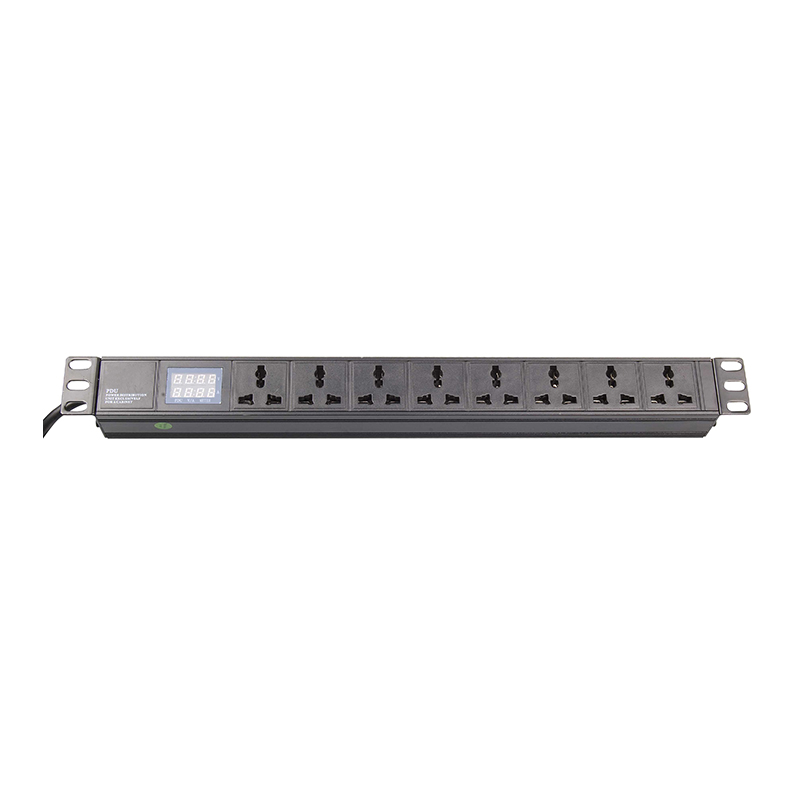
Buying a PDU for a branch office or edge closet is a different exercise from buying one for a hyperscale data center — and most of the catalog advice written for hyperscale buyers actively misleads edge buyers into over-spending. Because the load profile under 5 kW does not need three-phase power, breaker coordination studies, or 36-outlet density, the spec conversation collapses to outlet count, form factor, and certification. Skip those three correctly and the buying decision takes 20 minutes; skip any of them and you either over-spend or under-spec.
Below is the buying guide we walk edge buyers through — whether you are standardizing on compact basic PDUs across a 50-site retail rollout, sourcing a single 6-way rack PDU for one branch, or qualifying a vendor against the small rack PDU FAQs before issuing a P.O.
What “Under 5 kW” Actually Means for a Branch Office Closet
The first spec confusion is that “under 5 kW” sounds like a large load until you do the math. Because 5 kW at 230V single-phase is only 22 A — well below the 32A ceiling of industrial IEC 60309 outlets and just above the 16A rating of a typical residential wall outlet. A 5 kW branch-office closet is one or two 1U servers, a network switch, a firewall, a small NAS, and possibly a UPS. The total outlet count rarely exceeds 12, and the form factor is usually 1U horizontal or a wall-mount bracket rather than a vertical 0U PDU.
Three Rack Profiles That Define the Edge Market
The edge market is not monolithic, and a single SKU rarely fits all three profiles. Because the wrong form factor wastes rack space or wall space and complicates cable management, identifying which profile you are buying for is the first step in the spec. The three profiles we see most often are: the 1U horizontal rack-mount (a single 1U PDU in a half-depth wall-mount rack), the vertical 0U mini-rack PDU (a small freestanding rack with a vertical PDU on the back rail), and the wall-mount bracket PDU (a no-rack deployment in a utility closet where the PDU mounts directly to the wall).
Why Compact PDUs Are Not Just Smaller Versions of Data Center PDUs
The second confusion is that buyers assume a small PDU is the same engineering as a large PDU, just smaller. Because compact PDUs are designed for a different duty cycle — long idle periods interrupted by occasional peak — the spec they ship to is meaningfully different from a hyperscale SKU, and cutting corners on the spec turns the closet into a fire risk.
A consumer power strip sold at retail is typically rated for intermittent duty — a few hours at peak load per day, with significant cool-down periods. The cord is usually 3G0.75mm² or 3G1.0mm², the plastic is not flame-retardant to UL94V-0, and there is no thermal monitoring at the outlets. A compact rack PDU from a safety-certified manufacturer like Newsunn is rated for continuous duty (24/7 at rated load), with a 3G1.5mm² copper cord, UL94V-0 plastic that self-extinguishes if ignited, and aluminum chassis for thermal headroom. The compact PDU’s listed certifications — CE, UL, GS, EESS — are the buyer’s evidence that the spec was independently tested, not just claimed.
The 5-Criteria Filter That Separates an Edge PDU From a Consumer Power Strip
The buying decision for an under-5 kW edge PDU collapses to five criteria. Because each criterion maps directly to a code or safety requirement, a PDU that fails any one is not worth specifying regardless of price.
- Continuous duty rating at the rated current: the datasheet must say “continuous” or “24/7 rated”, not “peak” or “typical”.
- UL94V-0 (or equivalent) flame-retardant plastic: visible on the spec sheet; consumer strips usually do not publish it because they do not pass.
- Internal copper wire gauge at 3G1.5mm² or thicker for 10A / 16A circuits: anything thinner is a thermal bottleneck waiting to happen.
- Independent certification (CE, UL, GS, EESS) with certificate numbers verifiable in the issuing body’s database: a CE mark without a verifiable certificate is just a label.
- Aluminum housing or other engineered thermal path: a steel or plastic-only housing in a closed closet accumulates heat and shortens service life.
These five criteria are the same five that appear on every spec sheet we publish, and they are the reason the Newsunn 6-way compact PDU carries CE, GS, EESS, REACH, and ISO 9001 documentation with every shipment. Because a branch-office closet is the kind of deployment where the buyer cannot verify the spec after deployment, the spec has to be verifiable on paper at the quotation stage.
Outlet Mix for 1U, Wall-Mount, and Mini-Rack Profiles
The third decision is outlet count and connector mix. Because edge closets do not have the outlet density of a data center, the spec conversation is about hitting the right count without overshooting. A 6-outlet compact PDU covers the typical branch-office load; a 12-outlet 1U PDU covers a slightly larger closet; and a 24-outlet vertical 0U PDU is rarely needed at the edge.
Outlet Count vs Edge Rack Profile
| Profile | Typical Load (W) | Recommended Outlet Count | Connector Mix |
|---|---|---|---|
| Wall-mount, no rack | 300–800 W | 4–6 | Universal or country-specific |
| 1U half-depth rack | 800–2,000 W | 6–8 | Universal or IEC C13 mix |
| Vertical mini-rack | 2,000–4,000 W | 8–12 | Mix of C13 and C19 |
| Full-depth edge rack with UPS | 4,000–5,000 W | 12–16 | C13/C19 with selective locking |
The connector mix decision is driven by the equipment being plugged in. Most branch-office gear ships with C13/C14 inlets on the PSU side; the rare exception is a higher-power workstation or small server that needs a C19/C20 inlet. Because edge loads rarely exceed 10A per outlet, a C13-only PDU is fine for the majority of edge closets; the C19 outlet count only matters at the upper end of the under-5 kW range, where the equipment list includes a small AI inference box or a high-density storage controller.
When Remote Monitoring Pays Off at the Edge (And When It Does Not)
The fourth decision is whether to specify a metered or switched compact PDU at all. Because the management plane adds cost and configuration overhead, the ROI math has to close on operational value — not on a generic “monitoring is good” instinct.
Remote monitoring pays off when the site is unmanned and the drive time to reach it is more than one hour. In that scenario, a metered PDU that reports per-outlet load and sends alerts on threshold violations saves a truck-roll per event, and the upfront premium pays back within a small number of incidents. Because most branch offices have an IT generalist within driving distance, the same math does not close for a typical retail or office branch — the metered data ends up as a passive log rather than an active decision input.
For edge sites where remote monitoring does pay off, the spec should include SNMPv3 for legacy NMS integration or HTTPS web GUI for environments without a central NMS. The switched tier (per-outlet power cycling) is rarely needed at the edge — the truck-roll saved is small relative to the cost of the relay and control board, and most edge outages are network-side rather than power-side.
Sample Procurement Workflow for Multi-Site Rollouts
The fifth and last decision is the procurement workflow for multi-site rollouts. Because standardizing on one PDU across 20 or 50 sites compounds the value of every spec decision, the rollout process deserves its own walk-through.
The workflow that closes fastest on a multi-site rollout runs through six steps, in order. First, run a sample batch on three or four representative sites — a small office, a retail store, a warehouse, and a clinic — to validate the spec against the actual equipment list. Newsunn ships free samples below USD 50 in declared value per the FAQs page, which compresses the sample cost to a nominal shipping fee. Second, lock the SKU on the spec that performed best across the sample sites, and document the bill of materials for future sites. Third, request a tier quote from the OEM for the fleet size (e.g., 50 sites × 2 PDUs each = 100 units) and the projected lead time. Fourth, place the P.O. with a delivery schedule that staggers across the rollout months — this avoids warehouse overflow and keeps the install crews at a steady cadence. Fifth, ship each site a pre-configured PDU with the outlet labels and management-plane config printed, so the on-site installer does not need to log into the management plane to bring the closet online. Sixth, register each PDU serial number in the asset database and tie it to the site’s monitoring tool so future failures map back to a specific install date and a specific spec.
This six-step workflow is what most enterprise IT teams adopt within their first 50-site edge rollout, and it is the workflow that compresses a 6-month rollout into 8–10 weeks. Because each step removes a downstream source of friction, skipping any one of them usually shows up as a site that “took longer than expected” to commission.
For teams ready to standardize on a compact PDU SKU across multiple edge sites, share the equipment list for the first three sites and the target rollout size. Our engineering team returns a recommended SKU, a tier quote, and a sample-shipment timeline within 24 hours. From there, the rollout is a matter of repeating the spec conversation across the fleet.
Frequently Asked Questions
What size PDU do I need for a branch office closet?
For a typical branch office under 5 kW, a 6-outlet to 12-outlet compact PDU rated 10A or 16A at 230V single-phase covers the load.
Is a consumer power strip acceptable for a server closet?
No. Consumer strips are typically rated for intermittent residential duty. A compact rack PDU carries UL94V-0 plastic, 3G1.5mm² copper, and independently tested certifications. For 24/7 IT loads, the rack PDU is the correct choice.
Do I need a metered PDU at the edge?
Metered PDUs pay off when the site is unmanned and the drive time exceeds one hour. For staffed branch offices, a basic PDU with labeled outlets is usually sufficient.
What is the difference between a 1U PDU and a 0U PDU?
A 1U PDU mounts horizontally in a 19-inch rack. A 0U PDU mounts vertically in the back of the rack. For small edge racks, 1U is the most common form factor.
What certifications should a compact PDU have?
At minimum: CE, UL, GS, EESS, and REACH. ISO 9001 is the manufacturer quality certification.
Can I get free samples of a compact PDU before bulk purchase?
Yes. Newsunn’s published policy provides free samples below USD 50 in declared value, with the buyer covering shipping.
How many outlets do I need for a 4 kW edge load?
A 4 kW edge load at 230V single-phase is approximately 18A. A 6-outlet compact PDU rated 10A covers the load if no single outlet exceeds 10A.
What is the typical lead time for a multi-site edge PDU rollout?
For OEM orders of 100+ compact PDUs, typical production lead time is 20–30 days after order confirmation, plus 10–20 days for ocean freight. Sample batches ship in 7 days.
Newsunn — Senior PDU Product Engineer
With over a decade of hands-on experience in PDU design and manufacturing, Newsunn’s technical team provides in-depth insights into power distribution solutions for data centers, server rooms, and mission-critical facilities. Backed by 8 R&D engineers and a 30,000 m² production base, we help global clients source the right PDU products — from standard rack units to fully customized intelligent power distribution systems.
Connect with our team: About Newsunn | View Certifications | Factory Tour
Post time: Aug-20-2026