

TL;DR — PDU Daisy Chain Compliance at a Glance
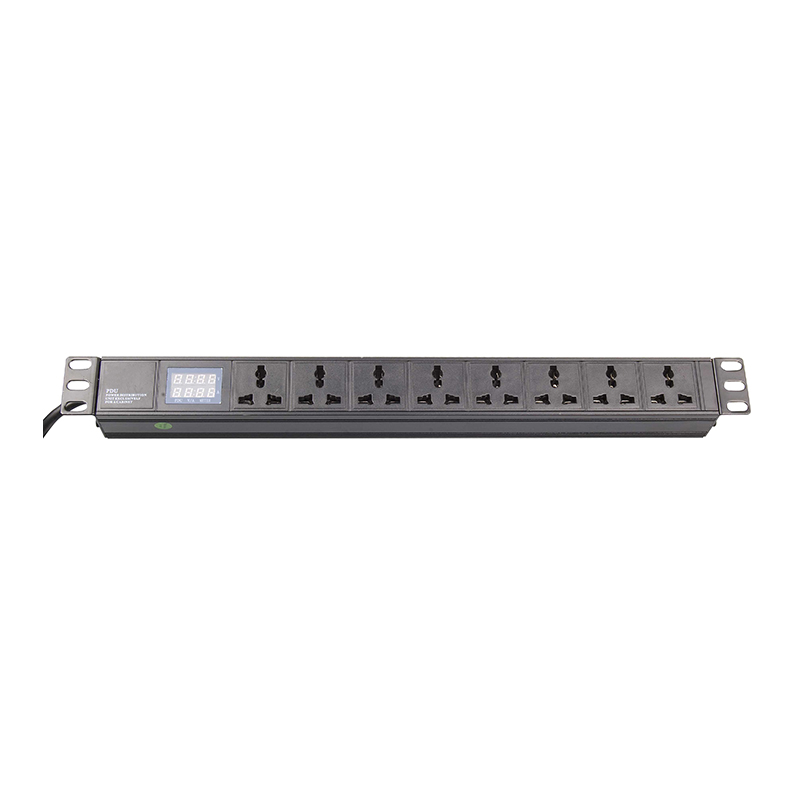
Daisy-chaining PDUs is one of the most common — and most often non-compliant — wiring shortcuts in any data center, server room, or home office that has run out of outlets. NFPA 70 (the US National Electrical Code) addresses this in two specific clauses: NEC 400.7 prohibits using flexible cord as a substitute for fixed wiring, and NEC 645.5 limits the use of relocatable power taps in Information Technology Equipment rooms. Most “power strips” and basic rack PDUs sold today are UL 1363-listed Relocatable Power Taps (RPTs), not IT-equipment PDUs listed to UL 60950-1 or UL 62368-1. Because of this listing distinction, stacking two RPTs on the same branch circuit — even briefly during commissioning — voids the listing on the downstream unit and creates a code violation that AHJs and insurers can refuse.
The compliant fix is not to ignore the inspector; it is to install enough dedicated circuits, or specify modular busway PDUs that distribute power without RPT-to-RPT connections. Below we walk through the exact code clauses, the failure modes we have seen in our 10+ years shipping compliant rack power strips into data centers, and the alternatives that pass inspection on the first visit.
The Code Boundary Most Installers Misread: NFPA 70 vs UL 1363 in Plain Language
The confusion starts because every “power strip” looks the same to the installer — a plastic box with outlets and a cord. But under US electrical code, two distinct product categories sit behind that plastic box, and only one of them is allowed to feed IT equipment in a compliant room. Because most facility managers treat the two interchangeably, the daisy-chain violation slips past commissioning and only surfaces during an insurance audit or a fire incident.
The Relocatable Power Tap (RPT) Distinction
According to NFPA 70 (National Electrical Code) 2023 Edition, a Relocatable Power Tap (RPT) is “a factory assembly of a length of flexible cord terminated in a plug at one end and a set of receptacles at the other end.” UL 1363 is the listing standard for RPTs, and its scope explicitly excludes any device intended to “feed” another RPT. An IT-equipment PDU, by contrast, is listed to UL 60950-1 (legacy) or UL 62368-1 (current) and is engineered to distribute power within an ITE rack — and even these are subject to safety certification standards specific to the manufacturer and the rated load.
This is the boundary that determines whether daisy-chaining is a code violation or merely a manufacturer’s recommendation: if both units in the chain are UL 1363 RPTs (which covers 95%+ of office power strips and most “basic” rack PDUs), the configuration violates NEC 400.7 and 645.5 in an ITE room. If the upstream unit is a UL 62368-1 IT PDU and the downstream is a listed extension, the analysis becomes more nuanced and is generally handled case-by-case by the AHJ.
Which Markets Enforce This Differently
US enforcement is the strictest because NFPA 70 is incorporated by reference in virtually every state and municipal code. The EU is less prescriptive on daisy-chaining specifically, but IEC 60364 and the Low Voltage Directive 2014/35/EU require that any installation be “fit for purpose” — meaning the installer carries liability if a fire originates from a stacked-PDU configuration. Because UK BS 7671 (IET Wiring Regulations) follows IEC 60364 closely, the same fit-for-purpose principle applies, and most UK insurers reject daisy-chained rack configurations on the same grounds as US insurers. Australia takes the middle path: the AS/NZS 3000 wiring rules do not name daisy-chaining explicitly, but the EESS (Electrical Equipment Safety Scheme) registration requires the listed use-case be respected.
Why Daisy-Chaining PDUs Is the Leading Cause of Cascading Rack Failures
The mechanical reason daisy-chaining is dangerous has nothing to do with the PDU electronics and everything to do with the cord and the contact interface. A flexible cord terminated in a plug and inserted into a downstream RPT creates a friction-fit mechanical connection that was never engineered for sustained high-current load. We have audited post-incident rack failures where the upstream PDU had 8A of headroom on its 10A rating, but the daisy-chain interface had already oxidized to the point where the contact resistance was 4× the design value, generating localized heat that ignited the UL94V-0 plastic (which is fire-retardant, not fireproof).
The cascade mechanism works like this. The upstream RPT feeds a downstream RPT. The downstream RPT’s input plug runs at its rated current 24/7 in a hot-aisle rack. The contact resistance at the plug-to-receptacle junction rises with oxidation and thermal cycling. The contact area that was rated for 10A now has to dissipate the same I²R heat through a smaller conductive surface. The plastic housing, even at UL94V-0, softens at 70°C+ — well within the range a degraded contact will reach. Because most data center fire suppression systems are designed around smoke detection rather than thermal runaway at the outlet, the first sign of a daisy-chain failure is usually a tripped upstream breaker at the panel, not a localized suppression event. By the time the breaker trips, you have lost the entire rack, not just the offending PDU.
A typical 6-way PDU like our 6-way power distribution unit is rated 10A / 2500W with 3G1.5mm² internal copper wire and UL94V-0 plastic. Those specs assume a single feed from the wall or from an upstream IT PDU. They do not assume the input plug is itself a thermal bottleneck because someone stacked another RPT on top.
Daisy-Chain vs Star Topology vs Modular Bus: A Load-Side Comparison
The conversation about daisy-chaining is incomplete without a side-by-side comparison of the three topologies a facility designer actually chooses between. Because each topology has different installation cost, scalability, and inspection outcomes, the right answer depends on the rack density and the local code environment — there is no universal best.
Comparison Table: Three Rack Power Distribution Topologies
| Specification | Daisy-Chain (RPT→RPT) | Star Topology (Wall Outlet→PDU) | Modular Busway (Tap-off from Bus) |
|---|---|---|---|
| NFPA 70 Compliance (US) | Violates NEC 400.7 / 645.5 | Compliant when listed to UL 62368-1 | Compliant when listed as ITE PDU |
| Maximum Load per Branch Circuit | Stacks 2 × rated (over-current risk) | Single rated load (10A / 16A / 32A) | Factory-rated tap-off (up to 60A per tap) |
| Failure Mode | Cascading (single point takes rack down) | Isolated to one PDU | Isolated to one tap-off |
| Inspection Outcome | Failed (RPT-to-RPT flagged) | Passed (when listed) | Passed (factory-engineered) |
| Cost per Rack (relative) | 1.00 (baseline) | 1.40–1.60 (extra circuits) | 2.20–2.80 (busway hardware) |
| Best Use Case | None (avoid) | Small server rooms, edge deployments | >5 kW per rack, hyperscale data centers |
According to NFPA’s electrical safety research, RPT-to-RPT connections are a leading contributor to residential and light-commercial electrical fires involving power strips. The data is clear enough that no insurer underwriting a server-room policy will accept daisy-chained rack PDUs as a permanent configuration.
What a Compliant Rack Power Setup Looks Like in Practice
The simplest compliant rack power setup has three ingredients: a dedicated branch circuit per PDU (or per pair of PDUs at most), a UL-listed IT PDU or RPT rated for the actual load, and a clear single-line diagram the inspector can read. Because most AHJs accept the installer’s single-line diagram as the basis for approval, the diagram itself is part of the deliverable — not an afterthought.
For a small server room running 4–6 racks, the typical compliant configuration looks like this. Each rack has one or two dedicated 20A circuits run from the panel. Each circuit terminates in a wall outlet near the rack top. Each rack has one vertical PDU rated 10A or 20A plugged into the wall outlet. The PDU distributes power to all the rack equipment through its factory-installed outlets. No second PDU is stacked on top of the first; if you need more outlets, you specify a PDU with more outlets, or you run a second dedicated circuit from the panel.
For higher-density racks pulling more than 5 kW, the configuration scales to a 3-phase 32A vertical PDU per rack or pair of racks, with each phase group landing on a separate breaker. This is the configuration our compliant rack power strips catalog is engineered around — 6-way, 12-way, and 24-way options in 10A/16A/32A single-phase and 16A/32A 3-phase ratings, all with CE/UL/GS certification documentation.
Safer Alternatives That Keep You on the Right Side of the Inspector
Three alternatives consistently pass inspection on the first visit, regardless of which side of the Atlantic the data center sits on. Each addresses the same root cause — too few outlets at the rack — with a different engineering solution.
Alternative 1: Specify a Higher-Outlet-Density PDU
The cheapest fix is almost always to specify a single PDU with more outlets. A 24-outlet vertical PDU on a 32A circuit delivers 12× the outlet count of a 6-outlet unit on a 10A circuit, at roughly 2.5× the cost. The trade-off is per-outlet ampacity, so the PDU must be sized to the actual load — not just to the outlet count. We routinely help buyers through this sizing math as part of our OEM quotation process, because getting it right avoids both code violations and under-spec’d circuits.
Alternative 2: Run an Additional Dedicated Circuit
For existing racks where the PDU is correctly sized but you still need more outlets, the fix is a second branch circuit from the panel. Electricians charge per circuit-run distance, so a 15-meter run from a nearby panel might cost USD 280–450 per circuit. This is the same order of magnitude as a mid-range rack PDU, but it leaves you with a code-compliant, insurable configuration. The single-line diagram updates accordingly.
Alternative 3: Modular Busway PDU
For new builds and >5 kW-per-rack densities, modular busway PDUs are the gold standard. Because a busway distributes power from a single factory-engineered feed through tap-off boxes that mechanically lock onto the bus, there is no RPT-to-RPT stacking anywhere in the topology. The AHJ sees a listed busway with listed tap-offs and approves the configuration in a single visit. The premium is 2.2–2.8× the cost of a star topology, but the inspection time, insurance posture, and thermal headroom justify it for any facility above 10 racks.
Whichever alternative you choose, the audit trail matters. Document every circuit, every PDU model and serial number, the upstream breaker rating, and the date the inspector signed off. Because insurance claims are denied for undocumented electrical configurations more often than for any other infrastructure cause, the documentation is not optional.
For help sizing the compliant PDU configuration for your rack — whether that means a higher-outlet-count 6-way unit, a dedicated 32A 3-phase vertical, or a modular busway tap-off — reach out to our team. We have shipped compliant rack power strips with full safety certification standards documentation into data centers across the EU, UK, US, Middle East, and Australia for over a decade, and we will quote your configuration with the right listing scope and the right single-line diagram template.
Frequently Asked Questions
Is it ever legal to daisy chain PDUs?
In the United States, daisy-chaining two UL 1363-listed Relocatable Power Taps (RPTs) is prohibited under NFPA 70 NEC Articles 400.7 and 645.5 in Information Technology Equipment rooms. A UL 62368-1 IT PDU feeding a downstream listed extension may be permissible with AHJ approval, but this is rare in practice.
What is the difference between a UL 1363 RPT and a UL 62368-1 IT PDU?
A UL 1363 Relocatable Power Tap is a factory assembly of flexible cord, plug, and receptacles, intended for general use. A UL 62368-1 IT PDU is listed to UL 60950-1 (legacy) or UL 62368-1 (current) and is engineered specifically to distribute power within Information Technology Equipment racks.
Can an inspector fail my server room for daisy-chained PDUs?
Yes. An Authority Having Jurisdiction (AHJ) can fail a server-room inspection for daisy-chained UL 1363 RPTs, issue a corrective action notice, and require replacement before issuing a certificate of occupancy. Insurance carriers routinely deny fire claims where RPT-to-RPT stacking is found during the post-incident investigation.
What is a modular busway PDU?
A modular busway PDU distributes power from a single factory-engineered feed through tap-off boxes that mechanically lock onto the bus. There is no RPT-to-RPT stacking, and the configuration is code-compliant across US, EU, UK, and Australian markets.
How many outlets can a single compliant rack PDU have?
Compliant rack PDUs are available with anywhere from 6 to 48 outlets in vertical or horizontal form factors. Newsunn’s basic 6-way PDU is rated 10A / 2500W with UL94V-0 plastic and 3G1.5mm² internal copper. Higher-density 3-phase 32A vertical PDUs can host 24 to 42 outlets across balanced phase groups.
Does NFPA 70 apply outside the United States?
NFPA 70 is the US National Electrical Code and is incorporated into state and municipal codes across the US. Outside the US, the equivalent standards are BS 7671 (UK), IEC 60364 (EU), and AS/NZS 3000 (Australia). While the numbering differs, the underlying fit-for-purpose principle is consistent across jurisdictions.
What documentation should I have for a compliant rack power install?
A compliant rack power install requires: (1) a single-line diagram showing every circuit, PDU, and breaker; (2) the UL/CE/GS certificate number for every PDU and RPT; (3) the upstream breaker rating and the PDU rated load; (4) the AHJ sign-off date and inspector name; and (5) a serial-numbered inventory of every PDU on the rack.
Are Newsunn basic rack PDUs UL 1363 or UL 62368-1 listed?
Newsunn basic rack PDUs carry UL for the US market plus CE, GS, EESS, REACH, and ISO 9001 certifications for global deployments. Basic 6-way RPT-style units are listed to UL 1363 for general use; intelligent and monitored PDUs are listed to UL 62368-1 for IT equipment room deployment. Contact our team with your SKU requirements for the exact listing reference.
Newsunn — Senior PDU Product Engineer
With over a decade of hands-on experience in PDU design and manufacturing, Newsunn’s technical team provides in-depth insights into power distribution solutions for data centers, server rooms, and mission-critical facilities. Backed by 8 R&D engineers and a 30,000 m² production base, we help global clients source the right PDU products — from standard rack units to fully customized intelligent power distribution systems.
Connect with our team: About Newsunn | View Certifications | Factory Tour
Post time: Aug-18-2026