

Introduction
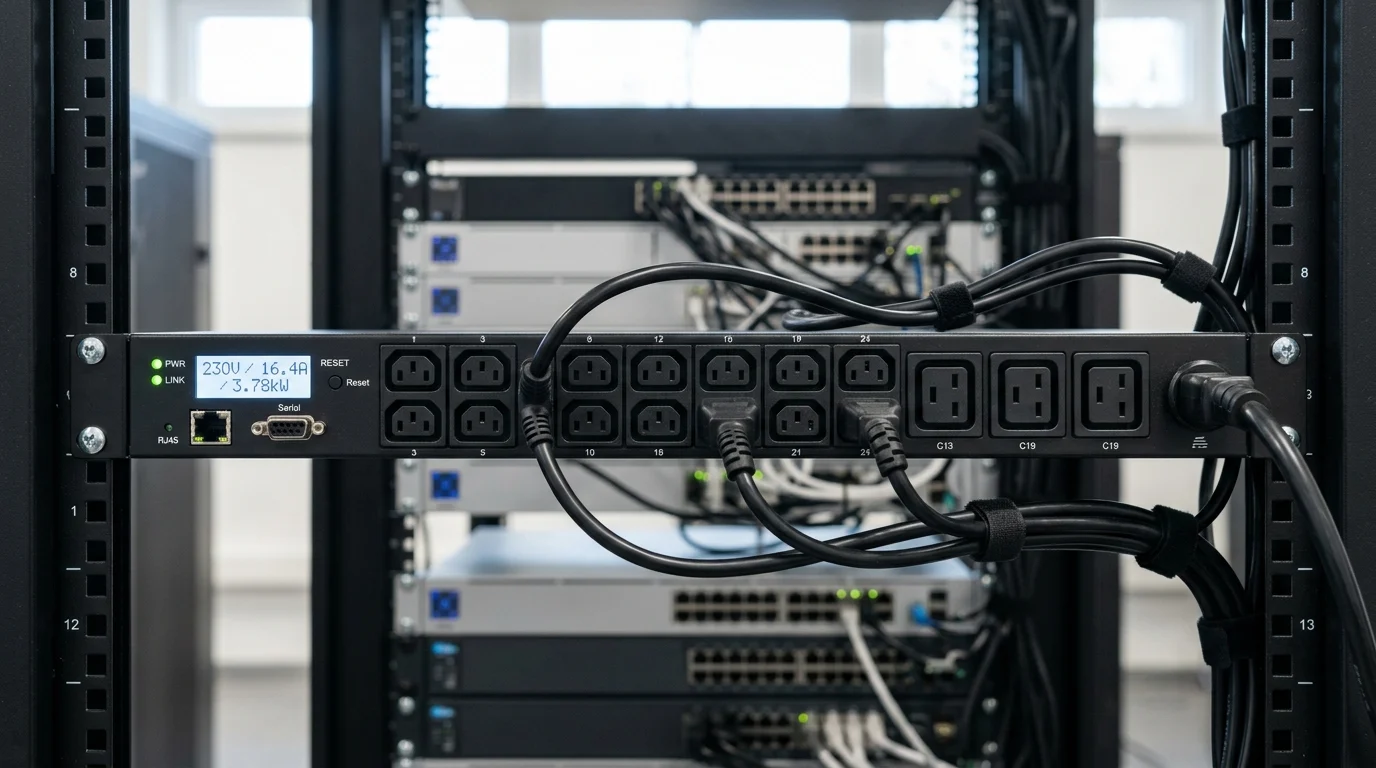
Reliable power distribution is a hidden but essential part of modern healthcare, where imaging systems, ICU devices, surgical equipment, and digital records all depend on continuous electricity. A PDU power distribution unit helps channel power safely and consistently from utility, backup, or UPS sources to critical medical loads, reducing the risk of outages, overloads, and equipment disruption. This article explains why PDUs matter in clinical settings, how they support uptime and patient safety, and what features healthcare facilities should evaluate when designing or upgrading resilient power infrastructure.
Why PDU Power Distribution Units Matter in Healthcare
The integration of sophisticated medical technology and digital record-keeping has fundamentally transformed the electrical demands of modern clinical environments. At the core of this infrastructure, the pdu power distribution unit serves as the critical bridge between primary power sources—such as utility feeds or uninterruptible power supplies (UPS)—and sensitive medical equipment. In contemporary healthcare facilities, power density requirements have escalated dramatically, with modern medical IT racks frequently demanding between 15 kW and 20 kW of power. This surge in energy consumption necessitates highly reliable distribution frameworks capable of sustaining continuous operations under extreme loads.
Clinical uptime, patient safety, and facility resilience
Clinical uptime is not merely a metric of operational efficiency; it is a direct determinant of patient safety. Healthcare facilities operate under the stringent expectation of “Five Nines” (99.999%) availability, which translates to less than 5.26 minutes of allowable downtime per year. A localized power failure in an intensive care unit (ICU) or surgical theater can compromise life-saving equipment such as ventilators, extracorporeal membrane oxygenation (ECMO) machines, and continuous monitoring systems.
Facility resilience depends on an architecture where single points of failure are systematically eliminated. Through strategic power distribution, hospitals ensure that even in the event of a catastrophic grid failure, generator and UPS power is seamlessly and evenly delivered to critical endpoints without overloading individual circuits or risking breaker trips.
Where PDUs are used in healthcare facilities
The deployment of these distribution systems spans a diverse array of clinical and administrative environments, each presenting unique electrical profiles. In operating rooms and ICUs, specialized medical-grade units distribute isolated power to patient-vicinity equipment, requiring strict adherence to grounding protocols. Imaging centers housing Magnetic Resonance Imaging (MRI) and Computed Tomography (CT) scanners rely on heavy-duty distribution to manage massive power draws and sudden load spikes.
Simultaneously, on-site data centers and telecommunication closets—which host Electronic Health Records (EHR) and Picture Archiving and Communication Systems (PACS)—utilize high-density rack units to maintain the digital backbone of the hospital. Even decentralized nursing stations and mobile biomedical carts depend on compact, medical-grade power strips to keep diagnostic tools functioning continuously throughout patient rounds.
Technical Requirements for PDU Selection
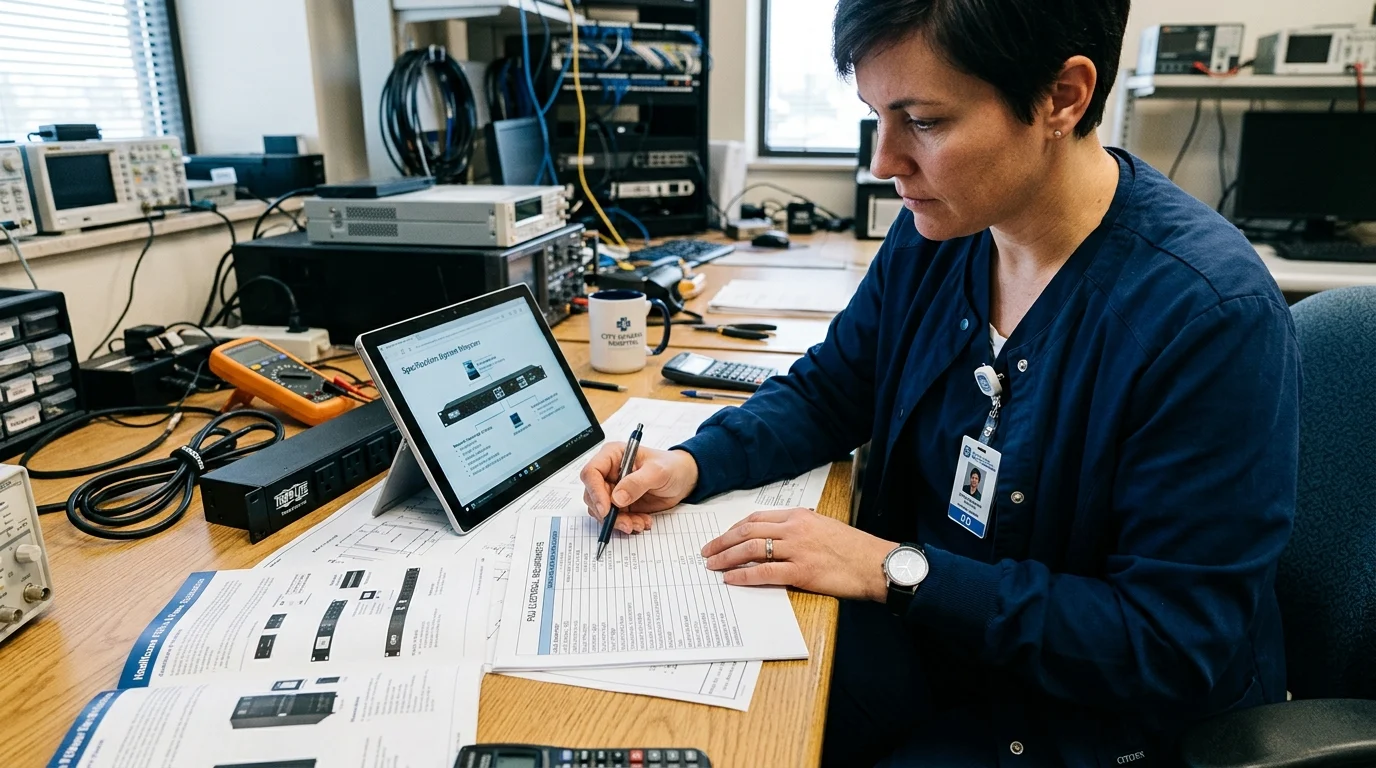
Specifying the correct power distribution unit PDU demands a rigorous technical analysis of the facility’s electrical architecture. Engineers must evaluate voltage requirements, which typically range from standard 120V/240V single-phase feeds for general clinical equipment to 208V or 400V three-phase systems designed for high-density IT and advanced diagnostic machinery. Load capacities for these units vary significantly, starting at 1.4 kW for decentralized mobile applications and scaling up to 22 kW or more for intensive data center racks. Furthermore, the physical integration into standard 19-inch racks (Zero U or 1U/2U form factors) and compatibility with specific receptacle standards, such as NEMA 5-15R/20R Hospital Grade or IEC C13/C19 locking outlets, are critical prerequisites for reliable deployment.
Load profile, redundancy, and outlet configuration
Establishing an accurate load profile is the foundational step in distribution planning. Facility managers must aggregate the continuous and peak power draws of all connected medical and IT devices, factoring in the National Electrical Code (NEC) requirement which mandates that continuous loads be derated to 80% of the circuit breaker’s maximum capacity.
Redundancy is achieved by deploying dual power paths—commonly referred to as A/B feeds—where each path is capable of supporting the entire load if the primary feed fails. Outlet configuration must also be customized to the operational environment. In high-vibration areas or environments where accidental disconnection poses a severe risk, locking receptacles or specialized retention clips are mandatory to secure the physical connection between the medical device and the power source.
Basic vs metered vs monitored PDUs
The choice between fundamental power delivery and advanced telemetry dictates the level of operational visibility a facility maintains over its critical infrastructure. While unmanaged units provide reliable power, modern healthcare operations increasingly require granular data to prevent overloads and optimize energy consumption.
| PDU Category | Key Characteristics | Typical Healthcare Application | Cost Profile |
|---|---|---|---|
| Basic PDU | Reliable power distribution without network connectivity or internal metering. | Administrative areas, non-critical IT closets, mobile carts. | Baseline ($) |
| Metered PDU | Includes a local digital display for phase/circuit load monitoring. No remote access. | Secondary data rooms, specialized clinical equipment racks. | Moderate ($$) |
| Intelligent PDU | Remote monitoring, per-outlet switching, SNMP/Modbus integration, environmental sensors. | Core hospital data centers, critical infrastructure nodes. | Premium ($$$) |
Intelligent units allow IT and facility managers to monitor power quality metrics in real-time, set automated threshold alerts, and perform remote power cycling of unresponsive equipment, thereby reducing the need for physical intervention in restricted clinical areas.
Requirements for life support, imaging, and IT systems
Different clinical modalities impose vastly different stresses on electrical infrastructure. Life support equipment, such as ventilators and infusion pumps, requires absolute power continuity and zero-transfer-time compatibility with upstream UPS systems, prioritizing low leakage current and redundant pathways over high raw wattage.
Conversely, diagnostic imaging systems (MRI, CT, X-ray) present unique challenges due to their dynamic load profiles. These machines can generate massive inrush currents—sometimes exceeding 100A for a few milliseconds during initialization or scanning sequences—necessitating distribution components with high-surge tolerance and specialized circuit protection. Health IT systems, which process massive volumes of diagnostic data, require high-density outlet configurations and precise thermal management to ensure continuous data availability and prevent thermal runaway in densely packed server racks.
Compliance, Safety, and Risk Management
In the healthcare sector, regulatory compliance and electrical safety are inextricably linked to risk management and institutional liability. The deployment of power infrastructure is governed by a stringent matrix of local and international standards designed to mitigate the risks of micro-shock, electrical fires, and catastrophic equipment failure. Failure to adhere to these standards not only jeopardizes patient safety but can also result in severe financial penalties, failed accreditation audits, and compromised insurance coverage. Facility engineers must ensure that all power distribution equipment operates within strictly defined safety margins, particularly concerning touch voltage and ground reliability.
Electrical safety and documentation requirements
Electrical safety documentation is a critical component of institutional compliance. In the United States, equipment utilized in patient care vicinities must adhere to UL 60601-1 (Medical Electrical Equipment) standards, whereas IT equipment housed in separated data rooms typically falls under UL 62368-1.
Furthermore, installations must comply with the NFPA 99 Health Care Facilities Code, which dictates the performance criteria for essential electrical systems. Procurement and facility management teams must maintain comprehensive documentation, including Declaration of Conformity certificates, third-party testing reports, and routine inspection logs. This documentation proves vital during regulatory audits, demonstrating that the facility’s power infrastructure has been vetted for the specific rigors of a clinical environment.
Grounding, leakage current, and infection control
Grounding integrity and leakage current suppression are paramount in areas where patients are connected to multiple diagnostic and therapeutic devices simultaneously. Standards dictate that leakage current for patient-contact equipment must remain exceptionally low, frequently restricted to under 100 microamps, to prevent lethal micro-shocks. Hospital-grade power strips and distribution units achieve this through robust internal grounding architectures and specialized isolation transformers where necessary.
Beyond electrical safety, infection control presents a unique operational challenge. Power units deployed in operating theaters or splash zones may require specific Ingress Protection (IP) ratings, such as IP44 or IP54, to resist fluid ingress. Additionally, some manufacturers incorporate antimicrobial coatings on exterior chassis and receptacles to inhibit the proliferation of nosocomial pathogens.
Total cost of ownership and service risk
Evaluating the Total Cost of Ownership (TCO) extends far beyond the initial capital expenditure of the hardware. A comprehensive TCO model for healthcare power infrastructure encompasses installation labor, ongoing maintenance, energy efficiency, and the projected lifespan of the unit, which typically ranges from 5 to 10 years.
More critically, the TCO calculation must account for service risk and the statistical cost of downtime. In modern healthcare IT, the cost of unplanned downtime can average upwards of $9,000 per minute when factoring in delayed procedures, corrupted diagnostic data, and idle clinical staff. Consequently, investing in high-reliability, compliant power distribution significantly mitigates the financial and operational risks associated with catastrophic power events, validating a higher initial investment in premium, redundant systems.
Supplier Evaluation and Implementation
The procurement of critical power infrastructure requires a methodical approach to supplier evaluation, moving beyond mere specification matching to assess the overall reliability of the supply chain. Healthcare organizations cannot afford the operational delays associated with substandard components or volatile manufacturing schedules. Establishing a robust partnership with a qualified vendor ensures that the facility receives consistent product quality, predictable delivery timelines, and responsive technical support. Standard procurement cycles often face lead times of 4 to 8 weeks for commercial-off-the-shelf (COTS) units, while highly customized medical-grade solutions may require 12 to 16 weeks of lead time, necessitating proactive capacity planning.
Supplier qualification and quality control
Supplier qualification in the medical sector demands rigorous scrutiny of the manufacturer’s quality management systems. Vendors should ideally hold ISO 9001 certifications for general quality assurance and, where applicable, ISO 13485 for medical device manufacturing standards. The qualification process should include an evaluation of the supplier’s defect rates, which in critical power applications must be maintained below 0.1%.
Furthermore, procurement teams should request documentation of Factory Acceptance Testing (FAT) to verify that each unit undergoes comprehensive load testing, dielectric withstand testing (hipot), and ground continuity verification before leaving the manufacturing facility. This stringent quality control prevents out-of-box failures that could delay critical facility upgrades.
Site audit, capacity planning, and installation
Successful implementation begins with a comprehensive site audit to evaluate the existing electrical topology. Electrical engineers must assess upstream UPS capacity, panelboard breaker sizing, and the physical constraints of the server racks or medical carts. Capacity planning must account for both current loads and projected growth, ensuring that the selected units do not exceed the 80% continuous load derating threshold mandated by electrical codes.
Installation protocols must be meticulously planned to minimize disruption to ongoing clinical operations. This often involves scheduling cutovers during low-acuity periods, utilizing temporary backup power, and conducting rigorous Site Acceptance Testing (SAT) to validate phase balancing, grounding integrity, and the functionality of dual-feed redundancy before bringing the systems online.
Lead times, customization, and lifecycle support
Navigating the logistical realities of hardware procurement requires careful attention to lead times and customization capabilities. While standard units may be readily available, healthcare facilities frequently require custom configurations, such as specific cord lengths to minimize tripping hazards, color-coded receptacles to visually differentiate A/B power feeds, or specialized locking mechanisms. These customizations often come with Minimum Order Quantities (MOQs), sometimes requiring batches of 50 to 100 units, which must be factored into the capital budget.
Post-installation, lifecycle support becomes the primary vendor interaction. For intelligent systems utilizing protocol data unit communications, this includes access to secure firmware updates to patch cybersecurity vulnerabilities, responsive warranty replacement services (RMA), and long-term availability of spare parts to ensure the infrastructure remains viable throughout its projected decade-long lifespan.
Decision Framework for Choosing the Right PDU
Formulating a standardized decision framework empowers facility managers and clinical engineers to select the optimal power distribution architecture tailored to specific departmental needs. The vast spectrum of available technology means that capital allocation must be strategic; it is fiscally inefficient to deploy top-tier intelligent monitoring on every mobile workstation, just as it is operationally dangerous to rely on basic power strips for a core data center processing real-time telemetry. Budgetary considerations typically span a wide continuum, from $100 to $300 for basic, hospital-grade units, escalating to $800 to $2,000 or more for high-density, networked models equipped with environmental sensors and per-outlet switching capabilities.
Matching criticality, budget, and expansion needs
The core of the decision framework involves matching the criticality of the connected load with the appropriate tier of power distribution. High-risk environments, such as core network closets facilitating hospital-wide communications or racks housing critical PACS servers, justify the premium investment in fully monitored and switched systems. These environments benefit directly from automated alerts and remote troubleshooting.
Conversely, administrative wings, secondary supply rooms, and non-critical workstations are best served by robust but basic units, conserving the capital budget. Expansion needs must also be integrated into the purchase decision; selecting units with modular receptacle configurations or higher amperage ratings than currently required provides a cost-effective pathway to accommodate future equipment upgrades without necessitating a complete overhaul of the power infrastructure.
Final evaluation checklist
To ensure a comprehensive evaluation process, procurement and engineering teams should utilize a standardized matrix prior to finalizing any purchase order. The following checklist categorizes the critical dimensions of PDU selection for healthcare environments.
| Evaluation Category | Key Verification Points | Target Metric / Standard |
|---|---|---|
| Technical Specifications | Amperage, voltage, phase type, receptacle count, and physical dimensions. | Max load ≤ 80% breaker capacity; compatible 1U/Zero U form factor. |
| Regulatory Compliance | UL certifications, grounding integrity, and leakage current thresholds. | UL 60601-1 / UL 62368-1; Leakage < 100 µA for patient vicinity. |
| Vendor Reliability | Quality control standards, warranty terms, and projected lead times. | ISO 9001/13485; Defect rate < 0.1%; 4-8 week standard delivery. |
| Operational Visibility | Telemetry requirements, SNMP/Modbus compatibility, and remote switching. | Granular power data for Tier 1 IT; Basic delivery for Tier 3 admin. |
By systematically applying this framework, healthcare facilities can standardize their power deployments, ensuring that every piece of medical and IT equipment receives continuous, clean, and compliant power. This structured approach ultimately fortifies the facility’s resilience, safeguarding both the substantial financial investment in medical technology and the critical patient care operations those systems support.
Key Takeaways
- The most important conclusions and rationale for pdu power distribution unit
- Specs, compliance, and risk checks worth validating before you commit
- Practical next steps and caveats readers can apply immediately
Frequently Asked Questions
Why are PDUs critical in healthcare facilities?
They distribute stable power from utility, UPS, or generators to life-support, imaging, and IT systems, helping prevent overloads, breaker trips, and downtime that could affect patient care.
What type of PDU is best for hospital IT racks?
For EHR, PACS, and network racks, monitored or intelligent PDUs are usually best because they provide outlet-level visibility, load tracking, and remote alerts for proactive maintenance.
How do I size a PDU for medical equipment?
Add the continuous and peak loads of all connected devices, then keep continuous demand within 80% of circuit capacity to meet common NEC derating practice and reduce trip risk.
When should a healthcare facility use A/B power feeds?
Use A/B feeds for critical loads such as ICU, OR, and data center equipment. Each feed should support the full load so one path can fail without shutting devices down.
What outlet features matter most in medical environments?
Choose hospital-grade or locking outlets where accidental unplugging is a risk, and match receptacle types such as NEMA or IEC to the device plugs and rack layout.
Post time: Jun-01-2026