

Why Edge Sites Need a Specialized PDU Strategy
The proliferation of edge computing has fundamentally shifted the architectural requirements for IT infrastructure. Unlike centralized hyperscale data centers, which benefit from highly controlled environments and on-site engineering staff, edge deployments are distributed, remote, and often situated in hostile physical environments. In these decentralized networks, ensuring continuous uptime requires highly resilient power infrastructure.
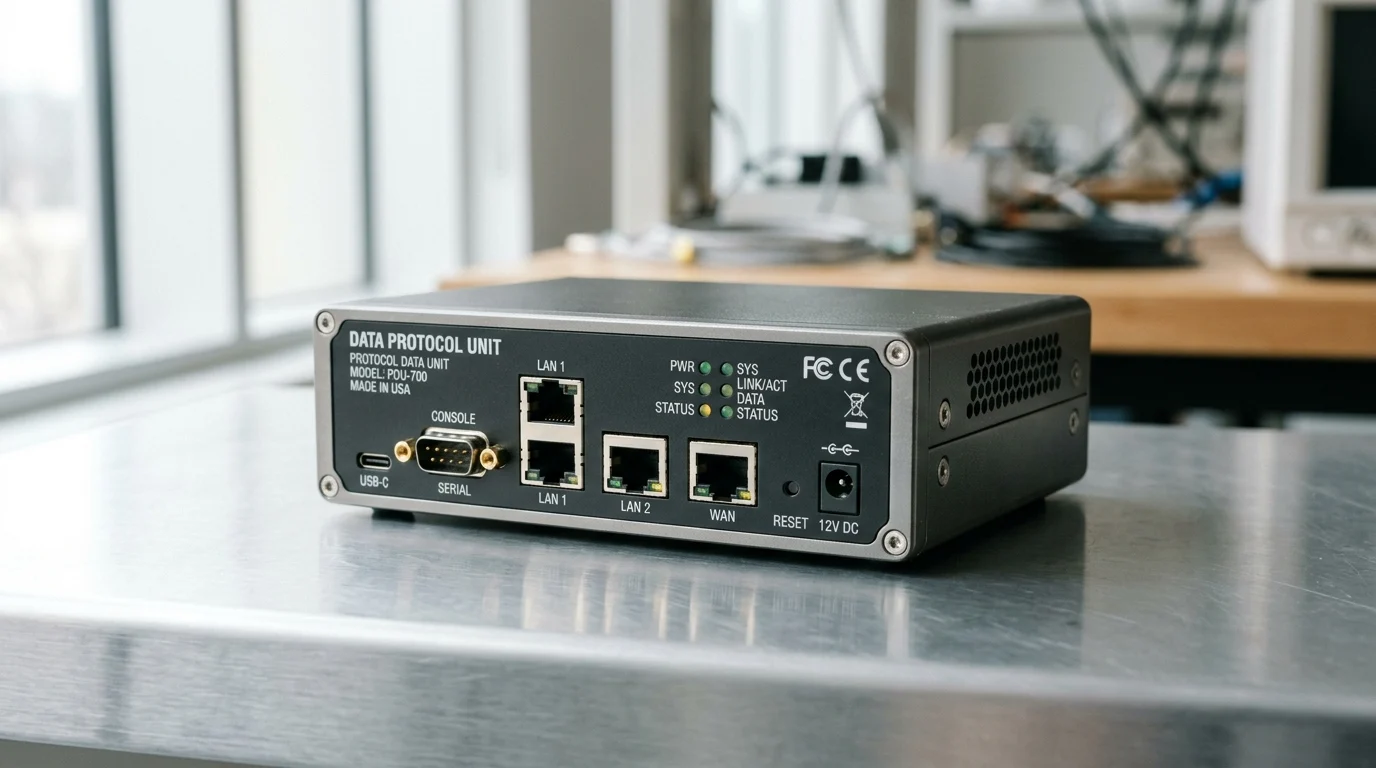
Just as a protocol data unit is essential for packaging and routing information across OSI layers in software, the physical Power Distribution Unit (PDU) is critical for routing clean, reliable electricity to the servers processing those data packets. A specialized strategy for edge power distribution is no longer optional; it is a mandatory safeguard against the escalating costs of unplanned downtime and remote maintenance.
How Edge PDUs Differ from Standard Power Distribution Units
Standard enterprise PDUs are engineered for climate-controlled data halls where temperatures rarely fluctuate outside the 18°C to 27°C (64°F to 81°F) optimal operating band. In contrast, edge PDUs are frequently deployed in telecom cell towers, factory floors, or outdoor enclosures where ambient temperatures can swing from -40°C to +60°C. Standard commercial plastics and internal relays can warp or fail under these extreme thermal loads, necessitating industrial-grade components.
Form factor constraints also heavily differentiate edge power equipment. Traditional data center cabinets easily accommodate 0U vertical power strips measuring 1.8 meters (72 inches) with up to 48 receptacles. Edge enclosures, however, are often limited to shallow-depth wall-mount racks or micro-data centers. This drives the requirement for compact 1U or 2U horizontal units, or specialized half-height 0U models, which must deliver high power density—often up to 10 kW—within a severely constrained footprint.
Commercial and Operational Pressures Driving PDU Selection
The shift toward intelligent edge power distribution is heavily driven by the commercial realities of remote management. Deploying a technician to a remote edge site—commonly referred to as a “truck roll”—averages between $300 and $800 per incident, depending on travel distance and SLA requirements. When a localized server lockup requires a simple hard reboot, lacking the ability to remotely toggle power at the receptacle level turns a minor software glitch into a costly operational expense.
Furthermore, the financial impact of edge downtime is severe. With industrial IoT, autonomous logistics, and real-time retail inventory relying on edge compute, localized outages can halt production lines or point-of-sale systems. Upgrading to specialized edge power infrastructure with remote switching and environmental monitoring requires an initial capital expenditure premium of 30% to 50% over standard units, but the return on investment is typically realized by avoiding just a single remote service dispatch.
PDU Requirements for Reliability and Uptime
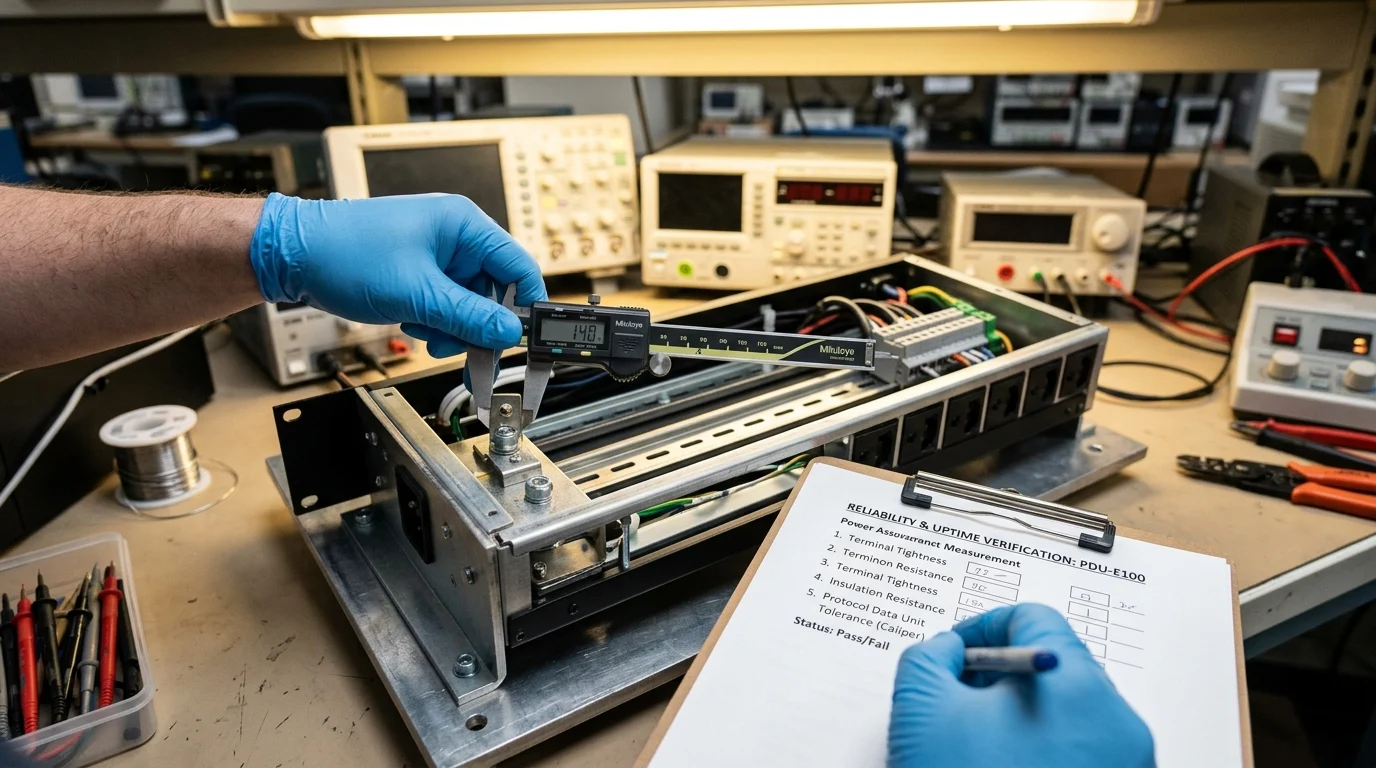
Reliability at the edge hinges on matching the exact electrical specifications of the IT load with the appropriate level of power management intelligence. Because edge sites lack the redundant UPS arrays and backup generators found in centralized facilities, the PDU often serves as the final line of defense and primary diagnostic tool for power anomalies.
Engineers must evaluate both the raw electrical capacity and the integrated telemetry features to ensure the chosen infrastructure can sustain continuous operations and provide early warning signs of impending hardware failure.
Electrical Specifications to Compare
Selecting the correct electrical specifications requires precise alignment with local utility standards and rack load demands. Edge power configurations typically range from standard single-phase 120V/15A circuits yielding 1.4 kW, up to three-phase 400V/32A circuits capable of delivering 22 kW per rack. It is critical to apply regulatory derating standards; for instance, the National Electrical Code (NEC) dictates an 80% continuous load rule in North America. Under this mandate, a 30A-rated PDU is legally and safely restricted to a 24A continuous draw.
Phase balancing is another critical metric for three-phase edge deployments. Unevenly distributed loads across L1, L2, and L3 can lead to excessive neutral currents and localized overheating. Advanced edge PDUs feature alternating phase receptacles, which sequentially distribute the phases down the length of the chassis. This design simplifies cable management and naturally encourages a balanced power draw, keeping phase unbalance below the industry-recommended threshold of 10%.
Monitoring, Metering, Switching, and Environmental Sensing
Visibility into power quality and physical conditions is essential for isolated deployments. Billing-grade metering, defined by a ±1% accuracy threshold (often compliant with ANSI C12.1 or IEC 62053-21 standards), allows operators to precisely track energy consumption for chargeback models or efficiency calculations. Beyond simple amperage, advanced metering captures voltage fluctuations, active power (kW), apparent power (kVA), power factor, and crest factor, providing granular insight into power supply health.
Environmental sensing capabilities transform the unit from a mere power strip into a comprehensive edge monitoring hub. Intelligent models feature dedicated sensor ports that support daisy-chained temperature and humidity probes, fluid leak detectors, and magnetic door contacts. Configuring alerts—such as SNMP traps or email notifications if cabinet temperatures exceed 35°C—enables proactive intervention before thermal shutdown thresholds are breached.
Basic vs Metered vs Switched vs Intelligent PDUs
The hierarchy of power distribution hardware is categorized by the depth of integrated intelligence. Basic units offer reliable, unmanaged power distribution with no network connectivity. Metered units add a network interface to monitor power draw at the aggregate or branch circuit level, preventing overloads. Switched units introduce bistable relays to remotely control individual outlets, while fully intelligent (or managed) units combine outlet-level metering with remote switching for maximum control.
| PDU Category | Metering Capability | Outlet Switching | Typical Edge Use Case | Est. Cost Factor |
|---|---|---|---|---|
| Basic | None | No | Simple network closets | 1.0x |
| Metered | Aggregate / Circuit | No | Capacity planning sites | 2.5x |
| Switched | Aggregate / Circuit | Yes | Remote lights-out edge | 4.0x |
| Intelligent | Outlet-level | Yes | High-density / Colocation | 6.0x |
Understanding the exact pdu meaning within this hierarchy allows infrastructure architects to avoid over-provisioning basic sites while ensuring mission-critical edge nodes possess the requisite remote management capabilities.
Compliance, Cybersecurity, and Environmental Protection
Deploying IT assets outside the fortified perimeter of a traditional data center exposes infrastructure to a triad of risks: electrical safety hazards, sophisticated cyber threats, and harsh environmental elements. Mitigating these risks requires strict adherence to global compliance frameworks and robust physical engineering.
A rigorous approach to safety, cybersecurity, and physical protection ensures that the power infrastructure not only operates reliably but also protects the broader network from unauthorized access and catastrophic hardware degradation.
Safety Standards and Certifications
Edge power equipment must comply with stringent international safety standards to prevent electrical fires and ensure operator safety. The baseline standard is UL/EN/IEC 62368-1, which replaced the legacy 60950-1 standard, introducing a hazard-based safety engineering (HBSE) approach. Compliance guarantees that the internal wiring, circuit breakers, and chassis isolation can withstand expected voltage spikes without exposing personnel to lethal currents.
Physical safety features are equally vital. In high-vibration edge environments like manufacturing floors or transit hubs, standard C13 and C19 power cords can easily vibrate loose, causing uncommanded power loss. Industrial edge PDUs mitigate this by utilizing high-retention locking receptacles. These specialized outlets secure standard power cables with a mechanical locking mechanism capable of withstanding up to 100 Newtons (approximately 22 lbs) of pull force, eliminating accidental disconnections without requiring proprietary locking cables.
Cybersecurity Controls for Intelligent PDUs
Because intelligent power units reside on the network, they represent a potential attack vector for malicious actors. Unsecured power controllers have historically been exploited to execute denial-of-service attacks by sequentially shutting down server racks. To secure pdu in computer network environments, enterprise-grade firmware must support modern cryptographic protocols, including TLS 1.3 for encrypted web interfaces and SSHv2 for secure command-line access.
Access control mechanisms must align with zero-trust architectures. This includes mandatory support for RADIUS, TACACS+, or LDAP/Active Directory integration to enforce Role-Based Access Control (RBAC). Network administrators must ensure the device supports SNMPv3, which encrypts management traffic, rather than the plaintext SNMPv1/v2c protocols. Additionally, secure boot mechanisms and signed firmware updates are required to prevent the installation of compromised code.
Thermal, Physical, and Ingress Protection Requirements
Environmental protection at the edge dictates physical engineering far beyond standard sheet metal enclosures. Devices installed in dusty warehouses or unsealed telecommunications cabinets require specific Ingress Protection (IP) ratings. An IP54 rating provides robust protection against dust accumulation and splashing water from any direction, while IP67-rated models offer total dust ingress protection and temporary submersion capabilities for extreme outdoor deployments.
Thermal resilience is managed through high-temperature grade internal components. Premium edge power strips utilize high-temperature internal wiring and heavy-duty relays rated for continuous operation at 60°C to 65°C. For environments with extreme humidity, such as coastal telecom shelters or agricultural processing facilities, conformal coating is applied to the internal printed circuit boards (PCBs). This microscopic polymer layer prevents short circuits and corrosion caused by condensation in environments reaching up to 95% non-condensing relative humidity.
How to Specify, Source, and Deploy Edge PDUs
The procurement and deployment of edge power infrastructure requires a methodical approach that bridges electrical engineering, supply chain logistics, and field operations. A miscalculation in load requirements or a poorly executed physical installation can severely compromise the reliability of the entire edge node.
Power Budgeting and Load Diversity
The first step in specification is conducting a precise power budget. Engineers must aggregate the maximum nameplate power draw of all servers, switches, and storage arrays planned for the edge rack. However, calculating based solely on maximum nameplate ratings often leads to massive over-provisioning. Applying a load diversity factor—typically estimating that actual concurrent peak load will reach only 65% to 75% of the aggregated nameplate maximum—provides a more realistic target for normal operations.
Redundancy planning directly impacts the power budget. In a standard A/B dual-feed configuration, each PDU must be capable of supporting 100% of the rack’s load if the opposing feed fails. Therefore, if an edge rack has an expected dynamic load of 4.5 kW, both the A and B power strips must be specified with a minimum continuous capacity of 4.5 kW (which, factoring in the 80% NEC derating rule, requires a 208V/30A circuit yielding 4.9 kW of usable continuous power).
Vendor and Sourcing Criteria
Sourcing hardware for distributed networks introduces complex supply chain variables. Vendor evaluation must prioritize lead times and global availability. Standard commercial-off-the-shelf (COTS) units typically carry lead times of 2 to 4 weeks, whereas custom-configured units specifying exact cord lengths, plug types, and chassis colors can extend lead times to 10 to 14 weeks. Minimum Order Quantities (MOQs) must also be negotiated, as edge rollouts often involve purchasing hundreds of low-density units rather than dozens of high-density units.
Warranty and firmware support lifecycles are critical vendor criteria. Because edge hardware is difficult to access, organizations should seek vendors offering a minimum 3-year standard warranty, upgradeable to 5 years. Furthermore, the vendor must commit to long-term firmware patching to address emerging CVEs (Common Vulnerabilities and Exposures) throughout the lifespan of the pdu networking infrastructure, ensuring that remote management interfaces do not become security liabilities over time.
Installation, Labeling, and Deployment Checklist
Successful deployment relies on strict standardization and labeling to minimize human error during field installation. A comprehensive installation checklist should mandate color-coded infrastructure—for example, utilizing red chassis and power cords for the ‘A’ feed and blue for the ‘B’ feed. This visual distinction allows remote technicians to instantly identify independent power paths, drastically reducing the risk of accidentally dropping a critical load during maintenance.
Physical installation practices must account for airflow and cable bend radii. Toolless mounting buttons allow vertical 0U units to snap securely into the rear keyholes of standard EIA-310 racks, preserving U-space for IT equipment. Technicians must ensure that heavy input power cables (such as 2 AWG or 4 AWG whips) maintain a minimum bend radius of at least four times the cable diameter to prevent internal jacket stress, and that the PDU placement does not obstruct server exhaust fans, which could trigger localized thermal throttling.
How to Choose the Right Edge PDU Architecture
Finalizing the architecture for edge power distribution requires balancing upfront capital constraints against long-term operational resilience. There is no single universal solution; the optimal choice depends entirely on the criticality of the hosted applications, the accessibility of the physical site, and the available budget.
Decision Matrix by Use Case
To streamline the selection process, infrastructure architects can utilize a decision matrix that maps common edge use cases to the most appropriate power distribution architecture. Aligning the physical capabilities of the network pdu definition with the site’s operational profile prevents both under-engineering and wasteful capital expenditure.
| Edge Use Case | Primary Operational Constraint | Recommended PDU Architecture | Target Redundancy |
|---|---|---|---|
| Retail Network Closet | Strict budget, easily accessible | Basic or Locally Metered | Single Feed (N) |
| Cell Tower Base Station | Harsh environment, limited space | Switched, High-Temp Rated | Dual Feed (N+1) |
| Remote Micro-Data Center | Lights-out operation, critical uptime | Intelligent (Per-Outlet Switched) | Dual Feed (2N) |
| Industrial IoT Gateway | High vibration, dust exposure | Metered, IP54 Rated, Locking Outlets | Single or Dual Feed |
Total Cost of Ownership vs Upfront Price
A common pitfall in edge procurement is fixating on the upfront hardware cost while ignoring the Total Cost of Ownership (TCO). A basic, unmanaged power strip might cost $150, whereas a fully intelligent, switched unit with environmental sensors could exceed $800. For a deployment of 100 edge nodes, this represents a $65,000 capital expenditure delta. However, if the lack of remote switching results in just 20 truck rolls per year at $600 per visit, the resulting $12,000 annual maintenance penalty will consume the initial savings within the hardware’s standard 5-year lifecycle.
Energy efficiency within the power equipment itself also impacts TCO. Modern intelligent units utilize bistable (latching) relays for outlet switching. Unlike standard normally-open relays that require continuous electrical current to maintain a closed state, bistable relays only consume power during the millisecond the state changes. This engineering choice reduces the PDU’s internal power consumption by up to 70%, lowering ambient heat generation inside small edge enclosures and slightly reducing long-term utility costs.
Final Selection Guidance
When finalizing the hardware selection, organizations should strive for maximum versatility to simplify their global supply chain. Emerging hardware innovations, such as universal input connections and combination outlets (e.g., C39 receptacles that natively accept both C14 and C20 plugs), allow enterprises to purchase a single PDU SKU that can adapt to varying rack requirements. This standardization dramatically reduces spare parts inventory and simplifies RMA processes.
Ultimately, the goal of an edge power strategy is to render the underlying infrastructure invisible yet highly responsive. By thoroughly evaluating environmental thresholds, electrical capacities, cybersecurity protocols, and lifecycle costs, IT leaders can architect a power foundation that guarantees uninterrupted data processing at the furthest reaches of their network.
Key Takeaways
- Choose industrial-grade edge PDUs when sites may face ambient temperatures from -40°C to +60°C.
- Use compact 1U, 2U, or half-height 0U PDUs when shallow wall-mount racks or micro-data centers limit available space.
- Specify remote outlet switching to avoid $300 to $800 truck rolls for simple device reboots.
- Budget for a 30% to 50% premium on intelligent edge PDUs, but evaluate ROI against avoided downtime and service dispatches.
- Match the PDU’s voltage, current capacity, outlet type, and monitoring features to the actual IT load before deployment.
Frequently Asked Questions
Is a PDU in edge computing a protocol data unit or a power distribution unit?
Both terms exist. In networking, a protocol data unit packages data across OSI layers. In edge infrastructure, PDU usually means Power Distribution Unit, which delivers and manages electricity to servers, switches, and edge devices.
Why do edge sites need specialized PDUs?
Edge sites are often remote, compact, and exposed to temperature swings, dust, vibration, or limited service access. Specialized PDUs improve uptime through rugged components, compact form factors, remote power control, and monitoring.
What temperature range should an edge PDU support?
Many edge deployments require industrial-grade operation from about -40°C to +60°C, far beyond the 18°C to 27°C range typical of controlled data center environments.
How can intelligent PDUs reduce maintenance costs?
Remote outlet switching allows teams to reboot locked devices without sending a technician. Since a truck roll can cost $300 to $800, avoiding even one dispatch can justify the added cost.
What PDU form factors work best for edge enclosures?
Compact 1U or 2U horizontal PDUs, shallow rack units, and half-height 0U models are common because edge cabinets often lack the depth and height of full data center racks.
Post time: Jun-22-2026