

Introduction
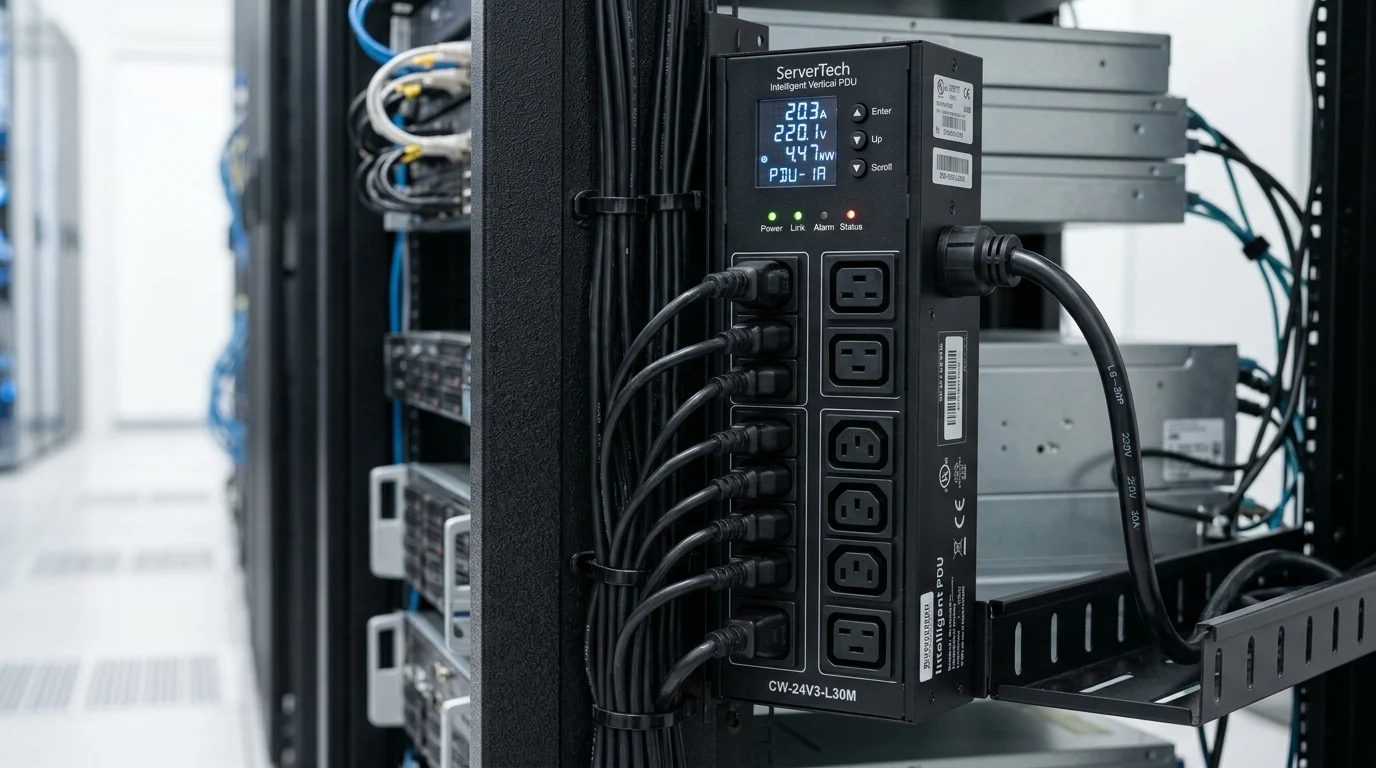
Lowering a data center’s carbon footprint starts with understanding where rack-level power is actually going. Intelligent PDUs give operators real-time visibility into voltage, current, energy use, and load trends, turning power distribution from a passive utility into a measurable control point. This matters not only for sustainability reporting and ESG targets, but also for capacity planning, cost allocation, and avoiding waste hidden inside everyday operations. The discussion ahead explains how intelligent PDUs support green computing by improving monitoring, enabling remote management, and helping teams make more efficient decisions about rack power distribution without sacrificing uptime.
Why Intelligent PDU matters in modern data centers
Data center operators face increasing pressure to run greener operations. With ESG (Environmental, Social, and Governance) mandates becoming standard, guessing energy metrics is no longer viable. The data center industry consumes an estimated 200 terawatt-hours (TWh) annually, accounting for roughly 1% to 1.5% of global electricity use. To genuinely reduce a Data Center Carbon Footprint, facilities need smarter ways to monitor and control infrastructure at the rack level. Moving beyond standard power strips is absolutely crucial.
Core definition and role
An Intelligent PDU is a networked power distribution unit equipped with built-in sensors, remote management capabilities, and real-time metering. Acting as the central nervous system of an IT rack, it goes beyond passively delivering 208V or 240V power to servers; it actively monitors voltage, current, active power (kW), and energy consumption (kWh).
This granular visibility is the foundation of modern Green Computing. When evaluating these units, operators should look for billing-grade accuracy, typically within a +/- 1% tolerance. This precision is critical for executing chargebacks to different departments or co-location tenants based on actual power draw rather than an arbitrary flat rate.
Business and operational value
On the operations side, the business value is immediate. By identifying stranded power capacity and locating ‘ghost servers’ that draw power without performing useful compute, facilities can safely increase rack densities. Teams can confidently push legacy 5 kW racks up to 15–20 kW without the constant fear of tripped breakers.
Deploying intelligent units can reduce overall facility energy consumption by 10% to 15% through better load balancing and optimized cooling configurations. Facilities have successfully dropped their Power Usage Effectiveness (PUE) from a sluggish 1.8 down to a much leaner 1.4 simply by leveraging the environmental sensor data these PDUs provide. Financially, these upgrades typically pay for themselves in 12 to 18 months through energy savings and reduced downtime.
Intelligent PDU vs. basic rack power distribution
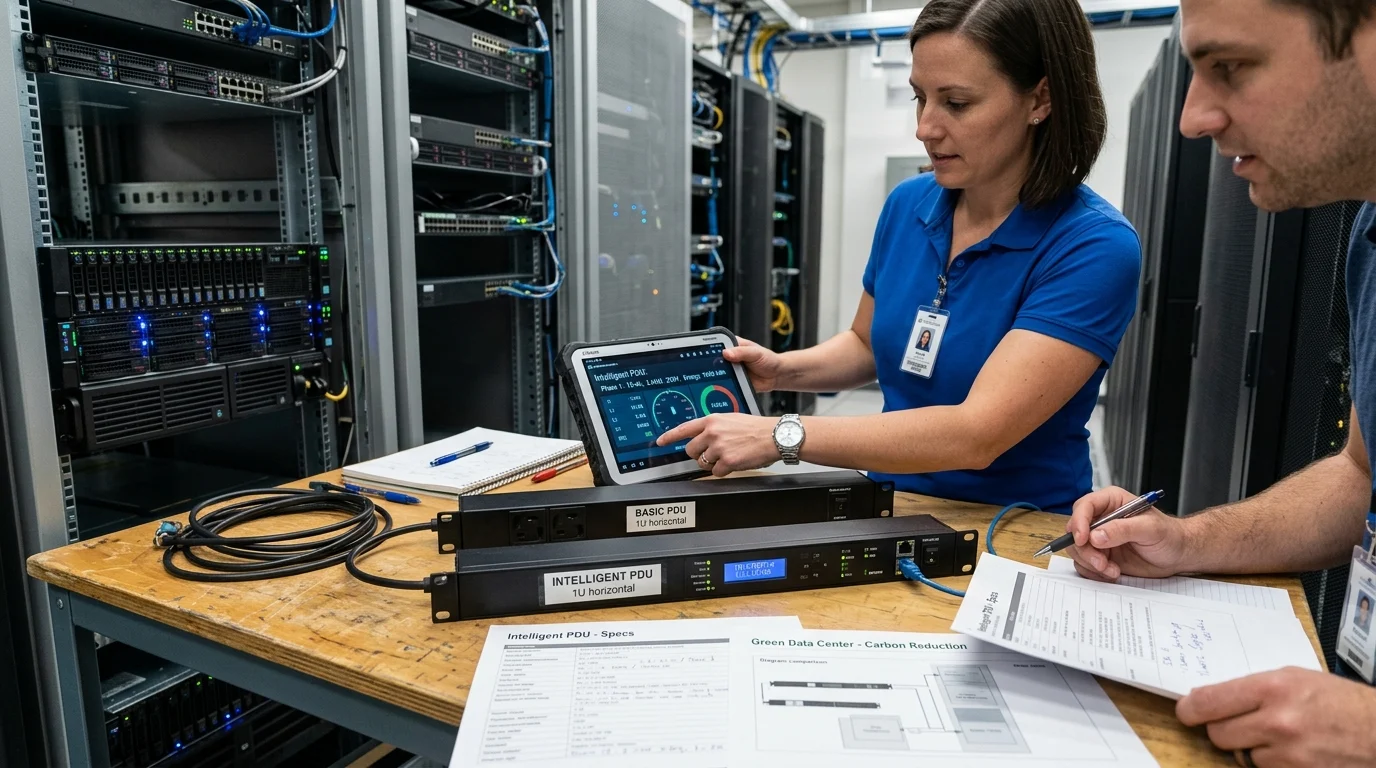
Relying on basic power strips leaves operators essentially flying blind. Basic strips offer no defense against overloads until a breaker physically trips, taking down the entire rack in the process. Upgrading a Rack Power Distribution strategy means moving from passive hardware to active infrastructure. Here is a breakdown of what changes when making the switch.
Key differences at a glance
A side-by-side comparison highlights the distinct advantages of a smart unit over a basic one.
| Feature | Basic PDU | Intelligent PDU |
|---|---|---|
| Power Metering | None / Local LED only | Real-time remote (kWh, kW, V, A) |
| Outlet Switching | Manual unplugging | Remote on/off/reboot per outlet |
| Environmental Sensors | Not supported | Temp, humidity, leak, airflow |
| Alerting | None | SNMP, Email, SMS thresholds |
| Average Cost (30-outlet) | $100 – $300 | $600 – $1,500+ |
While basic units function as durable extension cords, intelligent models provide the remote control and telemetry necessary to run a high-availability, sustainable environment.
Technical and operational considerations
The upfront capital expenditure (CapEx) for an intelligent unit is roughly 3 to 5 times higher than a basic strip. However, when calculating the total cost of ownership (TCO) over a standard 5-year hardware lifecycle, the smart route consistently proves more cost-effective. Network connectivity costs are a major factor; fortunately, daisy-chaining mitigates this expense. Most modern intelligent models allow administrators to link up to 16 PDUs on a single switch port and IP address, drastically reducing networking overhead.
From a hardware resilience standpoint, it is essential to check operating temperature ratings. Modern data centers run warmer to save on cooling costs, requiring units rated for up to 60°C (140°F) to ensure they survive in the hot aisle without failing. Because these are networked devices sitting on a management LAN, robust security protocols like SNMPv3, SSH, and HTTPS are non-negotiable to protect against unauthorized access.
How to select and deploy an Intelligent PDU
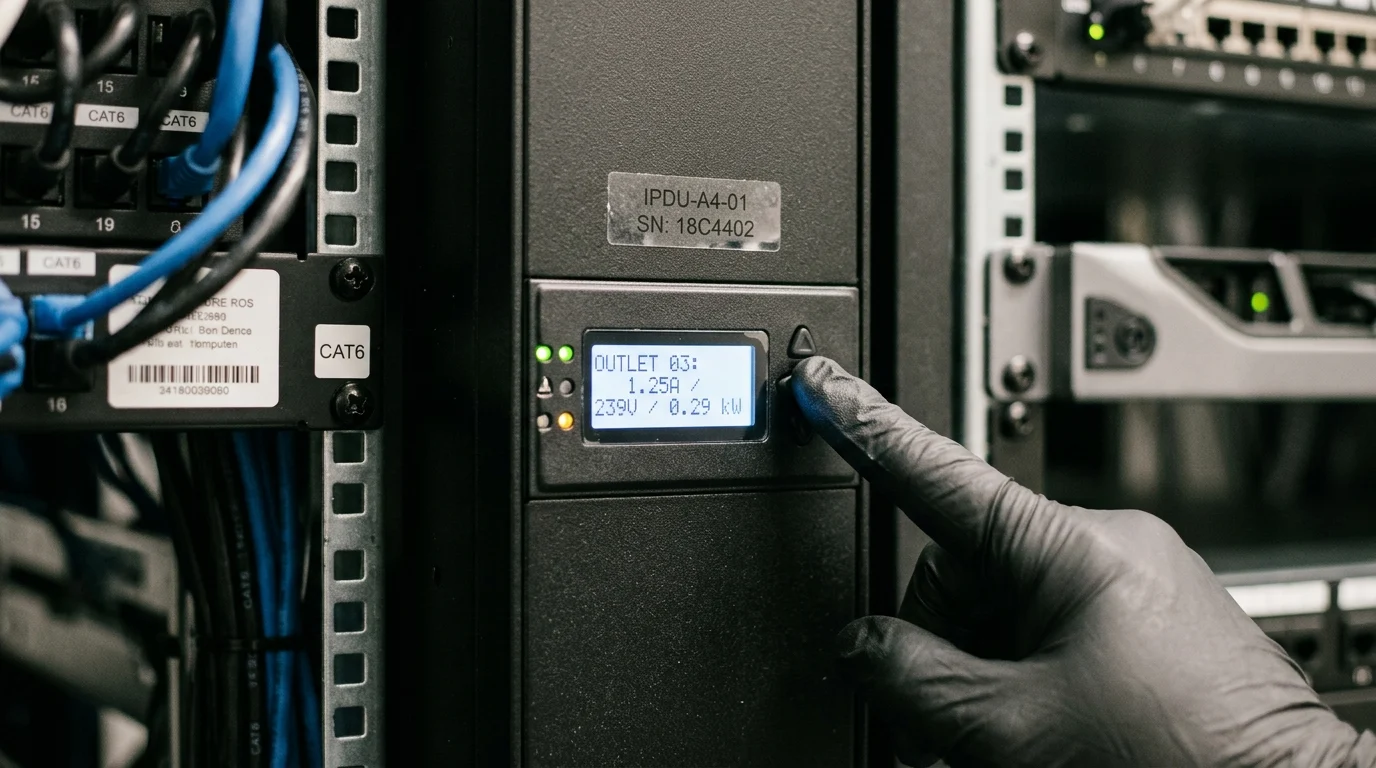
Choosing the right hardware is not just about picking the highest specifications; it requires matching the unit to specific rack architectures and Power Management goals. The following approach to the selection and rollout phases ensures a smooth transition.
Selection criteria and planning
First, define the power requirements. Determine whether the facility runs single-phase 120V/208V or three-phase 400V. For high-density setups, three-phase power is highly recommended to deliver up to 22 kW per rack, which minimizes cable bulk and improves phase balancing. Next, determine the necessary level of intelligence. Evaluate whether outlet-level switching is required to remotely reboot specific hung servers, or if rack-level metering is sufficient to calculate the carbon footprint.
Plug types and physical security are equally important. Ensure the correct mix of C13 and C19 receptacles to match server power supplies, leaving at least a 20% buffer on the outlet count for future expansion. Furthermore, locking receptacles with a minimum retention force of 100 Newtons are strongly advised to prevent accidental disconnects during routine maintenance or heavy vibration.
Implementation and rollout steps
During installation, a phased rollout is the safest approach. Start with a pilot group of 5 to 10 racks to allow time for integrating the PDU’s SNMP or RESTful APIs with Data Center Infrastructure Management (DCIM) software. Configure alert thresholds carefully; setting a warning trigger at 80% of the breaker’s rated capacity helps prevent accidental overloads before they happen.
Finally, physically color-code the A and B power feeds to streamline troubleshooting and ensure clear visual identification of redundant power paths.
Key Takeaways
- The most important conclusions and rationale for Intelligent PDU
- Specs, compliance, and risk checks worth validating before you commit
- Practical next steps and caveats readers can apply immediately
Frequently Asked Questions
What makes an Intelligent PDU different from a basic PDU?
An Intelligent PDU adds remote metering, outlet control, alerts, and sensor support. Unlike a basic strip, it shows real-time kWh, kW, volts, and amps so rack power can be managed proactively.
How can an Intelligent PDU help reduce data center carbon footprint?
It reveals wasted energy at the rack level, such as idle servers, overload risks, and cooling issues. This data helps teams balance loads, optimize airflow, and cut unnecessary power use.
Which features should I prioritize when choosing an Intelligent PDU?
Look for ±1% metering accuracy, outlet-level switching, environmental sensors, daisy-chain support, and security protocols like SNMPv3, SSH, and HTTPS. Also confirm the temperature rating fits hot-aisle deployment.
Can Intelligent PDUs improve rack power distribution in high-density cabinets?
Yes. They provide live load visibility and threshold alarms, helping operators safely raise rack density and avoid breaker trips. This is especially useful when moving from 5 kW racks toward 15–20 kW loads.
Where can I compare Intelligent PDU options for my facility?
You can review product details, use cases, and rack power distribution options at newsunnpdu.com. Start with the Intelligent PDU pages to compare metering, switching, sensors, and deployment features.
Post time: May-18-2026