

TL;DR
- Outlet-level switching lets authorized operations teams control selected loads and apply a defined recovery sequence.
- Specify outlet metering separately when device-level current or power data is needed.
- Check power restoration behavior, asset mapping and access controls on the exact hardware and firmware before rolling out a fleet.
- Choose the PDU by rack electrical architecture and documented operational requirements, including those for racks that need monitoring only.
The outlet switched PDU trend is best understood as a change in what rack power distribution can do. An outlet-switched power distribution unit gives an authorized team control over individual receptacles. That can support approved device recovery, staged restoration and commissioning in a large facility. Hyperscale rack designs vary, and switching makes sense where those actions justify the associated hardware, integration and governance. Start with the action operators need to take and the equipment it would affect.
Why put switching at the outlet?
Switch at the outlet when an approved recovery action needs to affect one device feed instead of a shared group of loads. A rack PDU distributes incoming electrical power to equipment in the cabinet. In a switched model, the relevant outlet has an independently controllable switching mechanism. A facilities team can specify a device-level action when the workload owner authorizes it and the feed mapping is verified. Available commercial models document individual power cycling and outlet sequencing as distinct management functions. Schneider Electric switched rack PDU product range.
Repeated rack designs make consistent outlet mapping valuable because the same operational procedure can then be applied with fewer site-specific assumptions. Hyperscale deployments often organize infrastructure around repeatable rack templates. That creates an opportunity to define the electrical feed, asset identifier, outlet label and management policy together during commissioning. A replacement server or a relocated power cord can invalidate that relationship. Have the team update the physical labels and inventory before treating the map as reliable again.
There is a difference between a useful capability and evidence of how widely it is installed. Product families from multiple suppliers show that individual switching and sequencing are established options. That supports evaluating them against a documented operating need. Compare rack classes by their need for remote intervention, their dependence on an available management path and the impact of power changes on shared services.
How do switched and metered PDUs differ?
Metering reports electrical conditions, while switching changes whether power is supplied to a controlled circuit or outlet. Newsunn’s catalog of outlet-switched PDUs presents intelligent products with different metering and control combinations. Its outlet switching technology overview distinguishes total metering, total switching, outlet metering and outlet switching. It also describes outlet naming and delay settings for the individual switching function. Ask for the exact feature combination in the quotation.
| Capability | What it provides | What to confirm on the specified model |
|---|---|---|
| Input metering | It reports aggregate electrical readings for the PDU. | Check reported parameters, accuracy and supported telemetry interfaces. |
| Outlet metering | It supplies readings at individual outlet level. | Confirm whether each outlet reports current, power, energy or another measure. |
| Whole-unit switching | It controls the shared circuit described by the product. | Identify all loads affected by that action. |
| Outlet switching | It allows a selected outlet to change state. | Check supported commands, state reporting and operator access controls. |
| Sequencing | It stages outlet actions according to supported delays or policies. | Confirm when the delays apply and verify behavior after input power returns. |
Buy outlet metering when operators need electrical telemetry by receptacle, even if they also plan to switch those receptacles. Newsunn’s published matrix lists Type A with total metering and switching plus individual outlet metering and switching. Type C lists total metering and individual outlet metering. Those labels describe the solution matrix. Include the required readings, reporting behavior and function set on the approved SKU to avoid relying on a family name. If a team only needs rack-level loading for planning, aggregate instrumentation may meet its requirement.
When does outlet control earn its place in a rack?
Choose outlet switching where operations has a defined use case, such as authorized recovery of single-fed auxiliary equipment or staged restoration after a planned interruption. When a single-fed device has become unresponsive and the owner has approved a power interruption, a verified outlet allows authorized staff to address that feed without switching the whole PDU. Normal shutdown and device-native recovery should follow the organization’s policies. For a device with two active supplies, changing one outlet can leave the device powered, so the target and intended result must be confirmed.
Sequence restoration when a simultaneous startup could concentrate inrush current, and verify the result with representative loads. Inrush is the short surge of current that can occur when equipment is energized. A supported sequencing function can stagger startup, but the effect depends on the attached equipment, power architecture and the way the PDU handles restoration. Record the expected startup order and have qualified personnel check the behavior under approved lab or commissioning conditions. Schneider Electric switched rack PDU installation guidance.
Choose metering alone when the rack’s operating procedures need visibility and assign power changes to another approved method. For example, an operations team may already use device-native controls for routine work and restrict outlet actions on racks carrying critical shared services. A metered configuration can provide data for those racks without requiring the team to maintain a separate switching workflow. Compare lifecycle costs, including fleet administration, firmware support and documentation, in addition to purchase price.
How should procurement qualify a switched rack PDU?
Start with the rack electrical schedule and mounting drawing, because a connector match says little about overall capacity or service access. State input voltage, phase, plug or connection type, required capacity, branch protection and receptacle mix. Confirm the applicable continuous loading and operating conditions with the facility electrical design owner. Verify available rack space, cable reach, outlet orientation and room to replace cords or service adjacent equipment. Review the approved design under normal operation and the applicable loss-of-feed case for redundant racks.
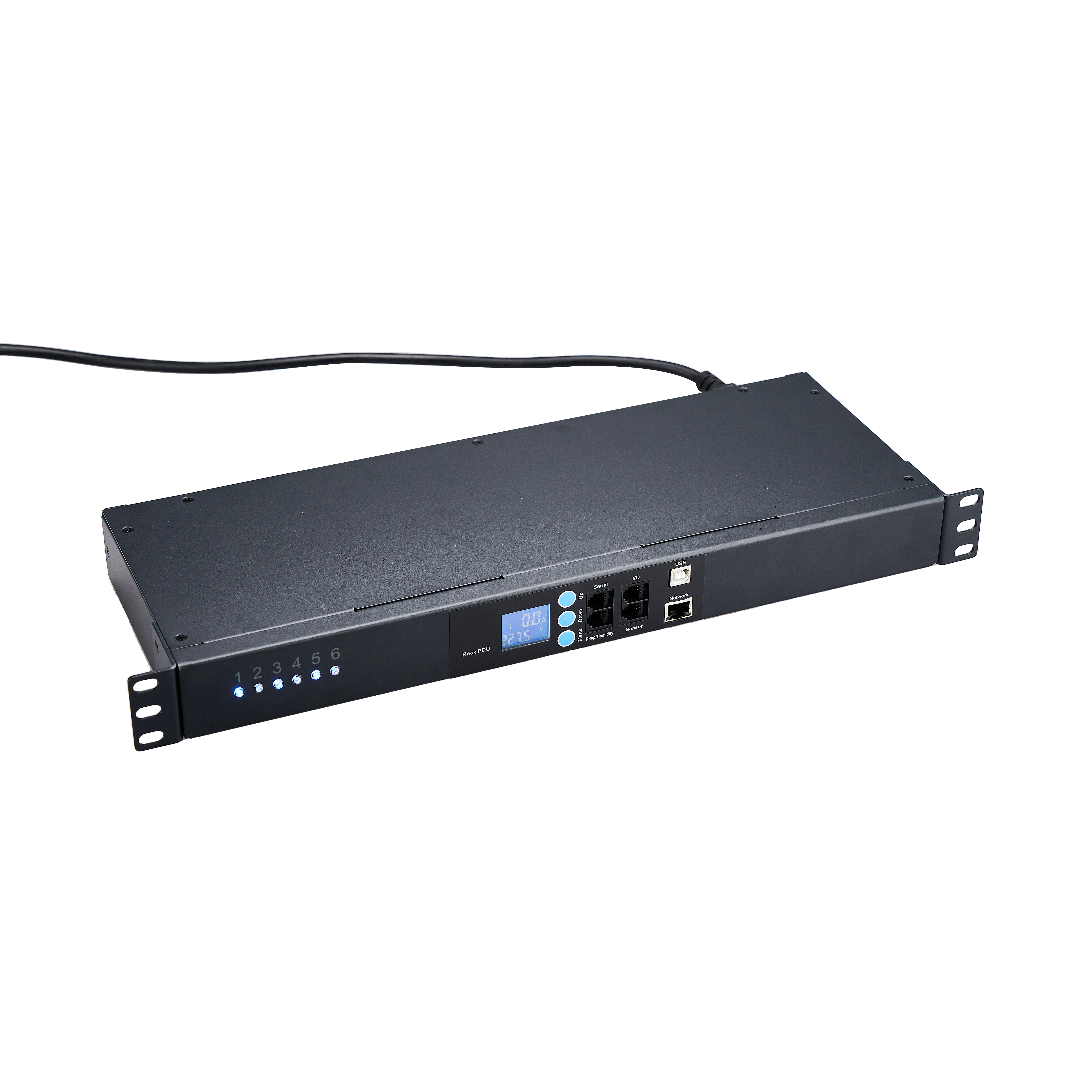
Newsunn’s US switched PDU supplier landing page describes a single-phase NEMA strip and lists a 120 VAC example rated 15 A and derated to 12 A, with 14 NEMA outlets. It also describes switches and other functional modules. Use it as a NEMA sourcing reference, and require a separate model-specific specification for independent remote outlet control. The illustrated C13 intelligent unit belongs to the intelligent PDU category and represents a different configuration. Request the exact tested model and relevant conformity documentation for the installation market.
Test a management restart, temporary loss of network and restoration of input power as separate events because their effects can differ. Ask which settings persist, whether the relay state is retained and which restoration policy applies to each outlet. In a pilot, use approved test loads and compare the configured intent, observed power state and displayed status. Accurately distinguishing these events helps an operations team interpret an alarm or stale measurement after service returns. Schneider Electric documentation on outlet behavior after a power outage.
Verify who can see electrical readings and who can change outlet states before connecting the unit to fleet management. Ask the supplier how the device integrates with the approved management stack, how actions are logged and which roles can perform switching. Include firmware update procedures, support windows and configuration recovery in the review. Use a management network and access policy approved by the facility, and have the responsible operations and security teams sign off on the proposed scope.
What should a hyperscale pilot measure?
A useful pilot verifies that the chosen feature supports the intended job and scales with the team’s operating procedures. Select representative shelves or racks with the electrical design and types of load planned for deployment. Record the hardware revision, firmware version and configuration baseline. Confirm the physical outlet mapping against the inventory and use agreed test conditions for outlet state, telemetry and restoration behavior. Keep the result tied to the model and version tested.
For a hypothetical pilot, a rack might have a single-fed monitoring appliance alongside dual-fed compute nodes. The test can show whether the monitoring appliance has a clearly identified control point and whether compute outlets are handled under the correct redundancy policy. Record the owner of each permitted action, the physical outlet identities and evidence of the observed result. The example illustrates differences in operational scope within a rack and represents no specific operator deployment.
Evaluate savings with operational records, because the presence of a switch does not establish lower downtime or lower energy use. Track the number of eligible incidents or maintenance activities, how often remote action actually resolved them and the staff time used to train, map and maintain the fleet. If an energy saving is part of the business case, measure the loads and the period during which a change occurred. Keep electrical savings, reduced service effort and capacity planning benefits as separate inputs to the financial review.
What changes when a pilot becomes a fleet standard?
Document the approved configuration by rack class so purchasing can tell which sites need switching and which can use the metered configuration. Keep a matrix showing the offered model, mounting arrangement, power feed, firmware baseline and authorized use cases. Assign a separate stock identifier if two units look similar but provide different outlet functions. When a replacement arrives, match its identifier and revision to the installation record before putting it into service.
At receiving, compare the model label, connector mix and installed options with the purchase specification. Then check the management and electrical documents that accompanied the approved sample. Where several suppliers are qualified, establish which operational behaviors must be consistent and which can vary by platform. For example, two products may both offer staged restoration yet apply their delays under different conditions. Keep the expected behavior visible to the team that supports the rack.
Assign ownership for outlet mapping and firmware changes because both can alter the evidence behind a previously approved operating procedure. Have the inventory owner reconcile any moved asset or power cord with the physical rack. Ask the supplier how firmware changes are announced and which records show that a release was tested. Set a review point for a new revision before it is distributed across the fleet. Use the pilot baseline to identify which acceptance cases need to be repeated. Document spare availability and the support path so an approved configuration can be maintained when a unit is replaced.
Procurement FAQ
Does a switched PDU automatically meter every outlet?
Switching and metering are separate functions. Request a feature matrix and verify which telemetry is available at the input, branch and individual outlet on the exact model.
Is outlet switching useful on every hyperscale rack?
It is useful where approved device-level actions, staged recovery or remote service justify it. Metered-only racks can be appropriate where telemetry meets the operational requirement.
Can one outlet restart a dual-corded server?
An independently powered second cord may keep the server running. Identify the physical feeds and follow the device owner’s approved recovery procedure before any power action.
Will outlet states survive a controller restart?
That behavior depends on the model and firmware. Verify management restart, network loss and input power restoration as separate acceptance cases with approved test loads.
Does a NEMA outlet type establish the PDU’s rack capacity?
Use the exact model’s input, branch, outlet and operating limits together with the approved facility design. The receptacle designation is only one part of that review.
What should a supplier provide before a fleet pilot?
Request the electrical and mounting drawings, outlet function matrix, firmware documentation, management compatibility and applicable compliance evidence for the quoted SKU. Agree pilot acceptance criteria before order release.
Prepare a rack-level specification for quotation
Send Newsunn the rack mechanical drawing, feed and outlet schedule, required metering level and the approved outlet actions. Ask for the electrical and firmware feature matrix for the proposed SKU, the applicable compliance records and a sample for acceptance testing. Include the intended power restoration behavior and asset naming conventions so the offered configuration can be evaluated against the operating procedure.
Post time: Nov-19-2026