

TL;DR
- PDU energy data supports the IT-energy side of PUE; a separate, correctly bounded facility-energy total is still required.
- Collect real energy in kWh over matching periods, with meter identities, timestamps and counter-reset records preserved.
- Use outlet measurements to investigate equipment demand, then verify changes against facility energy and useful IT work.
- Close ESG reporting with reconciled energy records, documented emission factors and assigned reviewers, rather than a dashboard screenshot.
PDU metering helps teams manage PUE targets and reporting deadlines by making IT energy traceable, actionable and reproducible. It does not measure the whole facility or calculate a complete greenhouse-gas inventory by itself. The useful connection between PDU energy monitoring, PUE and ESG is a controlled data chain: measured energy, an agreed boundary, validated calculations and a documented reporting close.
Start with two deliverables: a trustworthy IT-energy total and an equipment-level view that helps operators act. Newsunn’s intelligent-PDU configurations illustrate why these deliverables need different specifications.
Where does PDU energy belong in a PUE calculation?
PUE is total data-center energy divided by IT-equipment energy over the same defined reporting period. ISO/IEC 30134-2:2026 defines the measurement and reporting framework, including measurement categories and treatment of mixed-use facilities, on-site generation and unaccounted energy. Adopt the applicable method before selecting the meters.
PUE = Total data-center energy ÷ IT-equipment energy
Rack PDUs can contribute to the IT-energy measurement when their measurement points and load coverage match the adopted boundary. The facility numerator must also account for the supporting infrastructure within that boundary. An office-building utility meter cannot simply be paired with a few server racks if it includes unrelated building loads.
Because numerator and denominator describe one energy boundary, incomplete rack coverage can make PUE look worse without any operational change. Map every included IT feed, the facility supply and any exclusions. Explain shared infrastructure and unmetered energy through the adopted methodology rather than hiding them in a spreadsheet adjustment.
Keep monthly operational tracking distinct from a formally reported annual metric. A shorter-period ratio can identify trends, but it should retain its period label. For an annual calculation, divide the corresponding annual energy totals rather than taking an unweighted average of monthly PUE values.
Which PDU configuration supplies the data you need?
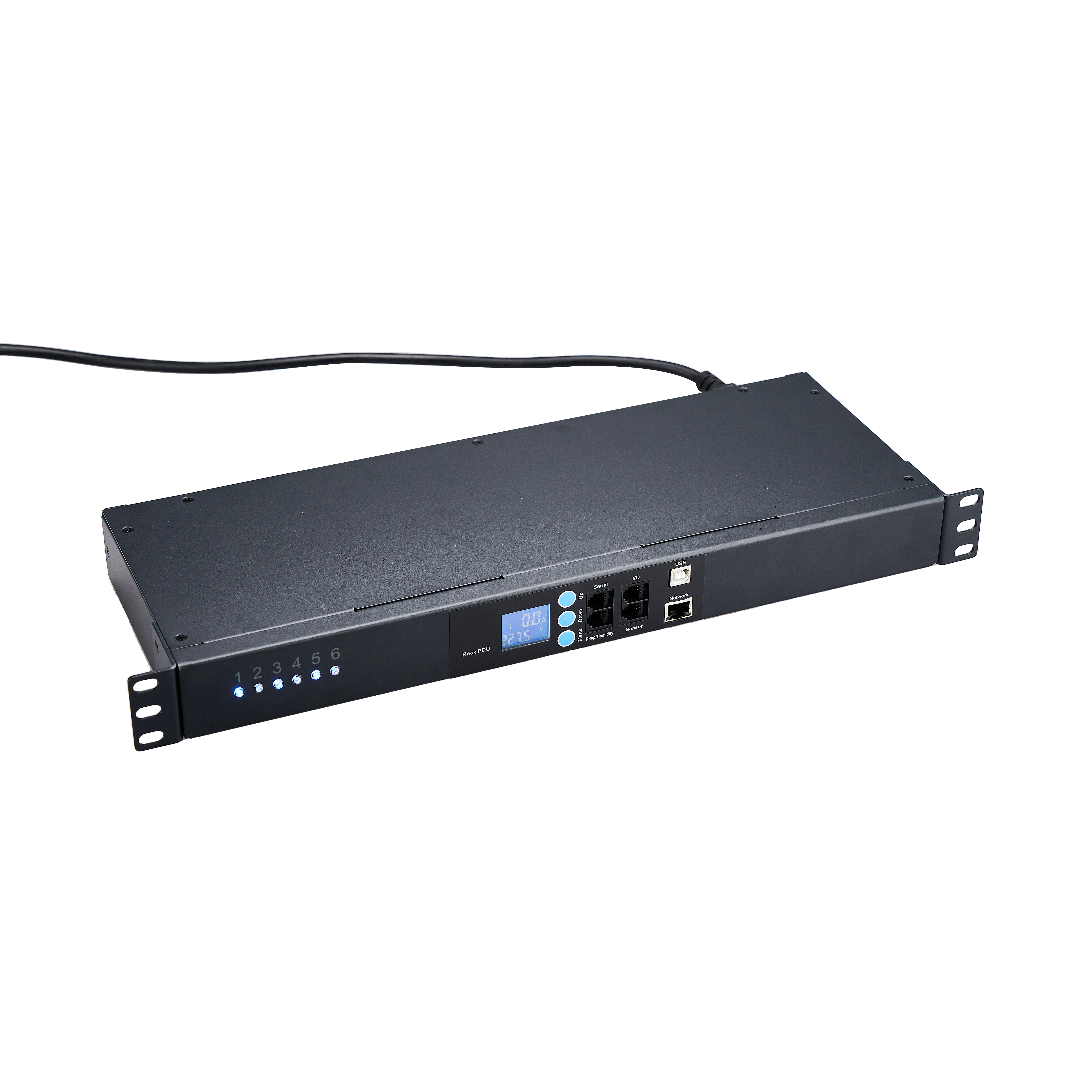
Specify the required measurement fields and hierarchy, not merely an “intelligent” product name. Newsunn’s energy-metering PDUs cover monitoring, switching and environmental functions, but the selected configuration determines which capabilities are delivered.
The six-way C13 intelligent-PDU listing distinguishes four functional models and lists total power in kW and total energy in kWh. Its configuration descriptions provide a useful first selection filter.
| Type | Metering described | Switching described | Procurement implication |
|---|---|---|---|
| A | Total and individual outlet metering. | Total and individual outlet switching. | Evaluate for device investigation and approved remote control. |
| B | Total metering. | Total switching. | Suitable for a total-data brief that also requires switching. |
| C | Total and individual outlet metering. | No switching in the functional description. | Evaluate for device visibility without a switching requirement. |
| D | Total metering. | No switching in the functional description. | Evaluate for an aggregate metering brief. |
For an outlet-level metered PDU quotation, inspect the exact configuration. The linked universal-outlet page describes optional current/voltage metering; that alone does not establish per-outlet kWh. Even where individual outlet metering is listed, verify whether the exposed fields are current, real power, cumulative energy or a subset.
Because current and voltage alone do not establish real energy for varying AC loads, an A/V display is insufficient evidence of reporting-ready kWh. Require the energy register, units, measurement scope and accuracy specification for the operating range you intend to use.
What should the meter-to-report data contract contain?
Define a small, explicit data contract between the PDU, collection platform and reporting workbook. This is an agreement about field meaning and handling, not a claim that a particular export format is already built into every unit.
The intelligent listing names SNMP, Modbus TCP/IP and Modbus RTU over RS-485 among its interfaces. A protocol name establishes a possible integration route; the actual MIB or register map establishes what the collector can read. Demonstrate this with a sample device and your intended monitoring platform.
| Requirement | Why it matters | Acceptance evidence |
|---|---|---|
| Device, rack, feed and outlet identity. | Measurements must map to the correct assets and boundary. | A verified asset-to-meter register. |
| Real power and cumulative energy units. | kW and kWh answer different questions. | Register definitions and actual sample records. |
| Timestamp and time-zone rules. | Facility and IT records need matching period boundaries. | A consistent collector timestamp convention. |
| Counter persistence and rollover behavior. | Resets can corrupt energy differences. | A documented restart and recovery demonstration. |
| Accuracy and operating conditions. | Small apparent changes may be measurement uncertainty. | Model-specific specifications and verification records. |
| Missing-data and retention rules. | Reporting needs explainable gaps and recoverable evidence. | A tested collection-gap and archive procedure. |
Set collection frequency from the operational and reporting needs. Faster polling is useful only if the device updates and collection system support it. Identify whether historical records reside on the PDU, in the collector or both; do not assume network access includes local backfill.
How do you avoid double counting and silent data gaps?
Aggregate one defined measurement layer for the IT total, and retain other layers for reconciliation. Adding PDU inlet energy to its outlet energy counts the same downstream consumption twice. If outlet totals are used, reconcile them with inlet readings while accounting for the different measurement positions.
For dual-cord equipment, include the actual energy drawn through both A and B feeds. Do not double one feed merely because the design is redundant, or multiply nameplate capacity by operating hours. Use outlet-to-asset mappings to prevent a moved cable from becoming an unexplained consumption change.
A missing polling interval is not zero consumption. A persistent cumulative counter may recover the total energy difference across a communications gap, provided its continuity and boundary readings are known. It cannot recreate the detailed load pattern within that gap. Distinguish a telemetry gap from a genuine power interruption.
Calculate interval energy from valid counter differences. A negative difference requires a reset, rollover or replacement investigation, rather than a negative energy credit. Preserve the raw readings and correction reason so the period total can be reproduced later.
How can the data help improve PUE without gaming the ratio?
Use PDU trends to locate demand changes, then verify the resulting effect on facility energy and service delivery. The ENERGY STAR PDU guidance describes device monitoring as a way to identify unused equipment and inform capacity planning.
A persistent load outside an expected operating schedule is an investigation lead. Match it with asset ownership and workload evidence before proposing consolidation or decommissioning. Low electrical demand alone does not prove that a server is unnecessary. Remote switching should follow the facility’s approved change and availability procedures.
Lower total energy and lower PUE are different outcomes, so review both. Consider a hypothetical period with 1500MWh of facility energy and 1000MWh of IT energy: PUE is 1.50. If IT energy falls to 800MWh and facility energy falls to 1300MWh, PUE becomes 1.625 even though facility consumption has declined by 200MWh.
This illustration assumes supporting energy remains at 500MWh. It is not a Newsunn project result or a promised saving. It shows why removing unnecessary IT load can improve absolute energy consumption while worsening the ratio. Check useful work and availability before judging the intervention.
To improve the ratio itself, investigate supporting energy at comparable IT demand: cooling, airflow and electrical losses are relevant candidates. PDU load trends can help align the investigation with demand, but PDU data alone cannot diagnose a chiller or establish cooling savings.
How does PDU data support ESG and Scope 2 reporting?
PDU records support energy evidence and allocation; emissions reporting also requires the appropriate organizational boundary, energy sources and emission factors. ESG means environmental, social and governance reporting. Rack electricity is one input to its environmental component, not a complete ESG dataset.
The GHG Protocol Scope 2 Guidance addresses emissions from purchased or acquired electricity, steam, heat and cooling. Its location-based and market-based methods use different evidence; meter readings do not establish contractual renewable-energy attributes.
For electricity, retain consumption alongside the factor source, applicable geography, period, units and calculation method. Where market-based accounting applies, retain the relevant contractual evidence and quality assessment. Keep measured electricity unchanged when evaluating different accounting methods.
Because rack consumption is contained within facility consumption, adding both as separate purchased-electricity totals creates double counting. Use rack records for an explicitly defined allocation or reconciliation. Do not add them again to a facility total that already includes them.
In a colocation arrangement, establish which organization reports which activity under its adopted boundary. If an IT reading is multiplied by a PUE value to estimate allocated facility energy, label the result as an allocation estimate and preserve its period, method and source. It is not a direct meter reading.
How do you close the report before the deadline?
Make the deadline a sequence of ownership and review gates, with data quality checked before the reporting period closes. The following is an illustrative internal workflow, not a statutory filing calendar.
| Stage | Accountable owner | Output |
|---|---|---|
| Day 1: collect. | Metering or DCIM owner. | Frozen raw readings and coverage report. |
| Day 2: reconcile. | Facilities and IT operations. | Boundary totals, reset records and gap decisions. |
| Day 3: calculate. | Sustainability reporting owner. | PUE, energy totals and applicable emissions calculations. |
| Day 4: review. | Independent internal reviewer. | Checked factors, methods and material exceptions. |
| Day 5: approve. | Designated reporting approver. | Locked report version and retained evidence pack. |
During the month, flag missing meters, stale timestamps and unexplained counter changes. At close, separate measured records from estimates and identify any provisional totals. Preserve the original dataset, transformation rules, approvals and final report together; a dashboard image cannot provide that calculation trail.
What should procurement prove before rollout?
Buy a demonstrated measurement-and-integration configuration, with acceptance evidence matched to the reporting use case. Test the proposed device through a load change, collector outage, restart and reporting-period boundary. Verify units, timestamps, counters and recovery behavior against the agreed data contract.
Review Newsunn’s energy data advantages in the context of its modular product design: outlet count, input arrangement and functional options must suit the installation. The advantages page describes electrical construction and testing; these are separate from energy-meter accuracy and export validation.
Our engineering recommendation is to bring facilities, IT monitoring and sustainability reporting into the sample review. Their acceptance questions differ, and discovering the mismatch before rollout is much easier than reconstructing missing records at year-end.
Frequently asked questions
Can a metered PDU calculate PUE by itself?
No. It can supply relevant IT-energy measurements, but the calculation also needs the correctly bounded facility-energy total for the same period.
Is outlet-level metering necessary for every PUE project?
No. Complete aggregate metering at the adopted measurement points may support the IT total. Outlet detail is valuable for asset investigation and allocation, with field availability verified separately.
Can current readings replace energy measurements?
Not directly. Current alone does not establish real energy for varying AC loads; use verified real-energy registers or a documented power-integration method with understood limitations.
What happens when PDU communications fail?
Flag the missing telemetry rather than recording zero. A continuous cumulative counter may recover aggregate consumption, but reset behavior and interval boundaries must be checked.
Does a lower PUE guarantee lower emissions?
No. PUE is an energy ratio, while emissions also depend on energy quantities, sources, accounting boundaries and emission factors. Report those measures separately.
Which documents should accompany an intelligent-PDU order?
Include the exact configuration, measurement specification, MIB or register map, integration test results and counter-recovery behavior. Add the agreed asset mapping, retention responsibilities and reporting acceptance criteria.
Build the reporting trail into the PDU specification
Start with the facility boundary and reporting close, then specify the required energy registers and operational detail. Use those requirements to select the Newsunn configuration and validate a sample with the intended collector. The result should be a repeatable energy total, useful investigation data and a reporting pack that remains understandable after the dashboard has changed.
Post time: Nov-17-2026