


In modern networking, Protocol Data Units (PDUs) play a vital role in communication. They help ensure that data moves smoothly across networks. By optimizing performance, PDUs enhance both speed and security, making them essential for any network setup. Moreover, they enable compatibility between different networking protocols, ensuring seamless interactions. Whether it’s a Basic PDU or an Intelligent PDU, understanding these units is key to mastering network dynamics.
Key Takeaways
- Protocol Data Units (PDUs) are essential for smooth communication in networks, ensuring data is transmitted accurately.
- PDUs consist of three parts: headers, payloads, and trailers, each playing a crucial role in data transmission.
- Different types of PDUs, like frames, packets, segments, and datagrams, serve specific functions in the networking process.
- Understanding PDUs can enhance network performance by optimizing data flow and reducing errors.
- PDUs help maintain data integrity through error-checking methods like checksums and cyclic redundancy checks.
- Encryption of PDUs is vital for protecting sensitive information during transmission, ensuring user privacy.
- Standardization of PDUs allows different devices to communicate effectively, reducing compatibility issues.
- Future trends in networking, such as AI integration and network virtualization, will continue to shape the development of PDUs.
What is a Protocol Data Unit?
Definition of Protocol Data Unit
A Protocol Data Unit (PDU) is the fundamental unit of exchange between entities that communicate using a specific networking protocol. This definition highlights how PDUs facilitate communication within multilayer protocol stacks. They serve as the building blocks for data transmission, ensuring that information flows smoothly across different layers of a network.
Types of Protocol Data Units
PDUs come in various types, each designed for specific functions within the networking model. Here’s a quick overview of the main types:
- Frames: At the data link layer, data is organized into frames. These frames include control information for error detection, which helps ensure that data arrives intact.
- Packets: At the network layer, frames are encapsulated into packets. These packets contain routing information, guiding data to its destination.
- Segments: In the transport layer, data is divided into segments (in TCP). Segments manage data flow and ensure complete data transfer.
- Datagrams: For UDP, data is packaged into datagrams. These units also help with data transmission but do not guarantee delivery like TCP segments do.
This modular approach allows for efficient communication, as each PDU type serves a distinct role in ensuring data is transmitted accurately and effectively.
Importance of Protocol Data Units in Networking
PDUs are critical for reliable data communication in modern networks. They structure data transmission across the OSI model layers, encapsulating data with control information necessary for maintaining data integrity and order. For instance, at the transport layer, PDUs include sequence numbers and acknowledgments, while at the network layer, they contain routing information. This modular design enhances network flexibility and ensures that data reaches its destination without issues.
Moreover, PDUs include fields for error detection and correction. Common methods for error checking, such as checksums and cyclic redundancy checks (CRC), help identify and rectify anomalies during data transmission. By ensuring that data is transmitted accurately, PDUs play a vital role in optimizing network performance and security.
Structure of a Protocol Data Unit
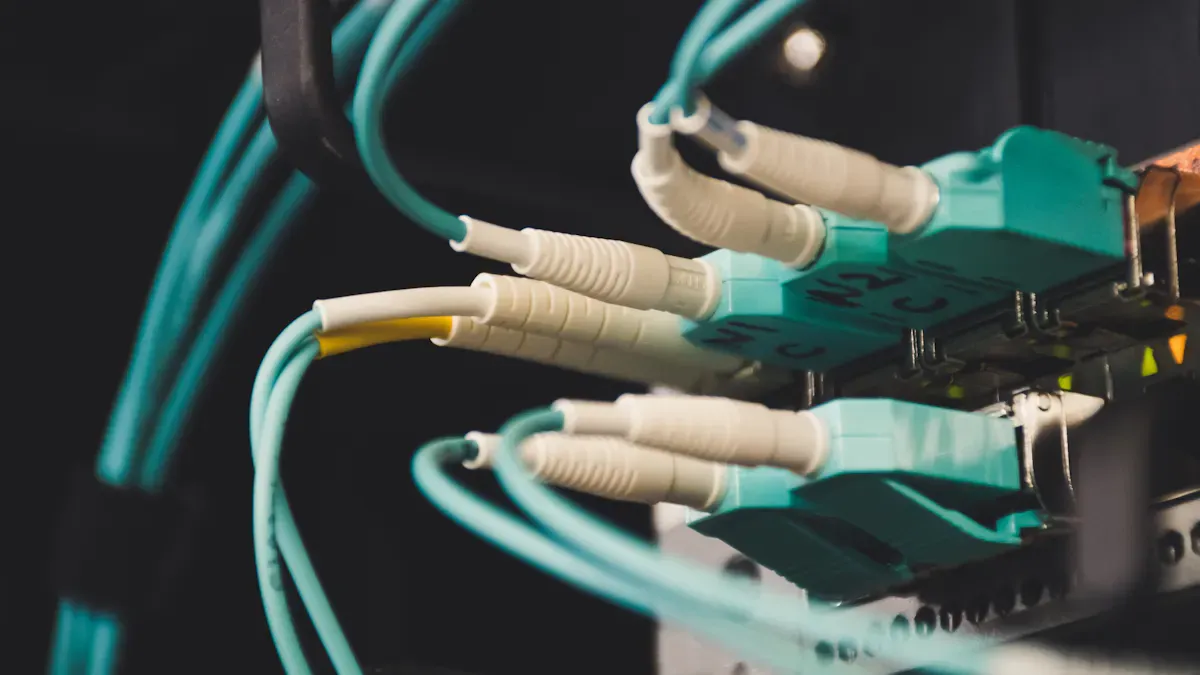
Understanding the structure of a Protocol Data Unit (PDU) is crucial for grasping how data travels through networks. A PDU consists of three main components: the header, the payload, and the trailer. Each part plays a unique role in ensuring effective communication.
Components of a Protocol Data Unit
Header
The header is the first part of a PDU. It contains important control information that helps route data across networks. This includes source and destination addresses, which allow network devices to determine the correct path for data transmission. Without a well-defined header, data could easily get lost or misdirected.
Payload
The payload is the core of the PDU. It carries the actual user data that needs to be transmitted. This is where the information intended for the recipient resides. The payload size can vary, but it must be optimized to ensure efficient data transfer. If the payload is too large, it can lead to fragmentation, which may slow down the transmission process.
Trailer
The trailer is the final component of a PDU. It often includes error-checking information, such as checksums or cyclic redundancy checks (CRC). This information helps verify that the data arrived intact and without corruption. If any errors occur during transmission, the trailer can assist in identifying and correcting them.
How Structure Affects Transmission
The structure of a PDU significantly influences how efficiently data is transmitted. Here are some key aspects to consider:
| Aspect | Explanation |
|---|---|
| Fragmentation | Enhances network efficiency by allowing protocols to remain unaware of underlying network architecture, reducing overheads. |
| Size Considerations | Influences network performance; optimal PDU dimensions are crucial for achieving high throughput and low latency. |
| Overhead | A smaller payload relative to the header increases overhead, reducing effective data rate. |
PDUs provide a standardized format for data exchange, facilitating communication between devices with different architectures. They manage information flow by segmenting data, which aids in error handling and maintaining data integrity. By understanding these components and their roles, network professionals can optimize data transmission and improve overall network performance.
Protocol Data Units in the OSI Model

The OSI model, or Open Systems Interconnection model, is a framework that standardizes how different networking systems communicate. It divides the communication process into seven layers, each with its own specific functions. Understanding how protocol data units fit into this model helps clarify their importance in networking.
Overview of the OSI Model
The OSI model consists of seven layers, each responsible for different aspects of data communication. Here’s a quick breakdown:
- Physical Layer: Deals with the physical connection between devices.
- Data Link Layer: Ensures reliable transmission of data frames.
- Network Layer: Manages routing and forwarding of packets.
- Transport Layer: Oversees end-to-end communication and data flow.
- Session Layer: Manages sessions between applications.
- Presentation Layer: Translates data formats for the application layer.
- Application Layer: Interfaces directly with user applications.
Each layer has its own protocol data unit, which plays a crucial role in ensuring effective communication.
Role of Protocol Data Units in Each Layer
Let’s explore how protocol data units function at each layer of the OSI model:
Application Layer
At the application layer, the protocol data unit is referred to as a message. This message contains user-centric information, such as emails or web pages. It’s the final data unit that users interact with, making it essential for delivering meaningful content.
Transport Layer
In the transport layer, the protocol data unit takes the form of segments when using TCP and datagrams when using UDP. These units manage data flow and ensure complete data transfer. They include important information like sequence numbers, which help in reassembling the data correctly at the destination.
Network Layer
The network layer uses packets as its protocol data unit. Each packet contains addressing information, which is crucial for routing data to its destination. This layer ensures that data travels efficiently across different networks.
Data Link Layer
At the data link layer, frames serve as the protocol data unit. Frames organize bits into a structured format, including error-checking information. This structure helps ensure reliable delivery of data over the physical medium.
Here’s a summary of the protocol data units associated with each layer:
| OSI Layer | Protocol Data Unit | Description |
|---|---|---|
| Physical Layer | Bits | The simplest form of data unit transmitted as raw bits. |
| Data Link Layer | Frames | Organized bits that include error-checking information for reliable delivery. |
| Network Layer | Packets | Encapsulated frames containing source and destination addresses. |
| Transport Layer | Segments/Datagrams | Used to manage data flow and ensure complete data transfer. |
| Session Layer | Messages | Data units that facilitate communication sessions. |
| Presentation Layer | Data Streams | Formats data for the application layer. |
| Application Layer | Messages | Final data units that are presented to the user or application. |
Understanding these roles helps network professionals optimize communication across the OSI model. Each protocol data unit serves a specific purpose, ensuring that data flows smoothly from one layer to the next.
Impact of Protocol Data Units on Network Performance
Efficiency of Data Transmission
The efficiency of data transmission is crucial for any network. Protocol Data Units (PDUs) play a significant role in this area. They help ensure that data packets reach their destinations quickly and accurately. Several metrics evaluate how well PDUs perform in this regard:
- Coverage: This measures the percentage of devices within a specific area that successfully receive data packets.
- Number of Transmitted Packets: This counts the total data messages sent during the communication process.
- Delay: This indicates the average time it takes for a data message to travel from the source to all intended recipients.
- Collisions: This tracks the total number of packet collisions that occur at the Medium Access Control (MAC) layer.
By monitoring these metrics, network administrators can identify bottlenecks and optimize data flow, leading to improved overall performance.
Latency and Throughput
Latency and throughput are two critical factors that affect network performance. They often have a trade-off relationship; improving one can sometimes negatively impact the other. High-performance systems aim for both low latency and high throughput, but achieving this balance can be tricky. Here are some key points to consider:
- Network Capacity and Bandwidth: Higher bandwidth generally allows for higher throughput. This means that more data can be transmitted in a given time frame.
- Network Congestion: When too many devices try to send data simultaneously, it can lead to delays or packet loss. Efficient protocols and traffic management are essential to mitigate these issues.
Understanding how PDUs influence these factors helps network professionals design systems that maximize performance while minimizing delays.
Error Handling and Correction
Error handling and correction are vital for maintaining data integrity during transmission. PDUs incorporate several mechanisms to ensure that data arrives intact. Here are some common methods used:
- Checksums: This technique involves calculating a value based on the data being sent. The receiving device recalculates the value and compares it to the received value to check for errors.
- Cyclic Redundancy Checks (CRC): Similar to checksums, CRCs provide a more robust method for error detection. They help identify any discrepancies in the data.
If discrepancies are found, protocols may enable the retransmission of corrupted data. This ensures accurate delivery and helps maintain the reliability of the network. Interestingly, larger PDUs are more prone to errors due to their size. If a single bit in a large packet gets corrupted, the entire packet must be retransmitted. This can lead to increased costs in terms of time and resources, highlighting the importance of considering packet size in large-scale networks.
By implementing effective error handling and correction strategies, networks can significantly enhance their performance and reliability.
Security Implications of Protocol Data Units
When it comes to networking, security is a top priority. Protocol Data Units (PDUs) play a significant role in maintaining data integrity and protecting sensitive information during transmission. Understanding how PDUs contribute to security can help network professionals design safer systems.
Data Integrity
Data integrity refers to the accuracy and consistency of data during transmission. PDUs help maintain this integrity through their structured components. Each part of a PDU has a specific role:
| Component | Role in Data Integrity |
|---|---|
| Header | Provides routing information and sequencing details to ensure data is directed correctly and reassembled in order. |
| Payload | Contains the actual data being transmitted; if corrupted, the communication fails. |
| Trailer | Includes error-checking mechanisms (like checksums) to verify data integrity and prompt retransmission if errors are detected. |
By ensuring that each component functions correctly, PDUs help prevent data loss and corruption.
Encryption and Protocol Data Units
Encryption is another critical aspect of securing PDUs. It transforms data into a format that unauthorized users cannot read. Without encryption, sensitive information can easily fall into the wrong hands. For example, protocols like Telnet and HTTP lack encryption, making them vulnerable to eavesdropping and session hijacking.
Using secure protocols, such as HTTPS or SSH, ensures that PDUs are encrypted during transmission. This way, even if an attacker intercepts the data, they cannot decipher it. Implementing encryption helps protect user privacy and maintain trust in network communications.
Vulnerabilities and Threats
Despite their importance, PDUs can also be targets for various security threats. Here are some common vulnerabilities:
- Inadequate data validation can lead to various attacks, including unauthorized access.
- The lack of encryption in certain protocols allows adversaries to easily read sensitive data, leading to eavesdropping and session hijacking.
- Insufficient authentication measures can result in data manipulation and replay attacks, as there is no verification of user or device identity.
- Absence of communication integrity verification allows tampering with communications without detection, increasing vulnerability to attacks.
By understanding these threats, network professionals can take proactive measures to secure their systems. Regular updates, strong authentication methods, and robust encryption practices can significantly reduce the risk of attacks.
Protocol Compatibility and Protocol Data Units
Interoperability Between Protocols
Interoperability is crucial for ensuring that different networking protocols can work together seamlessly. However, achieving this can be challenging. Here are some common issues that arise:
- Multiple Communication Protocols: Various IoT devices use different protocols, leading to compatibility problems.
- Security and Data Privacy Issues: Different security standards across devices complicate uniform protection measures.
- Lack of Standardization: The absence of universally accepted standards results in integration difficulties.
- Scalability Concerns: As IoT networks grow, adding new devices without disrupting existing systems becomes tricky.
- Power Consumption Constraints: Many devices need energy-efficient communication protocols to extend battery life.
These challenges highlight the importance of developing robust protocol data units that can adapt to various environments and requirements.
Standardization of Protocol Data Units
Standardization plays a vital role in the effectiveness of protocol data units. When PDUs follow established standards, they ensure consistent communication across different devices and networks. This consistency helps reduce errors and enhances overall network performance.
Organizations like the Internet Engineering Task Force (IETF) and the Institute of Electrical and Electronics Engineers (IEEE) work to create these standards. By promoting uniformity, they help manufacturers design devices that can communicate effectively, regardless of the underlying technology. This standardization is especially important in industries like telecommunications and IoT, where diverse devices must interact smoothly.
Future Trends in Protocol Data Unit Development
As networking technology evolves, so do protocol data units. Here are some emerging trends shaping their development:
- Network Virtualization: This trend allows multiple functionalities and protocol stacks to coexist on a single infrastructure, enhancing flexibility.
- Programmability: The ability to program the data path of routers supports dynamic packet processing, making networks more adaptable.
- Artificial Intelligence Integration: AI and swarm intelligence techniques are influencing how networks are designed and managed, leading to smarter PDUs.
As networking technology advances, PDUs will need to meet the increasing demands for higher efficiency and security. The rise of 5G and IoT will require PDUs capable of managing more devices and higher data throughput. Enhanced security features will also be essential to protect sensitive information in an interconnected environment. Overall, the future of PDUs looks promising, with innovations paving the way for more sophisticated and efficient networking solutions.
Protocol Data Units are fundamental to the functioning of modern networks. They serve as the basic units of exchange, ensuring effective communication between devices. Here are some key points to remember:
- PDUs consist of three main components: headers, payloads, and trailers, which are crucial for data transmission.
- Understanding PDUs enhances network performance and security. Techniques like intelligent forwarding and advanced algorithms help manage data flow effectively.
- The evolution of PDUs will continue to shape networking practices, adapting to new technologies and demands.
As networks grow more complex, grasping the role of protocol data units becomes essential for anyone involved in networking.
FAQ
What is a Protocol Data Unit (PDU)?
A Protocol Data Unit (PDU) is the basic unit of data exchanged between devices in a network. It helps ensure that information is transmitted accurately and efficiently across different layers of the OSI model.
Why are PDUs important in networking?
PDUs are crucial for reliable communication. They structure data transmission, include error-checking mechanisms, and ensure that data reaches its destination without loss or corruption.
How do PDUs affect network performance?
PDUs impact network performance by optimizing data flow, reducing latency, and enhancing throughput. They also help manage errors, ensuring that data is transmitted correctly and efficiently.
What are the different types of PDUs?
The main types of PDUs include frames (Data Link Layer), packets (Network Layer), segments (Transport Layer), and datagrams (UDP). Each type serves a specific function in data transmission.
How do PDUs ensure data integrity?
PDUs maintain data integrity through their structured components. They include headers for routing, payloads for actual data, and trailers for error-checking, ensuring accurate delivery.
Can PDUs be encrypted?
Yes, PDUs can be encrypted to protect sensitive information during transmission. Secure protocols like HTTPS and SSH use encryption to ensure that data remains confidential and secure.
What challenges do PDUs face in interoperability?
PDUs often encounter challenges like compatibility issues between different protocols, varying security standards, and the need for standardization. These factors can complicate seamless communication across devices.
How do PDUs evolve with technology?
As networking technology advances, PDUs adapt to meet new demands. Trends like network virtualization, programmability, and AI integration are shaping the future of PDUs, enhancing their efficiency and security.
Post time: Mar-14-2026