

Modern European data centers rely on specialized hardware components to sustain uninterrupted digital services. As infrastructure developers scale up high-density hosting systems, power delivery remains the primary focal point of facility engineering. Choosing reliable hardware from overseas partners requires an objective evaluation of manufacturing capabilities. Selecting among the Top 10 Factories Of Schuko Rack Mount PDU From China requires a thorough understanding of advanced electrical and structural engineering specifications. Industry professionals must evaluate factories based on quantifiable quality data rather than superficial market rankings. This rigorous selection method ensures long-term operational security for mission-critical rack systems. Global enterprises optimize their procurement workflows by establishing strict, data-driven technical parameters for their vendor audits. Consequently, verifying these elite production standards protects expensive computational investments from preventable power disruptions.
Uncompromising European Regulatory Pedigree and Compliance Integrity
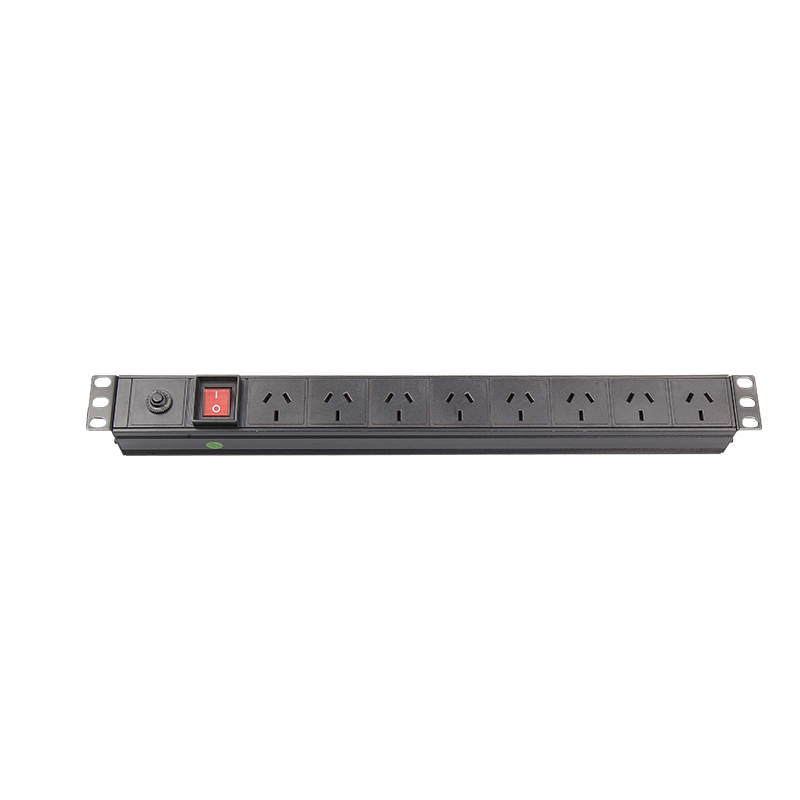
European data centers enforce unyielding safety guidelines due to the dense concentration of critical network hardware. Electrical distribution units operating in these environments must conform fully to local installation standards. For German standard deployments, products must comply with the physical parameters of the DIN 49440 specification. This rule defines the dimensional accuracy and earthing alignment required for standard Schuko socket-outlets. Elite manufacturing facilities secure comprehensive regulatory certifications to validate the safety profile of their electrical assemblies. Valid CE-LVD and CE-EMC certificates prove that a product satisfies European low-voltage and electromagnetic compatibility directives. Furthermore, obtaining the prestigious German GS safety mark demonstrates that independent testing laboratories have thoroughly evaluated the hardware. Material safety also represents a crucial evaluation criterion during engineering audits. Premier manufacturers choose high-oxygen-factor PC/ABS composite engineering plastics to construct their inner socket modules. This material selection offers excellent insulation properties and guarantees absolute compliance with the strict UL94-V0 flame-retardant classification. Consequently, the chosen plastic components successfully resist melting under extreme thermal duress, preventing dangerous rack fires.
Advanced Metallurgy and Thermal Armor: Evaluating Structural Rigidity
High-density server enclosures subject power distribution rails to immense physical and thermal strain over years of continuous deployment. Therefore, premier manufacturers abandon cheap sheet metals or flimsy plastic backings in favor of robust industrial extrusions. A top-tier production facility utilizes advanced metallurgy to construct high-performance protective enclosures for server racks. The structural standard requires heavy-duty enclosures engineered from premium aluminum alloy that exhibits a minimum tensile strength of 480 mpa. This high-strength metal profile prevents the structural casing from sagging under intense physical stress. Additionally, specialized aluminum alloy extrusions provide excellent passive thermal dissipation to keep internal electrical components cool. Inside the chassis, advanced design choices maintain safe separation between conductive elements and the outer metal shell. Specialized high-performance insulation boundaries completely separate the live electrical pathway from the exterior armor. An integrated grounding device provides definitive protection for data center technicians during routine maintenance tasks.
Conductor Craftsmanship: The Shift to Solderless Continuous Copper Busbars
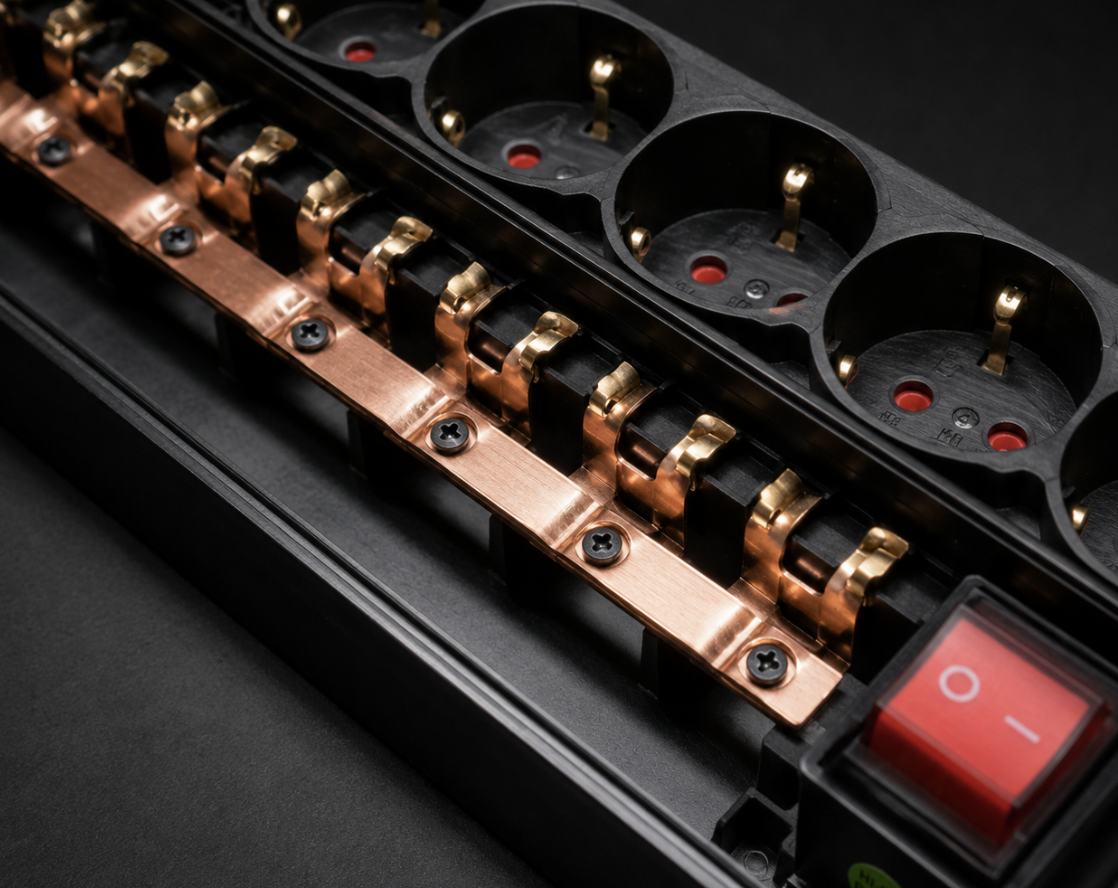
Electrical integrity inside a power distribution unit depends heavily on the architecture of its internal conductors. Traditional distribution systems often rely on internal wire bundles joined together by manual soldering methods. However, continuous 16-ampere loads at 250 volts create significant thermal expansion cycles that degrade soldered joints over time. This slow degradation increases contact resistance, generates focal heat, and eventually causes localized arc-flash failures inside server enclosures. To prevent these catastrophic failure modes, leading manufacturers implement innovative solderless connection technologies. Advanced factories like Newsunn utilize automated machinery to stamp continuous, integrated pure copper busbars for the internal power pathway. These solid copper structures distribute electrical current evenly without relying on failure-prone solder points. Furthermore, the socket connection sleeves utilize high-conductivity phosphor bronze to ensure reliable physical contact. Eliminating internal solder joints maximizes overall electrical efficiency and significantly extends the operational lifespan of the rack infrastructure.
End-to-End Production Sovereignty and Scalable Infrastructure Capacity
Global infrastructure projects require vendor partners that can guarantee absolute supply chain stability and consistent manufacturing quality. Therefore, elite suppliers maintain comprehensive control over their entire production ecosystem through vertical integration. For example, Newsunn (Ningbo Newsun Network Ltd.) operates an expansive 30,000 square meters manufacturing facility to ensure total production sovereignty. This centralized infrastructure enables the enterprise to manage every phase of fabrication, from initial raw material selection to automated assembly. The factory maintains an impressive annual output capacity of 1,200k units, proving its ability to scale production for large international rollouts. Because the brand controls its molding workshop and assembly lines, it reliably guarantees a stable lead time of 25 to 30 days. This comprehensive operational scale allows the manufacturer to accommodate custom orders with flexible minimum order requirements starting at just 100 pieces. Consequently, system integrators can execute localized market testing without committing to excessive upfront hardware inventory.
Quantifiable Quality Assurance Benchmarks: Multi-Stage Automated Stress Loops
Verifying the reliability of intelligent electrical hardware requires a structured approach to quality assurance testing. For this reason, premier production facilities implement rigorous, multi-stage automated stress loops prior to final packaging. The factory quality matrix includes comprehensive inspections at every stage of the manufacturing cycle. Technicians perform a mandatory 2000V high-voltage Hi-pot isolation test on every completed unit to verify safe creepage distances. Ground resistance checks ensure total isolation between the grounded chassis and active electrical poles. Furthermore, the factory mandates an exhaustive 48-hour online continuous aging test under precise ambient thermal conditions. This long-duration stress test stabilizes electronic control modules and successfully eliminates defective components before shipment. Finally, a 120% full-load threshold stress test confirms that the internal busbars handle unexpected power surges effortlessly. These rigorous testing protocols ensure that every piece of exported hardware arrives at the destination facility in perfect working order.
Intelligent Power Topology Integration: Transforming Passive Rails into Active Edge Nodes
The modern computing landscape requires data center operators to understand what is an intelligent PDU and how does it improve rack power efficiency across high-density facilities. Leading Chinese manufacturers now integrate sophisticated communication and monitoring modules directly into their Schuko rail configurations. Ningbo Newsun Network Ltd. offers advanced intelligent architectures divided into four clear functional topologies, categorized from Type A through Type D. Type A systems deliver total circuit metering, individual socket metering, total power switching, and independent outlet switching controls. This granular functionality allows remote engineers to execute precise power cycles on specific hung servers without disrupting adjacent hardware. Meanwhile, Type D models provide basic, cost-effective total load monitoring for simpler infrastructure layouts. These intelligent units support diverse communication standards, including HTTP, SNMP V1/V2, and MODBUS TCP/IP, to interface smoothly with centralized network operations centers. The hardware also accepts specialized auxiliary sensors to monitor temperature, humidity, smoke, water logging, and cabinet door security. This proactive remote telemetry eliminates the need for constant on-site engineering intervention, significantly reducing long-term operational costs.
Conclusion
Procuring high-quality Schuko rack-mount power distribution units from overseas requires a clear technical evaluation framework. To secure reliable infrastructure, facility managers must audit potential factory partners against strict regulatory, material, and electrical benchmarks. True manufacturing leaders differentiate themselves by offering high-strength metallurgy, solderless continuous copper busbars, and comprehensive remote telemetry options. Investing in certified, robustly tested hardware eliminates deployment uncertainties and minimizes expensive localized field maintenance over time. Aligning with an integrated manufacturer ensures consistent product quality and predictable delivery schedules for large-scale international infrastructure expansions. For detailed technical specifications and custom power distribution options, please explore the enterprise portal at https://www.newsunnpdu.com/.
Post time: Sep-10-2026