

The exponential growth of artificial intelligence and high-performance computing clusters changes the landscape of modern data centers. High-density server deployments require robust infrastructure to distribute electrical power efficiently across massive computing nodes. Consequently, legacy power architectures can no longer support the immense thermal design power of modern graphics processing units. Data center infrastructure buyers must look beyond simple brand names to evaluate the core engineering limits of primary manufacturing facilities. Many procurement managers review the Top 10 Factories Of 32A Server Rack PDU Manufacturer options to select reliable hardware partners for enterprise projects. This technical evaluation establishes the critical quality baselines that protect high-density computing clusters from sudden power loss. Furthermore, understanding the physical manufacturing processes helps facility managers avoid substandard assembly operations.

Amperage Headroom: Why High-Performance Clusters Demand 32A+ Single & 3-Phase Inputs
Modern server environments regularly operate computing clusters that consume fifteen to thirty kilowatts per rack enclosure. To manage these immense loads safely, infrastructure teams must deploy high-amperage feeds that range from 32A to 63A. Relying on lower capacity circuits causes severe cable congestion and blocks critical cooling airflow under the data center floors. Therefore, transitioning to high-capacity inputs simplifies wire management and improves overall thermal efficiency inside the server cabinets. In addition, 3-phase power distribution offers clear technical advantages over single-phase systems in high-density environments. A 3-phase Y-configuration provides continuous, smooth power delivery by utilizing a 120-degree electrical phase offset between the lines. This balanced configuration reduces current loads on the neutral wire and lowers the total cost of ownership for colocation facilities. Operators must understand why 3-phase PDUs are essential for modern data centers when planning multi-megawatt facility expansions. Efficient hardware allows engineers to alternate phase loads directly at the outlet level, which prevents upstream transformer imbalance. Dynamic phase balancing protects uninterruptible power supplies from localized overloads and extends the life of critical grid components.
The Thermal and Busbar Engineering Challenge in High-Current PDU Architecture
Distributing high electrical current within a tight 19-inch rack-mount enclosure presents severe engineering challenges for manufacturing facilities. Sustained loads of 32A or 63A generate significant ohmic heating due to natural material resistance within the power paths. Traditional internal wire bundles frequently suffer from rapid thermal runaway under these conditions, creating dangerous fire hazards. To solve this problem, elite manufacturers abandon internal wiring completely and deploy solid copper busbars instead. High-purity copper busbars maximize the cross-sectional conductive area to decrease voltage drops across the entire distribution unit. Furthermore, a continuous metal stamping process eliminates localized resistance hotspots near individual outlet modules. Enclosure material selection represents another vital factor in high-temperature facility environments. Premium units utilize heavy-duty, heat-resisting metal casings that dissipate thermal energy efficiently into the surrounding space. These robust enclosures maintain operational integrity even inside sixty degrees Celsius hot-aisle containment zones. Consequently, technical audits must scrutinize busbar dimensions and metallurgical properties to verify true continuous load resilience under maximum capacity.
How Newsunn Sets the Global Standard for Intelligent High-Density Power Infrastructure
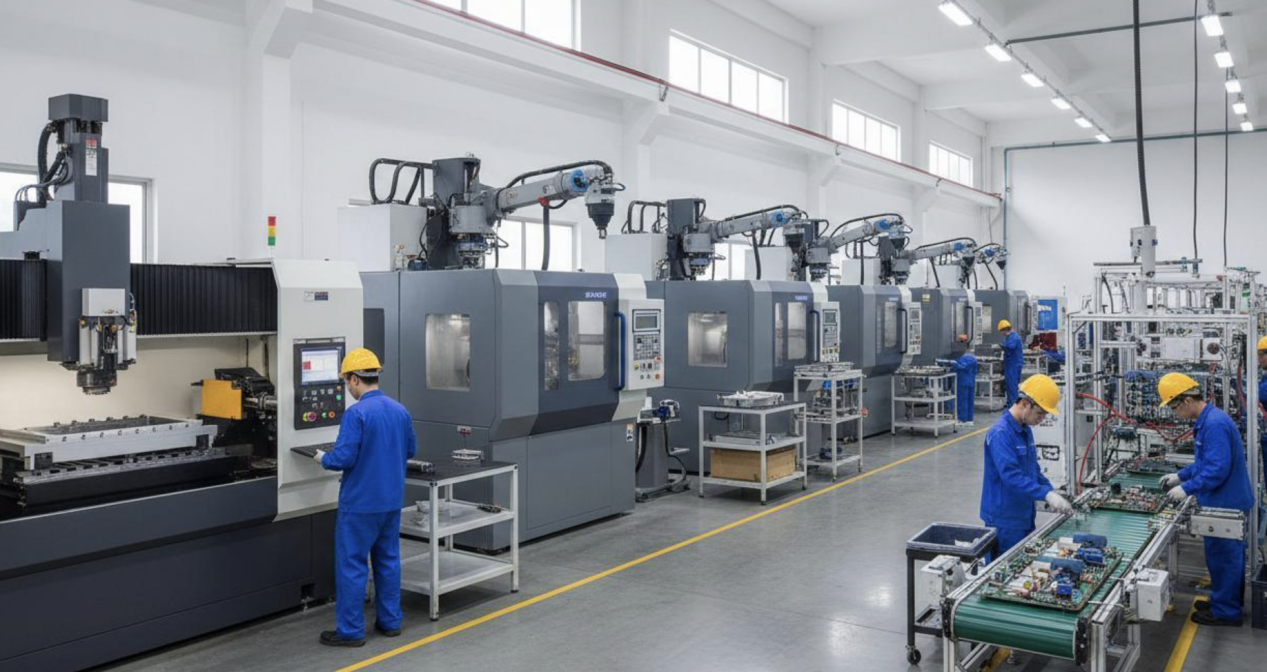
Achieving these rigorous engineering benchmarks requires a manufacturing partner with immense production scale and technical capability. Buyers can streamline international procurement projects by working directly with vertically integrated factories that control their entire supply chain. For example, Newsunn (Ningbo Newsun Network Ltd.) provides a comprehensive manufacturing infrastructure that handles complex high-current power challenges. The organization operates a centralized 30,000-square-meter production facility housing independent tooling, stamping, and automated assembly workshops to eliminate external component dependencies. This integrated setup ensures strict quality enforcement across mass production batches. As a result, Newsunn maintains a robust annual production capacity of 1,200k units to support hyper-scale enterprise deployments globally. The factory integrates revenue-grade monitoring chipsets into its smart rails, delivering plus or minus one percent billing-grade accuracy for voltage, current, and active power. In addition, robust intelligent air-switch modules reside directly within the rack-mount chassis to mitigate cascade overloads instantly. The facility offers four distinct customizable function matrices, known as Type A through Type D, to provide tailored monitoring and switching capabilities.
Strategic Collaboration: Accelerating Data Center Deployments via OEM/ODM Synergies
Customization flexibility represents an essential requirement for global system integrators building specialized hardware environments. Standard, off-the-shelf power rails rarely satisfy the unique spatial constraints of custom rack enclosures and complex blade servers. Therefore, Ningbo Newsun Network Ltd. leverages its internal engineering assets to provide agile design revisions for international clients. Technicians can combine high-retention IEC C13, C19, and region-specific industrial sockets into a single chassis containing up to forty-eight outlets. Furthermore, the company maintains stable manufacturing lead times of 25 to 30 days for large transoceanic shipments. This predictable fulfillment cycle allows project managers to align infrastructure deliveries precisely with tight facility construction timelines. The supplier supports flexible sourcing arrangements with low minimum order thresholds starting at 100 units. Comprehensive global compliance testing further simplifies cross-border distribution, as every product carries mandatory certifications including CE, GS, UL, NF, and EESS.
Advanced Quality Loop Verification: Eliminating Infant Mortality in High-Current Systems
A successful technical audit must culminate in a rigorous evaluation of the factory’s final quality assurance testing loops. Simple electrical continuity checks cannot intercept latent manufacturing defects in complex intelligent circuitry or high-current connection points. Therefore, premier production facilities implement multi-stage automated stress loops to isolate hardware infant mortality before global packaging. Technicians perform a mandatory 2000V high-voltage Hi-pot isolation test on every completed power unit during assembly. This high-voltage test verifies the absolute integrity of the insulation gaps within the robust metal housing. Following electrical checks, the factory subjects every smart rail to a non-negotiable 48-hour continuous thermal soak under full load inside aging chambers. This long-duration stress test stabilizes the telemetry chipsets and exposes any weak solder joints or component flaws before warehouse sign-off.
Conclusion
In summary, powering high-performance computing clusters demands a shift toward heavy-duty, high-amperage power distribution units. Technical procurement teams must look past basic commercial proposals to verify solid busbar architectures, robust thermal tolerances, and precise telemetry systems. Ultimately, direct cooperation with an established industrial enterprise provides the production stability and consistent product quality needed for hyper-scale expansion. To explore custom high-current configurations or analyze detailed engineering drawings, infrastructure professionals should visit the official corporate portal at https://www.newsunnpdu.com/.
Post time: Sep-23-2026